Category: clarence
Clarence Hates Mystery Meat: H.A.N.D.

First of all, I don’t even understand what I’m supposed to call this place. H. A. N. D. (39 rue de Richelieu, 75001 Paris, Métro: Palais Royale) stands for Have A Nice Day, but I don’t particularly want to call a restaurant a conversational pleasantry: “Do you want to go to Have A Nice Day for dinner tonight?” At the same time, it feels odd to spell out a recognizable word: “Do you want to go to H. A. N. D. for dinner tonight?” So I’ve been calling it Hand, which I also kind of hate, because who wants to eat a restaurant called hand?
So I was skeptical about the name from the very beginning, but my friend BC won me over with talk of a duck burger, slick interior design, and a good review in Le Fooding. I love duck! I love burgers! I love slick interior design! And Le Fooding is how I plan my week! But our attempts to eat at H. A. N. D. were foiled during BC’s final week in Paris, as it seemed to be either closed or too far out of the way every night we contemplated going. I’ve been pretty fixated on going since then, especially since B and I walked by the restaurant on our way to see the Rose C’est Paris exhibit at the BNF (resounding “eh” and I haven’t felt this bad about my boobs in years) and the slick interior design was resoundingly confirmed. H. A. N. D. is really darling inside with indigo walls, bare bulb light fixtures, antique globes, and stacked Campbell’s soup cans. The menu, a spare list of yummy-sounding burgers and a few other French bistro and American diner classics, was intriguing. I’ll admit that despite having eaten some good ones, I’m still on the search for the perfect burger in Paris. Despite their ubiquity here, burgers just aren’t quite what my good little American self wants them to be. As an aside: damn you, SoCal residents, for getting another location of The Counter within throwing range of my old abode.
All this is to say I had high hopes for our visit to H. A. N. D. on Tuesday night. B and I had met up with M at the Palais de Tokyo to take in their newest exhibit Dynasty. I keep going back to the Palais de Tokyo because I bought an annual pass during my initial museum-pass buying frenzy when I moved to Paris. We then discovered that if you have a student identification card and say you are an art history student, admission is free, a fact that never fails to piss me off when we enter the museum. On Tuesday night, our entry went something like this:
Ticket office employee: Eight euros.
B: Actually, I’m a student. An art history student.
Ticket office employee: Really? What kind of art history do you study?
B: Medieval art history.
Ticket office employee: (sighs) Okay. You’re free. Next?
M: I’m an art history student too.
Ticket office employee: Oh really! How convenient! And what kind of art history do you study?
M: (flustered) Uh, the same.
Ticket office employee: Are you kidding me? You also study medieval art history?
M: Uh, yes. I mean, no. Photography.
Ticket office employee: Medieval photography.
M: Yes.
Ticket office employee: Okay. Here’s your ticket.
Obviously technological development and art history are not strong subjects at the American Apparel College for Future Hipster Museum Employees.
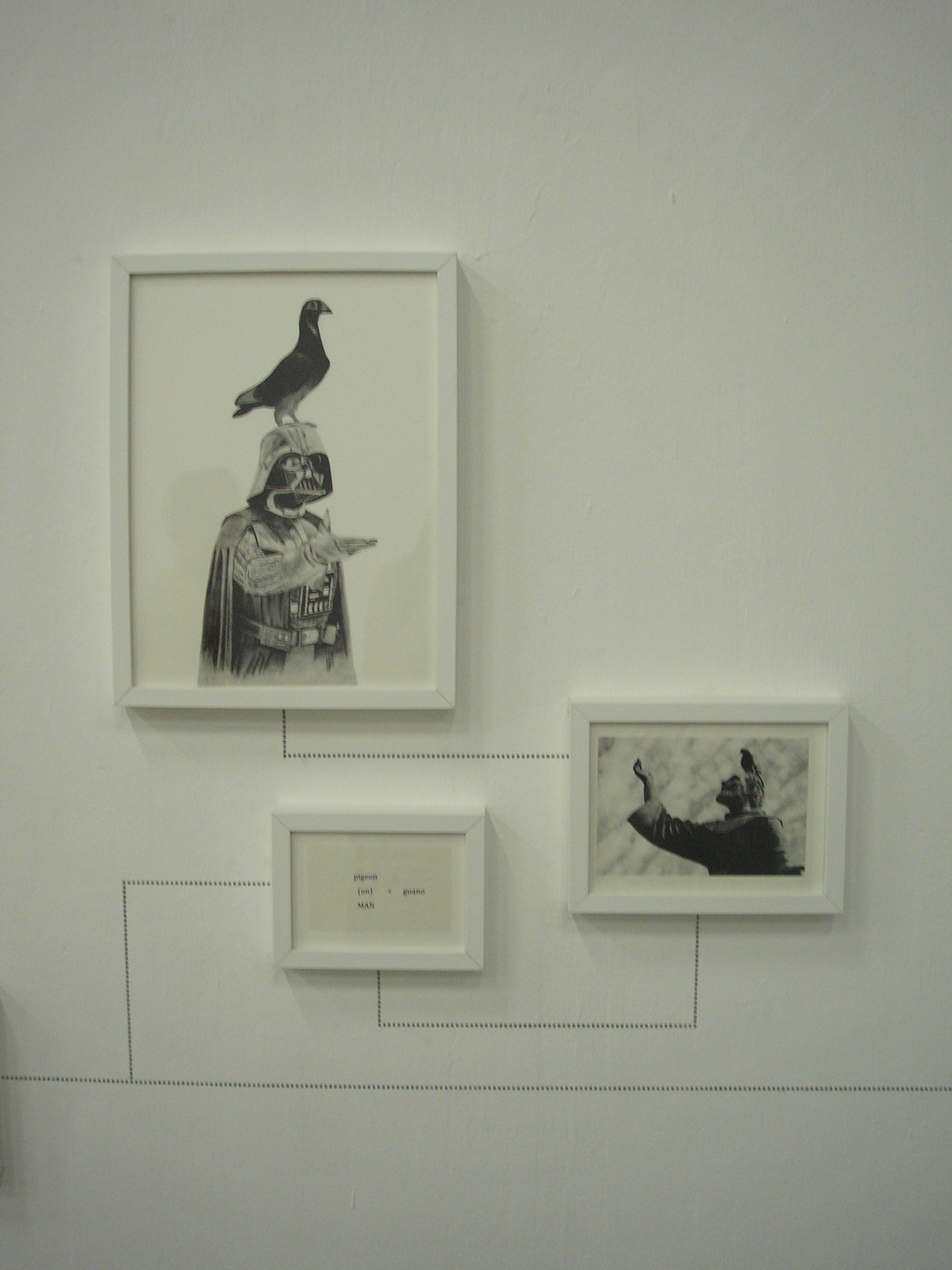
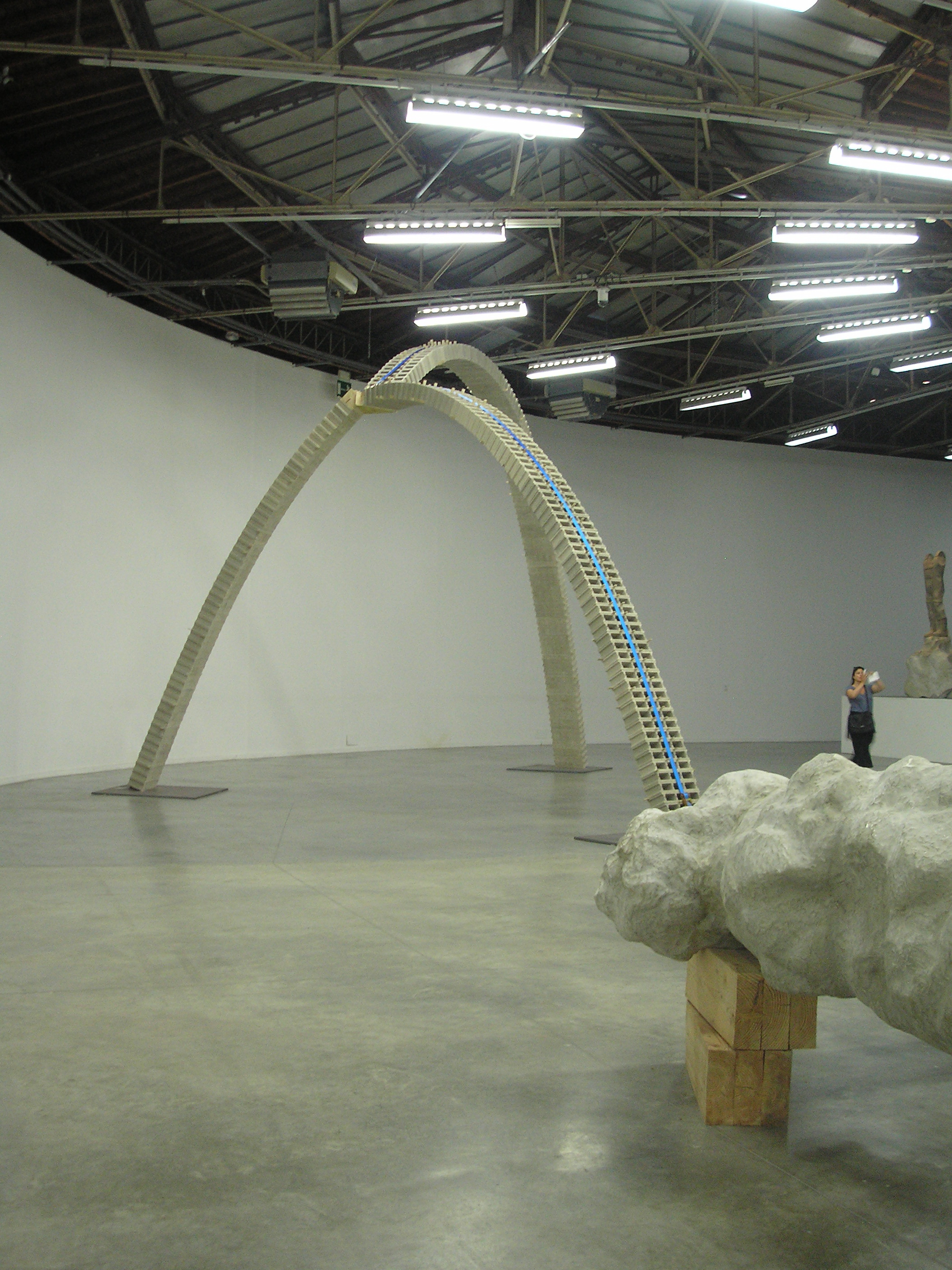
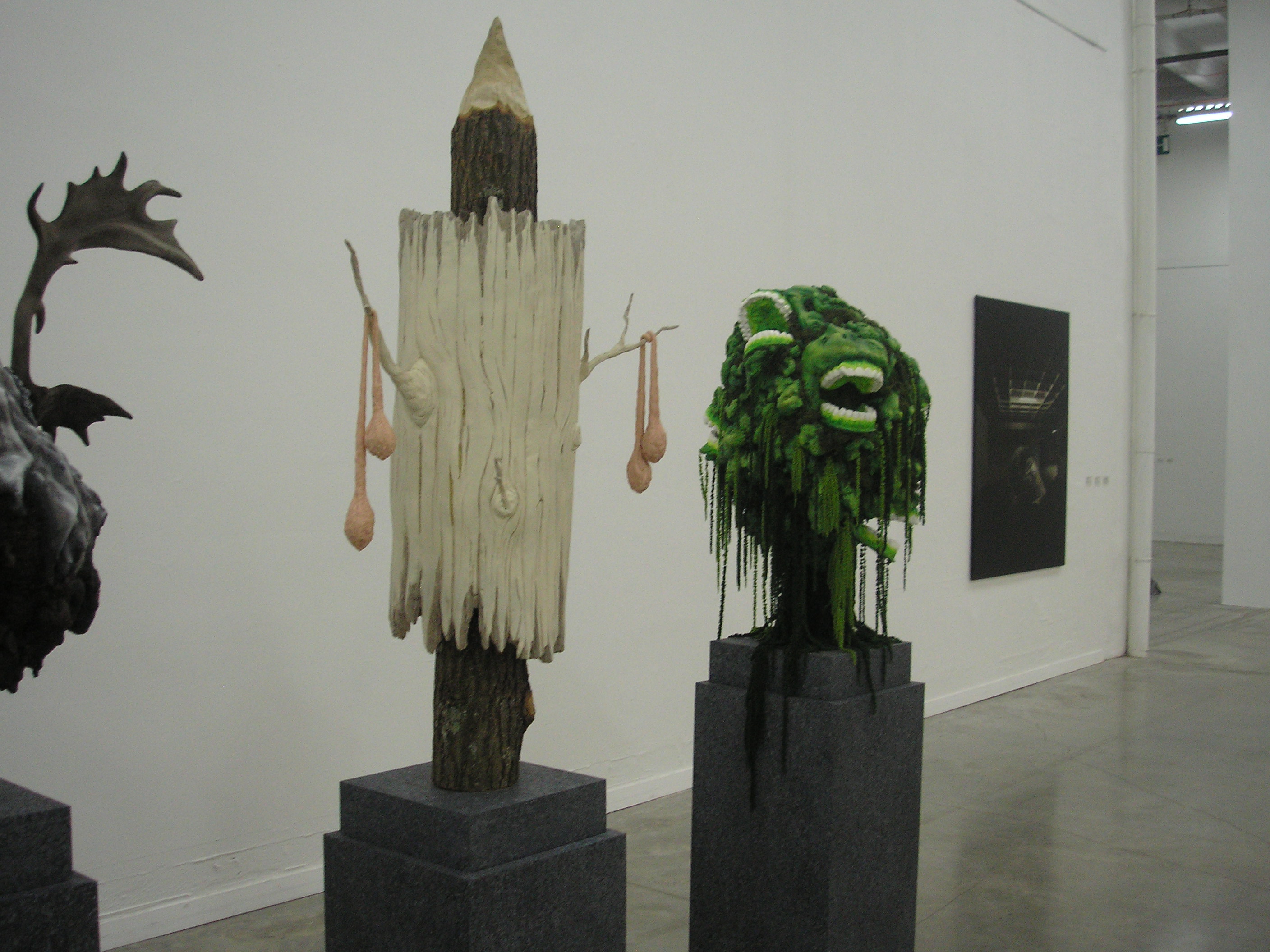
I have no idea why they decided to call this haphazard amalgamation Dynasty, as all that unites the work is the fact that it is new work by emerging young artists in France. Moreover, I seriously think that the Palais de Tokyo is actually trying to make me hate contemporary art entirely. The last several shows there have made me to nothing more than hit my forehead with the palm of my hand in frustration. While B carefully made his way through the exhibit, reading each unnecessarily cryptic description of each unnecessarily obtuse piece (you should see this guy in a museum that actually interests him!), M and I turned into ADD kindergarteners, taking silly pictures and making fun of our fellow museum goers. I can’t believe she’s leaving me for a month.

After a frustrating visit, I convinced everyone that H. A. N. D. would be the salvation of our evening. What couldn’t a duck burger improve? So we strolled into the first arrondissement for dinner, something we really never do unless we are getting Japanese. At first, everyone was happy with our choice. The restaurant is so cute! The staff is friendly! The menu is on a chalkboard! I chose the Super Duck, an anatine patty topped with sautéed mushrooms and melted chèvre. B chose the Cheese + + +, a regular beef burger with three different kinds of cheese. M chose the steak tartare as she is leaving Paris for a month and wanted a final fix before she left.
I’ll start with the good news.

B’s burger wasn’t terrible. It wasn’t the best burger in Paris, but it certainly wasn’t the worst (that honor goes to Café Francoeur in Montmartre). H. A. N. D.’s burger was at least properly cooked! The fries were soggy and the bun was stale, but hey, it was edible.
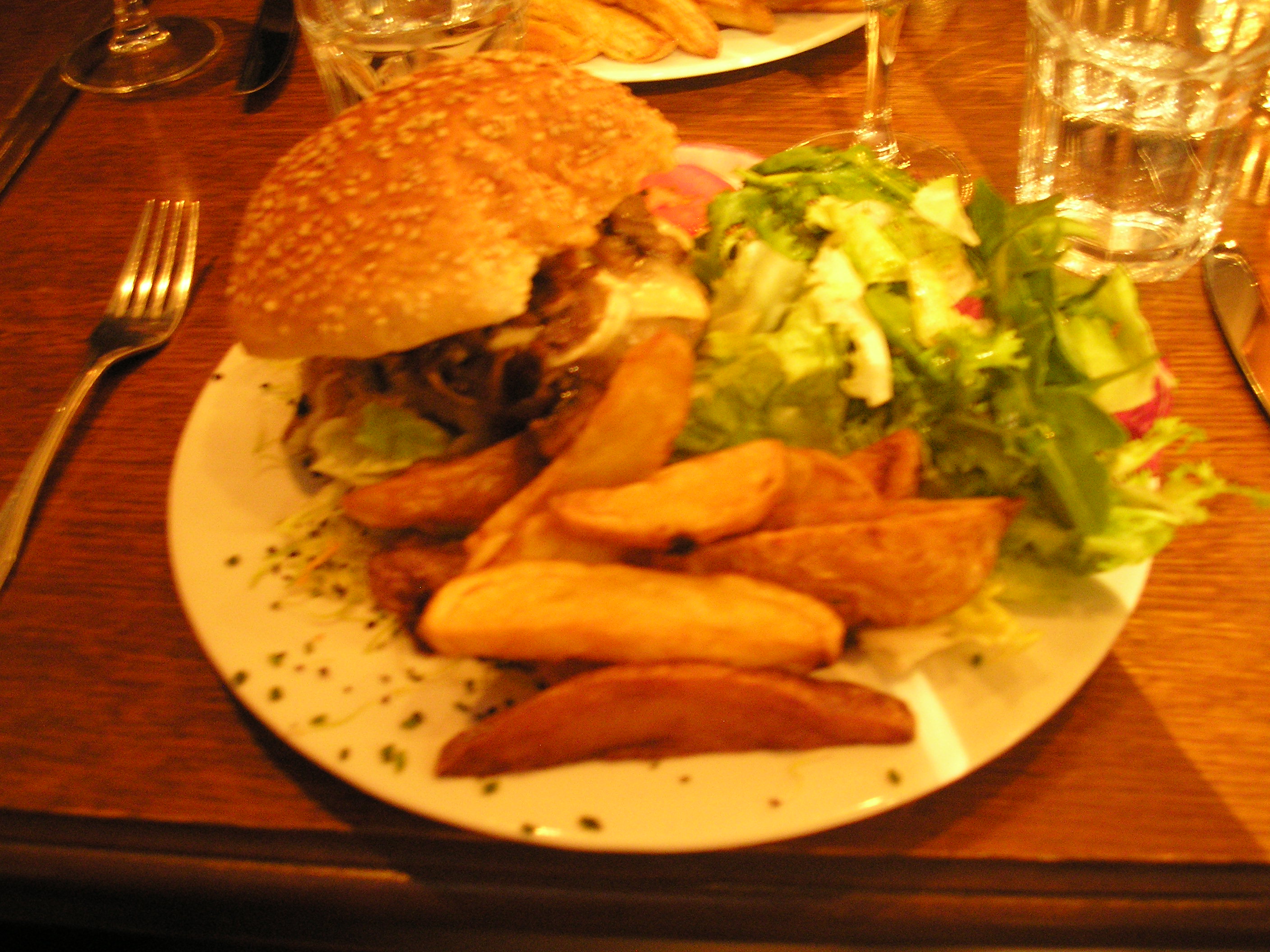
Less edible was my “duck” burger. First off all, let’s be frank: it wasn’t made of duck. Lamb, possibly. Or maybe a strange cut of beef. But waterfowl never even got close to that burger. The mystery meat was dry, dense, and strangely mealy. The cheese and the mushrooms were good, however, and after drowning the whole operation in mayonnaise, I got it down.
But then there was this:

Let’s just say I didn’t want to have to do this, H. A. N. D.
When we told you, H. A. N. D., that the steak tartare was “pas correcte,” what we actually meant was: “This steak tartare was completely inedible. It is at once mushy and sinewy, and it is dark brown! Frankly, it looks like someone defecated on the plate! That this dish would be served at any restaurant in Paris is an insult to French food! You should immediately fire your chef and your beef supplier. Short of this, you should at least remedy the situation and remove this atrocity from our bill, as my poor friend only ate two gracious bites before turning pale, quivering slightly, and setting down her fork for the rest of the evening. Shame on you! Make this right!”
I have to say that here is a difference in ethos between French and American restaurants. You say something is gross or inedible in the States and you can pretty much expect that it will be taken off the bill. H. A. N. D. even shocked me by French standards, as saying something is “not correct” in France is basically the most significant objection you can make to a dish. I almost hit the roof when we discovered that they still charged us for the steak tartare. I wouldn’t have even written this review if they had adjusted the bill properly. But they didn’t, so here we go:
Please don’t patronize this restaurant. They will lure you in with their kitschy décor and their cute typeface. You’ll make stupid American assumptions, like “How could they mess up a burger?” But something is not right here, people. Something is not right with the meat. Off-putting meat is the place where even I, devoted patron of sketchy taco trucks and guys who sell things out of coolers outside of nightclubs, draw the line. One of the best things about France is that meat is of such better quality across the board (largely because Europe has outlawed such terrifying practices as the use growth hormones in factory farms). So a place like H. A. N. D. that should specialize in high-end beef comes as a complete shock and something that nobody should put up with (especially not for a 14 euro hamburger – at current conversion rates, that’s $18.26). Frankly, I’m surprised and relieved that no one got sick from our visit. You might not be so lucky.
Clarence Beats the Heat Part Deux: Top Five Summer Dinner Ideas
My blog might suggest that I lead a louche life of perpetual dining out, which is hardly the case. In fact, despite the absurd percentage of my monthly budget that I devote to food (and books about psychoanalysis), I actually am living here on a pauper’s salary. This means that I eat most of my meals at home. I was quite the adventurous cook when I was living in States, probably because I had proper American kitchens at my disposal. While I was thrilled to find my Marais apartment on account of its enviable address and unheard-of wall between bedroom and living area, I was pretty dismayed to discover the pathetic excuse for a kitchen that they’ve installed in this bitch. We’re talking two glorified hotplates that they have disguised as burners (two settings: scorching and off), a mini-fridge, and a sink. All in one crappy, drippy stainless steel unit. Initially I figured that this would be the death of my culinary aspirations, but I’ve actually gotten pretty handy in my miniature kitchen. As the weather has gotten hotter, I’ve been forced to bust out some of my best summer dinners. I’d never presume to be so culinarily skilled as to tell anybody anything about cooking, but both B and M thought that this might make for an interesting entry and I’m nothing if obliging of my two best readers. And as someone who has certainly Googled “dinner ideas please help!” at one point or another, I thought I’d add my voice to the chorus. So here’s what I like to pull together on a hot evening. While some of these ingredients are rather special, I’ve seen most of them at this point at the City Market in rural Utah, so I don’t think I’m being too much of a Coastal Elite by posting these recipes. Tweak to your taste and enjoy!
1) Carpaccio-Style Bresaola
There isn’t much I love more than a proper raw beef preparation, be it a steak tartare or a beef carpaccio. But for whatever reason, I’m pretty squeamish about preparing raw beef for myself or my friends. I guess at the end of the day I just don’t want to poison anyone. Enter bresaola, that lovely wine-colored, air-dried and aged salted beef that you can find in the deli section of your local market or Italian specialty store. In both French and American grocery stores, I usually go for the Citterio brand for Italian cold cuts. They cost more, but they are usually better than whatever your supermarket is shilling. And no, Citterio isn’t paying me to say this, but if they would like to pay me or send me crates of cured meat, I certainly wouldn’t complain.
This “recipe” is stupid easy and I can’t even believe that I would condescend to my dear reader’s intelligence by writing it out, but here we go.
You need:
A package of bresaola (or approximately 4-5 slices per person)
Two large handfuls of baby arugula per person (Is anyone still buying tough bitter adult arugula? Stop that immediately.)
A wedge of Parmigiano-Reggiano (Don’t worry, you won’t use it all. Is anyone still buying pre-grated Grana Padano? Stop that immediately.)
A lemon
Some extra-virgin olive oil (I’m not particularly snobbish about this, surprisingly.)
Take a pretty salad or dinner plate. Lay out the bresaola slices evenly on the surface. I like to make it look like a flower, though I’m sure nobody has ever noticed this. Deposit handfuls of baby arugula in the middle. Leave the edges of your bresaola peeking out for aesthetic interest. Grate big flakes of parmigiano-reggiano over the top using a proper cheese grating device, or like me, an all-purpose vegetable peeler. You can do all this even a few hours beforehand. Then, right before you serve it, drizzle olive oil over the whole thing and salt and pepper to taste. Serve with lemon wedges and forcefully encourage your guests to squeeze said lemon slices over the top. If you are feeling fancy or improvisational, you can add all number of things to this dish, including capers, finely sliced red onions, or diced tomatoes. Don’t be surprised if your friends think you are more sophisticated that you actually are if you serve this on a weekday.
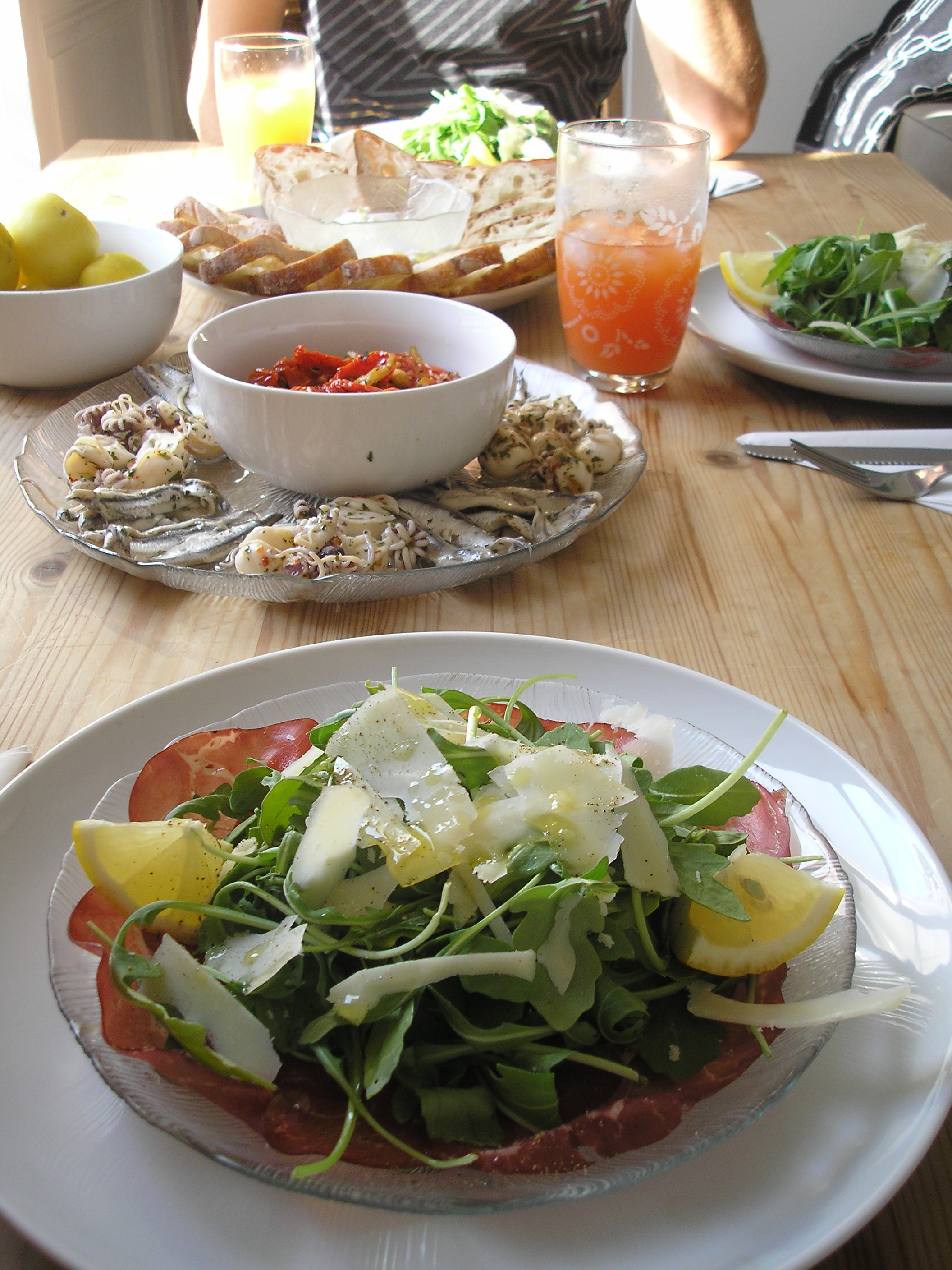
For the summer meal pictured, I served carpaccio-style bresaola with pre-packaged oil-marinated anchovy filets and mini-calamari, demi-sêche tomatoes (have you eaten these yet? They are revelatory if you always felt, like I did, that fully dried tomatoes were too chewy), ricotta with fresh mint and crusty bread, and Campari spritzers (recipe below). Everyone seemed unduly impressed despite the totally minimal preparation time on my part.
2) Terry’s Mother’s Tabouleh
One of the more idiosyncratic things about my dad is that he is a big believer in hitchhiking. He hitchhiked across the United States in his younger days and New Zealand in his first year of retirement, and still doesn’t hesitate to throw out a thumb if he finds himself in need. He’s also pretty unflagging in picking up hitchhikers, which I guess you have to be if you are buying into the whole operation. When I was a kid it wasn’t especially strange for him to bring home someone for dinner who he had picked up along the side of the road. Perhaps more remarkably, he has befriended many of these people over the years and they have stayed in touch over time and distance. One such fellow, a Lebanese guy named Terry, ended up becoming a dear friend of my family and a regular attendee at my mother’s epic Thanksgiving dinners when I was a child. Among the many lovely things he gave my mother over the years is his mother’s tabouleh recipe, which has been a standby at potlucks in our circle ever since. I like to make this at the end of the month when I’m feeling a bit more cash-poor as it filling, cheap, keeps for a couple of days in the fridge, and works well as both a light main course and as a side dish. My mother will probably kill me for sharing this with the world, but it’s really good and worth the ink.
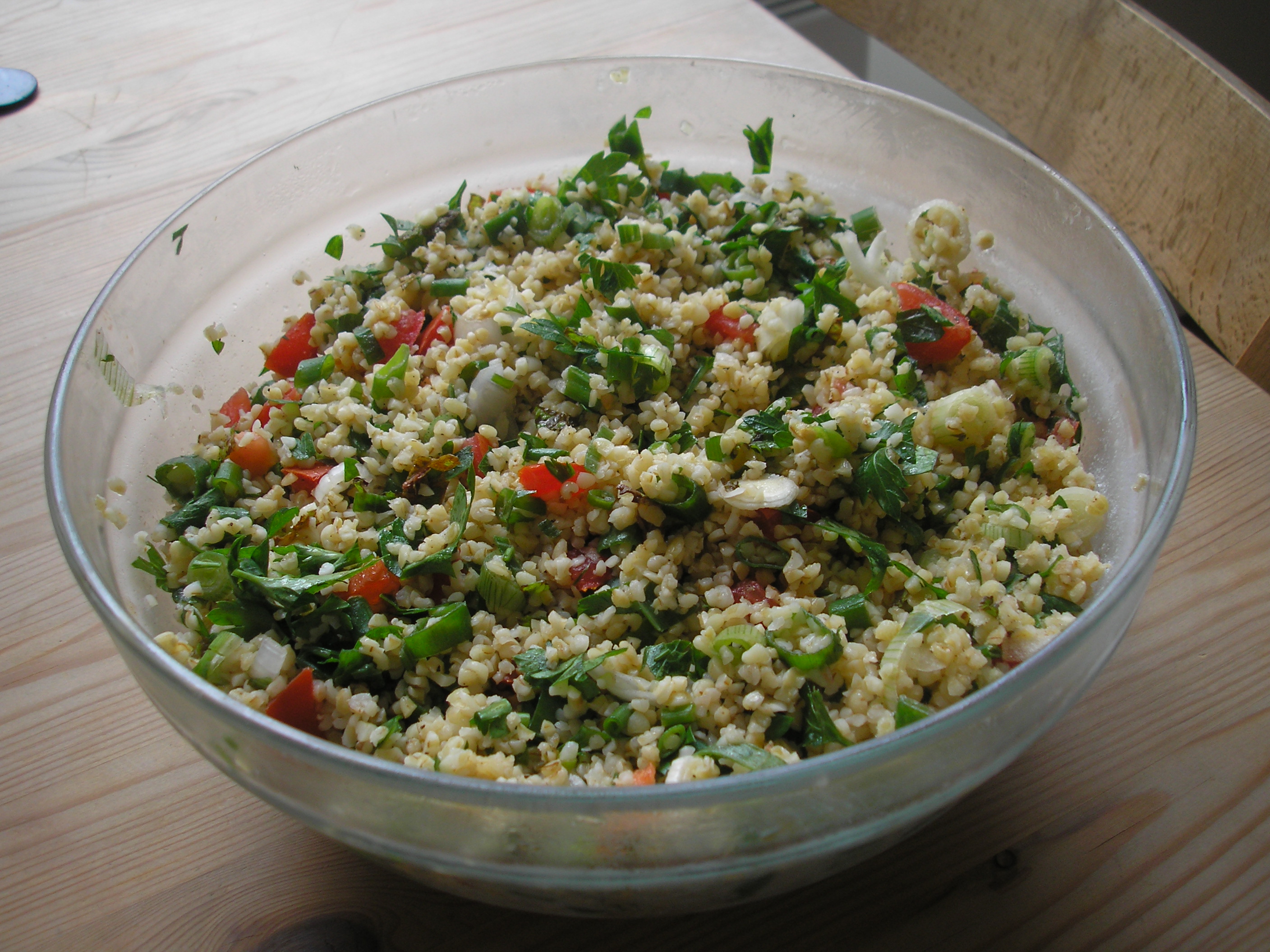
You need:
1 cup bulgar wheat, uncooked
2 cups boiling water
1/2 cup vegetable oil (I use extra-virgin olive oil because it’s all I ever have)
1/2 cup fresh-squeezed lemon juice (fresh squeezed)
2 teaspoons salt
1 teaspoon fresh-ground black pepper
1/2 cup chopped fresh parsley (Italian flat-leaved)
2 teaspoons fresh chopped mint (or you can use dried mint if the fresh stuff costs fifteen dollars at the market and you aren’t savvy enough to have a windowbox herb garden like yours truly)
1 bunch of chopped green onions (including white tops)
3-4 ripe plum tomatoes, diced
Pour the boiling water over bulgar wheat in bowl. Cover with a towel and let stand for one hour. Drain well if there is any excess liquid. Add tomatoes, onions, herbs, and oil, and stir. Then add lemon juice, salt, and pepper to taste and blend well. Chill for at least four hours before serving. I usually double the recipe because it just gets better over the next few days in the fridge.
3) My Mother’s Gazpacho (tweaked slightly)
I’m sorry, but I just have to say it: my mother’s gazpacho is better than your mother’s gazpacho. It just is. I’m sorry. Your gazpacho is runny and sad. My mother’s gazpacho (especially since I tweaked it) is gazpacho for a new generation. I don’t care that you are from Spain. I don’t care what Gwyneth Paltrow says, Spanish food is usually bland city. This is awesome, and I’ll fight you if you say any differently.
You need:
3 large tomatoes chopped and peeled (or not peeled, if you are lazy like me)
1 chopped yellow or orange bell pepper (My mom’s recipe calls for a green bell pepper, but let’s be honest here. Yuck! Who eats green bell peppers anymore? They should be reserved solely for convicts and B’s limb-quiveringly good gumbo).
1 English cucumber (these seem to hold up better than the hothouse varieties)
1 cup chopped celery
1/4 cup chopped green onion
1-2 finely diced raw jalapeno peppers (Less if you’re a wimp, more if you agree that Spanish food could use some heat.)
4 cups tomato juice
3-4 tablespoons of good balsamic vinegar
4 tablespoons olive oil
2 teaspoons salt
1/2 teaspoon black pepper
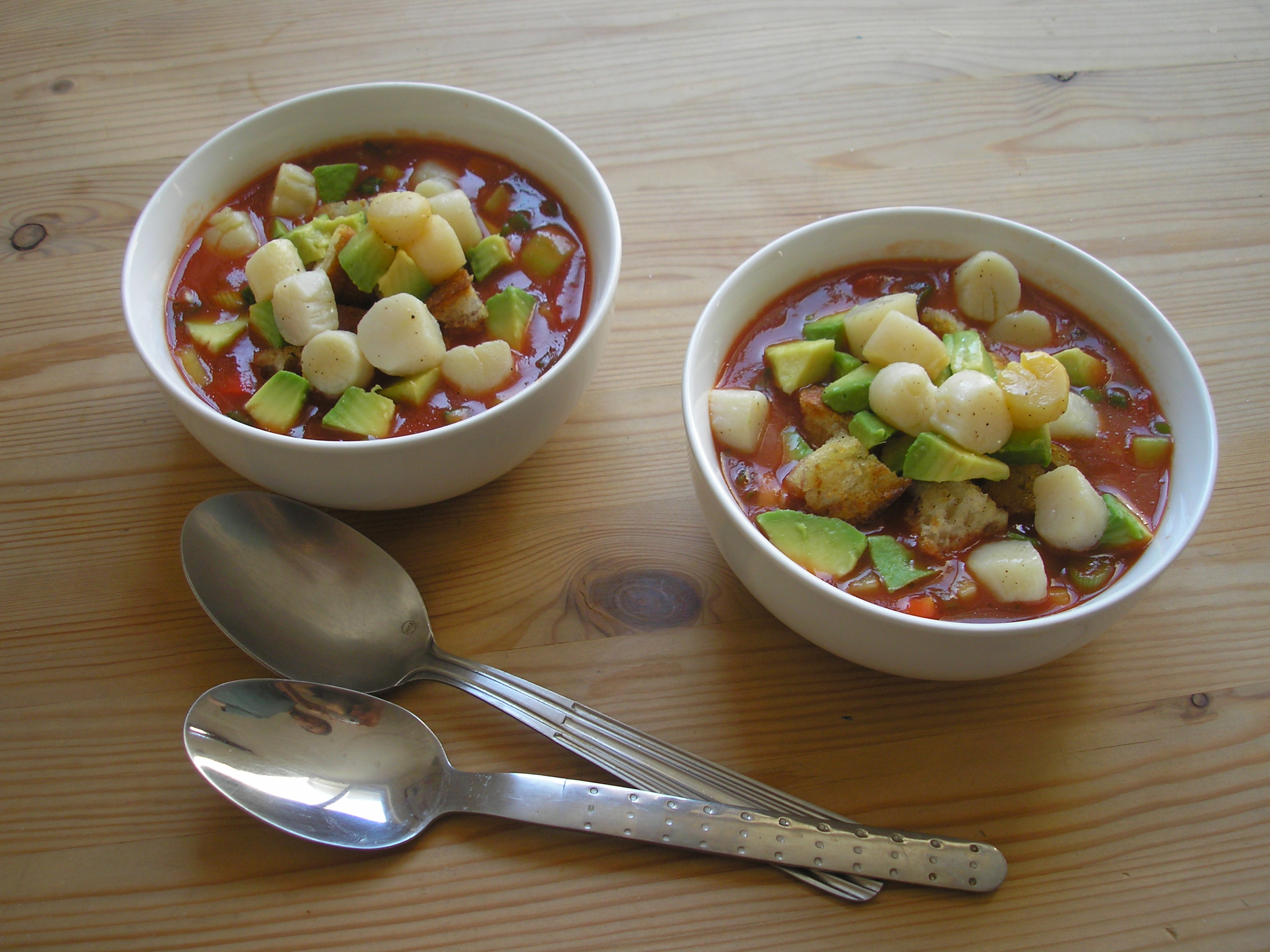
Combine all the veggies and the juice. Then add vinegar, olive oil, salt, and pepper to taste. Now, if you’re a purist, puree the whole mess in batches using your food processor or blender. Or, if you’re a renegade like my mom, leave it alone and watch your guest marvel at the delicious crunchiness of the vegetables. Or, if you’re a sad compromise formation like myself, puree half of the soup and then reincorporate it into the chunky half. Either way, let it marinate in the fridge for a few hours before serving. Then, immediately before serving you can add any of the following to the top:
Ripe avocado slices
Cooked shrimp (Aren’t you fancy! My mom always served small salad shrimp, but anything you can find will do nicely.)
Sautéed Scallops (I like the bay scallops for this, as they are bite sized. Actually, in my opinion, bay scallops don’t get nearly as much play as they ought to!)
Crab meat (Okay, so you’re really fancy! You can buy some pretty killer canned crab meats now, especially if you look in the refrigerated section of high-end markets.)
Croutons (Make your own by liberally dousing cubes of nice bread with olive oil, salt and pepper. Spread them evenly on a cookie sheet and stick sheet under the broiler, shaking every minute so they brown evenly.)
4 and 5) Canned Fish Sandwiches
Are you on the canned fish bandwagon yet? No?! Immediately block out a few hours of your life to browse the website for the Society for the Appreciation of the Lowly Tinned Sardine. In addition to being all things that a good blog should be, this wonderful website is full of recipes and serving ideas for one of the cheapest, healthiest, and yummiest things that you just might not be buying at your local grocery store. I’ve always been a big fan of sardines and have recently become an anchovy fanatic. But I don’t think I ever quite realized how versatile they are and how many different kinds things you can incorporate these omega-3 fatty acid, calcium, protein, and vitamins D and B12 packed foods. And if you’re squeamish about the bones and skin (FYI, that’s where all the nutrients are!), you can buy really lovely sardine filets these days. Spend a few extra bucks on your cans and you’ll be surprised how sweet, tender, and totally delicious these guys can be. They are still one of the cheapest animal protein sources you can buy. The Sardine Society’s website is full of reviews of both American and French brands, so give it browse before you go shopping.
One of the best things that came out of reading the Sardine Society was Alton Brown’s Sardicado Sandwich. Alton Brown usually annoys me, but I quite enjoyed this clip from his show, probably because I too spend a lot of my time proselytizing about the virtues of sardines to the people I love. I tweaked the recipe a little bit based on what I had in my kitchen. I used a fresh baguette sliced lengthwise instead of sourdough (I’m in France, remember?) and balsamic vinegar instead of red wine vinegar in the dressing. Finally, I had some dreamy sweet plum tomatoes that I sliced and put over the top, an addition I’d highly recommend.
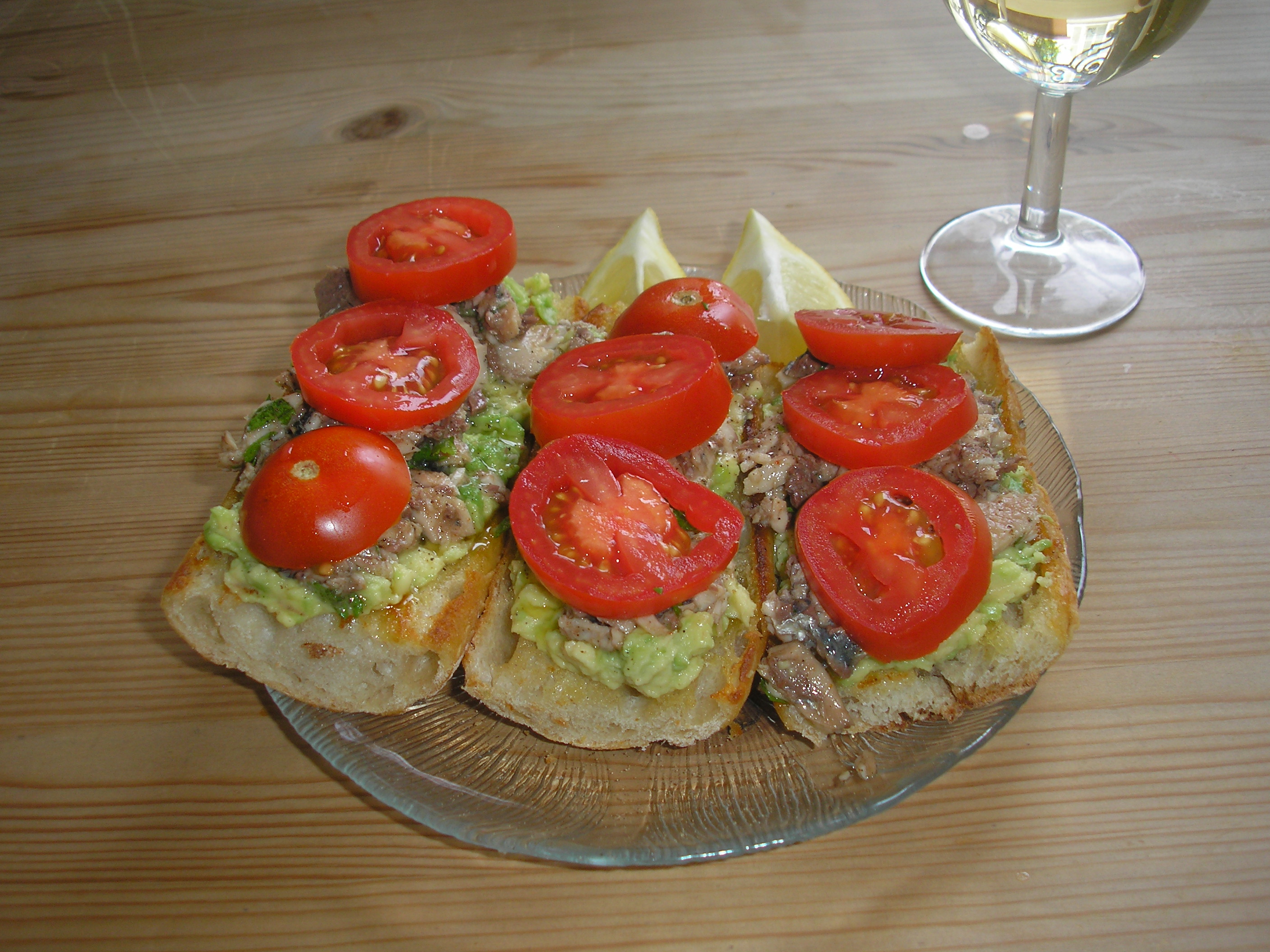
I also am pretty sweet on what I’ll call Cefalù Style Anchovy Sandwiches, the prototype for which I ate while we were staying in Cefalù, Sicily. It’s a simple combination: good anchovies (I usually buy the kind in oil, but am curious to try these Ortiz salt-packed one that all the foodie blogs are nuts for), drained half-dried tomatoes, and thin slices of pecorino cheese. Place the three of these on the inside of a baguette and wrap the whole thing tightly in plastic wrap for an hour or so to marinate. Then, before serving add some fresh arugula.
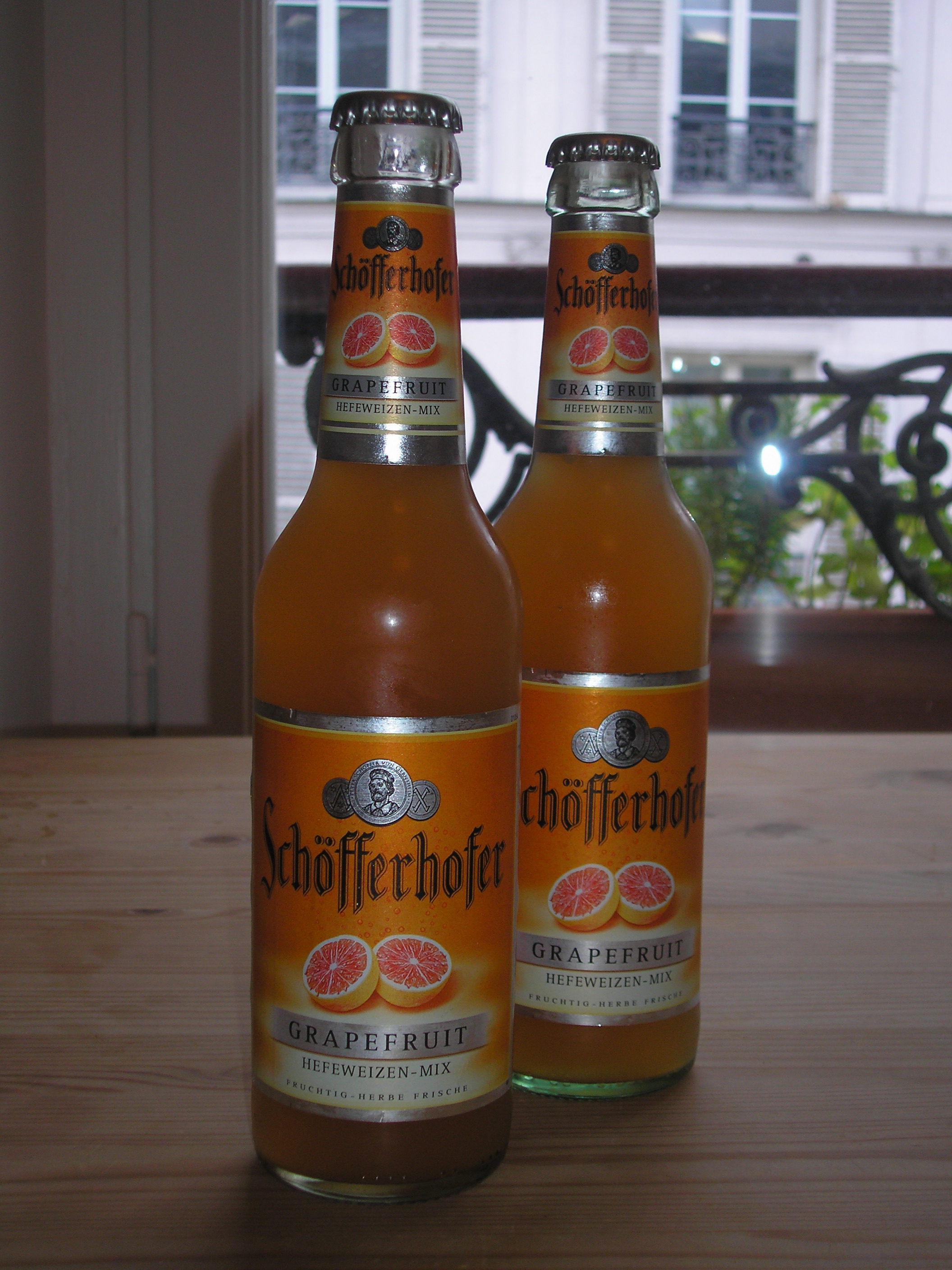
As for drinking, my ideal summer cocktail is three things: fizzy, seriously boozy, and kinda sweet. There’s nothing better than a whiskey and ginger ale on a hot evening. Or, experiment with making Bavarian Radlers (beer and sparkling lemonade) at home. If you’ve jumped on the Aperol and Campari bandwagons (judging from my Google results, many of you have!), I’d encourage you to fool around with the basic formula of an Aperol/Campari spritz. While the basic formula combination is Aperol or Campari, Prosecco, and soda, I like to add citrus juice instead of soda (clementine, tangerine, blood orange, and pink grapefruit are all really nice with these flavors).
Happy Eating!
Clarence Avoids the Mob and Eats Watermelon Jello: Palermo, Sicily
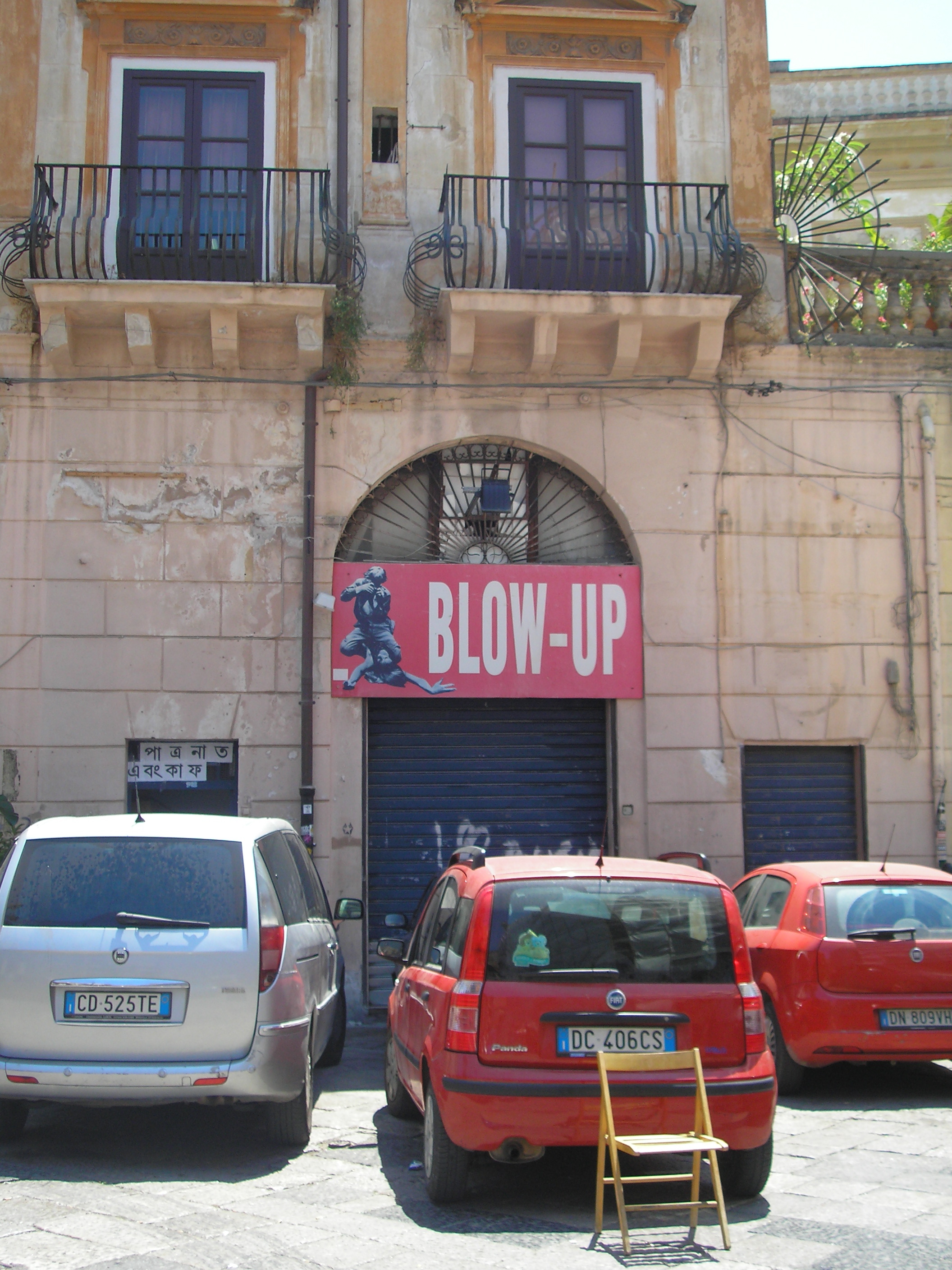
One of the dumber things we did when planning our trip was assume that we could easily take a ferry from Sardinia to Sicily, book our hotels, and then attempt to work out the ferry schedule. Turns out while you can indeed take a ferry from Sardinia to Sicily, it takes nearly 14 hours, is only offered as an overnight voyage, and is only available once a week. So at the last minute we had to book an Alitalia flight from Cagliari to Palermo via Rome. Which was annoying, but less expensive and fear-mongering than we imagined (though the Italians still do the thing of applauding when the plane touches the tarmac). After our sleepless night, I was looking forward to sleeping on the plane. B, however, is unable to sleep on planes, so he instead had three double espressos at the airport. I suspect you can guess how this ends.
We arrived in Rome with no complications, aside from the fact that they wouldn’t let us bring our amazing pocketknife from Corsica in our luggage, so B gave it to a small child in front of the airport (not cool?). We had a few hour layover in Rome, not really enough to do anything but wait. I was fine with that, as I was now deep into Jonathan Franzen’s Strong Motion, which is quite good if you want a summer read. Unfortunately, I couldn’t focus on my book because of an enormous group of American college girls who were hanging out at our gate, waiting for a flight to Florence that left before our flight to Palermo. Have I ranted about study abroad here before? NO? Well then it’s high time. First of all, I’ll admit that I was among the worst of the worst, as I was at NYU for undergrad and did a semester in Paris. I was pretty grossed out by the culture of study abroad when I was in college and didn’t participate in the modus operandi of getting wasted in a new European city every weekend. But I know I can’t make the statement I’m about to make without sounding like a hypocrite, so I want you to know that I will effectively lump myself in this category. Okay, here we go: the best way for the United States to improve their image abroad is to immediately disband all study abroad programs. I said it! Moreover, study abroad is entirely wasted on college students, even the smart sensitive ones that spend the whole time at museums quietly weeping into their Moleskin journal. For every one of those, there are twenty spoiled monsters in pink sweatpant shorts who act like Europe is a special branch of Disney with an all-you-can-drink alcoholic smorgasbord. I’ll take this argument further: study abroad programs are why Europeans think Americans are entitled assholes! Those white sneaker wearing, aw shucks, “I’ve wanted to see the Eiffel Tower my whole life and now I can die happy!” tourists – totally harmless! Those kinds of tourists are so terrified of being “the bad Americans” that they spend most of their trip trying to be extra-polite. You know who isn’t concerned about being a bad American? Kids whose parents are dropping forty grand for a semester in Florence, Prague, Barcelona, or Paris. Now look, I know that you, dear reader, were a total exception to this rule, as was your kid. But let me tell you about these girls at the airport.
B had arrived at the gate before I did, as I was in the ladies room trying to convince my face to stop resembling old Silly Putty. When I arrived, I found him sitting on our suitcases near a bank of empty chairs with a sour look on his face. “Why don’t we sit down to wait?” I asked. “We can’t sit there,” he responded through clenched teeth, “Those seats are all saved.” “Saved?” I asked innocently,“Why would anyone need to save fifteen chairs?” I turned around and the answer clomped towards us in flip flops , Ugg boots, hoodies, and sweatpant shorts. Some were clutching pillows, some stuffed animals. All looked as though they were ready to go to bed, even though it was ten o’clock in the morning. “Uh, excuse me!” one said snottily as she pushed our suitcase away from her “saved” seat. I turned to B and said we should head to a café before I lost my shit. He agreed, so we found the nearest place to grab some coffee and a panini. While I sat with the bags, B went to the counter to get our food. He came back sputtering, unable to speak with amazement. When he finally came back, I asked what had happened.
“So one of those American girls…”
“Yes, one of those college girls. What did she do?”
“She pushed ahead of everyone in line. She was speaking English to everyone, saying that she didn’t need to wait because all she wanted was water for her water bottle.”
“Oh, well, I mean, I guess…”
“No! It’s worse! So she gets to the front of the line and cuts in front of me. I let her go because I thought it might be amusing. And she thrusts her dirty little Nalgene bottle in the face of the barista and goes ‘I want some water.’”
“I’m sure she didn’t say it exactly like that…”
“No, SHE DID! In English! He obliged, and filled up her bottle and handed it back to her. She didn’t thank him, but I thought it was done. And then! DO YOU KNOW WHAT SHE DID THEN?!”
“Urinated on the floor?”
“She inspected the bottle, pushed her way back in front of me, and then caught the barista’s gaze. She held out the bottle, SHOOK IT AT HIM, and said “How about some ICE?’”
“NO!”
“YES!”
“We’re still in Rome, right?!”
“THIS JUST HAPPENED!”
After that I was done appeasing the spoiled children. We went back to our gate, stopped speaking English, and ignored two girls with visible thongs who informed us that the seats we were sitting in were “saved for our friends.” I gave one of them my patented “Little girl, don’t poke the cobra” face and we sat there until they boarded their flight. Not one of them attempted to greet the airline employee in Italian. Out of over twenty girls, only one thanked the airline attendant who wished them a pleasant flight. I was mortified to be an American.

Fortunately, we finally boarded our flight with little complications and were soon headed to Palermo. We arrived and easily found the bus into town, a much better plan that a fifty euro cab from the airport. The coastline around Palermo is really amazing, with huge craggy mountains rising almost directly out of the sea. And while the environs of Palermo seemed somewhat shabby, they also seemed to be homes that people took pride in and care of. As we entered the main part of the city, we drove through a rather fancy-looking shopping district and I immediately began formulating my theory about how everyone in my life that had said Palermo was gross and kinda scary was actually full of shit. “Look how pleasant this is!” I declared to B. “My mom was completely wrong about this!” B, who is much better at reserving judgment than I am, merely nodded and said that this part of town did indeed look nice.
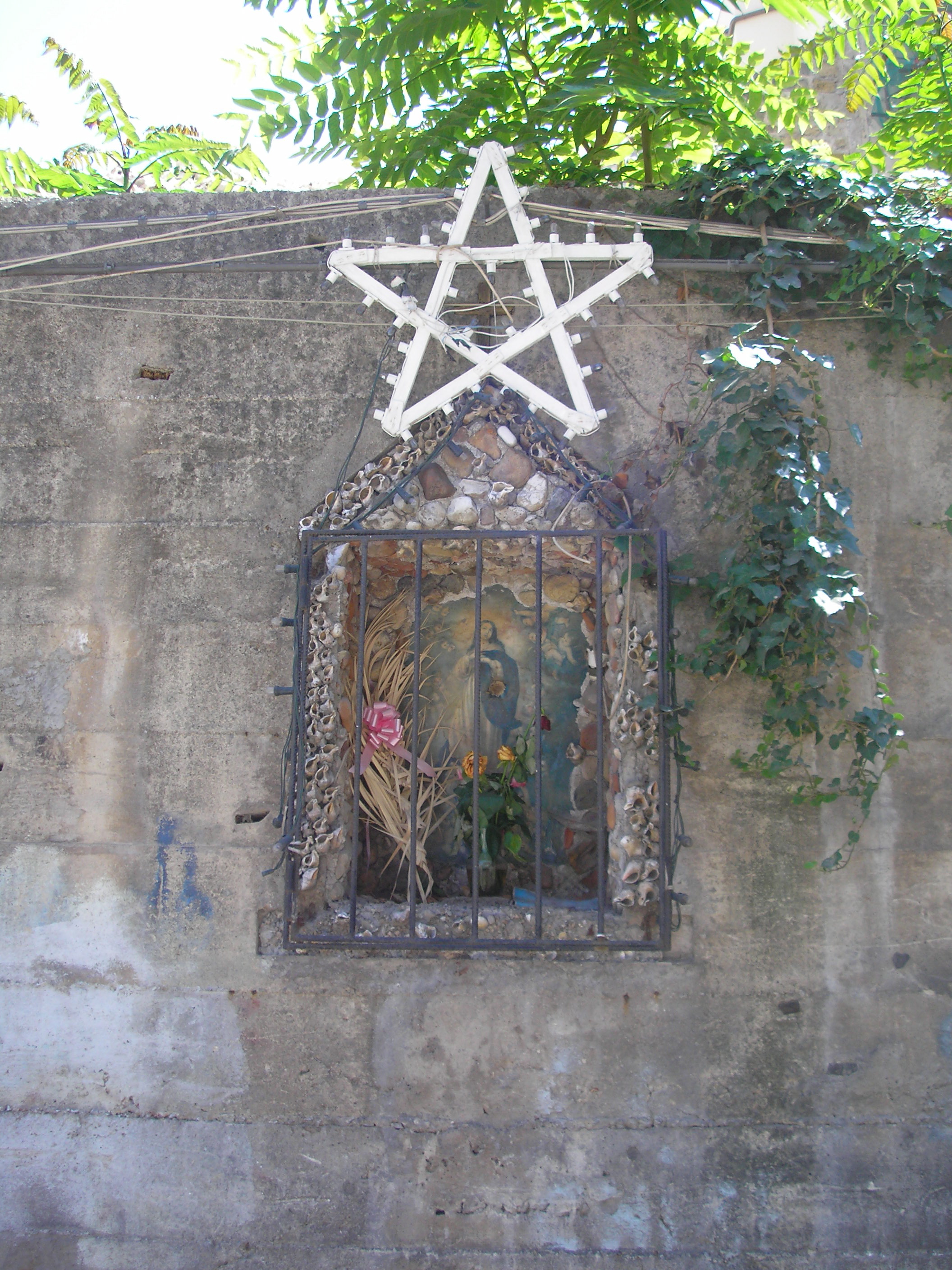
As we moved into the historic center of town, however, we quickly began to notice that things weren’t quite as nice or pleasant, and while there might be some high-end buildings, most everything else looked like it was about to crumble into dust from too much pollution. Getting out of the bus at the central station, the poor air quality hit us hard. I mean, you literally feel dirty as you are walking around outside in Palermo. At night when I went to wash my face, my white washcloth was covered in ash.
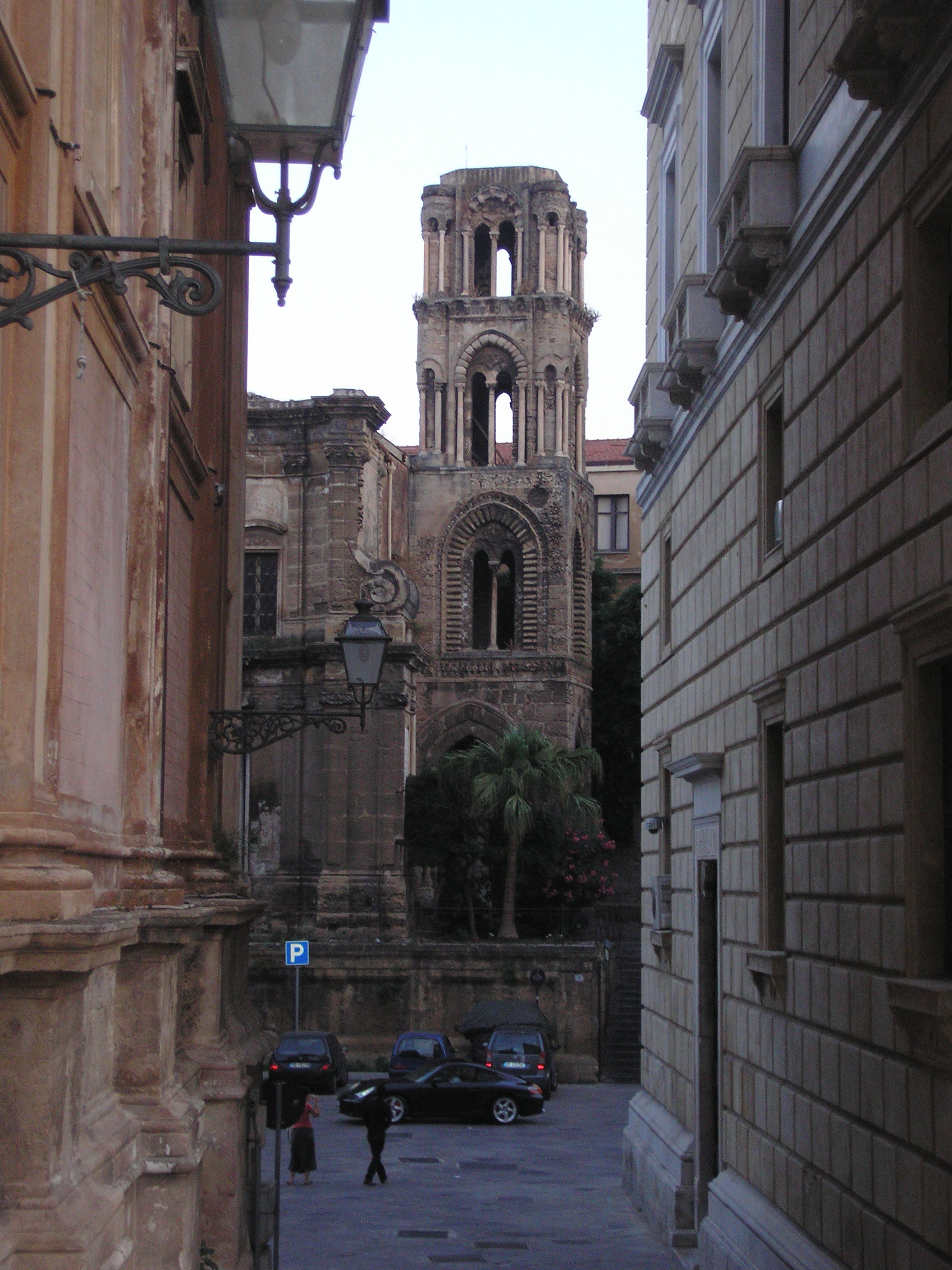 It’s actually really sad, because as B pointed out to me, Palermo is actually older than Rome and has a truly fascinating history that is reflected in the architecture. But even the most important civic buildings are in a state of decay and the urban infrastructure that surrounds them is entirely not conducive to walking around. We were perpetually thwarted in our attempts to visit historic sites, often because they were closed for private events or just off limits to tourism more generally. B made the wise comment that Palermo likely looks today like much of Europe did in the fifties and sixties. It’s unfortunate, as it seems like a really fascinating city that is held back culturally by deeply entrenched corruption. I mean, seriously. Our hotel only accepted cash.

Our first culinary stop was the Antica Focacceria di San Francesco (Via Alessandro Paternostro 58), described by our guidebook as a “Palermitan institution” and the first stop the Sicilian president made when showing Anthony Bourdain around town. We figured that if it was good enough for them, it was good enough for us. We were especially anxious to try the maritata, a sandwich of stewed veal innards and ricotta cheese. Lonely Planet also described a moffoletta of cherry tomatoes, anchovies, caciocavallo cheese, and oregano, that I had been fantasizing about all morning.
We had a terrible time finding the place, as we tried to be clever and take some side streets for the atmosphere. Can I just say to future visitors: maybe be careful taking side streets for atmosphere in Palermo? While many of them are indeed atmospheric and a few are even flat-out charming, some are downright scary, including one we took on the way to lunch that appeared to be an informal sort of dump for the neighborhood. I was amused by our circuitous route to lunch, but I noticed B wasn’t quite in such high spirits. This was probably because while I had slept for three hours on the plane, he had drank six espressos and was now crashing from all that caffeine and lack of sleep. By the time we arrived at the chaotic Antica Focacceria di San Francesco, he was about to collapse. I rallied, figured out the complicated system of ordering, and got B his maritata. The giant vat of milza (veal innards) dominates the center of the room and smells strongly of lard. In fact, everything smelled strongly of lard. I was in that cheerful, dopey tourist mode and happily flirted with the bartender when he handed me my beer. B in contrast was shaky, cranky, and obsessed with the lard dripping into his beard. While the food wasn’t good, not even a little bit, I was impressed by the bargain. Everything you see below cost less than fifteen euro. Much of it tasted like sand, but that’s another story.

After a much-needed nap at the hotel, we explored the area around the Quattro Canti, the elaborate intersection of two of the largest streets that forms the center of the oldest part of the city. Here is the Piazza Pretoria, the “scandalous” fountain that the city purchased in 1573 and subsequently had to modify to appease the prudish churchgoers:

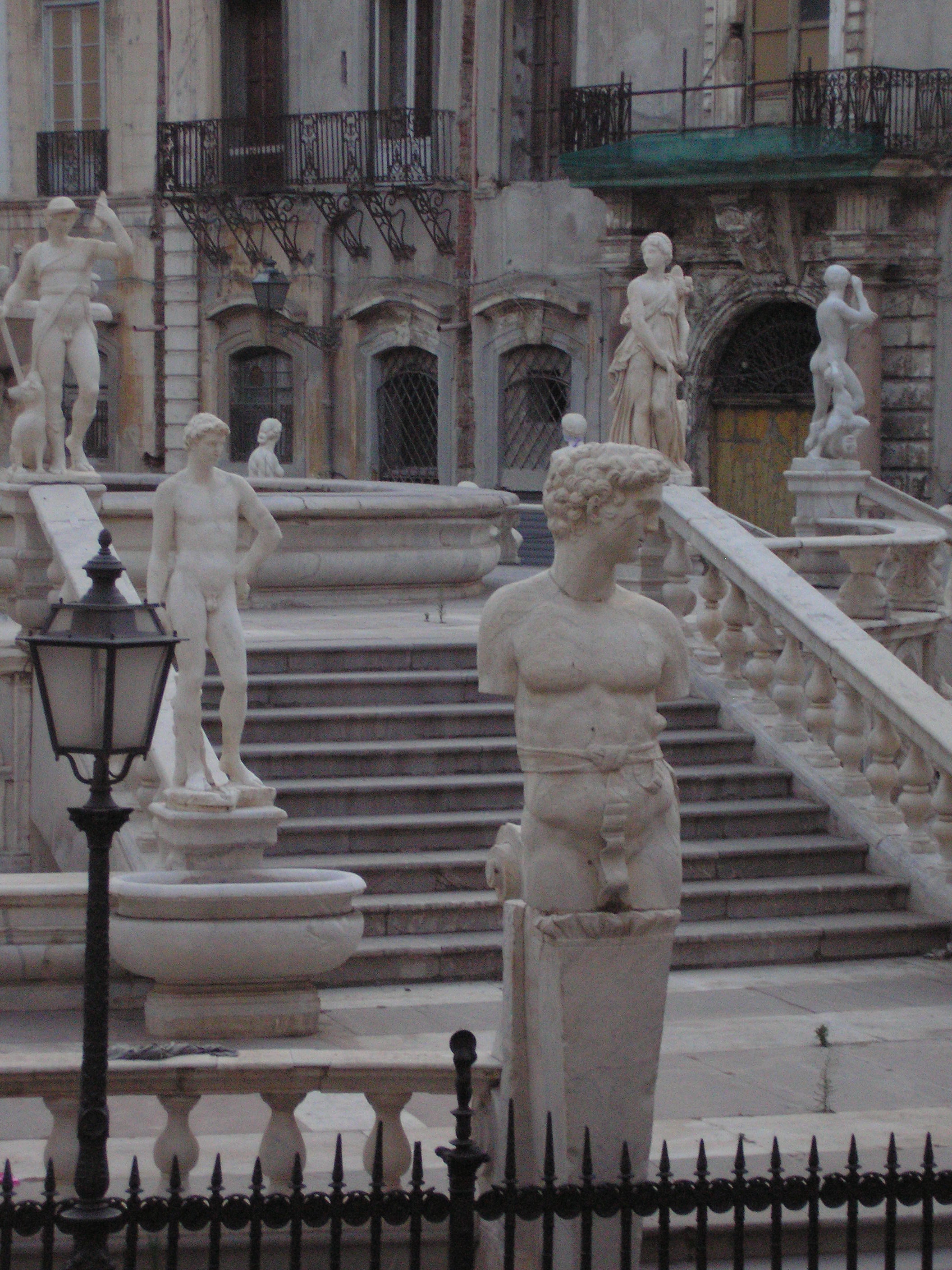
It was empty and filthy, of course. Why on earth would you want to fill, clean, or light one of the most important landmarks in the city? How bourgeois that would be!
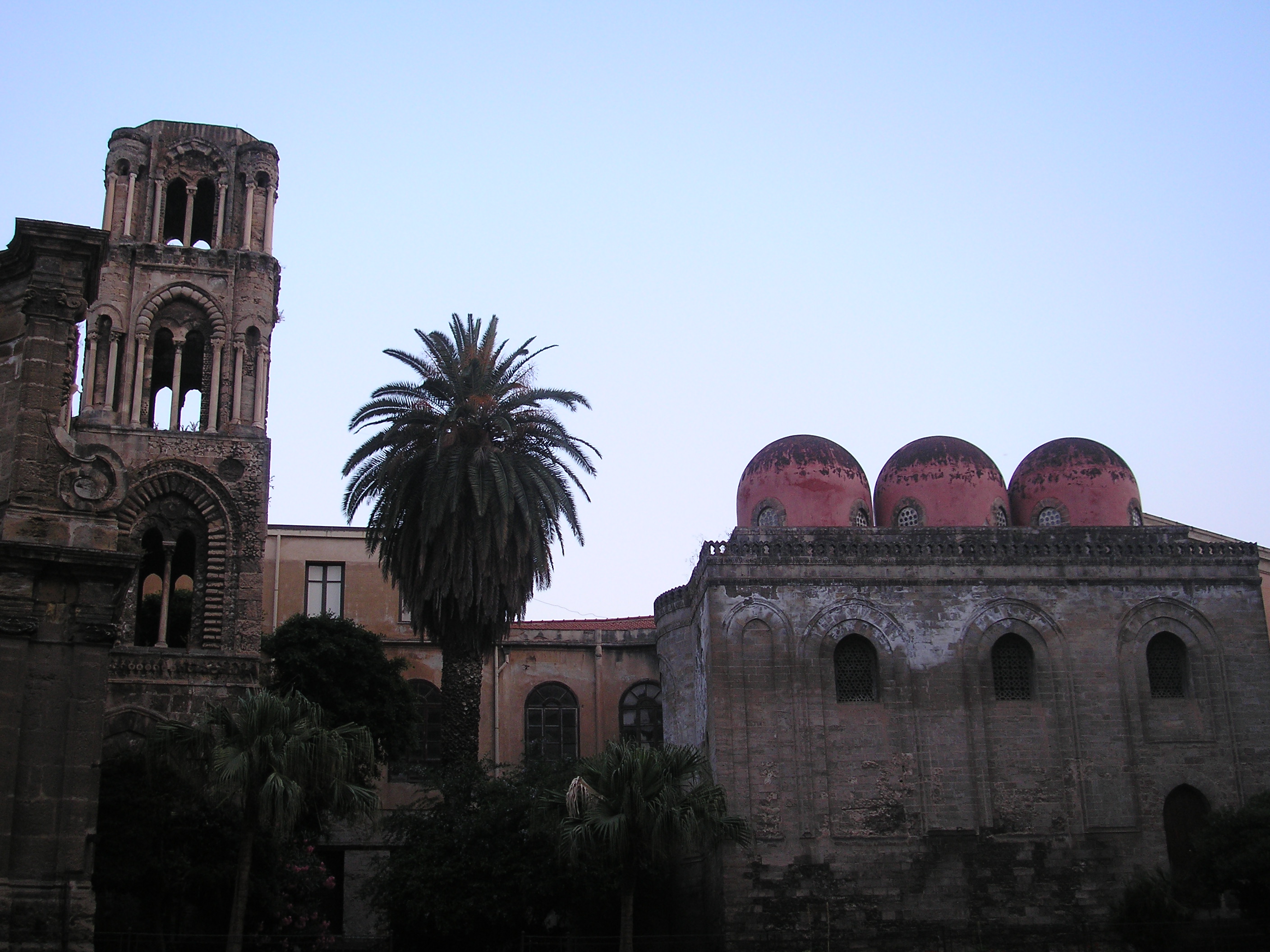
From left to right, this is La Martorana (which houses some really exquisite mosaics and some extremely annoying attendants) and the Chiesa di San Cataldo. You can see the incredible hybrid of Roman, Arab-Norman, and gaudy Baroque ornamentation that characterizes much of the historic center of Palermo.
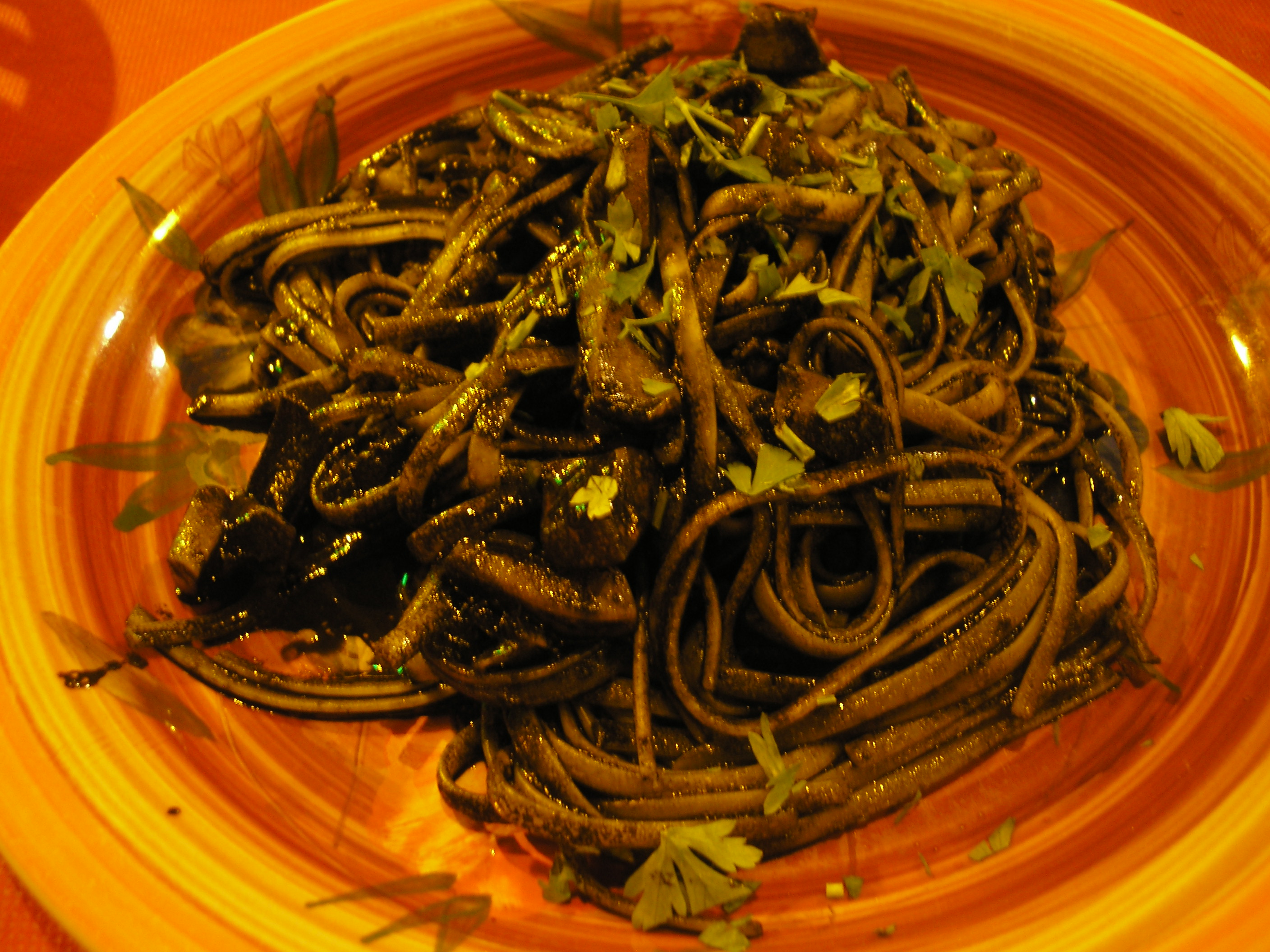
Let’s get to the good stuff, shall we? For dinner, we went to Primavera (Piazza Bologni 4), a Slow-Food recommended trattoria that literally feels like a Fellini set, as you dine by candlelight in the midst of a ruined piazza. The food? Fantastic and startlingly affordable. We began our meal with antipasti of polpette (deep fried balls of fresh sardines, pine nuts, and raisins) and eggplant parmesean. For our pasta course, we shared plates of fettuccine in squid ink (our first encounter with this visceral dish that dyes your teeth and lips black) and in a light white wine sauce with fresh mussels, clams, and shrimp.

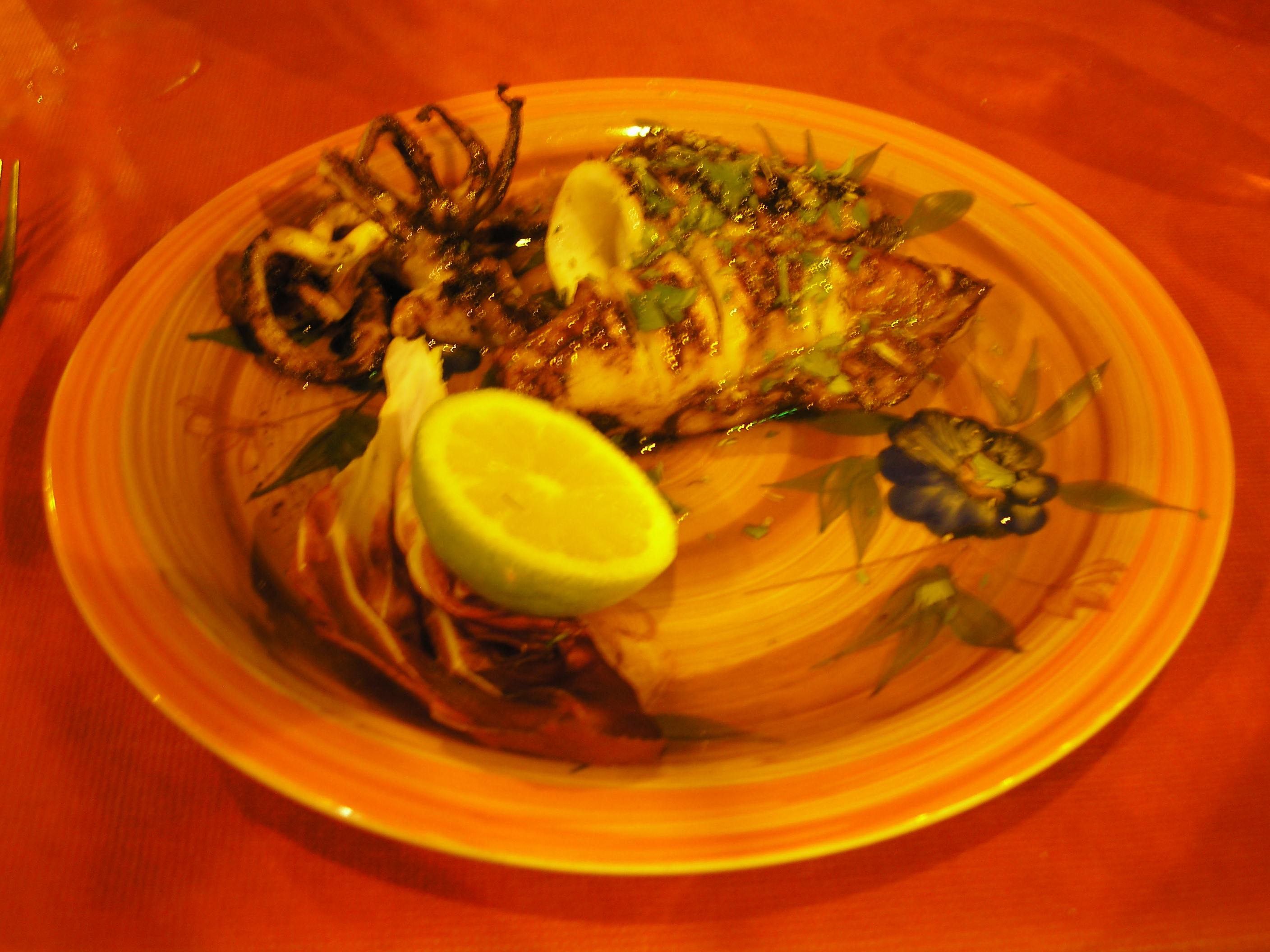
For my main course, I had charcoal grilled squid. I can’t even express how tender and magnificent these were:
B sampled the spigola al sale, mainly because it was amusingly translated as “it gleans, with salt.” He discovered his new favorite dish, a whole fish cooked in a bed of famous Sicilian salt, which keeps all the moisture in the flesh and creates a crunchy crust of skin. It became his go-to dish during our time in Sicily:
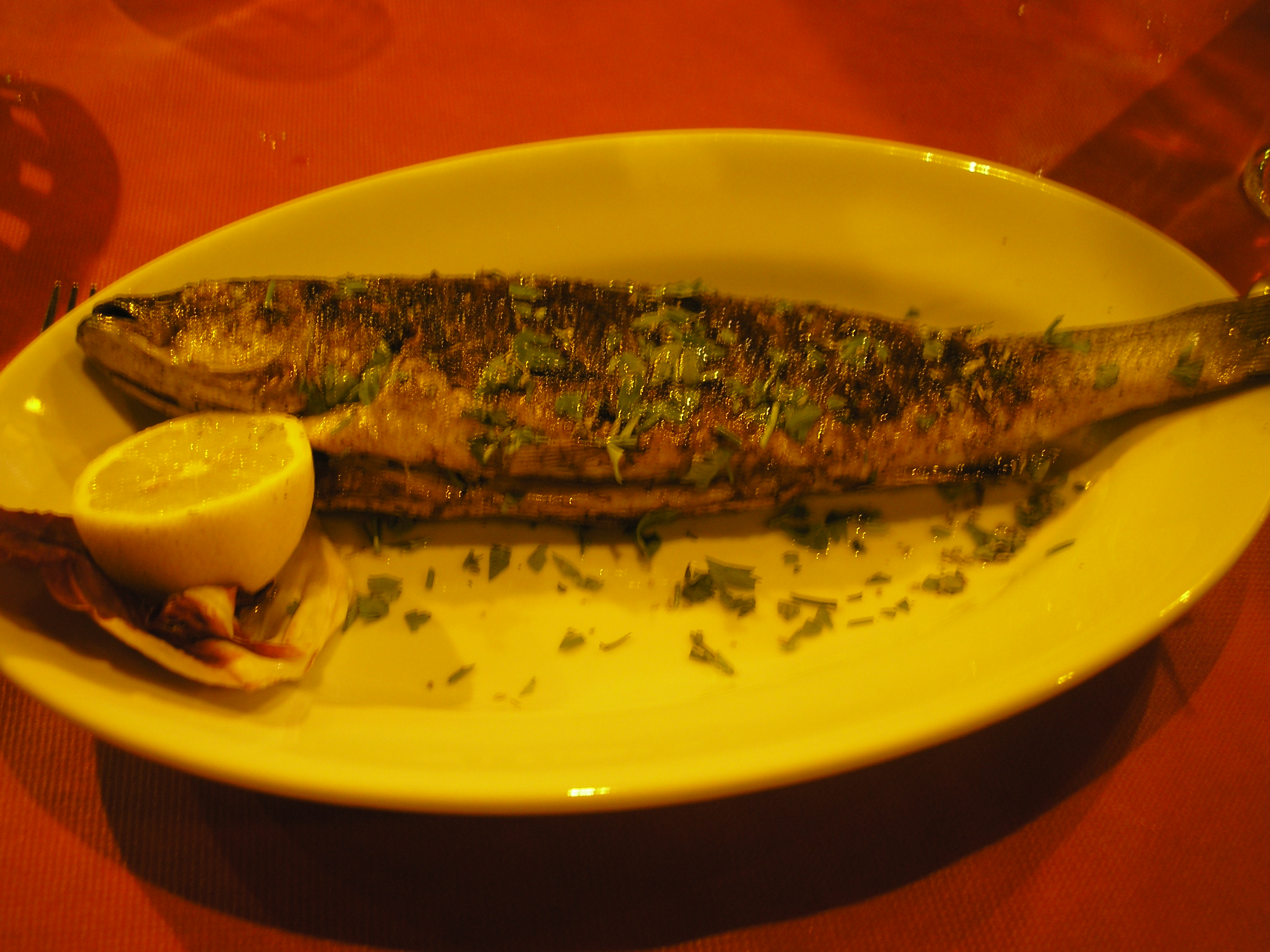
The whole meal, with wine and sparkling water, set us back about forty euros, a far cry from the cash hemorrhage that our lives in Paris and Corsica had been. While I can’t say that Palermo is much for sight-seeing, a real foodie could do some serious damage here on a limited budget.
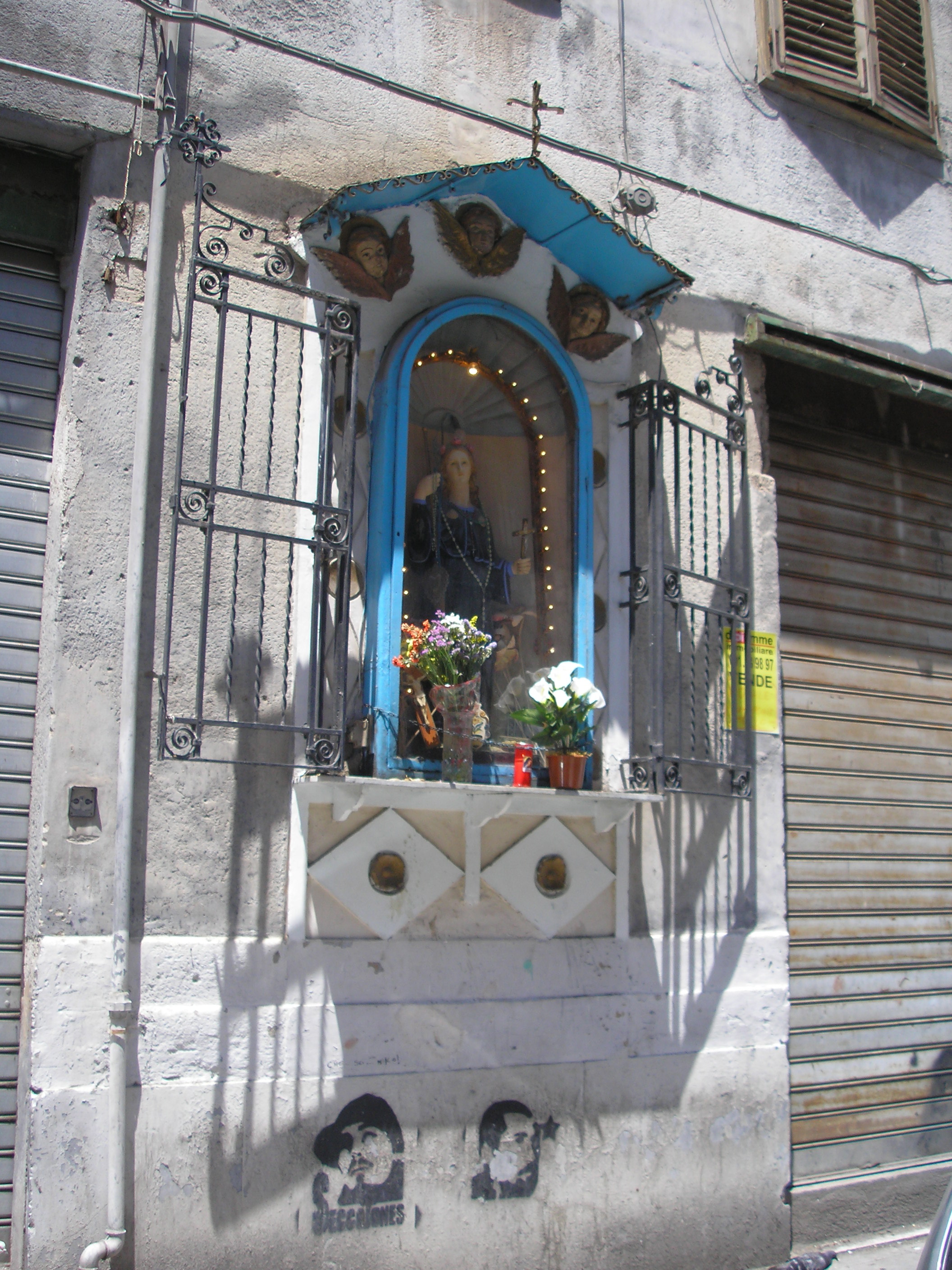
The following day we attempted to do some sightseeing in the oppressive heat and dirt of the city and were confounded at every turn. We started at the Civica Galleria d’Arte Moderna, less because of our deep interest in 19th and 20th century Sicilian art and more because we had read that the museum restaurant was “a hidden gem” run by the Michelin-starred chefs at Osteria dei Vespri across the street. I’ll burst your bubble – it’s isn’t anymore. The restaurant is closed indefinitely, likely because there is nobody in the museum. While the structure itself is an amazing and obviously expensive restructuring of a 15th century palazzo, the collection is mostly made up of yawn-inducing hotel art. There are more people working at this empty museum than I’ve ever seen before, and they stood around in huge uniformed packs and gossiped loudly. Nobody knew anything about the art or could answer any questions about the building. The museum guards were all surfing the internet at the various computer banks around the exhibitions and totally ignored our presence. As B pointed out, we could easily steal some of the artwork, that is, if any of it had been worth stealing. We spent the better part of the afternoon guessing about what kind of ridiculous Italian government grant had spawned that monstrous collection and its enormous and inept staff. It was the most impressive attempt at a tourist attraction that the city has to offer, and it was a mess.
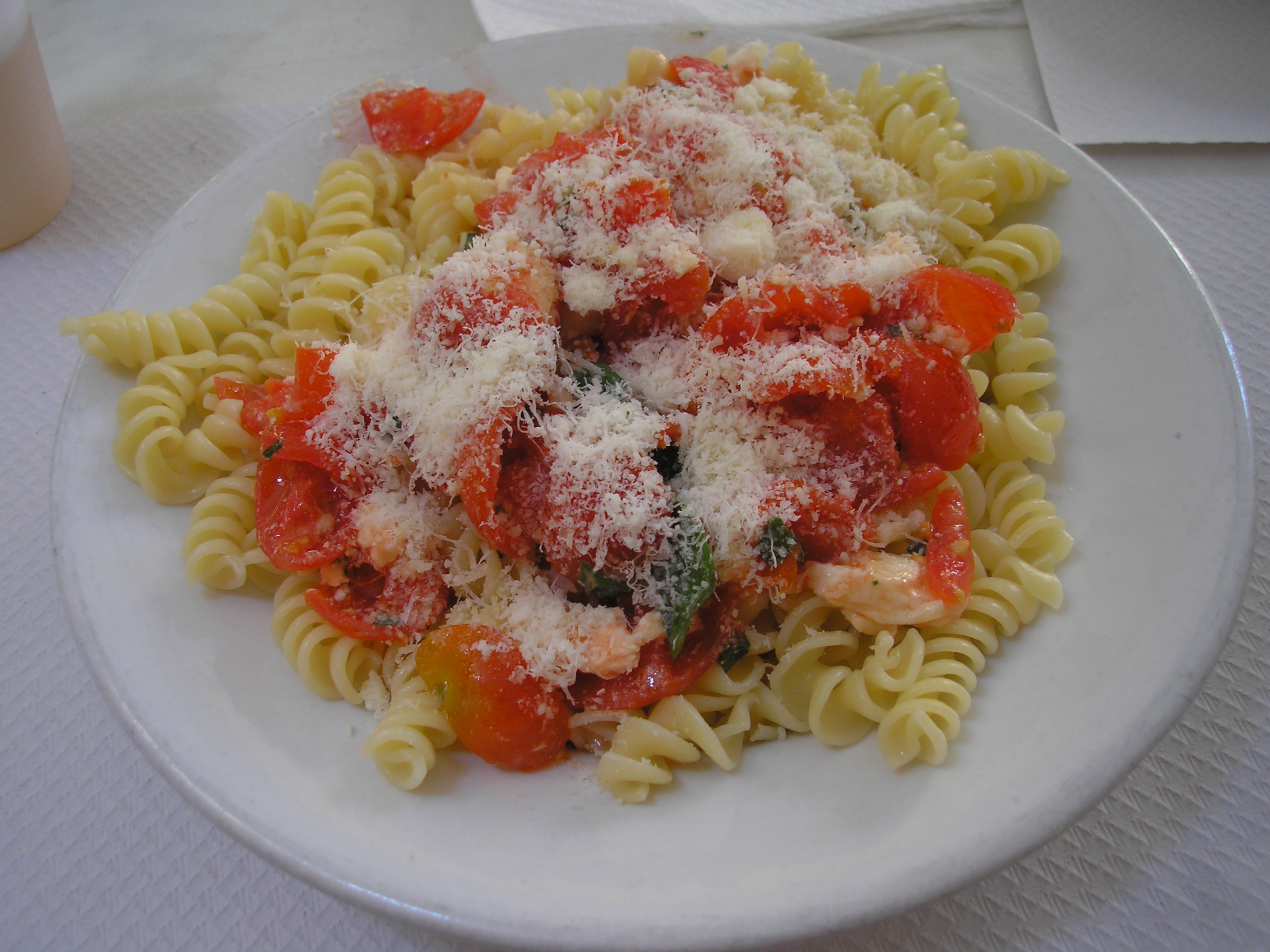
Disappointed about our lunch failure, we decided to give the Sicilian eating house another try and walked to the Trattoria Basile (Via Bara all’Olivella 76) for lunch and found the kind of place that we had hoped the Antica Foccaceria di San Francesco might be. Huge servings of antipasti and fresh pasta are the main attraction here and long lines wait for this excellent (and cheap!) dining experience. We both had a plate of this simple and delicious corkscrew pasta with fresh tomatoes and mozzarella:
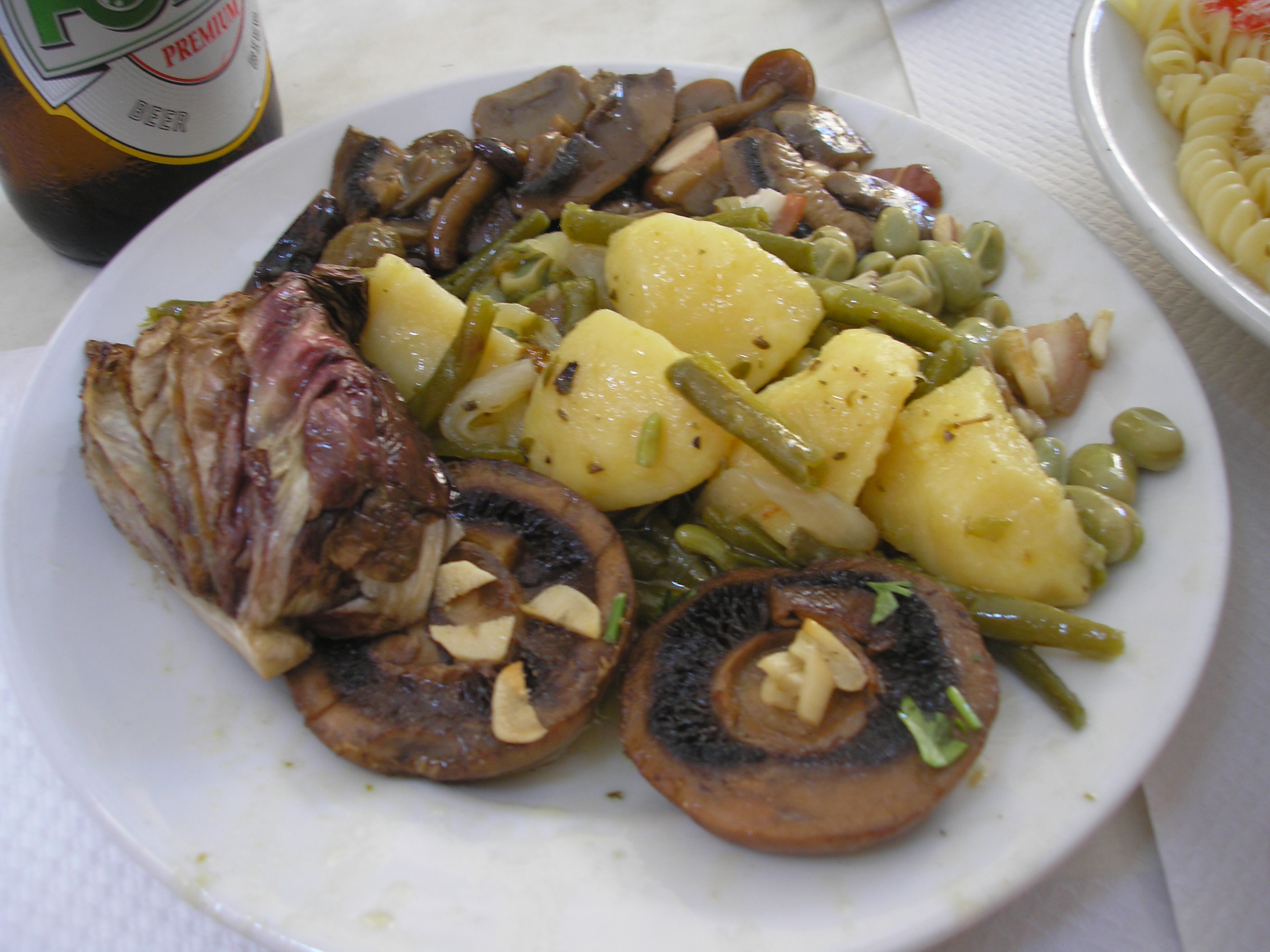
And we shared a delicious selection of roasted vegetables from the antipasti section, including the very fava beans that were a ubiquitous presence in my mother’s Sicilian family when she was growing up.
For dessert, we were anxious to try the gelo di melone, a watermelon gelatin dessert served with chocolate chips and fresh flowers. They are flat-out obsessed with watermelons in Sicily and big slices are often served as a light summertime dessert. For some reason I found it hysterically funny to see waiters at fancy restaurants carrying around trays with huge wedges of watermelon. Likewise, gelo di melone is everywhere and considered the signature dessert of Palermo.

The verdict: pretty, but totally weird. I was skeptical about the combination of watermelon and chocolate and found it rather off-putting in practice. But I’m glad I tried it, once.
The damage: two plates of pasta, a plate of antipasti, a dessert, two enormous German beers, and a liter of sparkling water cost twelve euro. Twelve. I was ready to move to Palermo after lunch.

Instead, we walked across town to the Palazzo dei Normanni, a giant Norman-style (duh) palace that houses both the main governmental offices of Sicily as well as the Capella Palantina, a supposedly-amazing chapel from 1130. Except…it was closed for the day. In the middle of high tourist season. Because, wait for it: the tackiest wedding in the history of time was taking place there! There was a gelato stand near the entrance, so B and I decided that our Sicilian culture lesson would not be in mosaics of Old and New Testament, but instead in the amazing hair weaves and polyester gowns of Palermo’s elite. Oh my god, what a show! I tried to take pictures, but was told by a bodyguard (!) that while we could sit there as it was indeed public property, there was no way I could take any photographs. I acquiesced and B and I watched the spectacle of the wedding guests, each couple more amazing than the last. It was too bad that we missed the best maintained chapel in Palermo, but I’ll probably remember some of those hairstyles long after I would have forgotten those inlaid marble floors.
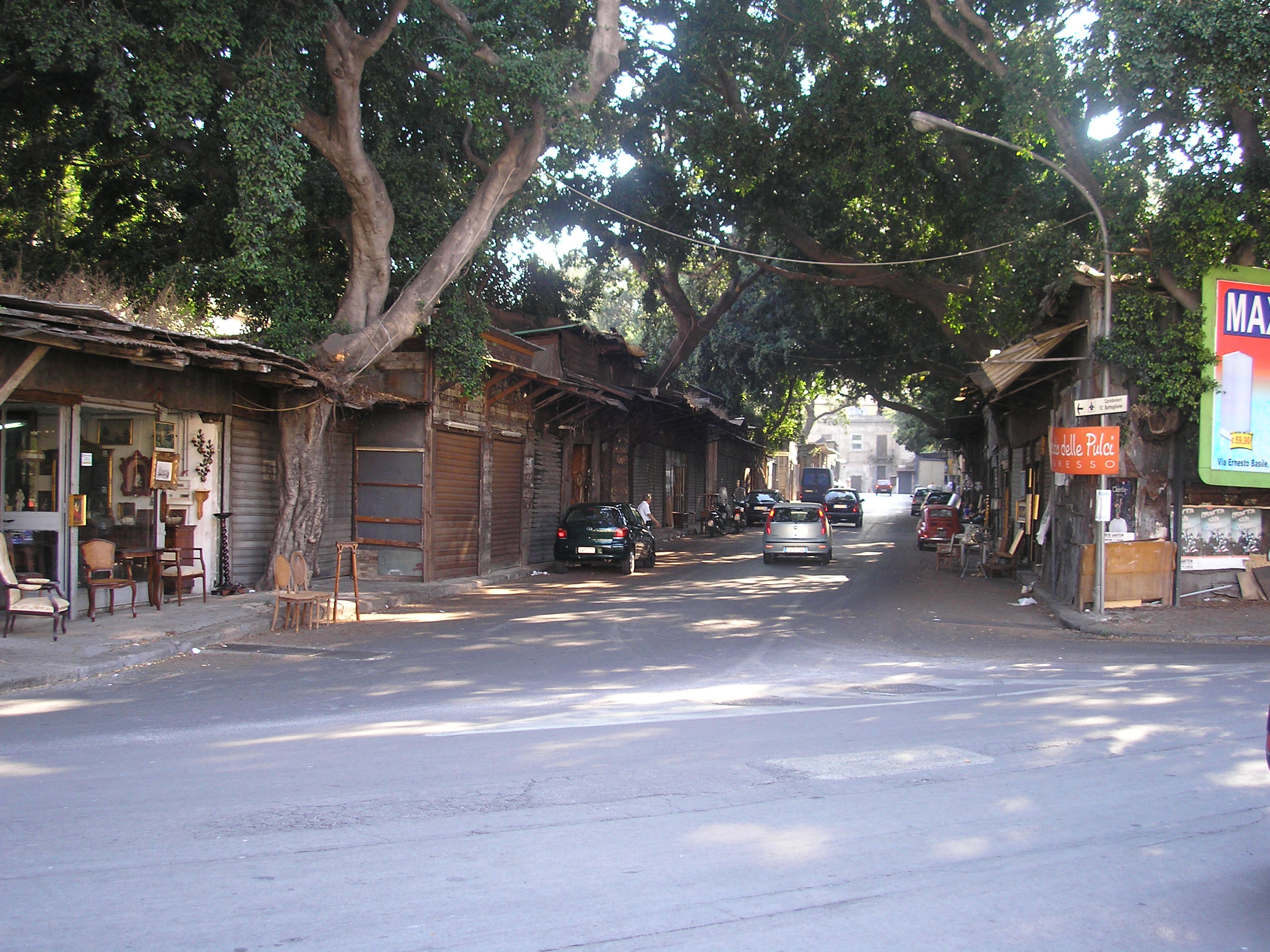
After that, we gave up on the sightseeing. Palermo didn’t want us to see her sights. We wandered into Albergheria, the residential area around the Palazzo dei Normanni that is essentially a slum, complete with full fledged corrugated steel shantytowns. Atmospheric, I guess? Actually it was my favorite part of Palermo, as we saw many interesting buildings and off-the-map medieval churches and mosques.

We helped two nuns that were having some trouble with their darling orange Cinquecento (this sounds like the beginning of a joke). We found an amazing ceramics workshop, the Bottega Dorte di Angelo Longo (Via M. Bonello 13), where I bought an beautiful plate with an image of the trinacria, the ancient symbol of Sicily that is comprised of a winged, floating head surrounded by three bare legs (talk about imagos of the fragmented body!).
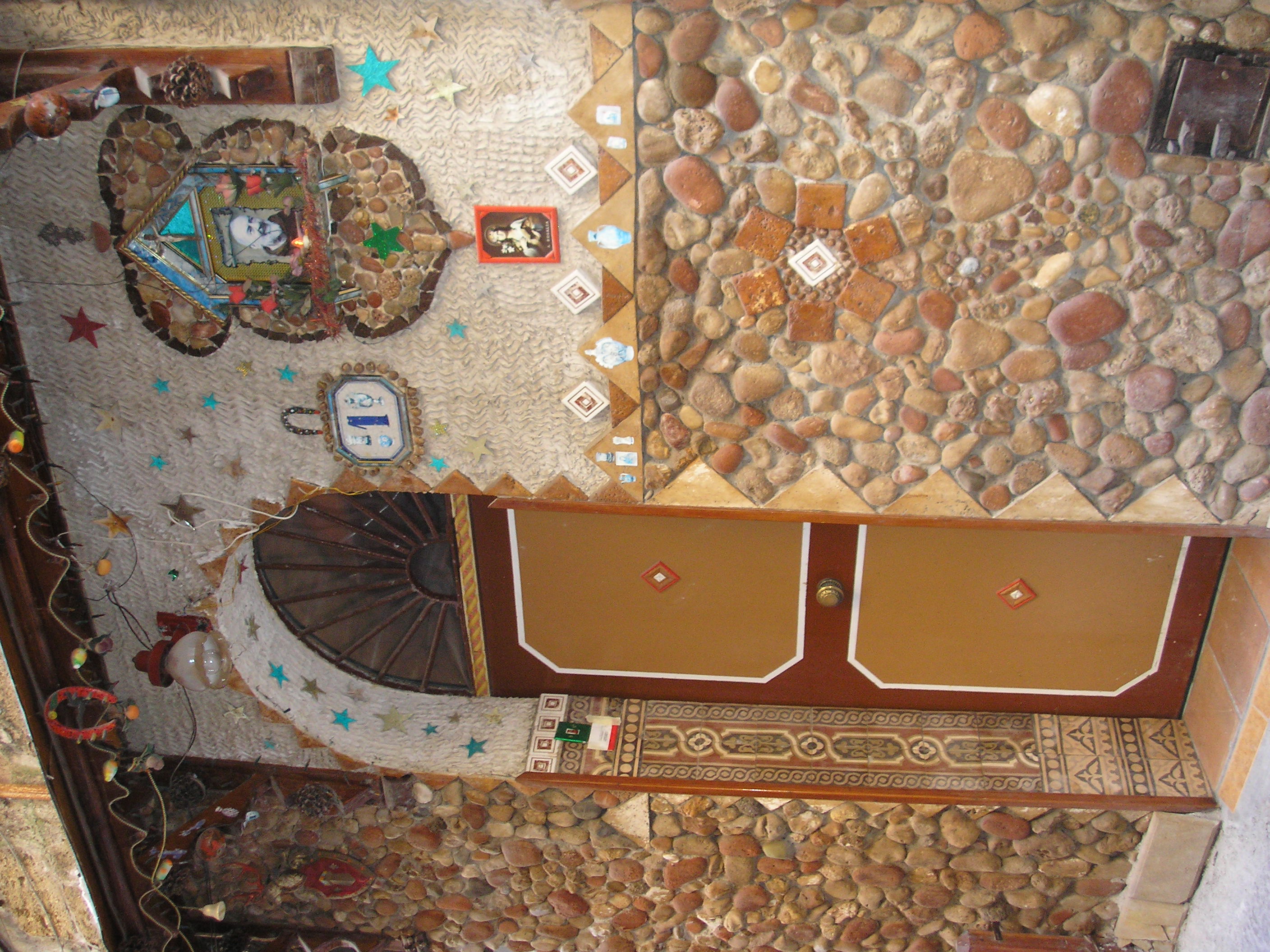
We stumbled on the Mercato delle Pulci, a flea market that looks at first like a squalid rathole, but is filled with beautiful furniture. The area is definitely worth a walk around if you find yourself in Palermo, but remember to do it in broad daylight and that this is a cash-only town.
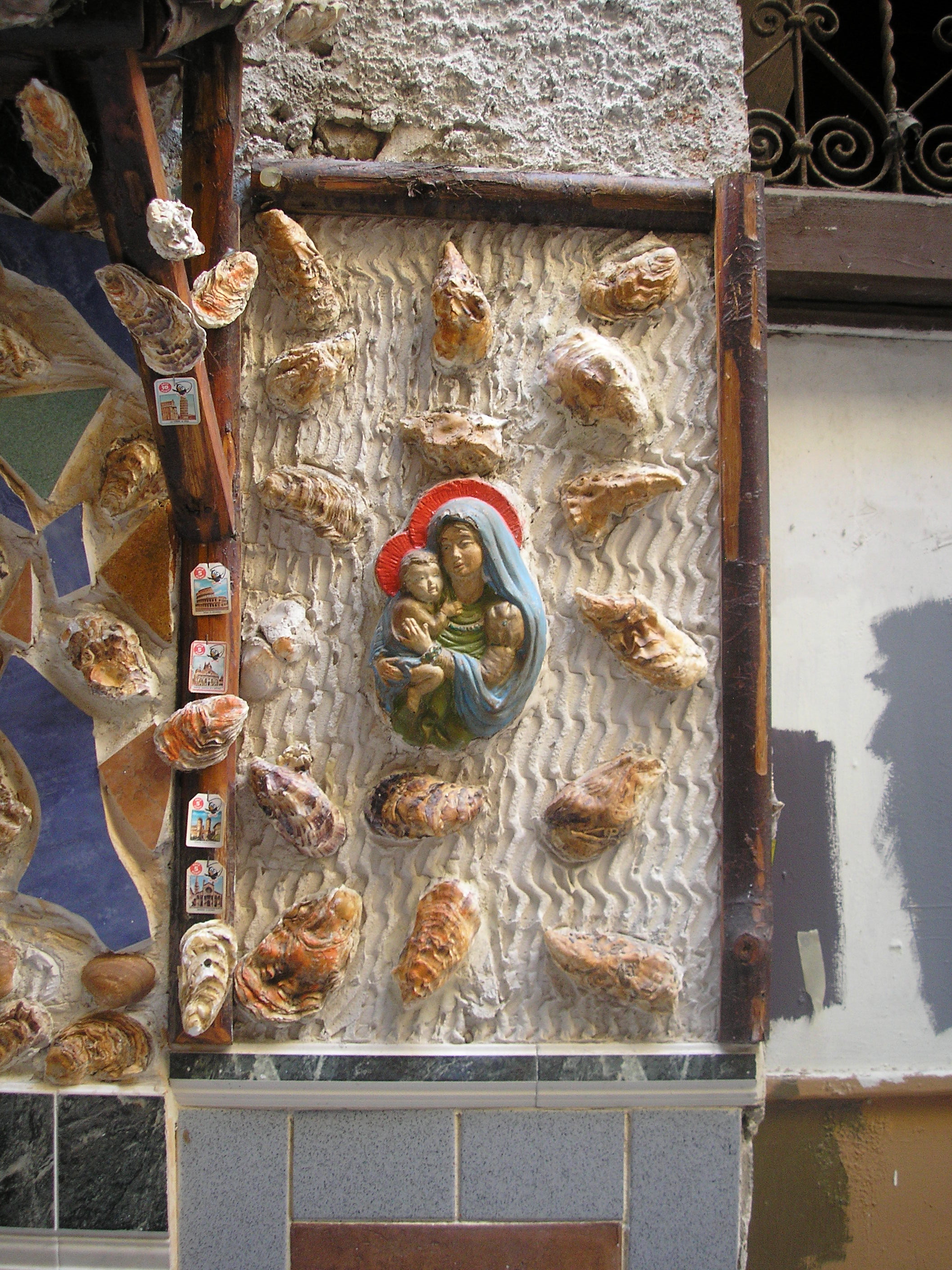
Later in the evening, we walked north to see the Theatro Massimo (Godfather III, people!) and to eat dinner at Pizzeria Biondo (Via Carducci 15).

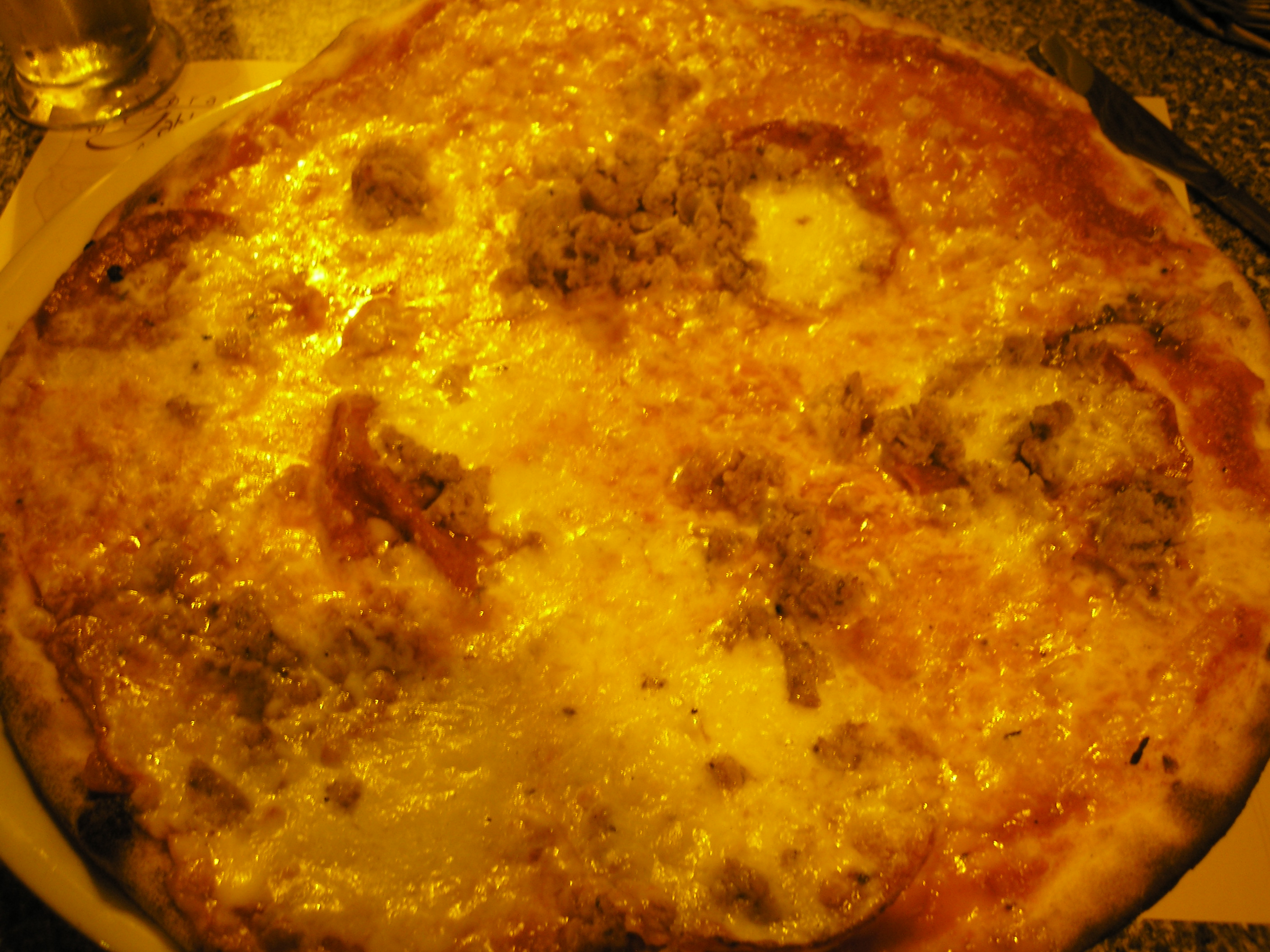
The sister restaurant to the much-pricier Trattoria Biondo, Pizzeria Biondo is a lively, unpretentious affair that serves big beers and even bigger pies at reasonable prices. And the pizza. Oh, my god, the pizza. We shared two pies, the first a combination of spicy salami and homemade sausage:
And, the pièce de résistance, a mushroom medley that include huge slabs of roasted portabella, fresh bufala mozzarella, and large smears of tartufo nero:
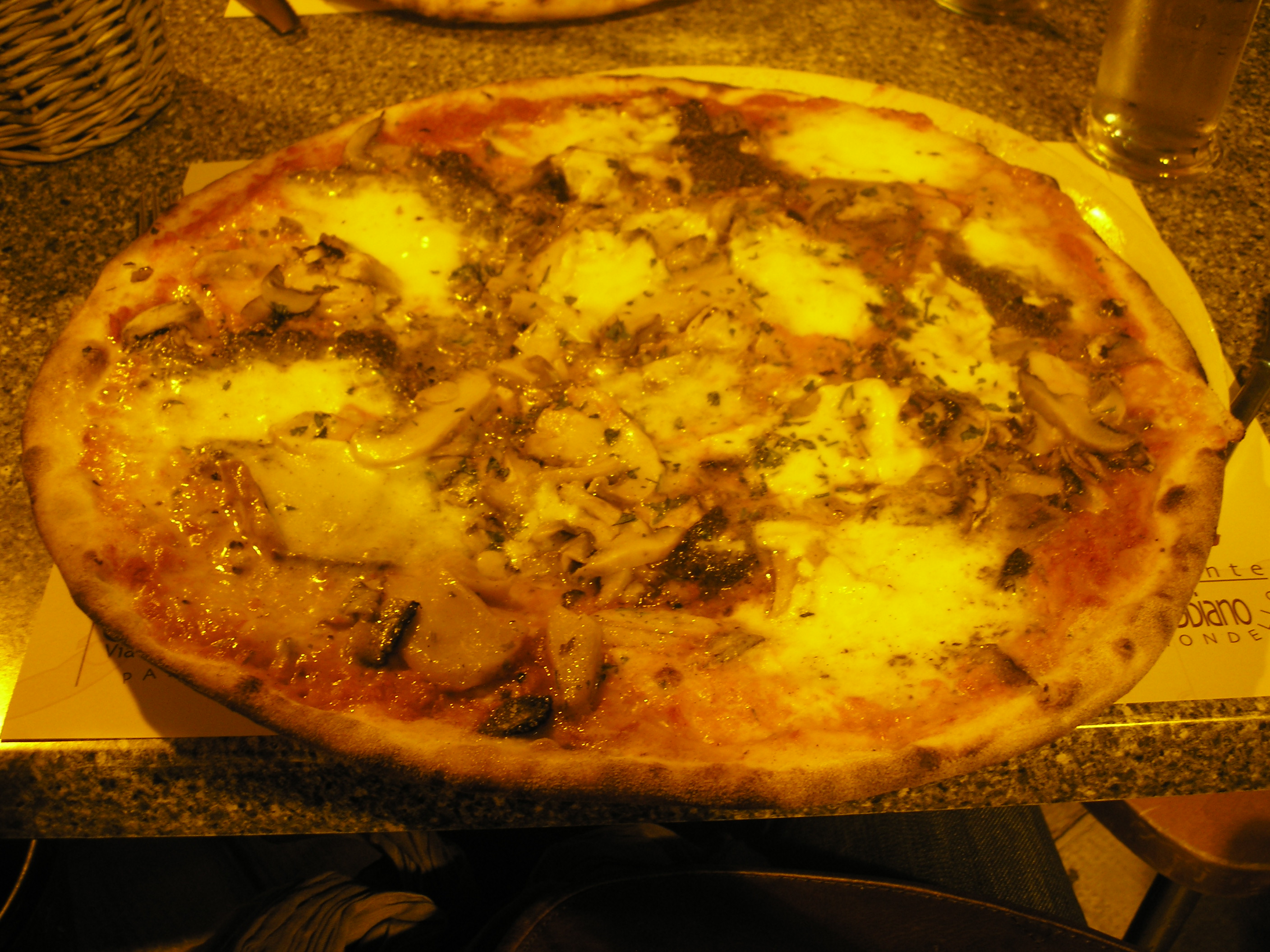
That’s right, people. Those dark-brown splotches are pure black truffle spread. I think Manic Mushroom Boy died and went to heaven that night. It was a nice way to end a strange part of our journey. I can’t exactly recommend you visit Palermo, but I’m glad that I did, if that makes any sense.
Next up: Beautiful Cefalù and its not-so-beautiful beachgoers. Stay tuned!
Clarence Enters the Evil Nuraghi and Pays the Price: Cagliari, Sardinia
So when we last left our travelers they were having an amazing time in Sardinia, eating lobster and smug in the knowledge that they had succeeded in their careful planning of the trip and assuming that nothing could possibly go wrong. They were getting along famously, having cultivated a series of running dumb jokes and finally bested the first rounds of mosquito bites from Corsica. The day in question began innocently enough. The plan: leisurely drive through inland Sardinia, stop at Su Nuraxi (ostensibly the mother of all prehistoric sites on the island), and arrive in Cagliari in the early afternoon to drop off the rental car and spend one night before flying to Sicily.
I knew we were in trouble within the first hour of driving. Despite being a breathtakingly beautiful road, I realized that reaching tiny towns on the map was much, much slower than we had anticipated, thanks to mountainous terrain and perpetual switchbacks that made driving over 20 mph nearly impossible. My penchant for carsickness when I’m not driving kicked in after an hour, so we switched positions. Soon B was carsick as well, but nauseous and cranky, we drove on. And on. And on. A trip that we had anticipated taking three hours in total gradually consumed the whole day. We couldn’t find anywhere to eat lunch, and were forced to stop at a terrible hotel restaurant where we ate something so pitiful that I’ve blocked it out entirely. And then we kept driving, and driving.
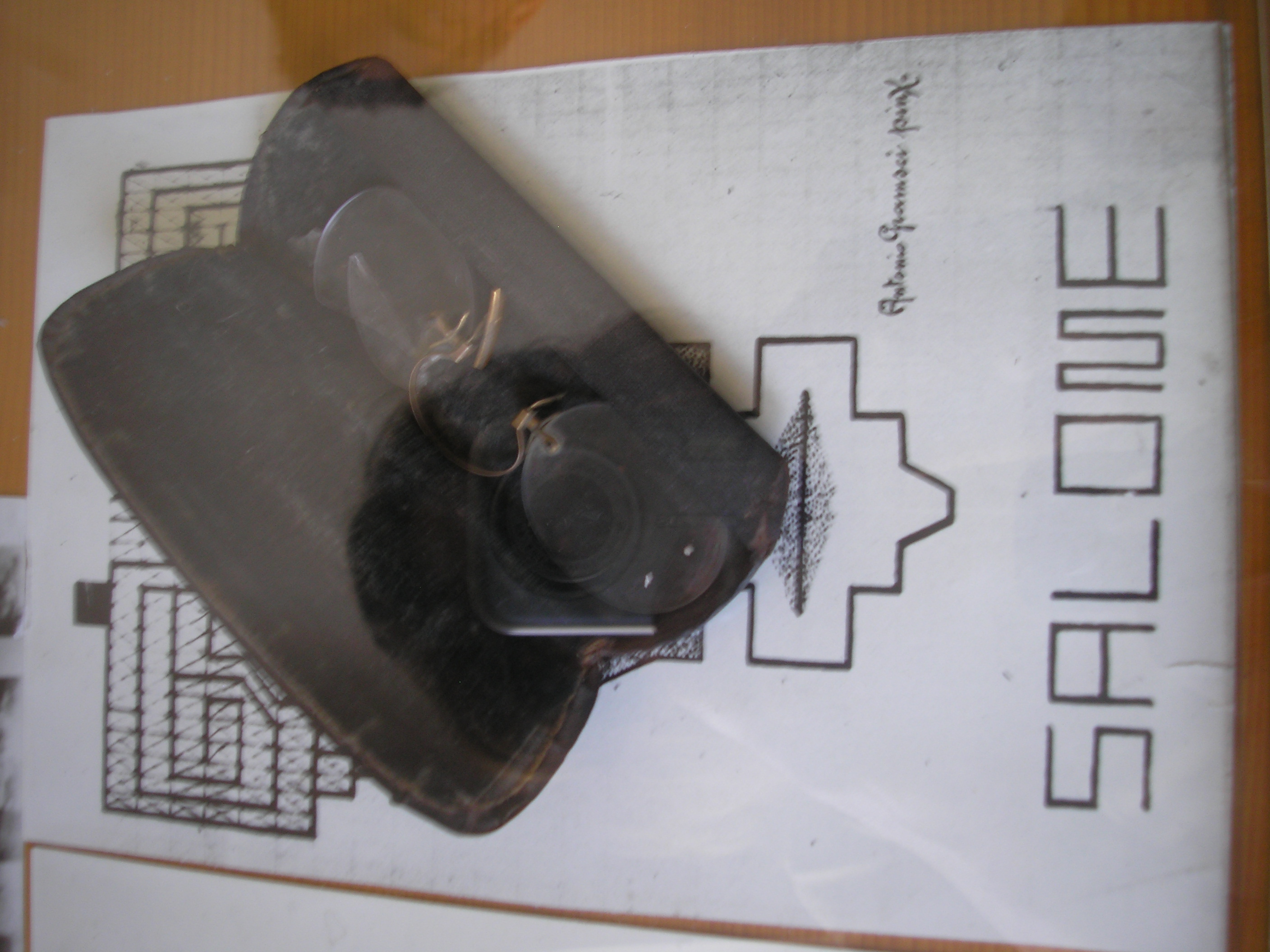
One nice detour came in Ghilarza, the town that is best known as the childhood home of the political theorist Antonio Gramsci. The town now houses the Casa di Gramsci, a small museum and research center. As we are theory dorks of the first order, we stopped and marveled at the small collection, which included many of the books Gramsci’s personal library:


Here you can see his signature glasses:
We especially liked looking at his old report cards from school:

After taking corny photographs of ourselves next to Gramsci’s portrait (geek love!) and chatting up the lovely woman running the museum, we bought souvenir t-shirts and postcards, brushing aside of the irony of buying consumerist clutter to commemorate one of the most important communist thinkers of the twentieth century. Pish posh. Revived, we began driving again.
Another seven hundred nauseous hours later, we finally arrived at Su Nuraxi. Now, I’m sure my dear reader already knows this, but Sardinia is literally chock-a-block with these enormous piles of rocks called nuraghi that were actually the dwellings of pre-Roman Sardinians. The largest of pile of rocks is Su Nuraxi, a prehistoric military fortress that was also used by the Phoenicians and the Romans. Dating from 1500 BC, it’s a massive archeological find and a UNESCO World Heritage Site.
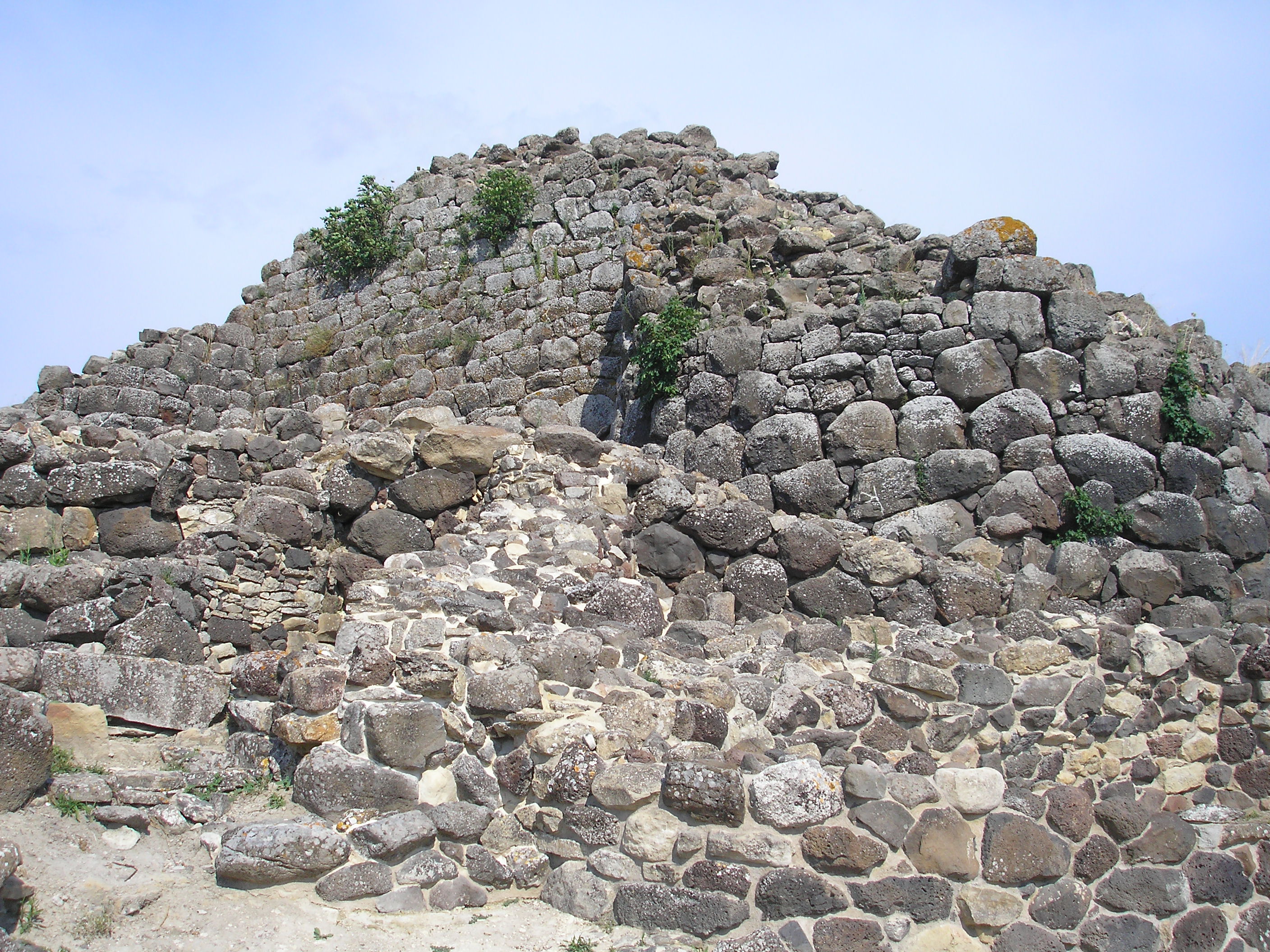
Now, let me just say that this kind of thing isn’t particularly my bag. But B had been incredibly patient about all of the aspects of our journey that were important to me, including pretending that “second lunch” is a legitimate meal. And we had been largely daunted in our attempts to see cool prehistoric things until now. In Corsica, we were unable to visit Cauria without a car and the Museum of the Prehistory (sic) was like watching paint dry. In Sardinia, we were perpetually thwarted in our attempts to visit sites of archeological interest: the Nuraghic village we had attempted to visit near Oliena was closed, Tharros was obscenely expensive to visit and my boyfriend is cheap (sorry, that one slipped out), and the dolmen we tried to find in a cornfield based on a shitty road map was, well, nonexistent. I felt like I owed B this damn nuraghi. But I was tired and terse, and the winding roads we were forced to take to visit Su Nuraxi had easily tripled the length of the drive to Cagliari. After driving around in circles in the town of Barùmini like idiots for a half hour or so, we finally found Su Nuraxi. We quickly discovered that you can’t just wander around the thing unattended, but are required to take a guided tour. When B started to balk at the ticket price and the idea of a guided tour, I hissed at him that I didn’t care if it cost a hundred dollars and our tourguide only spoke gibberish if that was what it took visit this damn nuraghi. So we forked over fourteen euro and waited semi-patiently for our tour guide. While we browsed the gift shop and contemplated buying a neon nuraghi-shaped ashtray, B got to listen to my conspiracy theories about the site, namely that it wasn’t actually a prehistoric fortress but instead a canny scam built by a bunch of unemployed Barùmini locals after World War II. Of course he tried to contradict my (flawless!) logic with his knowledge of fancy things like carbon dating, but I was feeling petty and continued to pretend I thought it was hoax to get his goat. It worked.

After about twenty minutes we were joined by our guide, a sharp young archeologist. The tour was actually pretty cool, as you get to climb into the nuraghi itself and explore the various towers. Our guide patiently and adeptly answered all of our questions despite her shaky English and our pathetic Italian. The only moment of embarrassment came when B happened upon a giant slab of granite and asked “Is this where the sacrifices happened?” Our tour guide didn’t understand the question at first, and so B decided to pantomime human sacrifice by throwing me down on the slab and air-stabbing at me Psycho shower-scene style. While I’m sure it was a nice release of tension for B, our tour guide seemed horrified at the implication that the Nuraghic people were human-sacrificing barbarians, which of course prompted a long rant from B later about the European archeological disavowal of sacrifice in its early cultures. I don’t know much about these things, but I can say that I’m happy to not be a Nuraghic person. As far as I could tell, all they really did was haul giant rocks around and fight neighboring tribes. I can’t imagine that life for women was anything other than nasty, brutish, and short, a sentiment that I demonstrated in a series of hi-larious photos in which I pretended to be a Nuraghic person. But seriously, not to sound too hippy-dippy about things, but there was something really off about the way that some of the spaces inside of Su Nuraxi felt. One tower in a particular gave both B and I a terrible vibe. I attribute this to the pack of killer mosquitoes that descended upon me and nearly ate me alive. B attributes it to a “palpable feeling of evil.” Guess which one of us knows more about tarot and astrology? Either way, it gave both of us the creeps and while we were pleased to have successfully visited the site, neither of us wanted to stick around too long.
Returning to the Panda, I realized I was now covered in inexplicably bloody mosquito bites and we both were completely sick of driving. But it was only an hour or so to Cagliari. Our plan was to drop off our bags at our hotel, drive to the nearby airport to drop off the rental car, take a bus back into town, and explore Cagliari for the evening. And while I guess that is basically the series of events that ensued, each step was so comically thwarted and difficult that the evening damn near killed us.
As we reached the periphery of the city, B discovered that somehow we had managed to omit the address of our hotel on our meticulously typed itinerary. Initially we assumed we would see signs for the hotel, but quickly discovered that Cagliari was a properly chaotic Italian city, full of angry drivers, poorly marked signage, and an impossibly difficult layout. It took two hours in a paid parking spot (expensive! listen for it…), a visit to the tourist office (worthless! keep listening…) and an internet café (more expensive! keep listening…), and three passes on the most bizarre one-way street I have ever encountered to find our goddamn hotel (… and there it is! the sound of our brains exploding with frustration!). At some point in this narrative I morphed into the most annoying backseat driver in the history of time (my mother): clutching the armrest, squealing in fear or gasping in frustration with every single thing B did as a driver, and providing a running narrative of everything going on outside the car (“Oh my god, there’s two people trying to cross the street! Oh my god, there’s a car in the left lane! Oh my god, this is a one-way street!”). While I thought this was helpful, I slowly realized that B was on his last frayed nerve and I was strumming it like a banjo.
After we dropped our bags at the hotel, we hopped in the car and with a minor amount of yelling arrived at the airport. Expecting to find a gas station directly next to the airport, we had waited to fill up the gas tank as we needed to return the car full. I was especially panicked about being charged some ridiculous fill-up fee, so I insisted that we follow the letter of the law on this particular issue. Except…there wasn’t a gas station near the airport. Or anywhere near the airport. Cut to us driving around in an industrial park for a half an hour searching for one until we decided to head back into Cagliari to get gas. I was about to cry with anxiety and frustration, and B’s knuckles were white as he clutched the steering wheel. We finally happened upon a self-serve Agip outside of town. No problem, we thought. Despite the fact that we had only encountered full-service gas stations thus far on our trip, we both assumed that we could properly fill up a car given that we have both been driving for more than a decade.
Wrong wrong wrong. As I sat in the car waiting for B to fill up, I heard him struggling near the fuel tank. I got out of the car to find him drenched in gasoline and cursing like a madman. The machine, which only accepted Italian credit cards and cash, had already eaten ten euros and B had failed to even get the nozzle into the fuel tank. Cocky, I snatched the nozzle from B and attempted to fill up the car by inserting yet another ten euro bill into the machine, only to discover that the nozzle really didn’t fit into the gas tank when the gasoline gushed out and covered me as well. At this point we both entered the climax phase of our frustration. I began yelling obscenities about Italy. B shut down into a terrifyingly silent rage. A kind guy who was filling up his own car observed our meltdown and offered to help, showing us that we were actually trying to put diesel in the car, hence the mis-sized nozzle. After depositing another ten euro bill and some effusive thanks to our good Samaritan, we were back on the road to the airport. At this point, we were barely speaking to one another, as of course the logical thing to do when the world fucks you over is to take it out on your partner. When the location of the entrance to the Eurocar parking lot was unclear, B declared with rumbling rage that he would abandon the car in a ditch before he left the airport again. I snapped back that it was easy to talk about abandoning the rental car when it wasn’t his credit card that Eurocar had on file, wasn’t it? We were near total emotional collapse. We managed to find the lot and the check-in counter, and at first everything seemed to be fine. The car was in perfect shape, making me regret the extra insurance that I had insisted we purchase from superego-induced dread, nearly doubling the cost of the car. It was only when I demanded a receipt that we discovered (wait for it!) that due to our many detours and hang ups, we had missed the return deadline and were going to be charged for an additional day. With our absurd amount of collision and theft coverage, this would total over a hundred euros. It wasn’t the money, exactly, but the aggregated frustration from our afternoon caused me to double over under the counter and begin weeping. B launched into a loud and elaborate defense of our heinous attempts to get gas in the car, culminating in him thrusting his gasoline-soaked hand in the face the rental car employee and demanding that she “SMELL MY HAND!” as proof of our struggle. She declined, politely, and said that there was nothing to be done. We were in Europe, after all, where the customer is decidedly not king and nobody gives a damn if you threaten to never patronize them again. She wished us a good evening and we left, B shaking with rage and me crying into my gasoline-soaked sleeve.
As we waited for the bus back into town, we slowly recovered from the afternoon and our first real fight. After airing all sorts of anxieties and worries and hurts that had nothing to do with killer mosquitoes, long drives, lost addresses, or rental cars, we recovered and decided that we would continue the trip. By the time we boarded the bus, we were nauseatingly lovey-dovey again.

Returning to Cagliari, we were famished and exhausted, if decidedly happier with one another and relieved that the mess was finally over. We decided that the best remedy was gelato. We had read about the enormous Isola del Gelato (Piazza Yenne 35) with greedy anticipation and agreed that we needed ice cream before even contemplating finding a place for dinner. Isola del Gelato is a seriously enormous place, with whole counters dedicated to fruit sorbet, soy and other dairy-alternative ice cream, sour frozen yogurt, and semi-freddo (logs of layered frozen mousse and cake). Perhaps most impressive (if unappetizing) is their fantasy counter, where giant mounds of gelato are decorated to look like a children’s dreams of mountains of candy and ice cream, complete with bubblegum avalanches and tiny chocolate mountaineers. I have no idea what flavors we chose, but I remember enjoying the experience.

After our gelato-and-rally, we strolled through town to Il Fantasma (Via San Domenico 94), which our guidebook described as having the best pizza in town. While it was quite a walk, we enjoyed wandering through the hustle of dirty Cagliari, which I can now say resembles Sicily more than it does Sardinia. Il Fantasma was a homey place with perhaps the worst wall treatment I’ve ever seen in my life. The pizza was fantastic, however, and staggeringly inexpensive to our Paris-acclimated eyes. Two enormous pizzas and four pints of beer set us back only twenty euros, which helped alleviate the pain of wounds still smarting from the gas station and rental car counter. It’s a great little restaurant and our evening made me wish that we had a bit more time to explore Cagliari.

That is until we returned to our seemingly innocuous hotel room and discovered that the central air conditioning unit made a buzzing noise the likes of which I’d never encountered. It was perhaps the single most annoying noise ever produced by an air conditioning unit: loud, erratic, grating, and impossible to turn off. We tossed and turned in frustration, neither of us sleeping a wink until our alarm sounded at four-thirty a.m. so we could catch our cab to the airport, the very airport we had left just eight hours earlier. I can’t say we were unhappy to put that leg of our journey to bed.
Next up: We head to Sicily! Get ready, the grungy part of our vacation is beginning. Palermo is just as bad as you’ve heard, maybe worse! Stay tuned!
Clarence Does the Rock Lobster: Bosa and Alghero, Sardinia, or, A Tale of Two Cities

For the next leg of our trip, we drove across Sardinia to spend some time on the Western coast of the island. Our home base: the beautiful town of Bosa. We stayed at a gorgeous bed and breakfast at the recommendation of our friend S, the S’Ammentu (Via Del Carmine 55). What a charmer. Our room was especially romantic, with pink walls (inoffensively so!), tile floors, and a fantastic wood-beamed ceiling. The proprietor described it as the “room for lovers.” Cue a nervous laugh on my part. Seriously, though, it’s an amazing place to stay. The best part by far is the complimentary breakfast, which you take a few doors down in a rock-lined room with local art on the walls. There, two friendly women prepare your drinks from an espresso bar while you sample lovely local pastries, charcuterie, cheese, and fruit grown in their own garden, including a particularly tiny pear that is specific to the Bosa area. Yum.

We explored Bosa a little when we arrived, but decided that it would be a good idea to take a drive up the coast to Alghero. We had read that it was an amazing drive and that the old town of Alghero was particularly enchanting. So we hopped in the Panda and got on the road. The drive was exquisite and I really wish that I had some pictures of it for you. But B was driving and I was carsick to the max. We actually had to stop at a small beach along the way so that I didn’t barf in our rental car.
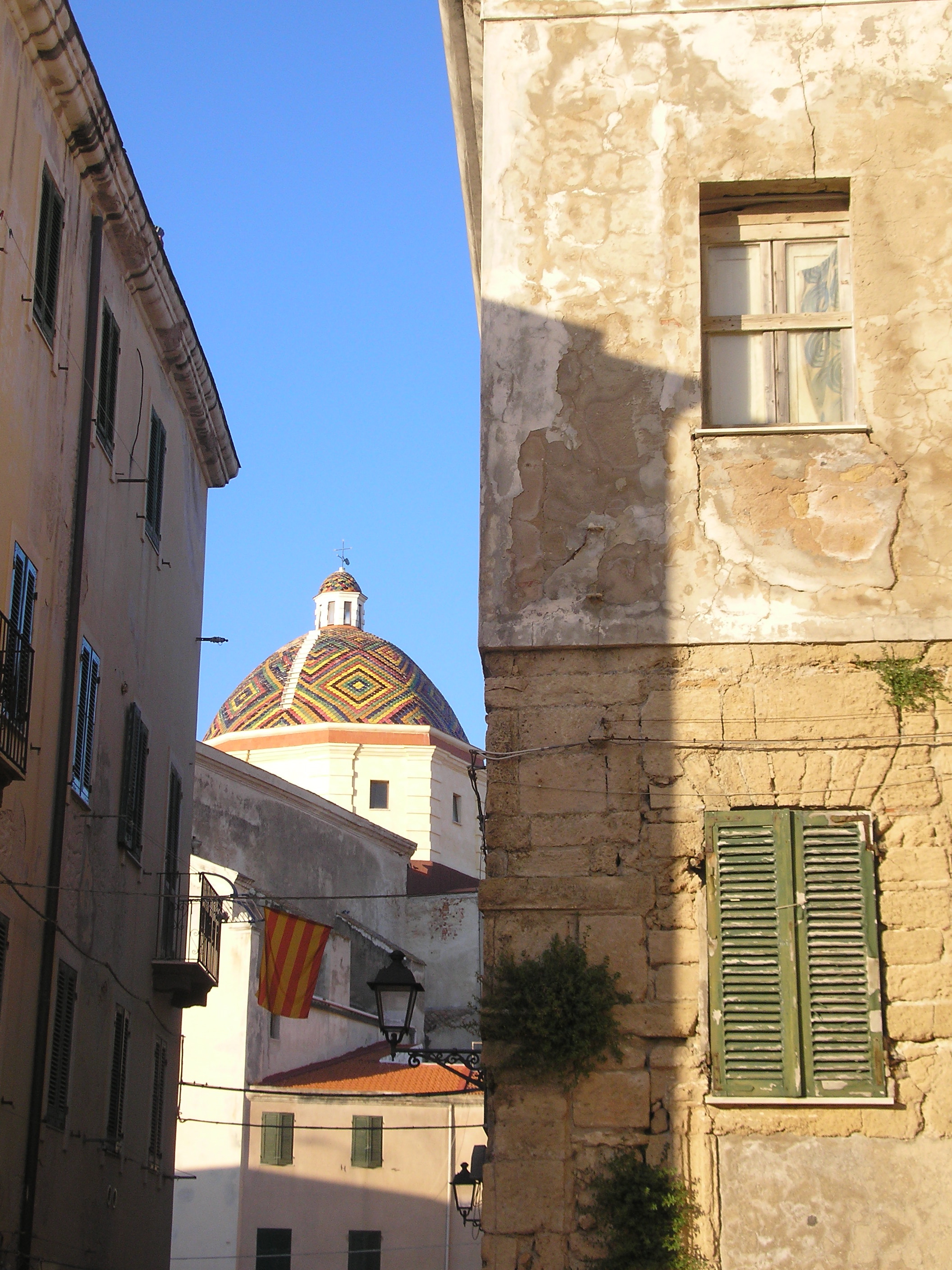
After a nauseous ride, we finally arrived in Alghero, which did indeed look dreamy from afar. Hell, it even seemed dreamy as we started driving around. But that sentiment soured quickly as we realized that we would have to pay for parking. Now, I personally don’t have any problem paying for parking. But I might as well have asked B to slit his own wrists. Another travel-induced discovery about my boyfriend: while he is remarkably generous in giving gifts and paying for expensive meals, boy oh boy is this guy loathe to pay for anything that he believes on principle should be free, including parking, access to ruins or other archeological sites, and beaches. After finally convincing him that we couldn’t outsmart the legion of parking attendants that roamed the streets of Alghero, he acquiesced and forked over six euros for the evening. Par for the course by Los Angeles standards, but my Indiana born-and-bred B was smarting from the exchange.

The centro storico of Alghero is touristy to the max, meaning that while there are obviously a lot of interesting shops and probably some serious restaurants, there were even more souvenir shops filled to the brim with kitschy crap and pseudo-gelato shops that sell the Italian equivalent of Baskin-Robbins. Part of our problem was that we were still in low tourist season during our time in Corsica (I suspect that Bonifacio would be a veritable nightmare right now) and our time to this point in Sardinia was spent in rural heaven. Thus, we were a little culture-shocked to find ourselves among droves and droves of portly tourists buying vaguely racist t-shirts and faux-coral plastic crap for their friends back home. We did enjoy looking at the architectural pastiche that reflects Alghero’s multifaceted cultural history, as evidenced in the Cattedrale di Santa Maria, an amazing fusion of late Moorish and late Baroque style, and the Campanili bell tower that shows the strong Catalan presence that still remains in Alghero.
We were celebrating a relationship milestone that would make you barf if I told you about it, but needless to say we wanted to have a nice dinner. After wandering around for a while, we decided to try Angedras Restaurant (Bastioni Marco Polo 41, Alghero), mainly for it’s lovely location of the top of the rampart walls overlooking the sea. The menu seemed to be a kind of gussied-up take on Sardinian classics coupled with the traditional Catalan seafood preparations that Alghero is known for.
I hate what I’m about to write, because really Angedras is nice. In fact, I suspect that ninety percent of travelers would be over the moon to eat at a place like that. My critique of the restaurant resides more in the fact that I am turning steadily into that most dreaded of beasts: the food snob. But I’m worse than even your regular run of the mill French food snob because I also have a strong distaste for anything I would see as fussy or formal at the expense of flavor or character. And Angedras was just that – fussy, formal, geared entirely to a non-local palate, and consequently bland at moments when it should have shone. This is not to say that it didn’t have strong moments: B’s pasta of fregola in zuppetta di pesce, crostacei e molluschi (an Egyptian couscous-like pasta served in a fish broth with assorted crustaceans and mollusks) was really quite delicious and my main course, the maialino al forno, finocchi croccanti e olive bosane (roasted suckling pig served with roasted fennel and Bosa olives) was a knockout with achingly tender meat and crispy skin. But my pasta, a linguine al nero di seppia, gamberi e zucchine (squid-ink linguine served with crawfish and zucchini), and B’s main course, the pesce spada, verdure di campo e calamaretti croccanti (swordfish with sautéed greens and positively microscopically miniature calamari dotting the plate) were both bland city. And honestly, it was too damn expensive, especially by Sardinia standards, for anything to be less than amazing. So, like spoiled children who have never encountered a moment of hardship, we were pissed. We were pissed about the food, pissed about the loud families around us, and pissed about our snooty waiter. It became pretty funny, however, as we started fantasizing about breaking our wine bottle and using it to attack our waiter and throwing our table into the sea as protest, a joke that lasted through the rest of our trip that I now realize isn’t actually very funny. You had to be there, I guess. Anyway, if you care about sampling local food and are interested in at least a simulacrum of authenticity, I’d avoid Angedras entirely. However, if you are the kind of American who really digs The Chart House or Ruth Chris Steakhouse (no judgment!), I’d say it is a must-visit.
Our evening improved slightly with a visit to Gelateria Arcobaleno (Piazza Civica 34), a well-stocked gelato shop with friendly salespeople that jab a lovely kind of almondy cookie into your mound of ice cream. The only remotely good deal in the entire town. As we were walking to our car, we happened upon large crowd who raptly were watching a demonstration of “traditional Native American” dances and giddily buying beaded bracelets labeled with the names of various tribes. I won’t get into my own relationship with Native American culture and jewelry besides to say that I know a fair amount about these things and this was probably the most ridiculous thing I’ve ever seen. We’re talking strobe lights and Enya blasting. B couldn’t even speak he was so horrified and incredulous at the spectacle. We both agreed that the “real live Indian dancers” (their words, not mine) were actually Guatemalan and I guess in retrospect if I were a Guatemalan immigrant who found myself in a tourist town with an obvious hunger for “authentic” cultural experiences, I’d milk it for all it was worth too. But it was the cherry on the top of a ridiculous evening, and I can’t say I’d even recommend you stopping in Alghero from my own experience. I certainly won’t be going back.

In contrast (and this is where the tale of two cities bit comes in), we really loved exploring Bosa the following day. The city has a beautiful castle at the highest point in town, the Castello Malaspina. Each narrow, cobblestone street was more enchanting than the last, and the few shops specialize in really amazing local handicrafts, including ceramics and silver filigree jewelry. We witnessed a procession celebrating the Feast of Peter and Paul (the patron saints of Bosa) through the center of town, and it was really moving to see the entire community come to a halt for the sake of the ritual. In the afternoon, we drove down to Tharros to see the ruins of the Greek city and ended up spending a few hours on a local beach watching high school kids flirt with one another (one of my favorite activities). Only an hour south of the tourist glut we encountered in Alghero, we were the only foreigners for miles.
For dinner, we went La Pulce Rossa (Via Lungo Temo Amendola 1), a local hangout near the Bosa marina that obviously does most of its business in huge 6 euro pizzas. But we had begun to suspect that while Alghero is famous for it’s seafood dishes, that seafood was actually coming from the Bosan fisherman. Our charming waiter discouraged us from ordering more than antipasti, pasta, or main course, as their portions are huge and intended for sharing. Turned on by this instant savings, we went ahead and ordered the most expensive things on the menu, which meant our paper napkins were swapped out for linen ones. Look who’s fancy now! We knew things were looking up when our server delivered our shared antipasti: a simple plate of marinated local sardine filets drizzled in balsamic vinegar. Oh my god. For a girl that basically lives for sardines, these salty, sour, sharp, and tender little fish were Nirvana.
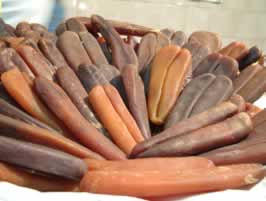
Perhaps even more exciting was our shared pasta course, spaghetti alla bottarga. Now what, you may ask, is bottarga? Bottarga is salted, cured mullet roe that is found only in Sardinia. To prepare this signature pasta dish, the bottarga roe is sliced thin and sautéed in olive oil until fragrant and golden. It is then added to spaghetti and more bottarga is grated (as you would a hard cheese) over the top of the pasta. Knowing we were tourists, our waiter warned us that bottarga was “an intense taste, maybe difficult to like.” But we had been dying to try it since we arrived in Sardinia. I had expected it to be a forceful and saltier taste. In reality, it is a delicate, but rich, mushroomy-like flavor that somehow tastes piquantly like the sea. It’s exquisite. It’s umami personified. I could eat it everyday and if you eat nothing else during your time in Sardinia, please give it a try.

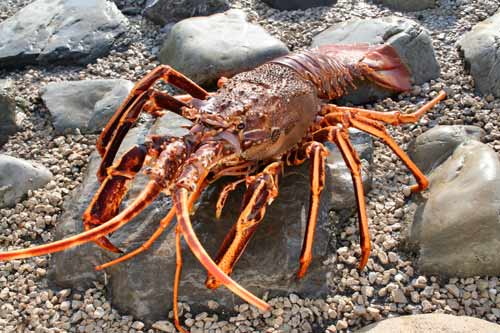
While we both could have died happy after our pasta dish, the best was yet to come. In a moment of bombast, B had decided that we were going to take the plunge and order arogosta alla Bosa (local spiny lobster) for our main course. The chef had an especially large one (500 grams!) that our waiter suggested that we share. Now neither B nor I are crazy about lobster. In fact, before this fateful evening, I believe B had described lobster as “basically tasting like shrimp” to him. But spiny lobsters are the local specialty and the pride and joy of the Bosan fisherman who were eating with their families all around us. We almost felt like it would be disrespectful to stay in that town and not eat lobster. Our giant red flea (which is what la pulce rosa means) arrived at our table in a light broth with celery and potatoes and was so beautiful and fragrant that our waiter hesitated for a second before he disrupted the presentation and carefully served it. I suddenly realized that everyone was watching us, including the other diners, the chef, and all of the waitstaff. We dug in and well, how do you describe these moments? You know, those moments where you eat something and an ingredient is forever transformed and you realize with a sudden heaviness that you will probably spend the rest of your life dreaming about this one dish and never coming close to approximating the experience again? It was like that. And I don’t have a picture of it, because I forgot my camera. I won’t go so far as to make some corny statement about the fleetingness of life here, but if you ever find yourself in Bosa, can I just ask you to please splurge and get yourself the lobster? Perfection doesn’t seem a nearly perfect enough description.
Fortunately “watching the Americans eat the lobster” was only the opening act in terms of entertainment that evening. A large extended family was having a dinner there as well, and the four couples that were assembled had between them a dozen adorable kids under the age of five, who ran around the restaurant like monkeys that had been kept in a cage for too long. Their parents tried to keep them under control, but it was like herding cats. We ended up helping as one particularly sneaky toddler named Andrea tried to book it out of the restaurant and into the street. It was great fun to watch them over glasses of myrto. It might have been my favorite meal of the trip. Well, maybe.
Stay tuned for our next installment, as a cloud falls over our idyll. Evil prehistoric spirits, killer mosquitoes, and a rental car disaster are up next!
 The Bear-Garden