Category: dear reader
Clarence Hates Mystery Meat: H.A.N.D.

First of all, I don’t even understand what I’m supposed to call this place. H. A. N. D. (39 rue de Richelieu, 75001 Paris, Métro: Palais Royale) stands for Have A Nice Day, but I don’t particularly want to call a restaurant a conversational pleasantry: “Do you want to go to Have A Nice Day for dinner tonight?” At the same time, it feels odd to spell out a recognizable word: “Do you want to go to H. A. N. D. for dinner tonight?” So I’ve been calling it Hand, which I also kind of hate, because who wants to eat a restaurant called hand?
So I was skeptical about the name from the very beginning, but my friend BC won me over with talk of a duck burger, slick interior design, and a good review in Le Fooding. I love duck! I love burgers! I love slick interior design! And Le Fooding is how I plan my week! But our attempts to eat at H. A. N. D. were foiled during BC’s final week in Paris, as it seemed to be either closed or too far out of the way every night we contemplated going. I’ve been pretty fixated on going since then, especially since B and I walked by the restaurant on our way to see the Rose C’est Paris exhibit at the BNF (resounding “eh” and I haven’t felt this bad about my boobs in years) and the slick interior design was resoundingly confirmed. H. A. N. D. is really darling inside with indigo walls, bare bulb light fixtures, antique globes, and stacked Campbell’s soup cans. The menu, a spare list of yummy-sounding burgers and a few other French bistro and American diner classics, was intriguing. I’ll admit that despite having eaten some good ones, I’m still on the search for the perfect burger in Paris. Despite their ubiquity here, burgers just aren’t quite what my good little American self wants them to be. As an aside: damn you, SoCal residents, for getting another location of The Counter within throwing range of my old abode.
All this is to say I had high hopes for our visit to H. A. N. D. on Tuesday night. B and I had met up with M at the Palais de Tokyo to take in their newest exhibit Dynasty. I keep going back to the Palais de Tokyo because I bought an annual pass during my initial museum-pass buying frenzy when I moved to Paris. We then discovered that if you have a student identification card and say you are an art history student, admission is free, a fact that never fails to piss me off when we enter the museum. On Tuesday night, our entry went something like this:
Ticket office employee: Eight euros.
B: Actually, I’m a student. An art history student.
Ticket office employee: Really? What kind of art history do you study?
B: Medieval art history.
Ticket office employee: (sighs) Okay. You’re free. Next?
M: I’m an art history student too.
Ticket office employee: Oh really! How convenient! And what kind of art history do you study?
M: (flustered) Uh, the same.
Ticket office employee: Are you kidding me? You also study medieval art history?
M: Uh, yes. I mean, no. Photography.
Ticket office employee: Medieval photography.
M: Yes.
Ticket office employee: Okay. Here’s your ticket.
Obviously technological development and art history are not strong subjects at the American Apparel College for Future Hipster Museum Employees.
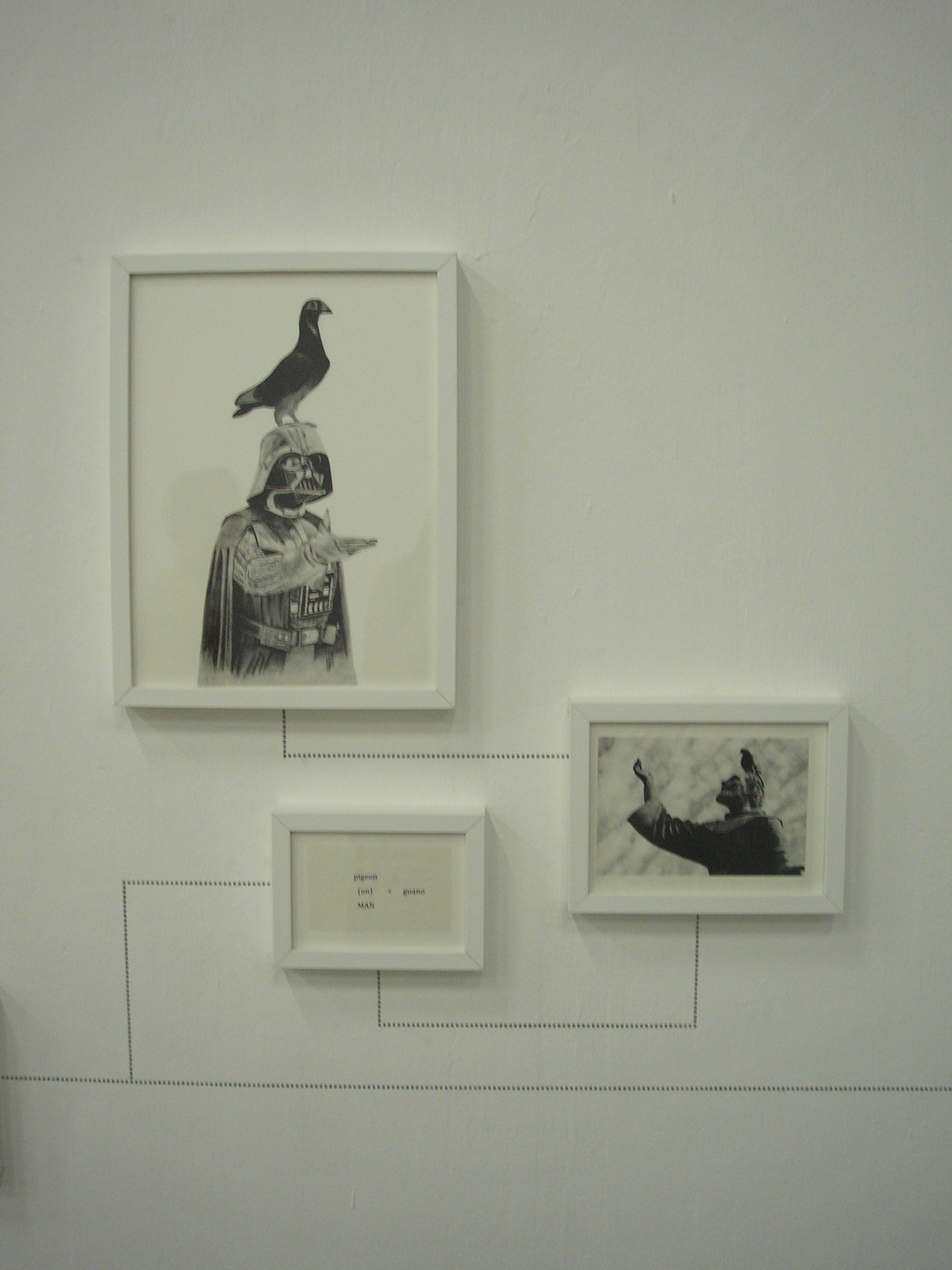
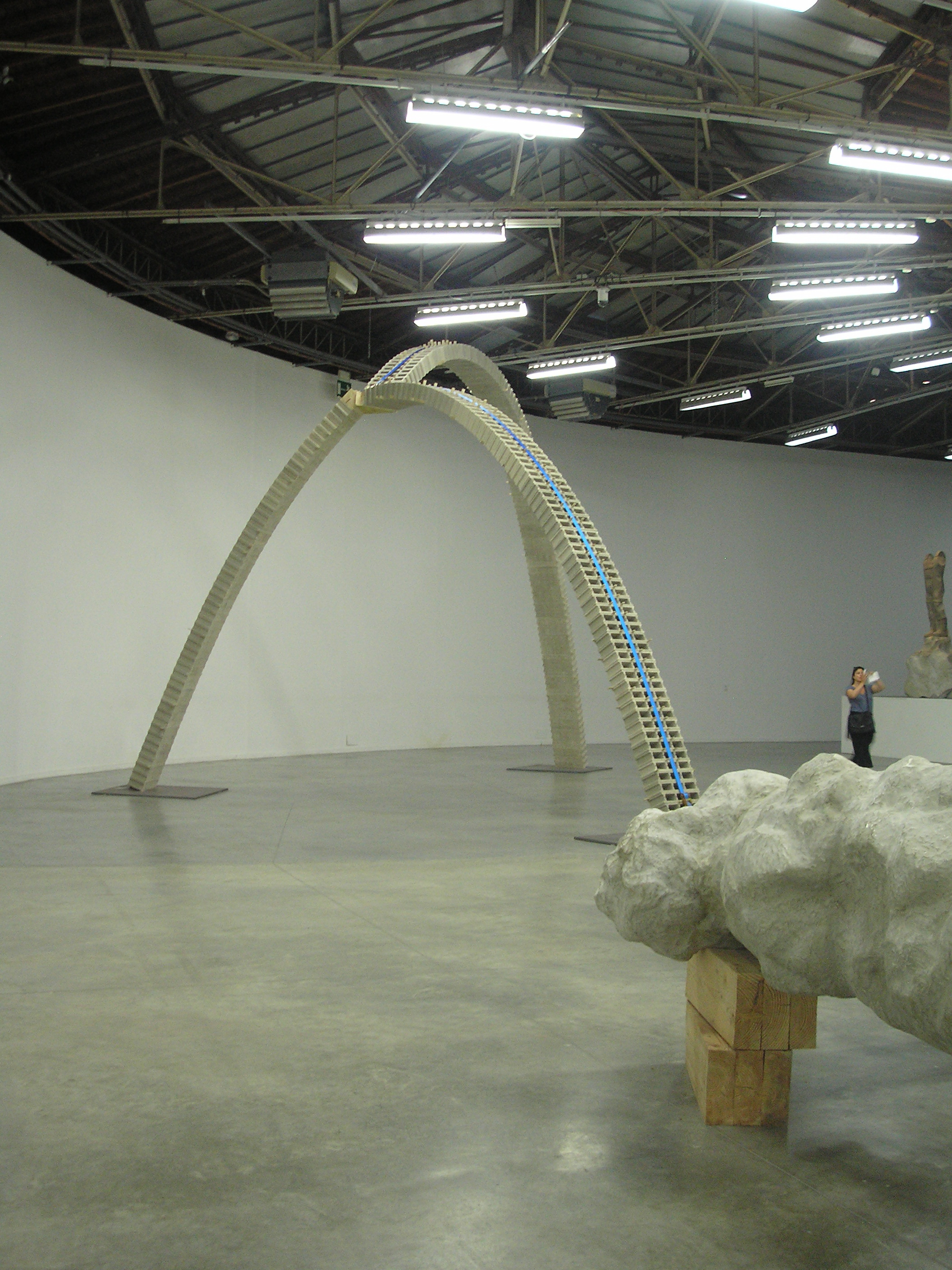
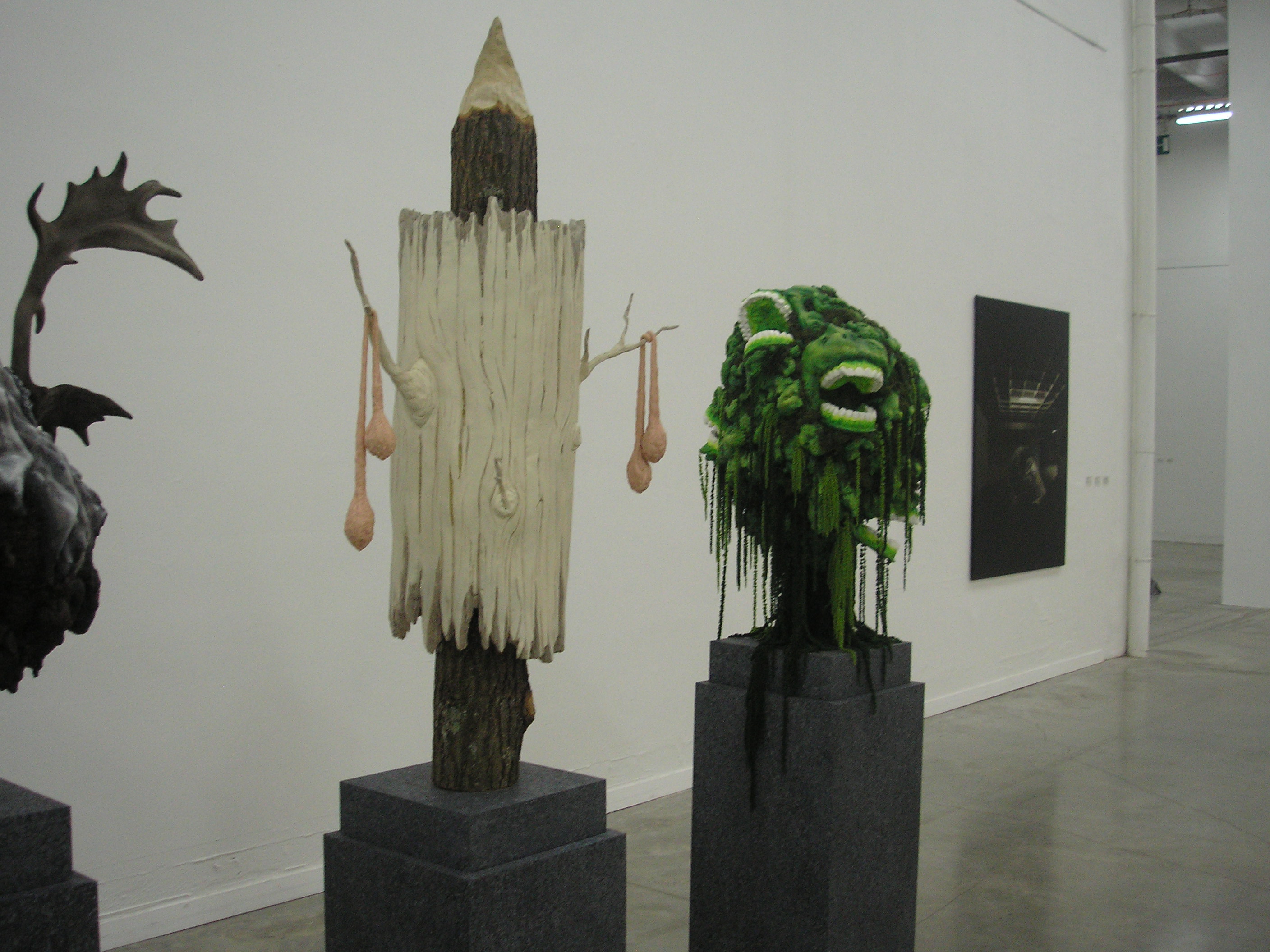
I have no idea why they decided to call this haphazard amalgamation Dynasty, as all that unites the work is the fact that it is new work by emerging young artists in France. Moreover, I seriously think that the Palais de Tokyo is actually trying to make me hate contemporary art entirely. The last several shows there have made me to nothing more than hit my forehead with the palm of my hand in frustration. While B carefully made his way through the exhibit, reading each unnecessarily cryptic description of each unnecessarily obtuse piece (you should see this guy in a museum that actually interests him!), M and I turned into ADD kindergarteners, taking silly pictures and making fun of our fellow museum goers. I can’t believe she’s leaving me for a month.

After a frustrating visit, I convinced everyone that H. A. N. D. would be the salvation of our evening. What couldn’t a duck burger improve? So we strolled into the first arrondissement for dinner, something we really never do unless we are getting Japanese. At first, everyone was happy with our choice. The restaurant is so cute! The staff is friendly! The menu is on a chalkboard! I chose the Super Duck, an anatine patty topped with sautéed mushrooms and melted chèvre. B chose the Cheese + + +, a regular beef burger with three different kinds of cheese. M chose the steak tartare as she is leaving Paris for a month and wanted a final fix before she left.
I’ll start with the good news.

B’s burger wasn’t terrible. It wasn’t the best burger in Paris, but it certainly wasn’t the worst (that honor goes to Café Francoeur in Montmartre). H. A. N. D.’s burger was at least properly cooked! The fries were soggy and the bun was stale, but hey, it was edible.
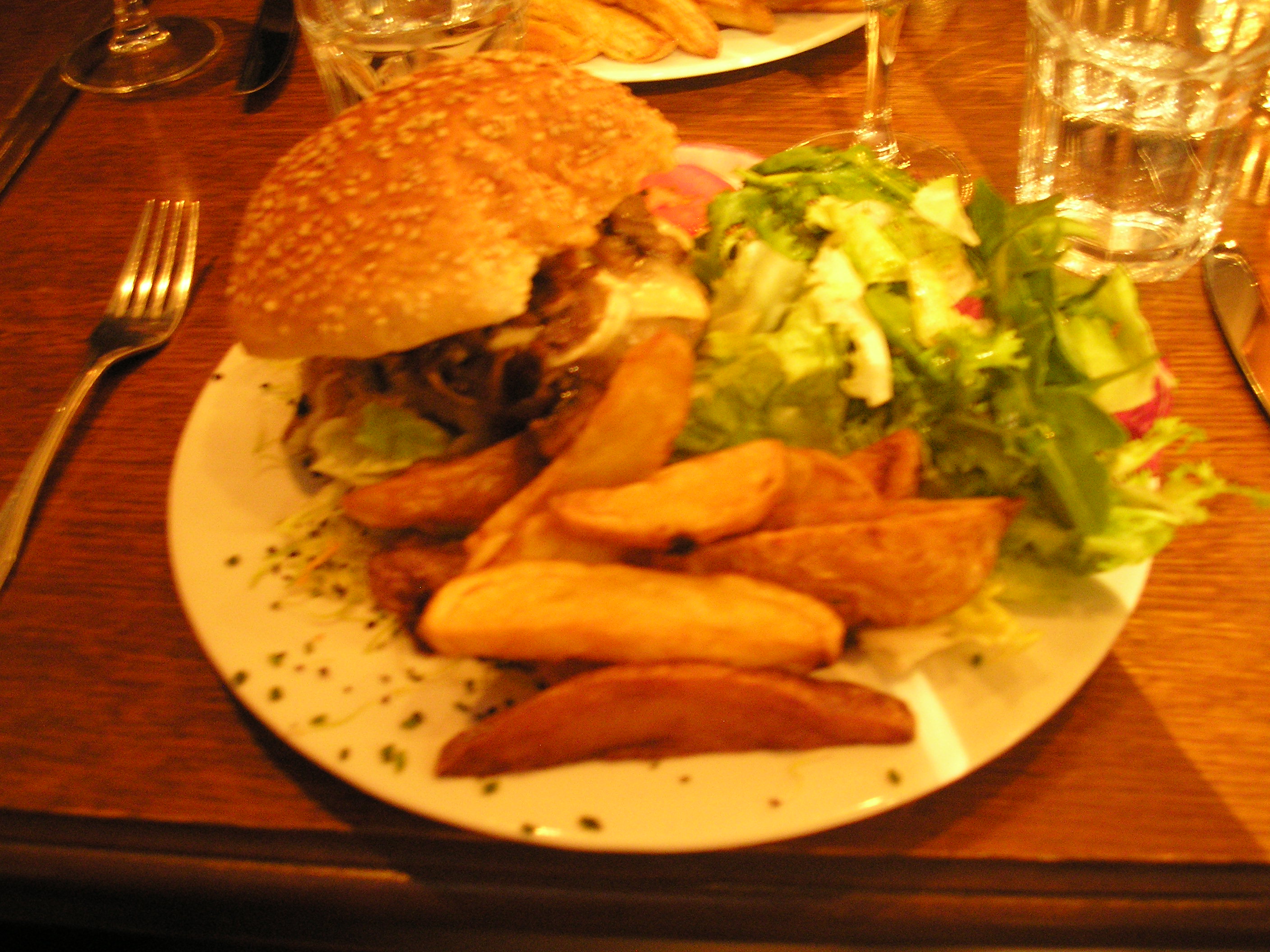
Less edible was my “duck” burger. First off all, let’s be frank: it wasn’t made of duck. Lamb, possibly. Or maybe a strange cut of beef. But waterfowl never even got close to that burger. The mystery meat was dry, dense, and strangely mealy. The cheese and the mushrooms were good, however, and after drowning the whole operation in mayonnaise, I got it down.
But then there was this:

Let’s just say I didn’t want to have to do this, H. A. N. D.
When we told you, H. A. N. D., that the steak tartare was “pas correcte,” what we actually meant was: “This steak tartare was completely inedible. It is at once mushy and sinewy, and it is dark brown! Frankly, it looks like someone defecated on the plate! That this dish would be served at any restaurant in Paris is an insult to French food! You should immediately fire your chef and your beef supplier. Short of this, you should at least remedy the situation and remove this atrocity from our bill, as my poor friend only ate two gracious bites before turning pale, quivering slightly, and setting down her fork for the rest of the evening. Shame on you! Make this right!”
I have to say that here is a difference in ethos between French and American restaurants. You say something is gross or inedible in the States and you can pretty much expect that it will be taken off the bill. H. A. N. D. even shocked me by French standards, as saying something is “not correct” in France is basically the most significant objection you can make to a dish. I almost hit the roof when we discovered that they still charged us for the steak tartare. I wouldn’t have even written this review if they had adjusted the bill properly. But they didn’t, so here we go:
Please don’t patronize this restaurant. They will lure you in with their kitschy décor and their cute typeface. You’ll make stupid American assumptions, like “How could they mess up a burger?” But something is not right here, people. Something is not right with the meat. Off-putting meat is the place where even I, devoted patron of sketchy taco trucks and guys who sell things out of coolers outside of nightclubs, draw the line. One of the best things about France is that meat is of such better quality across the board (largely because Europe has outlawed such terrifying practices as the use growth hormones in factory farms). So a place like H. A. N. D. that should specialize in high-end beef comes as a complete shock and something that nobody should put up with (especially not for a 14 euro hamburger – at current conversion rates, that’s $18.26). Frankly, I’m surprised and relieved that no one got sick from our visit. You might not be so lucky.
Clarence Beats the Heat Part Deux: Top Five Summer Dinner Ideas
My blog might suggest that I lead a louche life of perpetual dining out, which is hardly the case. In fact, despite the absurd percentage of my monthly budget that I devote to food (and books about psychoanalysis), I actually am living here on a pauper’s salary. This means that I eat most of my meals at home. I was quite the adventurous cook when I was living in States, probably because I had proper American kitchens at my disposal. While I was thrilled to find my Marais apartment on account of its enviable address and unheard-of wall between bedroom and living area, I was pretty dismayed to discover the pathetic excuse for a kitchen that they’ve installed in this bitch. We’re talking two glorified hotplates that they have disguised as burners (two settings: scorching and off), a mini-fridge, and a sink. All in one crappy, drippy stainless steel unit. Initially I figured that this would be the death of my culinary aspirations, but I’ve actually gotten pretty handy in my miniature kitchen. As the weather has gotten hotter, I’ve been forced to bust out some of my best summer dinners. I’d never presume to be so culinarily skilled as to tell anybody anything about cooking, but both B and M thought that this might make for an interesting entry and I’m nothing if obliging of my two best readers. And as someone who has certainly Googled “dinner ideas please help!” at one point or another, I thought I’d add my voice to the chorus. So here’s what I like to pull together on a hot evening. While some of these ingredients are rather special, I’ve seen most of them at this point at the City Market in rural Utah, so I don’t think I’m being too much of a Coastal Elite by posting these recipes. Tweak to your taste and enjoy!
1) Carpaccio-Style Bresaola
There isn’t much I love more than a proper raw beef preparation, be it a steak tartare or a beef carpaccio. But for whatever reason, I’m pretty squeamish about preparing raw beef for myself or my friends. I guess at the end of the day I just don’t want to poison anyone. Enter bresaola, that lovely wine-colored, air-dried and aged salted beef that you can find in the deli section of your local market or Italian specialty store. In both French and American grocery stores, I usually go for the Citterio brand for Italian cold cuts. They cost more, but they are usually better than whatever your supermarket is shilling. And no, Citterio isn’t paying me to say this, but if they would like to pay me or send me crates of cured meat, I certainly wouldn’t complain.
This “recipe” is stupid easy and I can’t even believe that I would condescend to my dear reader’s intelligence by writing it out, but here we go.
You need:
A package of bresaola (or approximately 4-5 slices per person)
Two large handfuls of baby arugula per person (Is anyone still buying tough bitter adult arugula? Stop that immediately.)
A wedge of Parmigiano-Reggiano (Don’t worry, you won’t use it all. Is anyone still buying pre-grated Grana Padano? Stop that immediately.)
A lemon
Some extra-virgin olive oil (I’m not particularly snobbish about this, surprisingly.)
Take a pretty salad or dinner plate. Lay out the bresaola slices evenly on the surface. I like to make it look like a flower, though I’m sure nobody has ever noticed this. Deposit handfuls of baby arugula in the middle. Leave the edges of your bresaola peeking out for aesthetic interest. Grate big flakes of parmigiano-reggiano over the top using a proper cheese grating device, or like me, an all-purpose vegetable peeler. You can do all this even a few hours beforehand. Then, right before you serve it, drizzle olive oil over the whole thing and salt and pepper to taste. Serve with lemon wedges and forcefully encourage your guests to squeeze said lemon slices over the top. If you are feeling fancy or improvisational, you can add all number of things to this dish, including capers, finely sliced red onions, or diced tomatoes. Don’t be surprised if your friends think you are more sophisticated that you actually are if you serve this on a weekday.
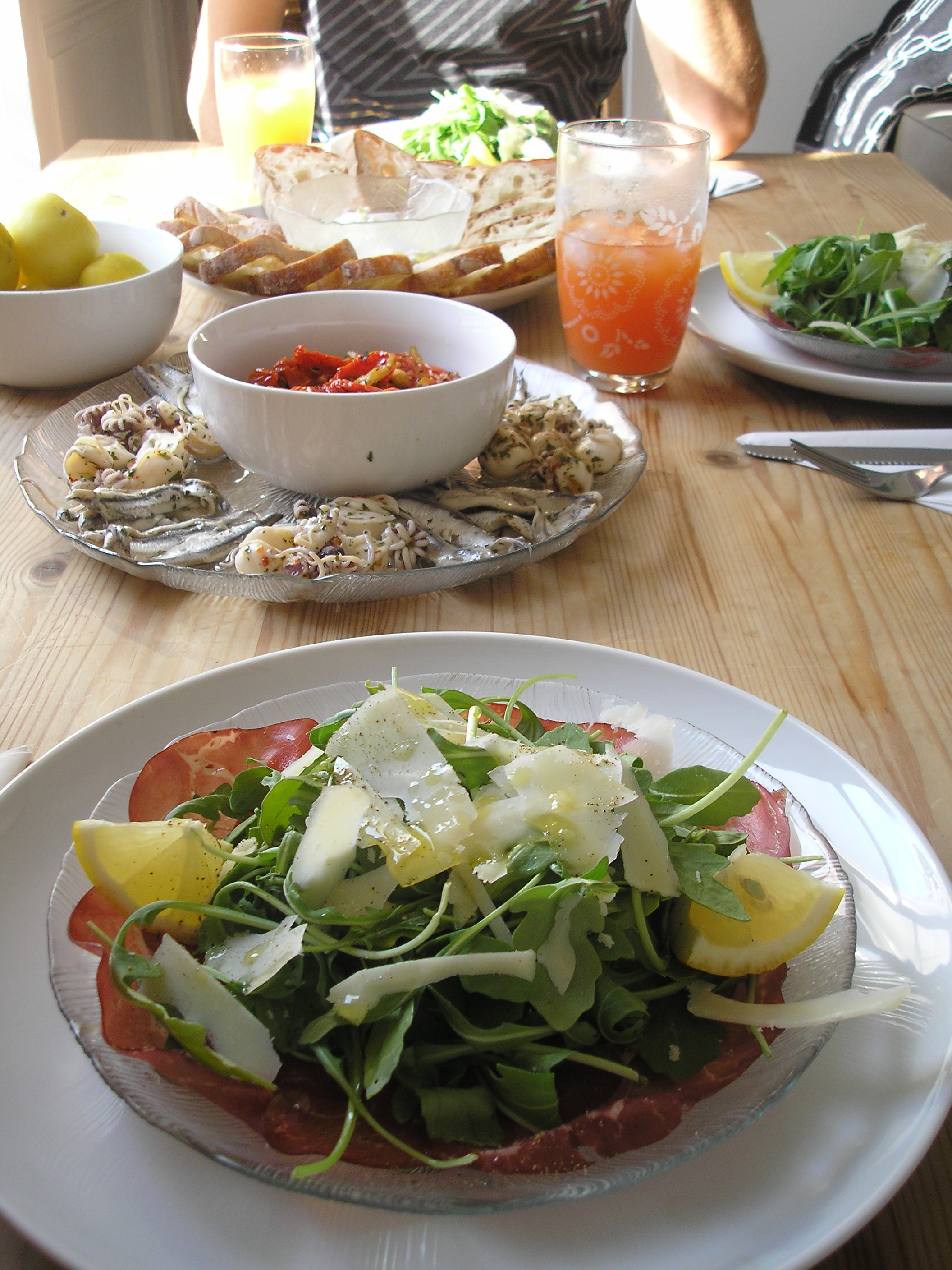
For the summer meal pictured, I served carpaccio-style bresaola with pre-packaged oil-marinated anchovy filets and mini-calamari, demi-sêche tomatoes (have you eaten these yet? They are revelatory if you always felt, like I did, that fully dried tomatoes were too chewy), ricotta with fresh mint and crusty bread, and Campari spritzers (recipe below). Everyone seemed unduly impressed despite the totally minimal preparation time on my part.
2) Terry’s Mother’s Tabouleh
One of the more idiosyncratic things about my dad is that he is a big believer in hitchhiking. He hitchhiked across the United States in his younger days and New Zealand in his first year of retirement, and still doesn’t hesitate to throw out a thumb if he finds himself in need. He’s also pretty unflagging in picking up hitchhikers, which I guess you have to be if you are buying into the whole operation. When I was a kid it wasn’t especially strange for him to bring home someone for dinner who he had picked up along the side of the road. Perhaps more remarkably, he has befriended many of these people over the years and they have stayed in touch over time and distance. One such fellow, a Lebanese guy named Terry, ended up becoming a dear friend of my family and a regular attendee at my mother’s epic Thanksgiving dinners when I was a child. Among the many lovely things he gave my mother over the years is his mother’s tabouleh recipe, which has been a standby at potlucks in our circle ever since. I like to make this at the end of the month when I’m feeling a bit more cash-poor as it filling, cheap, keeps for a couple of days in the fridge, and works well as both a light main course and as a side dish. My mother will probably kill me for sharing this with the world, but it’s really good and worth the ink.
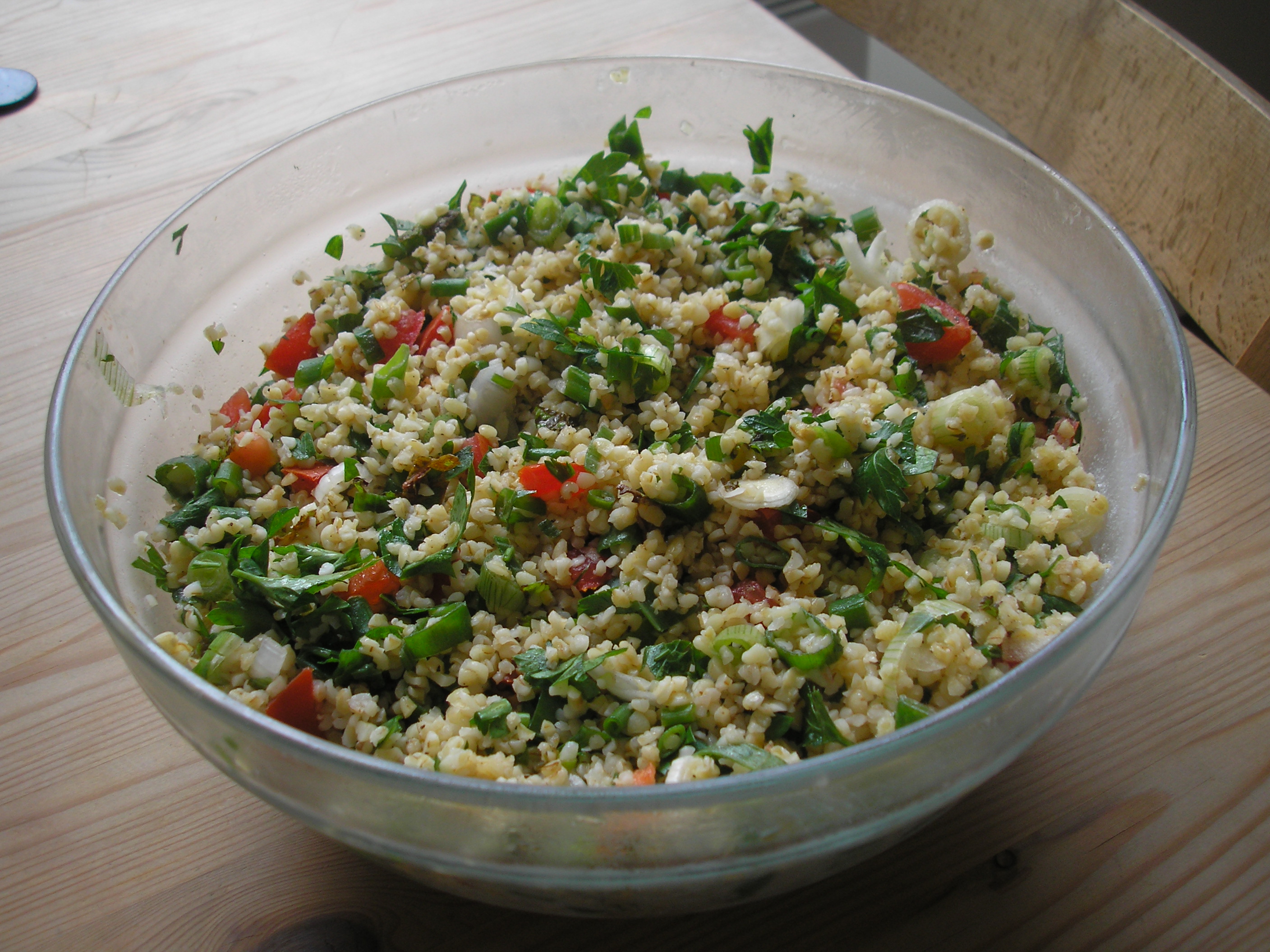
You need:
1 cup bulgar wheat, uncooked
2 cups boiling water
1/2 cup vegetable oil (I use extra-virgin olive oil because it’s all I ever have)
1/2 cup fresh-squeezed lemon juice (fresh squeezed)
2 teaspoons salt
1 teaspoon fresh-ground black pepper
1/2 cup chopped fresh parsley (Italian flat-leaved)
2 teaspoons fresh chopped mint (or you can use dried mint if the fresh stuff costs fifteen dollars at the market and you aren’t savvy enough to have a windowbox herb garden like yours truly)
1 bunch of chopped green onions (including white tops)
3-4 ripe plum tomatoes, diced
Pour the boiling water over bulgar wheat in bowl. Cover with a towel and let stand for one hour. Drain well if there is any excess liquid. Add tomatoes, onions, herbs, and oil, and stir. Then add lemon juice, salt, and pepper to taste and blend well. Chill for at least four hours before serving. I usually double the recipe because it just gets better over the next few days in the fridge.
3) My Mother’s Gazpacho (tweaked slightly)
I’m sorry, but I just have to say it: my mother’s gazpacho is better than your mother’s gazpacho. It just is. I’m sorry. Your gazpacho is runny and sad. My mother’s gazpacho (especially since I tweaked it) is gazpacho for a new generation. I don’t care that you are from Spain. I don’t care what Gwyneth Paltrow says, Spanish food is usually bland city. This is awesome, and I’ll fight you if you say any differently.
You need:
3 large tomatoes chopped and peeled (or not peeled, if you are lazy like me)
1 chopped yellow or orange bell pepper (My mom’s recipe calls for a green bell pepper, but let’s be honest here. Yuck! Who eats green bell peppers anymore? They should be reserved solely for convicts and B’s limb-quiveringly good gumbo).
1 English cucumber (these seem to hold up better than the hothouse varieties)
1 cup chopped celery
1/4 cup chopped green onion
1-2 finely diced raw jalapeno peppers (Less if you’re a wimp, more if you agree that Spanish food could use some heat.)
4 cups tomato juice
3-4 tablespoons of good balsamic vinegar
4 tablespoons olive oil
2 teaspoons salt
1/2 teaspoon black pepper
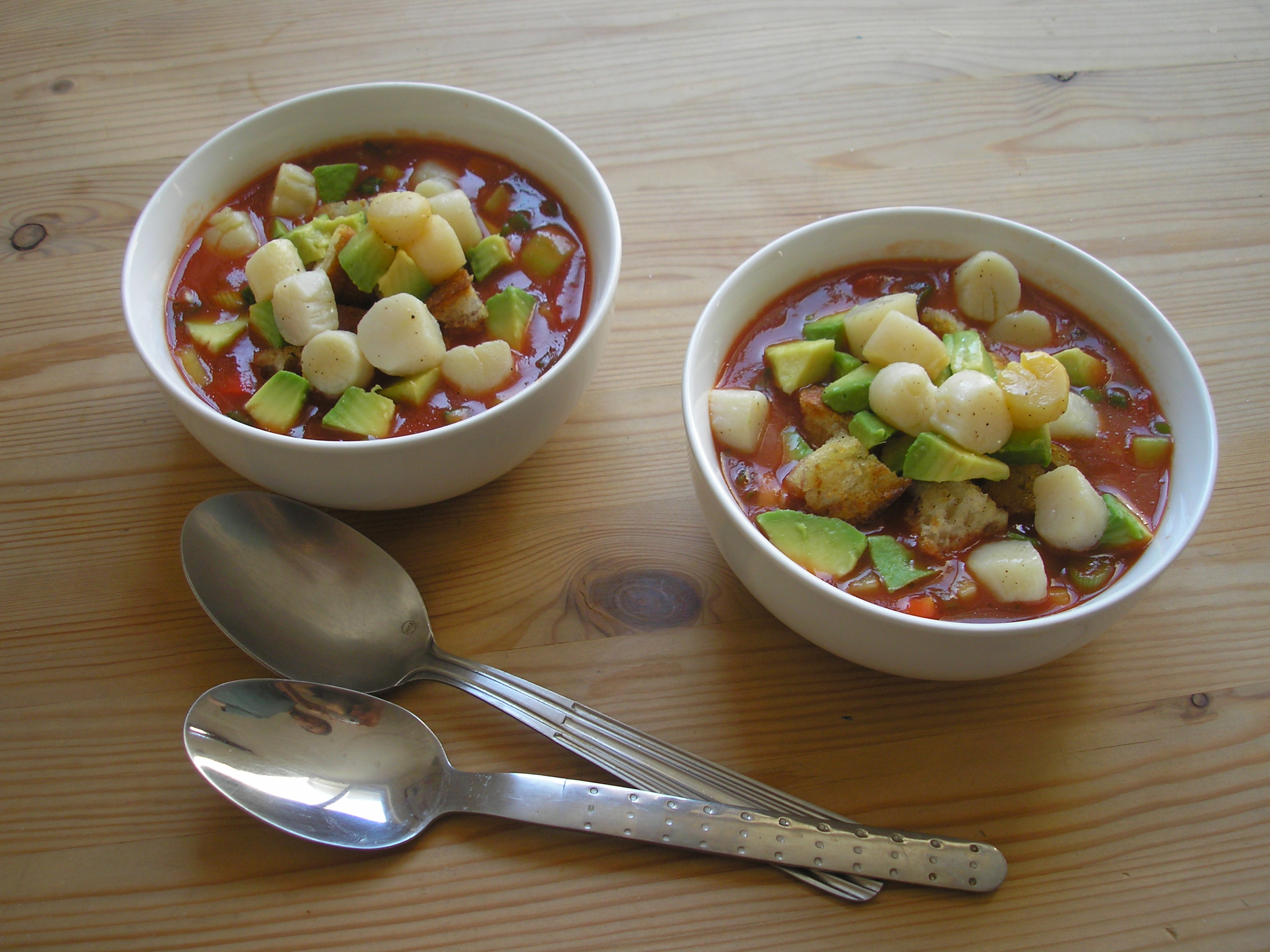
Combine all the veggies and the juice. Then add vinegar, olive oil, salt, and pepper to taste. Now, if you’re a purist, puree the whole mess in batches using your food processor or blender. Or, if you’re a renegade like my mom, leave it alone and watch your guest marvel at the delicious crunchiness of the vegetables. Or, if you’re a sad compromise formation like myself, puree half of the soup and then reincorporate it into the chunky half. Either way, let it marinate in the fridge for a few hours before serving. Then, immediately before serving you can add any of the following to the top:
Ripe avocado slices
Cooked shrimp (Aren’t you fancy! My mom always served small salad shrimp, but anything you can find will do nicely.)
Sautéed Scallops (I like the bay scallops for this, as they are bite sized. Actually, in my opinion, bay scallops don’t get nearly as much play as they ought to!)
Crab meat (Okay, so you’re really fancy! You can buy some pretty killer canned crab meats now, especially if you look in the refrigerated section of high-end markets.)
Croutons (Make your own by liberally dousing cubes of nice bread with olive oil, salt and pepper. Spread them evenly on a cookie sheet and stick sheet under the broiler, shaking every minute so they brown evenly.)
4 and 5) Canned Fish Sandwiches
Are you on the canned fish bandwagon yet? No?! Immediately block out a few hours of your life to browse the website for the Society for the Appreciation of the Lowly Tinned Sardine. In addition to being all things that a good blog should be, this wonderful website is full of recipes and serving ideas for one of the cheapest, healthiest, and yummiest things that you just might not be buying at your local grocery store. I’ve always been a big fan of sardines and have recently become an anchovy fanatic. But I don’t think I ever quite realized how versatile they are and how many different kinds things you can incorporate these omega-3 fatty acid, calcium, protein, and vitamins D and B12 packed foods. And if you’re squeamish about the bones and skin (FYI, that’s where all the nutrients are!), you can buy really lovely sardine filets these days. Spend a few extra bucks on your cans and you’ll be surprised how sweet, tender, and totally delicious these guys can be. They are still one of the cheapest animal protein sources you can buy. The Sardine Society’s website is full of reviews of both American and French brands, so give it browse before you go shopping.
One of the best things that came out of reading the Sardine Society was Alton Brown’s Sardicado Sandwich. Alton Brown usually annoys me, but I quite enjoyed this clip from his show, probably because I too spend a lot of my time proselytizing about the virtues of sardines to the people I love. I tweaked the recipe a little bit based on what I had in my kitchen. I used a fresh baguette sliced lengthwise instead of sourdough (I’m in France, remember?) and balsamic vinegar instead of red wine vinegar in the dressing. Finally, I had some dreamy sweet plum tomatoes that I sliced and put over the top, an addition I’d highly recommend.
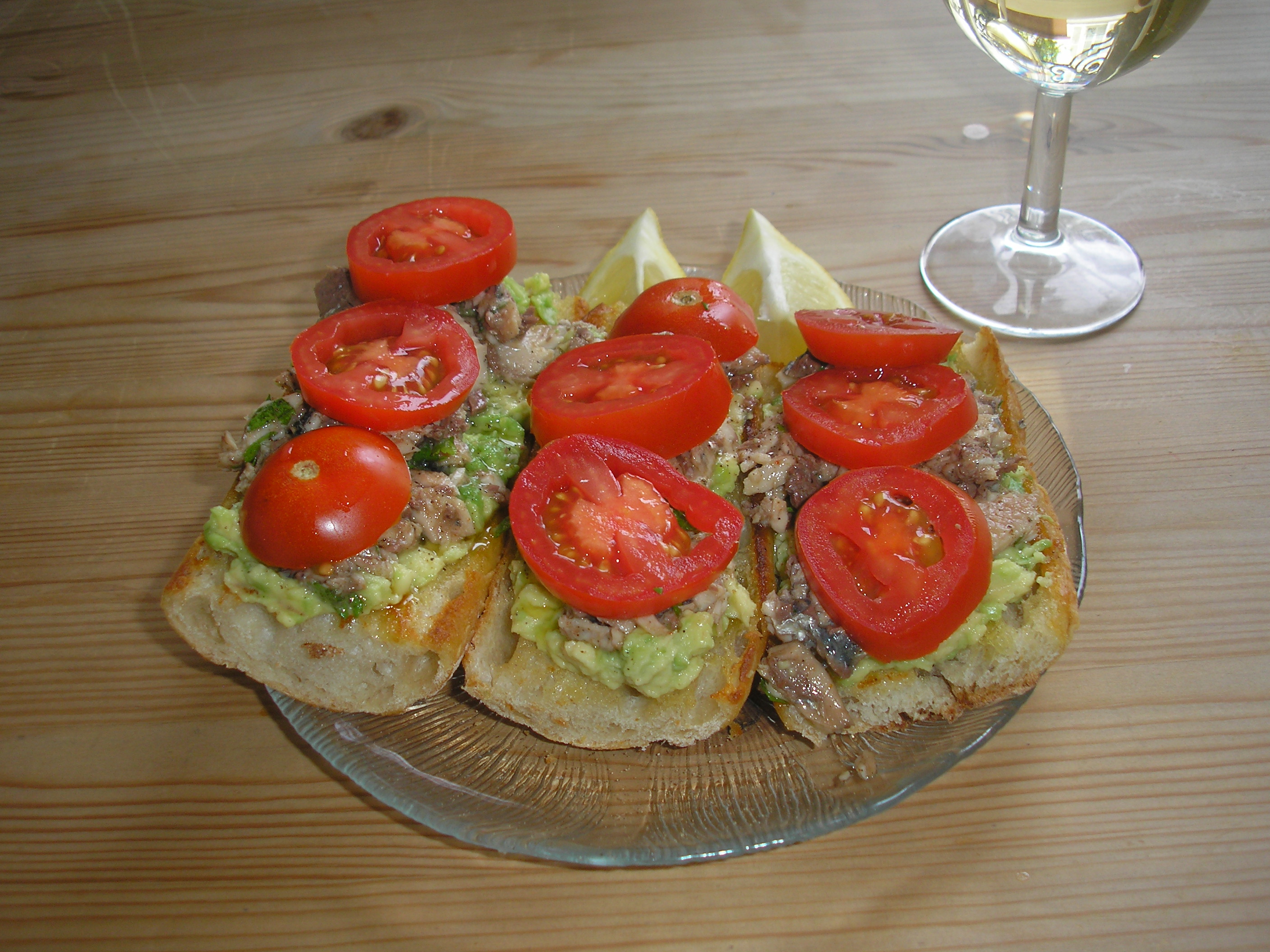
I also am pretty sweet on what I’ll call Cefalù Style Anchovy Sandwiches, the prototype for which I ate while we were staying in Cefalù, Sicily. It’s a simple combination: good anchovies (I usually buy the kind in oil, but am curious to try these Ortiz salt-packed one that all the foodie blogs are nuts for), drained half-dried tomatoes, and thin slices of pecorino cheese. Place the three of these on the inside of a baguette and wrap the whole thing tightly in plastic wrap for an hour or so to marinate. Then, before serving add some fresh arugula.
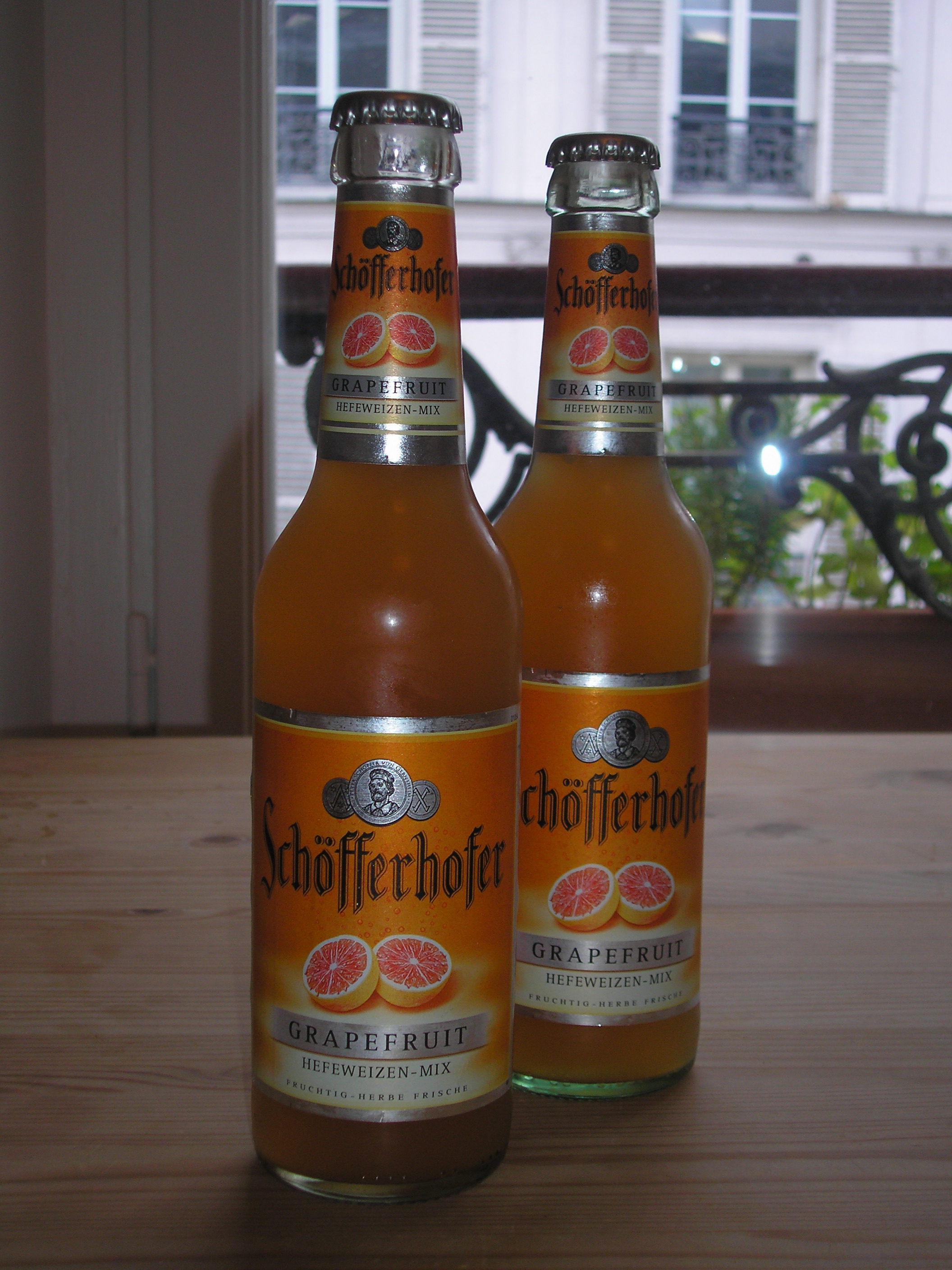
As for drinking, my ideal summer cocktail is three things: fizzy, seriously boozy, and kinda sweet. There’s nothing better than a whiskey and ginger ale on a hot evening. Or, experiment with making Bavarian Radlers (beer and sparkling lemonade) at home. If you’ve jumped on the Aperol and Campari bandwagons (judging from my Google results, many of you have!), I’d encourage you to fool around with the basic formula of an Aperol/Campari spritz. While the basic formula combination is Aperol or Campari, Prosecco, and soda, I like to add citrus juice instead of soda (clementine, tangerine, blood orange, and pink grapefruit are all really nice with these flavors).
Happy Eating!
Clarence Avoids the Mob and Eats Watermelon Jello: Palermo, Sicily
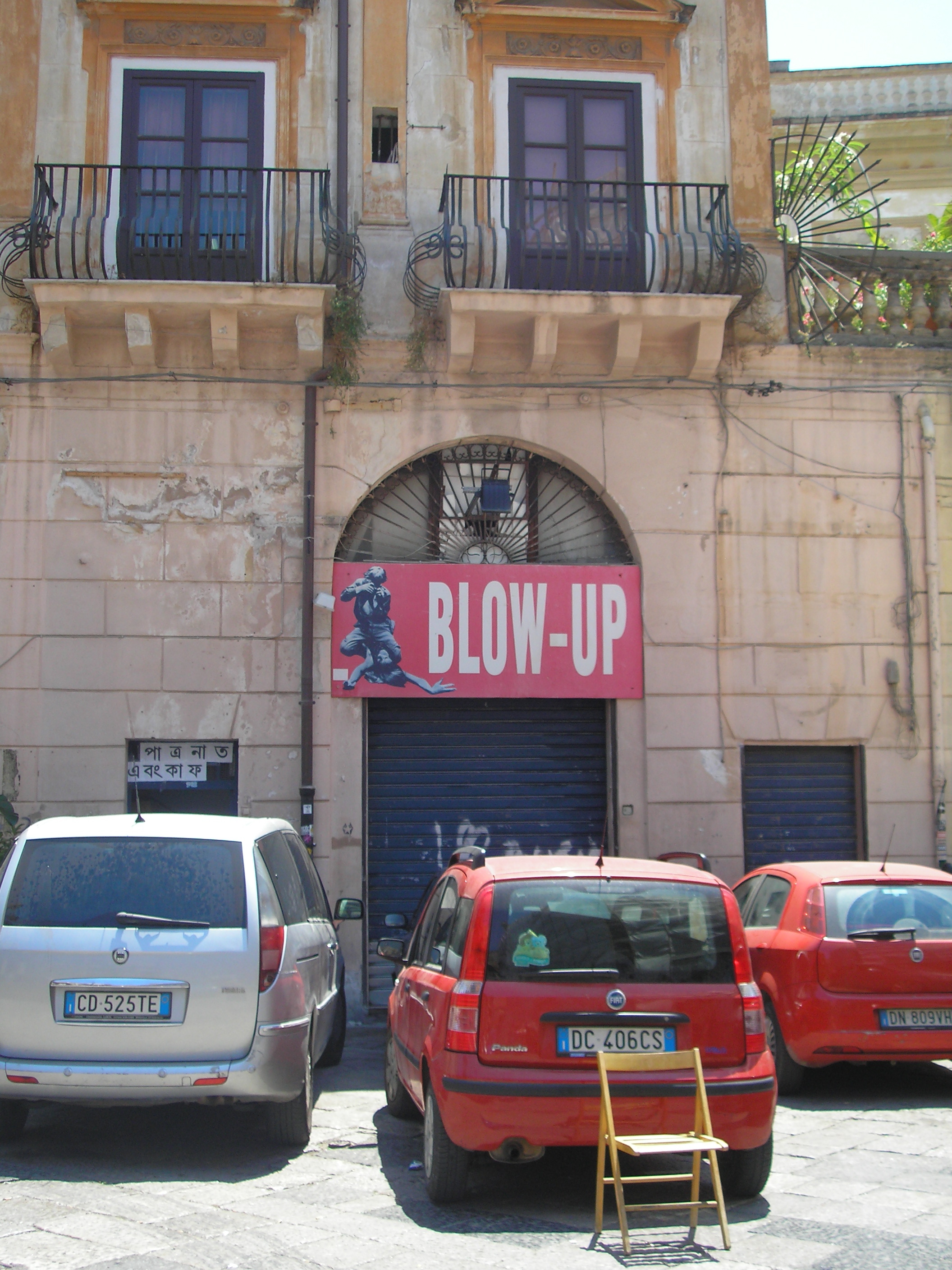
One of the dumber things we did when planning our trip was assume that we could easily take a ferry from Sardinia to Sicily, book our hotels, and then attempt to work out the ferry schedule. Turns out while you can indeed take a ferry from Sardinia to Sicily, it takes nearly 14 hours, is only offered as an overnight voyage, and is only available once a week. So at the last minute we had to book an Alitalia flight from Cagliari to Palermo via Rome. Which was annoying, but less expensive and fear-mongering than we imagined (though the Italians still do the thing of applauding when the plane touches the tarmac). After our sleepless night, I was looking forward to sleeping on the plane. B, however, is unable to sleep on planes, so he instead had three double espressos at the airport. I suspect you can guess how this ends.
We arrived in Rome with no complications, aside from the fact that they wouldn’t let us bring our amazing pocketknife from Corsica in our luggage, so B gave it to a small child in front of the airport (not cool?). We had a few hour layover in Rome, not really enough to do anything but wait. I was fine with that, as I was now deep into Jonathan Franzen’s Strong Motion, which is quite good if you want a summer read. Unfortunately, I couldn’t focus on my book because of an enormous group of American college girls who were hanging out at our gate, waiting for a flight to Florence that left before our flight to Palermo. Have I ranted about study abroad here before? NO? Well then it’s high time. First of all, I’ll admit that I was among the worst of the worst, as I was at NYU for undergrad and did a semester in Paris. I was pretty grossed out by the culture of study abroad when I was in college and didn’t participate in the modus operandi of getting wasted in a new European city every weekend. But I know I can’t make the statement I’m about to make without sounding like a hypocrite, so I want you to know that I will effectively lump myself in this category. Okay, here we go: the best way for the United States to improve their image abroad is to immediately disband all study abroad programs. I said it! Moreover, study abroad is entirely wasted on college students, even the smart sensitive ones that spend the whole time at museums quietly weeping into their Moleskin journal. For every one of those, there are twenty spoiled monsters in pink sweatpant shorts who act like Europe is a special branch of Disney with an all-you-can-drink alcoholic smorgasbord. I’ll take this argument further: study abroad programs are why Europeans think Americans are entitled assholes! Those white sneaker wearing, aw shucks, “I’ve wanted to see the Eiffel Tower my whole life and now I can die happy!” tourists – totally harmless! Those kinds of tourists are so terrified of being “the bad Americans” that they spend most of their trip trying to be extra-polite. You know who isn’t concerned about being a bad American? Kids whose parents are dropping forty grand for a semester in Florence, Prague, Barcelona, or Paris. Now look, I know that you, dear reader, were a total exception to this rule, as was your kid. But let me tell you about these girls at the airport.
B had arrived at the gate before I did, as I was in the ladies room trying to convince my face to stop resembling old Silly Putty. When I arrived, I found him sitting on our suitcases near a bank of empty chairs with a sour look on his face. “Why don’t we sit down to wait?” I asked. “We can’t sit there,” he responded through clenched teeth, “Those seats are all saved.” “Saved?” I asked innocently,“Why would anyone need to save fifteen chairs?” I turned around and the answer clomped towards us in flip flops , Ugg boots, hoodies, and sweatpant shorts. Some were clutching pillows, some stuffed animals. All looked as though they were ready to go to bed, even though it was ten o’clock in the morning. “Uh, excuse me!” one said snottily as she pushed our suitcase away from her “saved” seat. I turned to B and said we should head to a café before I lost my shit. He agreed, so we found the nearest place to grab some coffee and a panini. While I sat with the bags, B went to the counter to get our food. He came back sputtering, unable to speak with amazement. When he finally came back, I asked what had happened.
“So one of those American girls…”
“Yes, one of those college girls. What did she do?”
“She pushed ahead of everyone in line. She was speaking English to everyone, saying that she didn’t need to wait because all she wanted was water for her water bottle.”
“Oh, well, I mean, I guess…”
“No! It’s worse! So she gets to the front of the line and cuts in front of me. I let her go because I thought it might be amusing. And she thrusts her dirty little Nalgene bottle in the face of the barista and goes ‘I want some water.’”
“I’m sure she didn’t say it exactly like that…”
“No, SHE DID! In English! He obliged, and filled up her bottle and handed it back to her. She didn’t thank him, but I thought it was done. And then! DO YOU KNOW WHAT SHE DID THEN?!”
“Urinated on the floor?”
“She inspected the bottle, pushed her way back in front of me, and then caught the barista’s gaze. She held out the bottle, SHOOK IT AT HIM, and said “How about some ICE?’”
“NO!”
“YES!”
“We’re still in Rome, right?!”
“THIS JUST HAPPENED!”
After that I was done appeasing the spoiled children. We went back to our gate, stopped speaking English, and ignored two girls with visible thongs who informed us that the seats we were sitting in were “saved for our friends.” I gave one of them my patented “Little girl, don’t poke the cobra” face and we sat there until they boarded their flight. Not one of them attempted to greet the airline employee in Italian. Out of over twenty girls, only one thanked the airline attendant who wished them a pleasant flight. I was mortified to be an American.

Fortunately, we finally boarded our flight with little complications and were soon headed to Palermo. We arrived and easily found the bus into town, a much better plan that a fifty euro cab from the airport. The coastline around Palermo is really amazing, with huge craggy mountains rising almost directly out of the sea. And while the environs of Palermo seemed somewhat shabby, they also seemed to be homes that people took pride in and care of. As we entered the main part of the city, we drove through a rather fancy-looking shopping district and I immediately began formulating my theory about how everyone in my life that had said Palermo was gross and kinda scary was actually full of shit. “Look how pleasant this is!” I declared to B. “My mom was completely wrong about this!” B, who is much better at reserving judgment than I am, merely nodded and said that this part of town did indeed look nice.
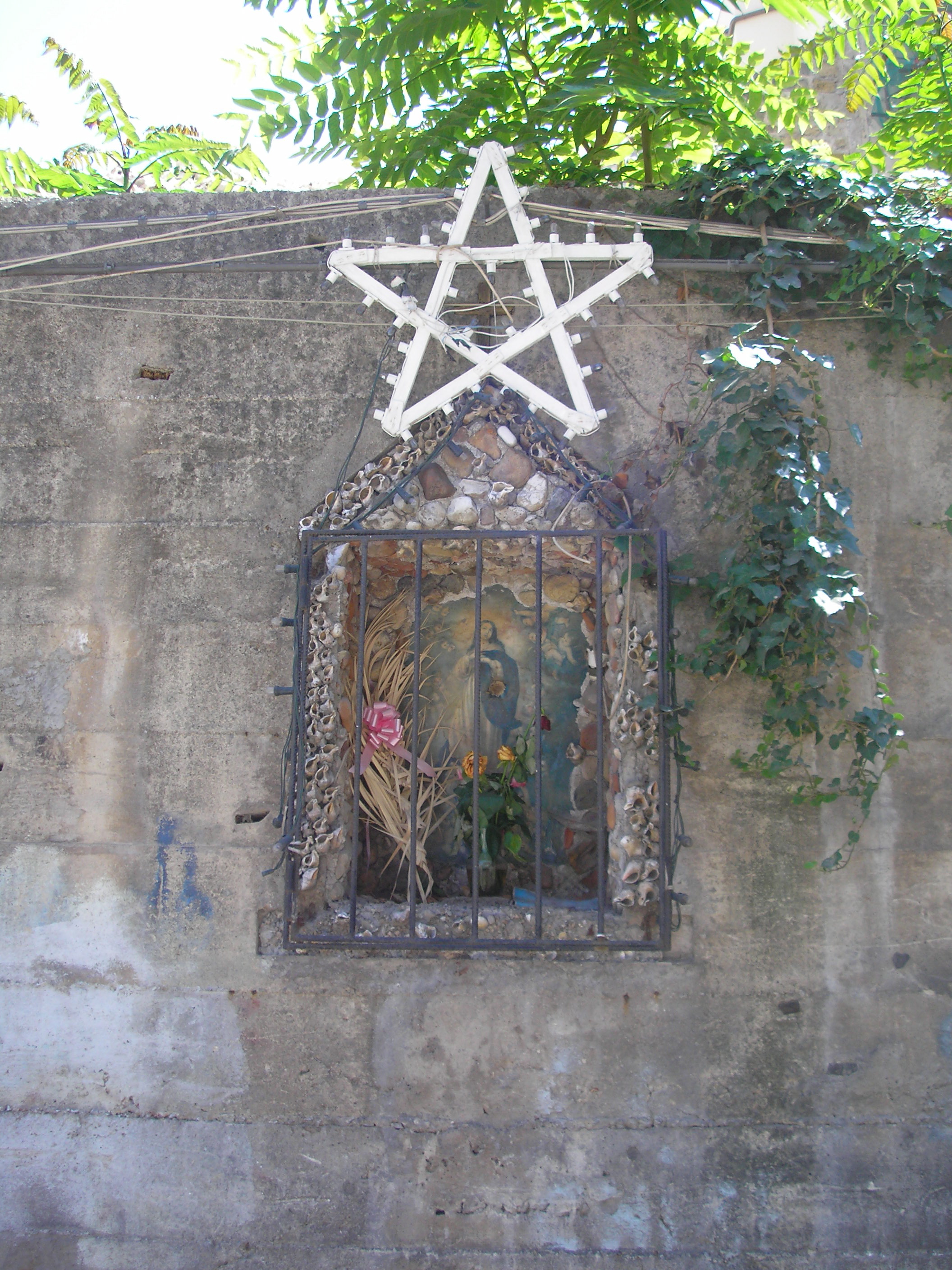
As we moved into the historic center of town, however, we quickly began to notice that things weren’t quite as nice or pleasant, and while there might be some high-end buildings, most everything else looked like it was about to crumble into dust from too much pollution. Getting out of the bus at the central station, the poor air quality hit us hard. I mean, you literally feel dirty as you are walking around outside in Palermo. At night when I went to wash my face, my white washcloth was covered in ash.
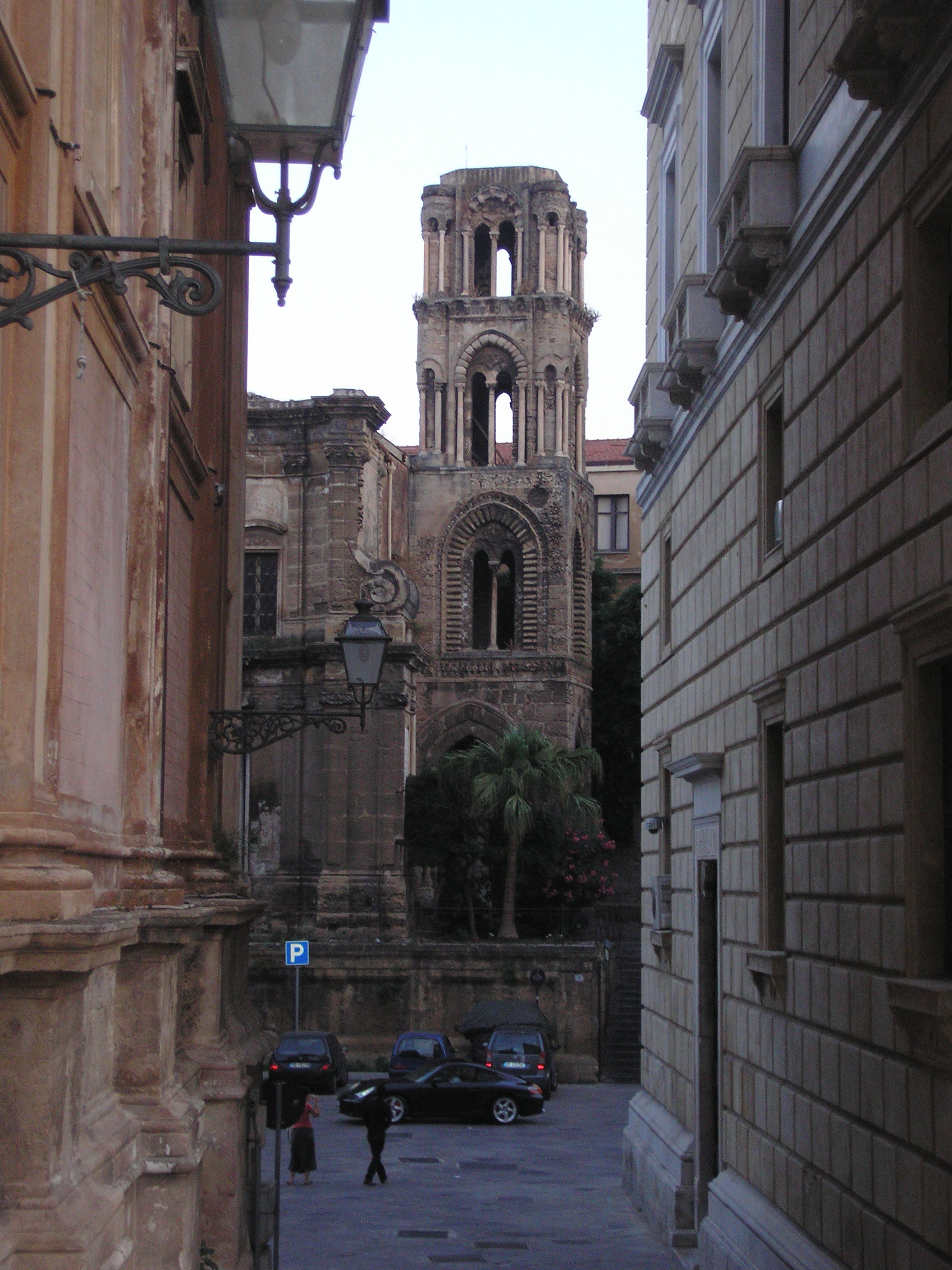 It’s actually really sad, because as B pointed out to me, Palermo is actually older than Rome and has a truly fascinating history that is reflected in the architecture. But even the most important civic buildings are in a state of decay and the urban infrastructure that surrounds them is entirely not conducive to walking around. We were perpetually thwarted in our attempts to visit historic sites, often because they were closed for private events or just off limits to tourism more generally. B made the wise comment that Palermo likely looks today like much of Europe did in the fifties and sixties. It’s unfortunate, as it seems like a really fascinating city that is held back culturally by deeply entrenched corruption. I mean, seriously. Our hotel only accepted cash.

Our first culinary stop was the Antica Focacceria di San Francesco (Via Alessandro Paternostro 58), described by our guidebook as a “Palermitan institution” and the first stop the Sicilian president made when showing Anthony Bourdain around town. We figured that if it was good enough for them, it was good enough for us. We were especially anxious to try the maritata, a sandwich of stewed veal innards and ricotta cheese. Lonely Planet also described a moffoletta of cherry tomatoes, anchovies, caciocavallo cheese, and oregano, that I had been fantasizing about all morning.
We had a terrible time finding the place, as we tried to be clever and take some side streets for the atmosphere. Can I just say to future visitors: maybe be careful taking side streets for atmosphere in Palermo? While many of them are indeed atmospheric and a few are even flat-out charming, some are downright scary, including one we took on the way to lunch that appeared to be an informal sort of dump for the neighborhood. I was amused by our circuitous route to lunch, but I noticed B wasn’t quite in such high spirits. This was probably because while I had slept for three hours on the plane, he had drank six espressos and was now crashing from all that caffeine and lack of sleep. By the time we arrived at the chaotic Antica Focacceria di San Francesco, he was about to collapse. I rallied, figured out the complicated system of ordering, and got B his maritata. The giant vat of milza (veal innards) dominates the center of the room and smells strongly of lard. In fact, everything smelled strongly of lard. I was in that cheerful, dopey tourist mode and happily flirted with the bartender when he handed me my beer. B in contrast was shaky, cranky, and obsessed with the lard dripping into his beard. While the food wasn’t good, not even a little bit, I was impressed by the bargain. Everything you see below cost less than fifteen euro. Much of it tasted like sand, but that’s another story.

After a much-needed nap at the hotel, we explored the area around the Quattro Canti, the elaborate intersection of two of the largest streets that forms the center of the oldest part of the city. Here is the Piazza Pretoria, the “scandalous” fountain that the city purchased in 1573 and subsequently had to modify to appease the prudish churchgoers:

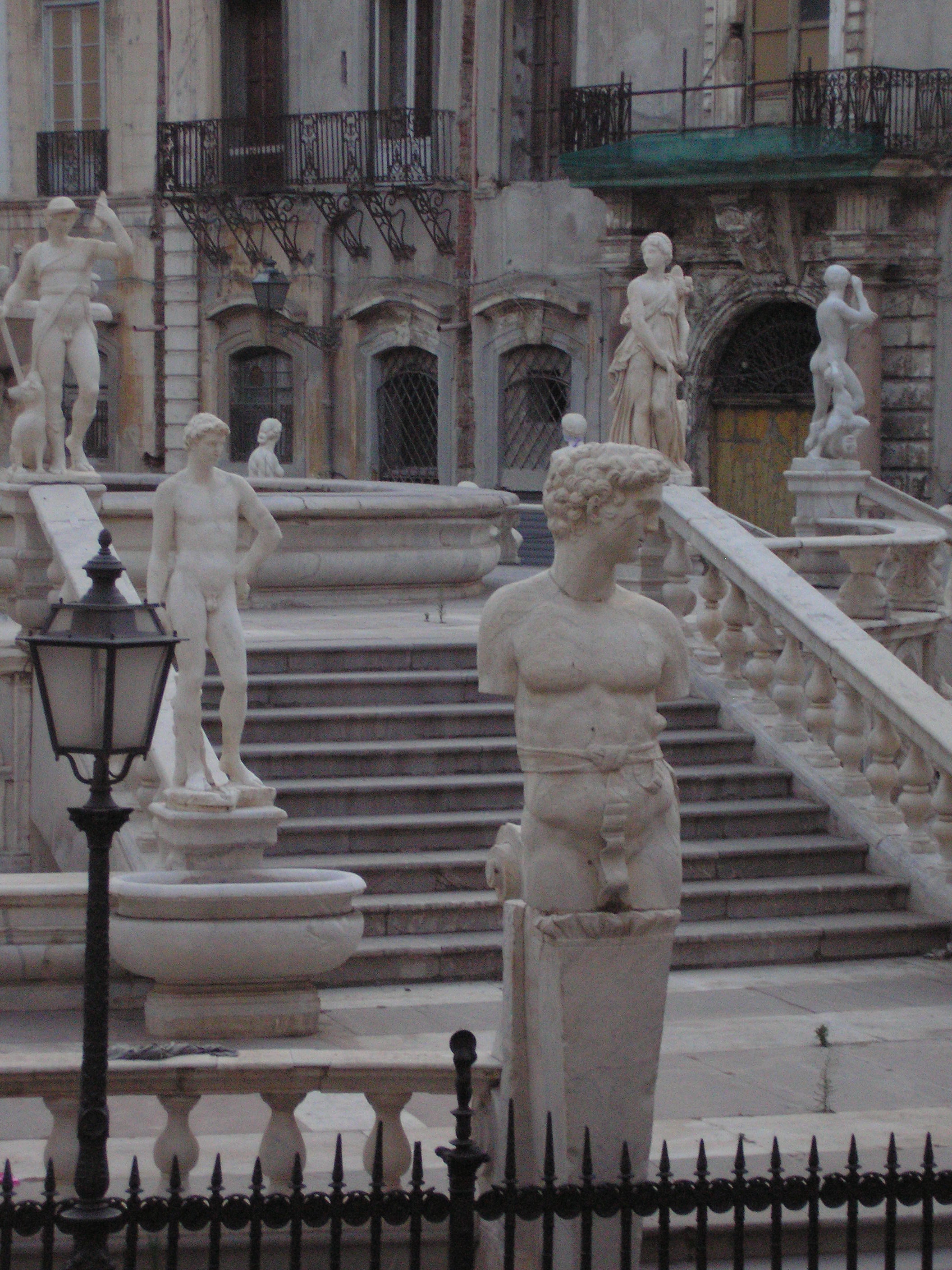
It was empty and filthy, of course. Why on earth would you want to fill, clean, or light one of the most important landmarks in the city? How bourgeois that would be!
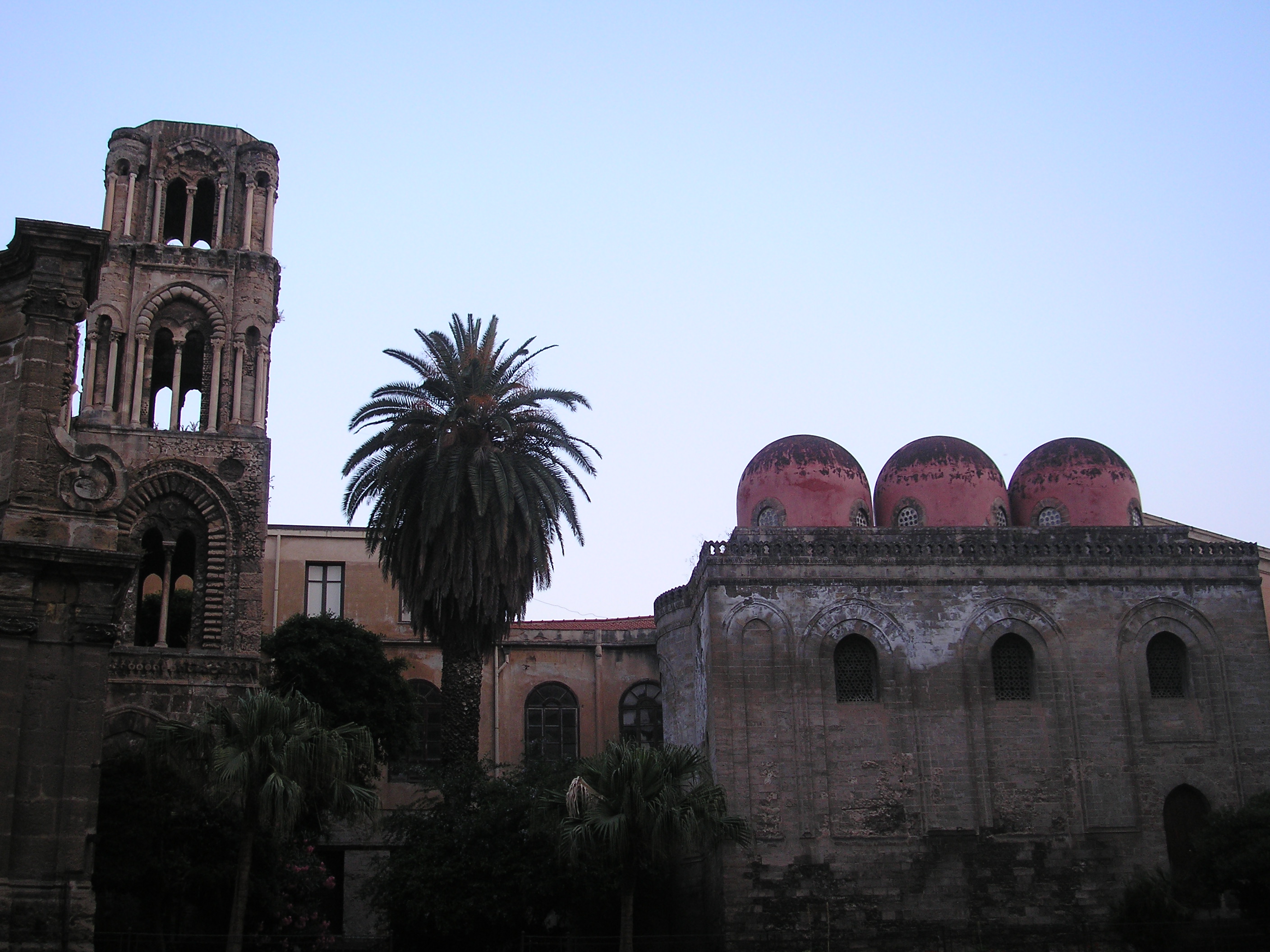
From left to right, this is La Martorana (which houses some really exquisite mosaics and some extremely annoying attendants) and the Chiesa di San Cataldo. You can see the incredible hybrid of Roman, Arab-Norman, and gaudy Baroque ornamentation that characterizes much of the historic center of Palermo.
Let’s get to the good stuff, shall we? For dinner, we went to Primavera (Piazza Bologni 4), a Slow-Food recommended trattoria that literally feels like a Fellini set, as you dine by candlelight in the midst of a ruined piazza. The food? Fantastic and startlingly affordable. We began our meal with antipasti of polpette (deep fried balls of fresh sardines, pine nuts, and raisins) and eggplant parmesean. For our pasta course, we shared plates of fettuccine in squid ink (our first encounter with this visceral dish that dyes your teeth and lips black) and in a light white wine sauce with fresh mussels, clams, and shrimp.
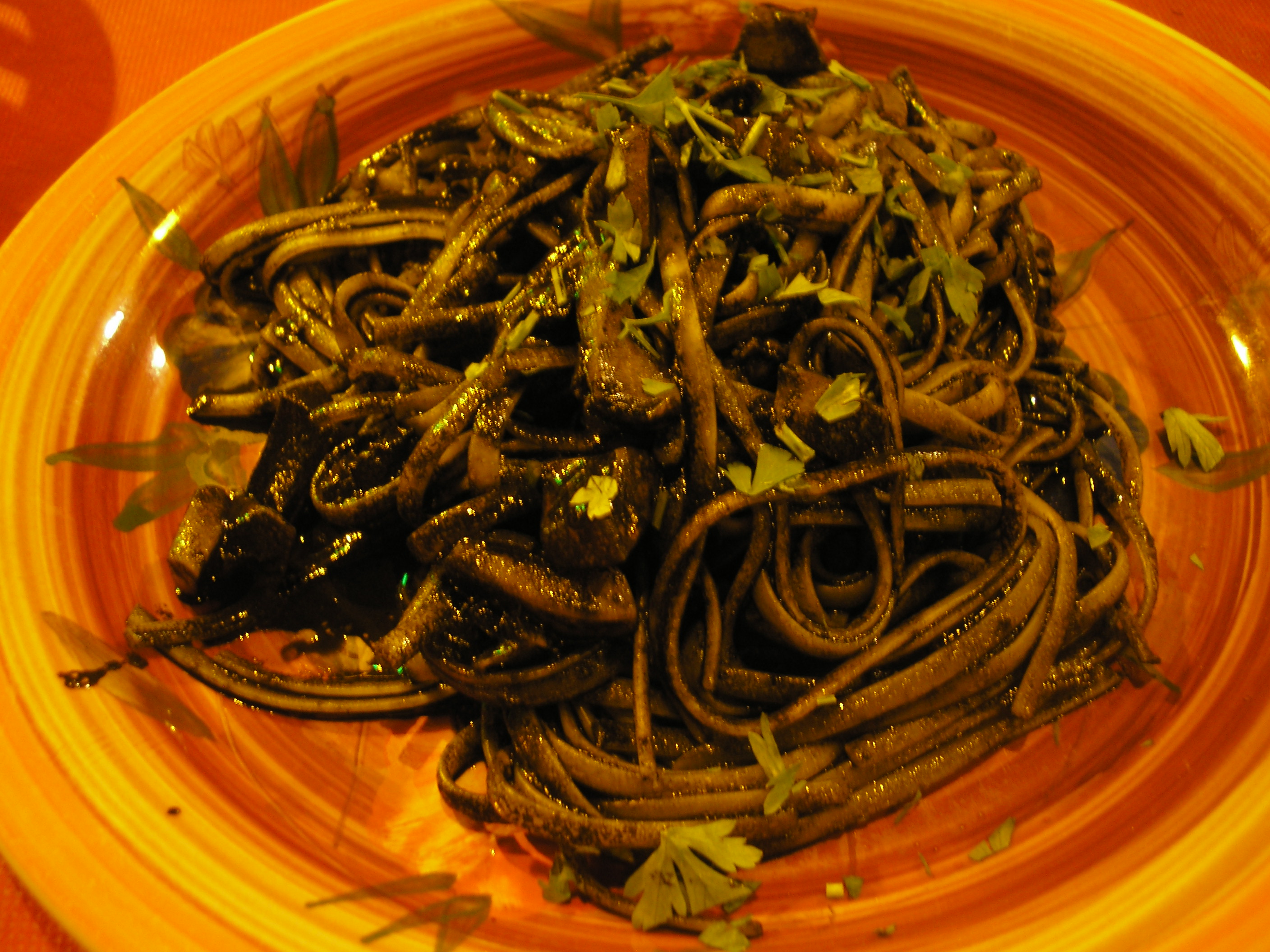

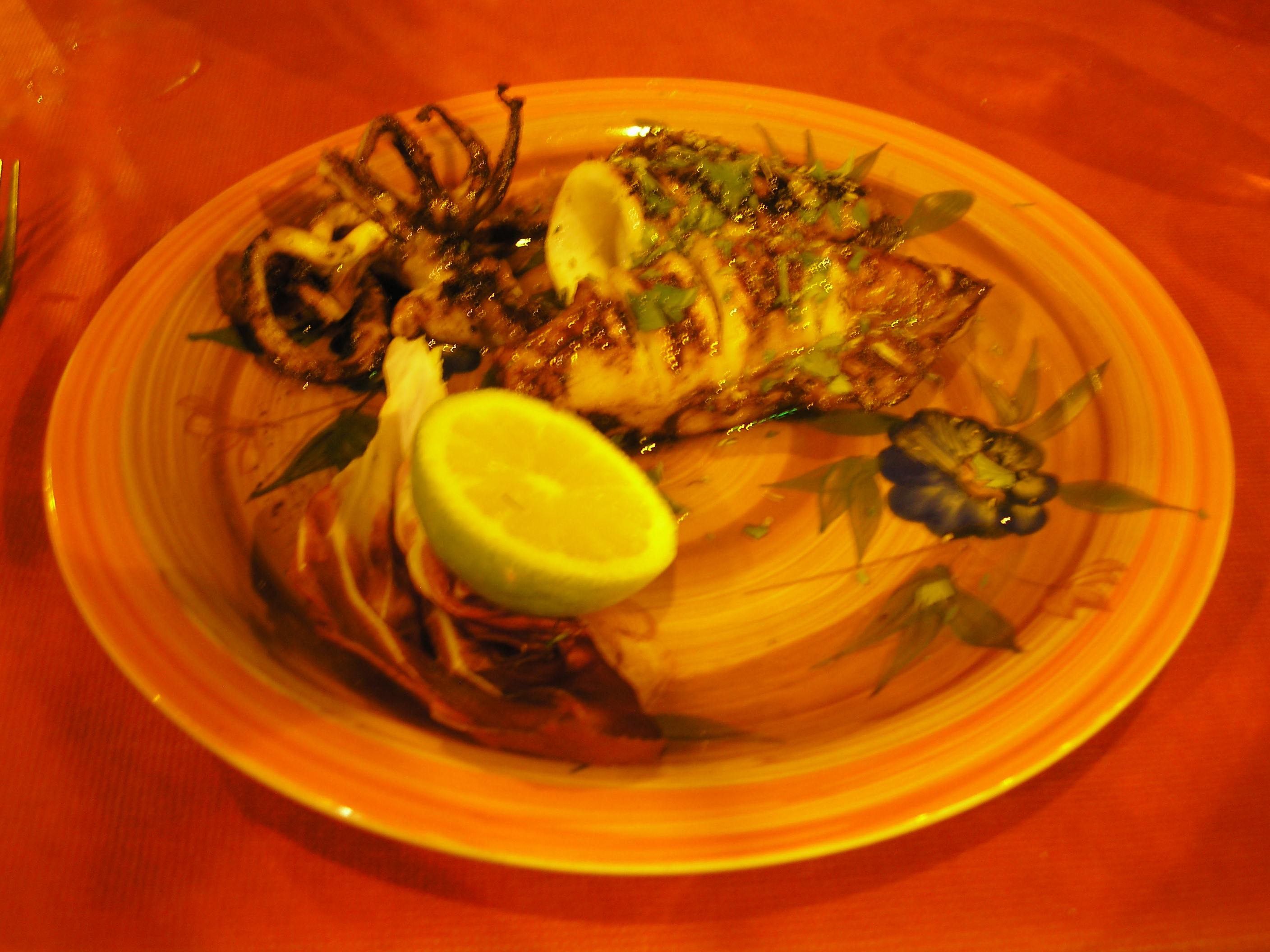
For my main course, I had charcoal grilled squid. I can’t even express how tender and magnificent these were:
B sampled the spigola al sale, mainly because it was amusingly translated as “it gleans, with salt.” He discovered his new favorite dish, a whole fish cooked in a bed of famous Sicilian salt, which keeps all the moisture in the flesh and creates a crunchy crust of skin. It became his go-to dish during our time in Sicily:
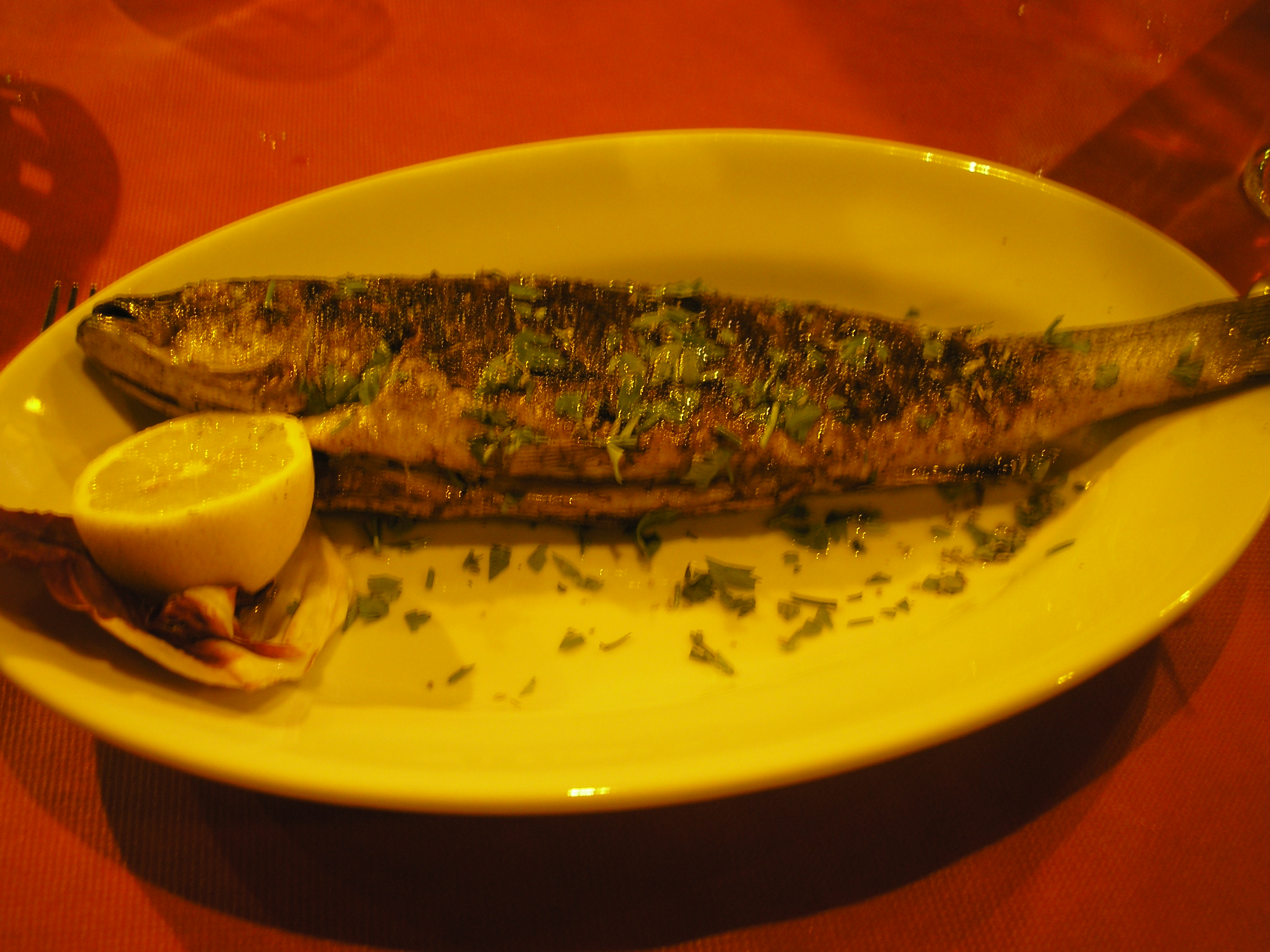
The whole meal, with wine and sparkling water, set us back about forty euros, a far cry from the cash hemorrhage that our lives in Paris and Corsica had been. While I can’t say that Palermo is much for sight-seeing, a real foodie could do some serious damage here on a limited budget.
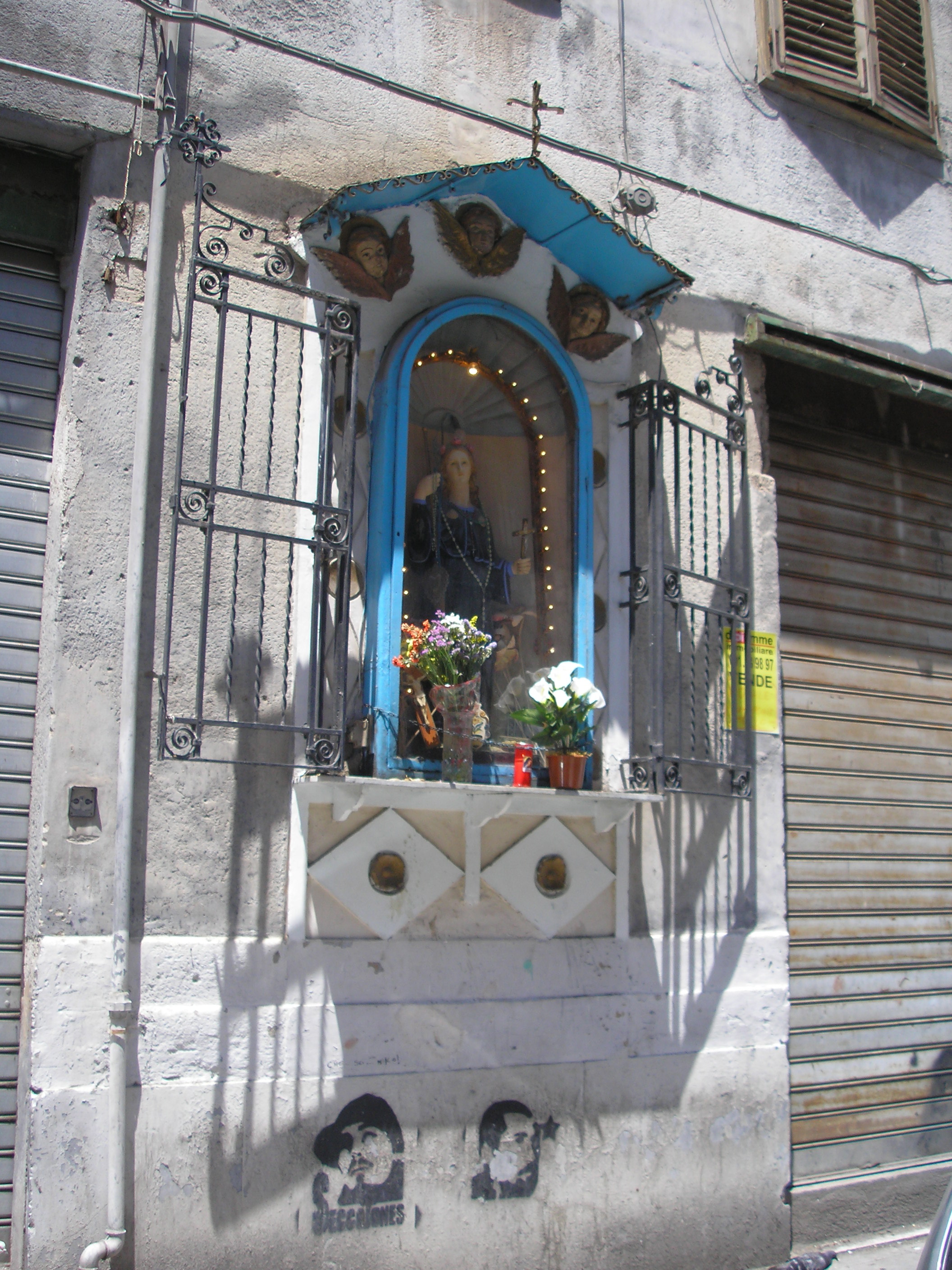
The following day we attempted to do some sightseeing in the oppressive heat and dirt of the city and were confounded at every turn. We started at the Civica Galleria d’Arte Moderna, less because of our deep interest in 19th and 20th century Sicilian art and more because we had read that the museum restaurant was “a hidden gem” run by the Michelin-starred chefs at Osteria dei Vespri across the street. I’ll burst your bubble – it’s isn’t anymore. The restaurant is closed indefinitely, likely because there is nobody in the museum. While the structure itself is an amazing and obviously expensive restructuring of a 15th century palazzo, the collection is mostly made up of yawn-inducing hotel art. There are more people working at this empty museum than I’ve ever seen before, and they stood around in huge uniformed packs and gossiped loudly. Nobody knew anything about the art or could answer any questions about the building. The museum guards were all surfing the internet at the various computer banks around the exhibitions and totally ignored our presence. As B pointed out, we could easily steal some of the artwork, that is, if any of it had been worth stealing. We spent the better part of the afternoon guessing about what kind of ridiculous Italian government grant had spawned that monstrous collection and its enormous and inept staff. It was the most impressive attempt at a tourist attraction that the city has to offer, and it was a mess.
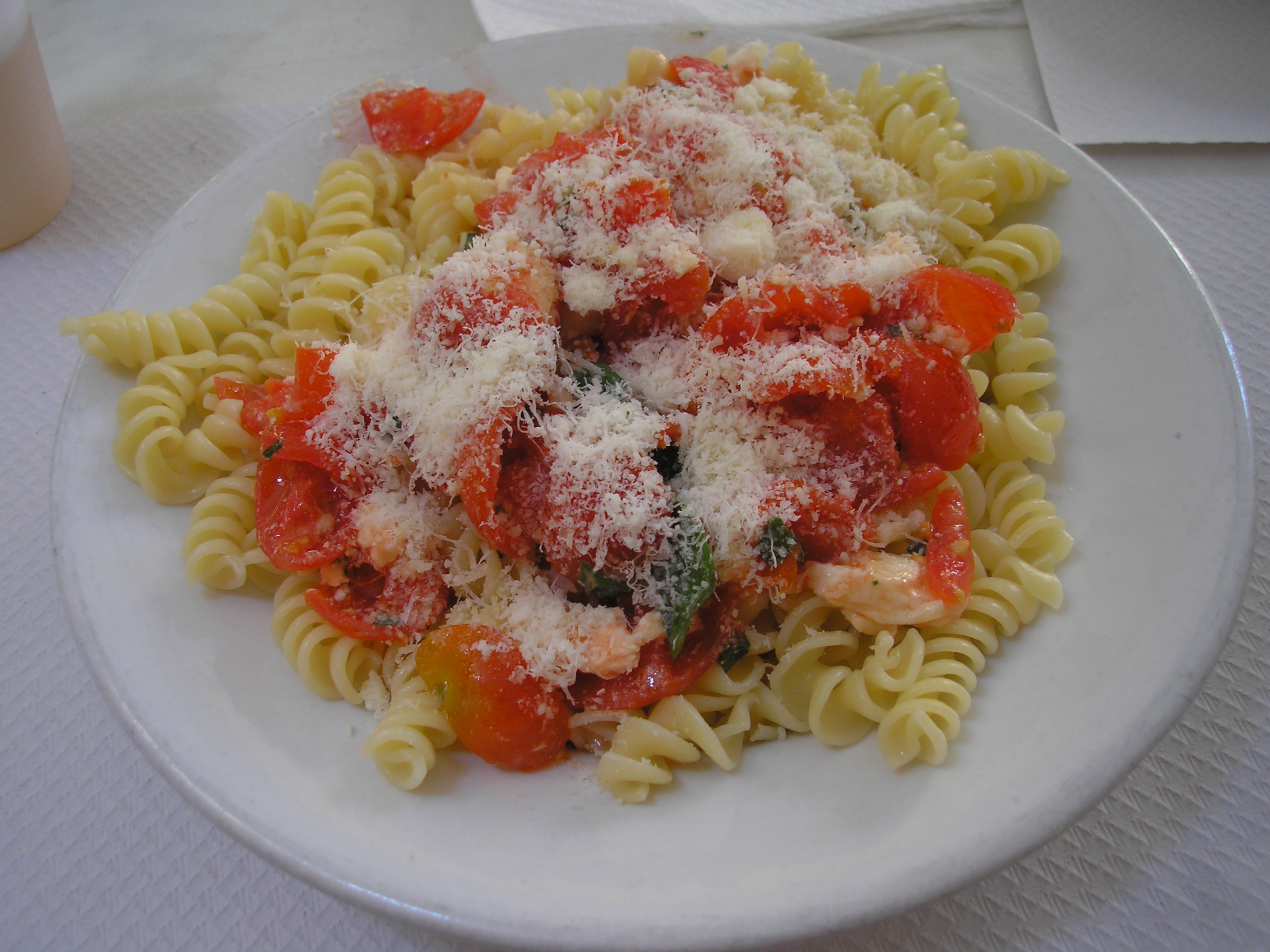
Disappointed about our lunch failure, we decided to give the Sicilian eating house another try and walked to the Trattoria Basile (Via Bara all’Olivella 76) for lunch and found the kind of place that we had hoped the Antica Foccaceria di San Francesco might be. Huge servings of antipasti and fresh pasta are the main attraction here and long lines wait for this excellent (and cheap!) dining experience. We both had a plate of this simple and delicious corkscrew pasta with fresh tomatoes and mozzarella:
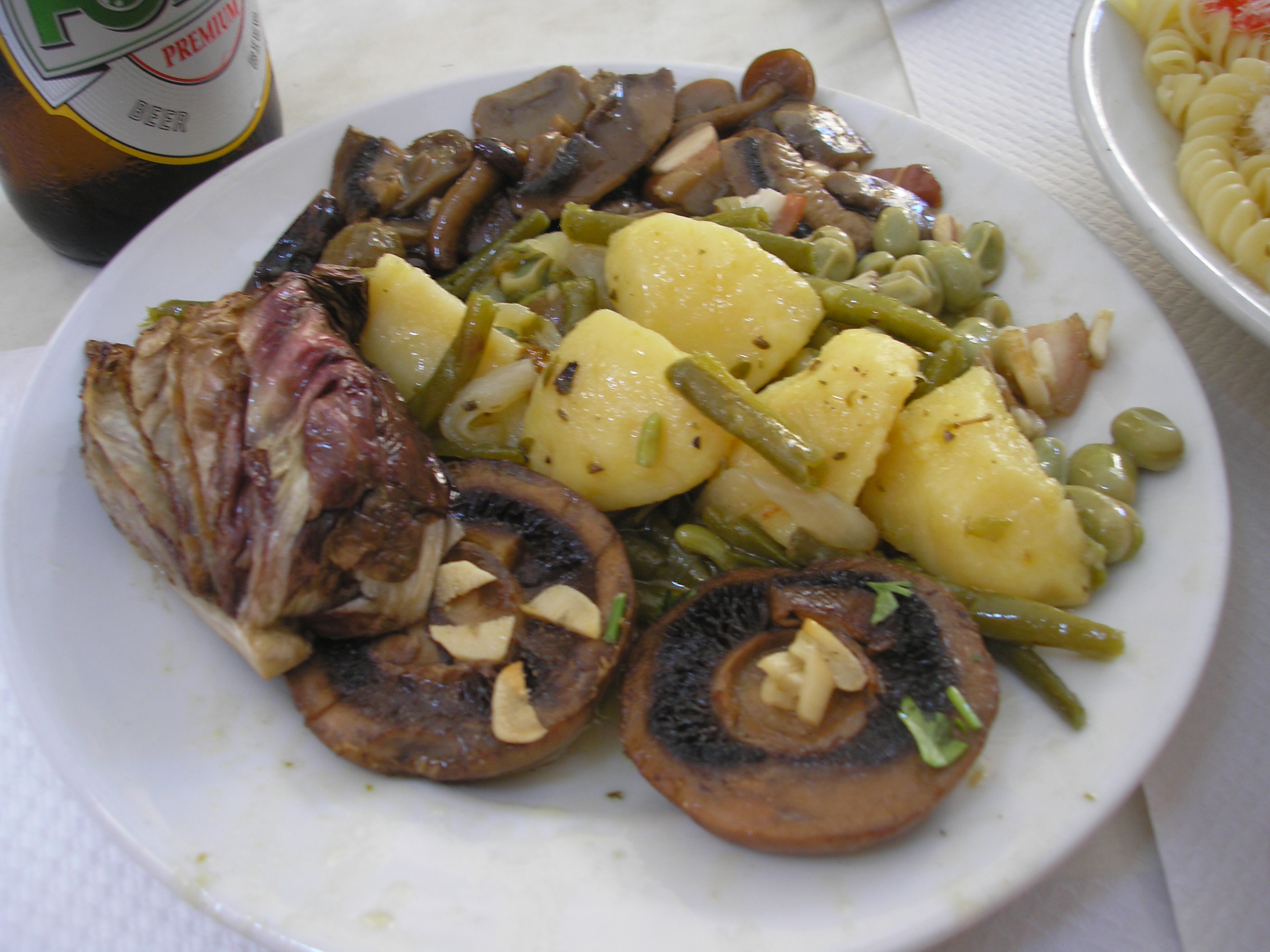
And we shared a delicious selection of roasted vegetables from the antipasti section, including the very fava beans that were a ubiquitous presence in my mother’s Sicilian family when she was growing up.
For dessert, we were anxious to try the gelo di melone, a watermelon gelatin dessert served with chocolate chips and fresh flowers. They are flat-out obsessed with watermelons in Sicily and big slices are often served as a light summertime dessert. For some reason I found it hysterically funny to see waiters at fancy restaurants carrying around trays with huge wedges of watermelon. Likewise, gelo di melone is everywhere and considered the signature dessert of Palermo.

The verdict: pretty, but totally weird. I was skeptical about the combination of watermelon and chocolate and found it rather off-putting in practice. But I’m glad I tried it, once.
The damage: two plates of pasta, a plate of antipasti, a dessert, two enormous German beers, and a liter of sparkling water cost twelve euro. Twelve. I was ready to move to Palermo after lunch.

Instead, we walked across town to the Palazzo dei Normanni, a giant Norman-style (duh) palace that houses both the main governmental offices of Sicily as well as the Capella Palantina, a supposedly-amazing chapel from 1130. Except…it was closed for the day. In the middle of high tourist season. Because, wait for it: the tackiest wedding in the history of time was taking place there! There was a gelato stand near the entrance, so B and I decided that our Sicilian culture lesson would not be in mosaics of Old and New Testament, but instead in the amazing hair weaves and polyester gowns of Palermo’s elite. Oh my god, what a show! I tried to take pictures, but was told by a bodyguard (!) that while we could sit there as it was indeed public property, there was no way I could take any photographs. I acquiesced and B and I watched the spectacle of the wedding guests, each couple more amazing than the last. It was too bad that we missed the best maintained chapel in Palermo, but I’ll probably remember some of those hairstyles long after I would have forgotten those inlaid marble floors.
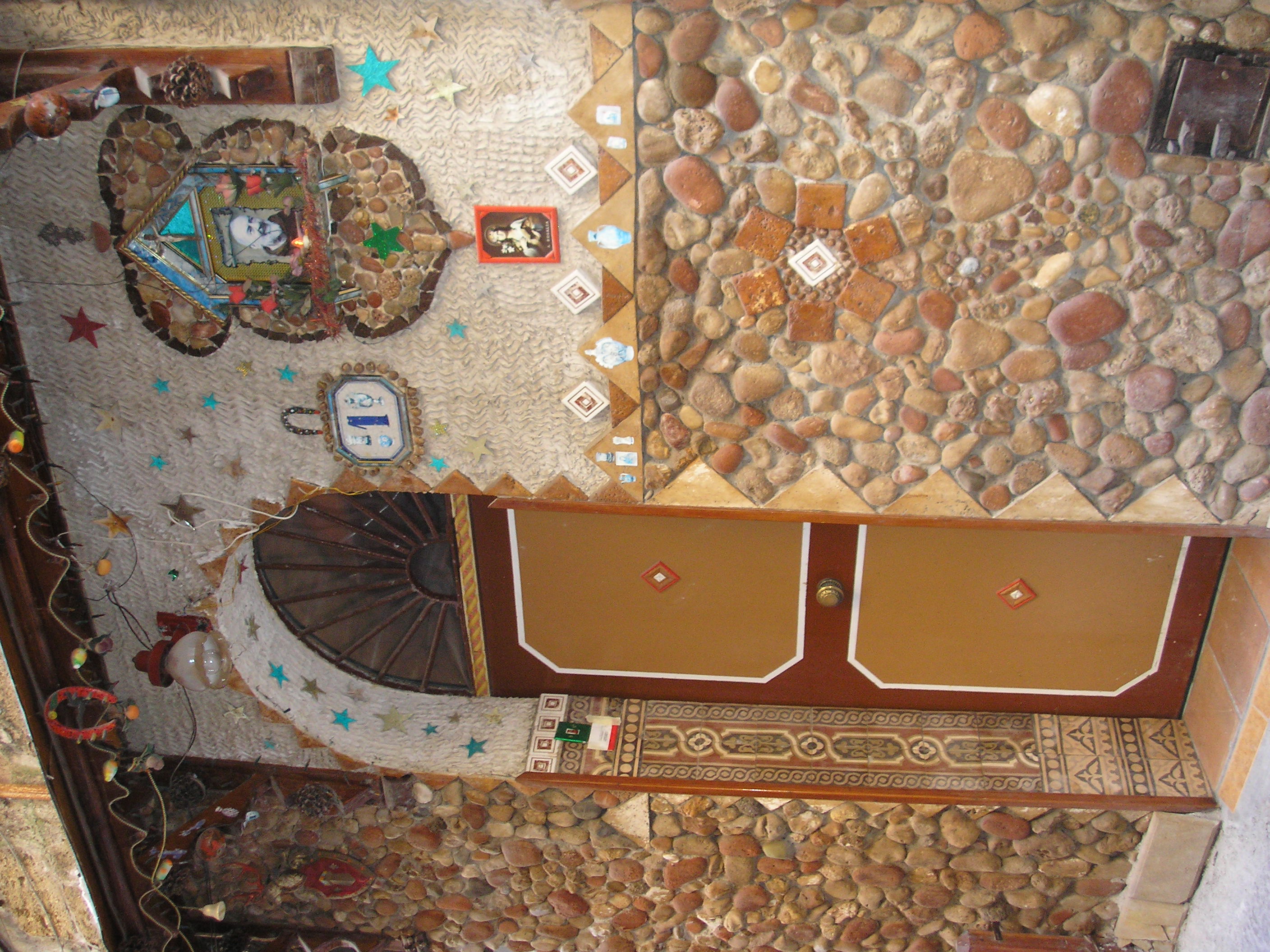
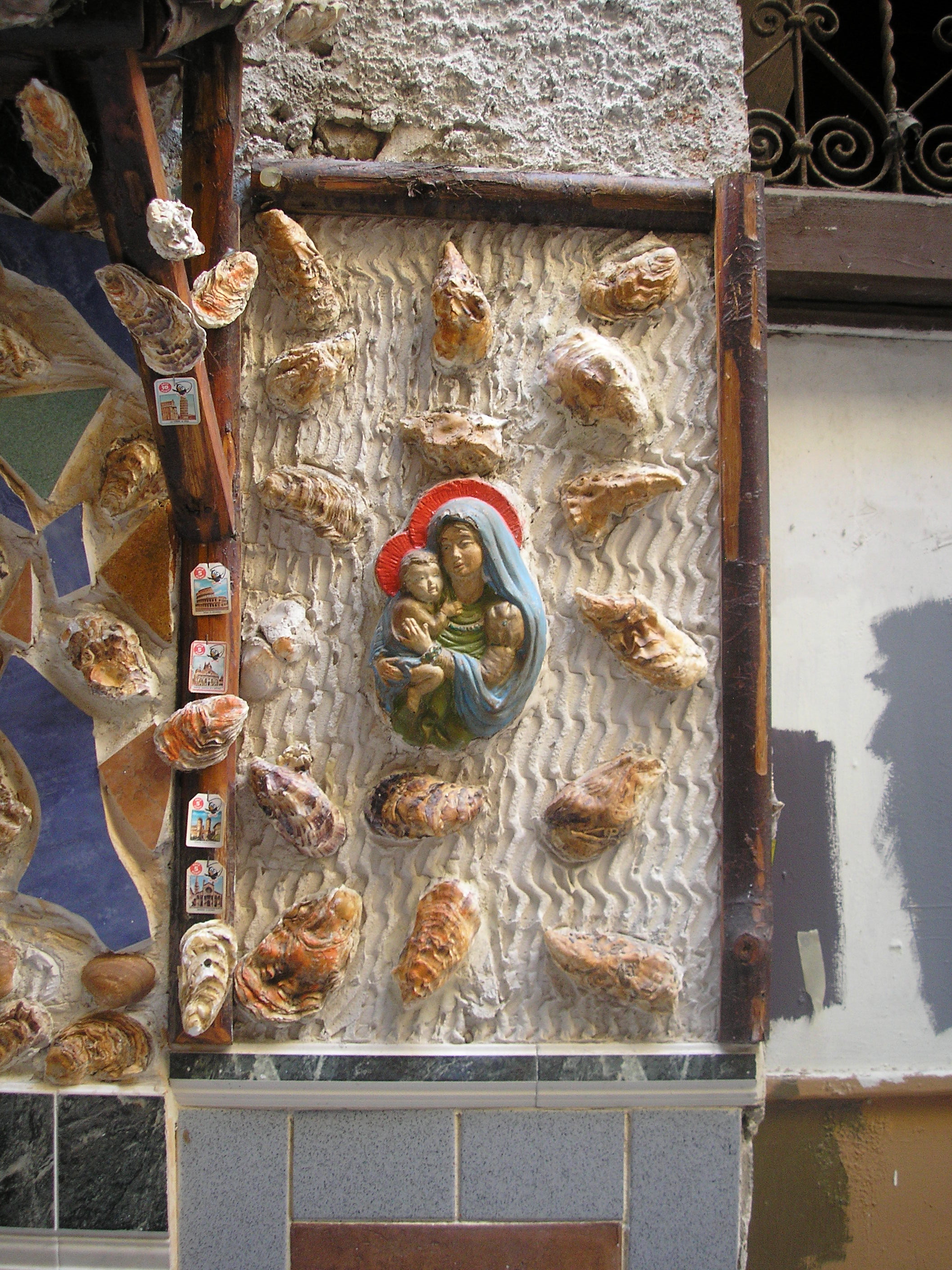
After that, we gave up on the sightseeing. Palermo didn’t want us to see her sights. We wandered into Albergheria, the residential area around the Palazzo dei Normanni that is essentially a slum, complete with full fledged corrugated steel shantytowns. Atmospheric, I guess? Actually it was my favorite part of Palermo, as we saw many interesting buildings and off-the-map medieval churches and mosques.

We helped two nuns that were having some trouble with their darling orange Cinquecento (this sounds like the beginning of a joke). We found an amazing ceramics workshop, the Bottega Dorte di Angelo Longo (Via M. Bonello 13), where I bought an beautiful plate with an image of the trinacria, the ancient symbol of Sicily that is comprised of a winged, floating head surrounded by three bare legs (talk about imagos of the fragmented body!).
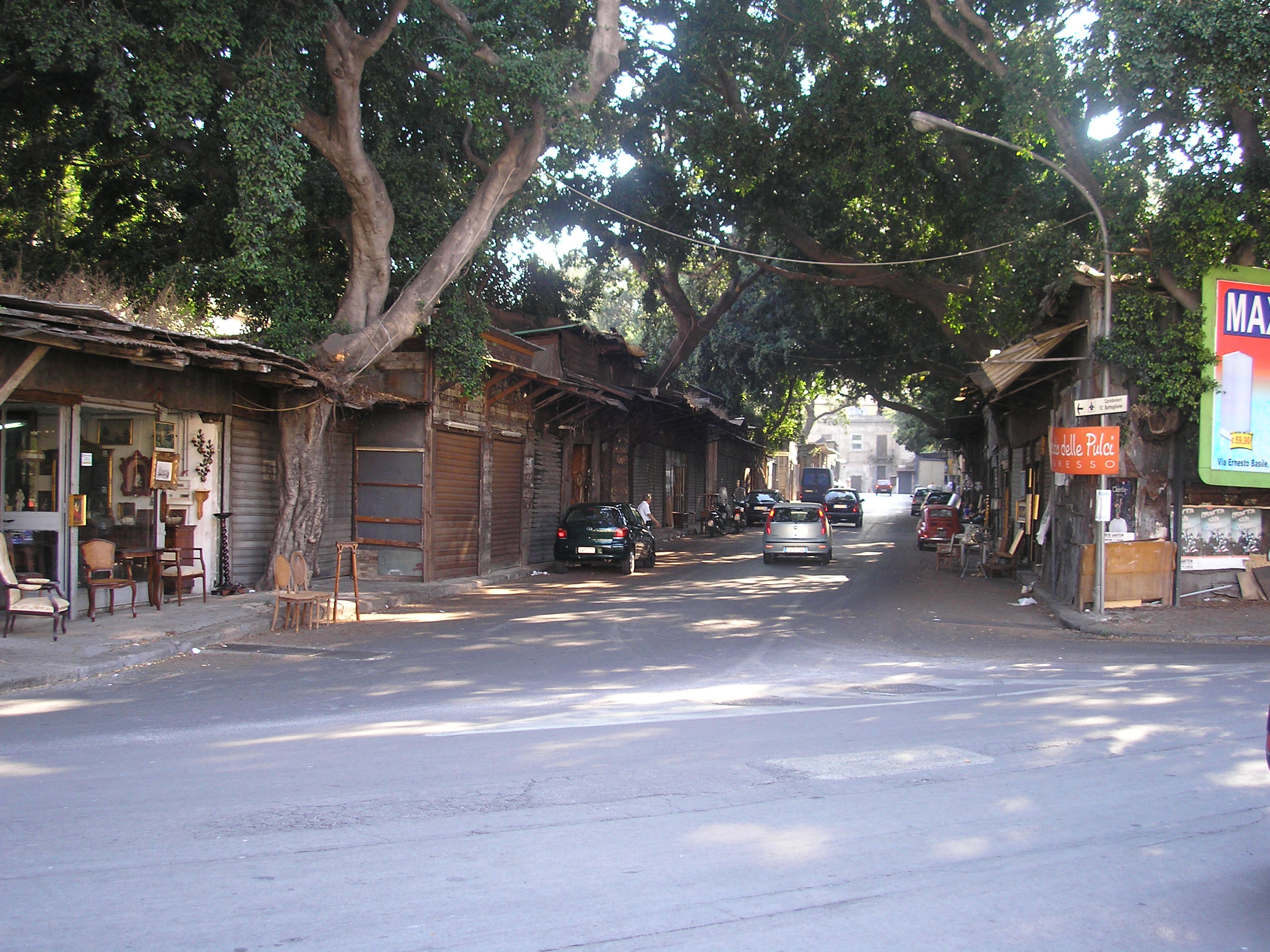
We stumbled on the Mercato delle Pulci, a flea market that looks at first like a squalid rathole, but is filled with beautiful furniture. The area is definitely worth a walk around if you find yourself in Palermo, but remember to do it in broad daylight and that this is a cash-only town.
Later in the evening, we walked north to see the Theatro Massimo (Godfather III, people!) and to eat dinner at Pizzeria Biondo (Via Carducci 15).

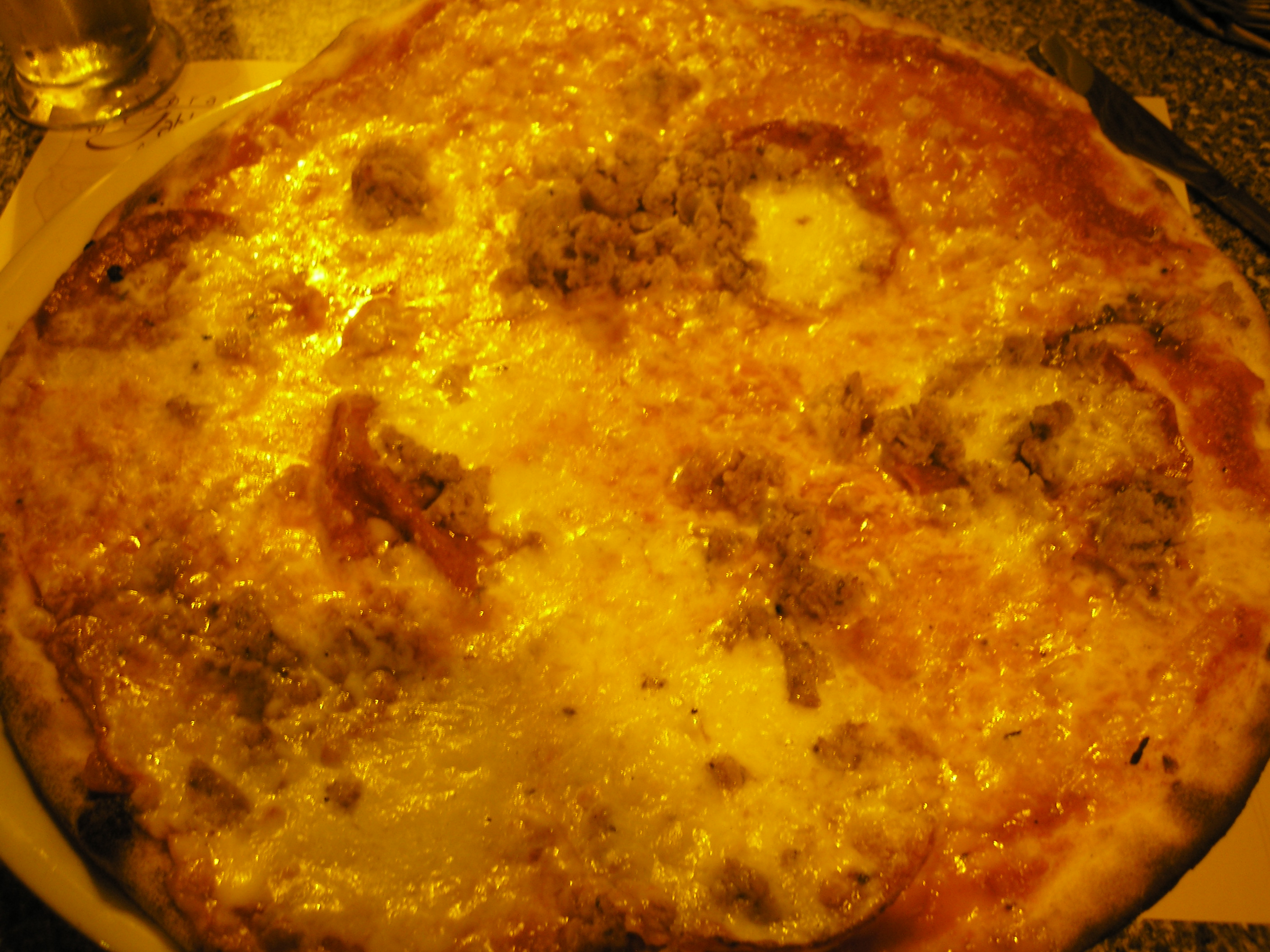
The sister restaurant to the much-pricier Trattoria Biondo, Pizzeria Biondo is a lively, unpretentious affair that serves big beers and even bigger pies at reasonable prices. And the pizza. Oh, my god, the pizza. We shared two pies, the first a combination of spicy salami and homemade sausage:
And, the pièce de résistance, a mushroom medley that include huge slabs of roasted portabella, fresh bufala mozzarella, and large smears of tartufo nero:
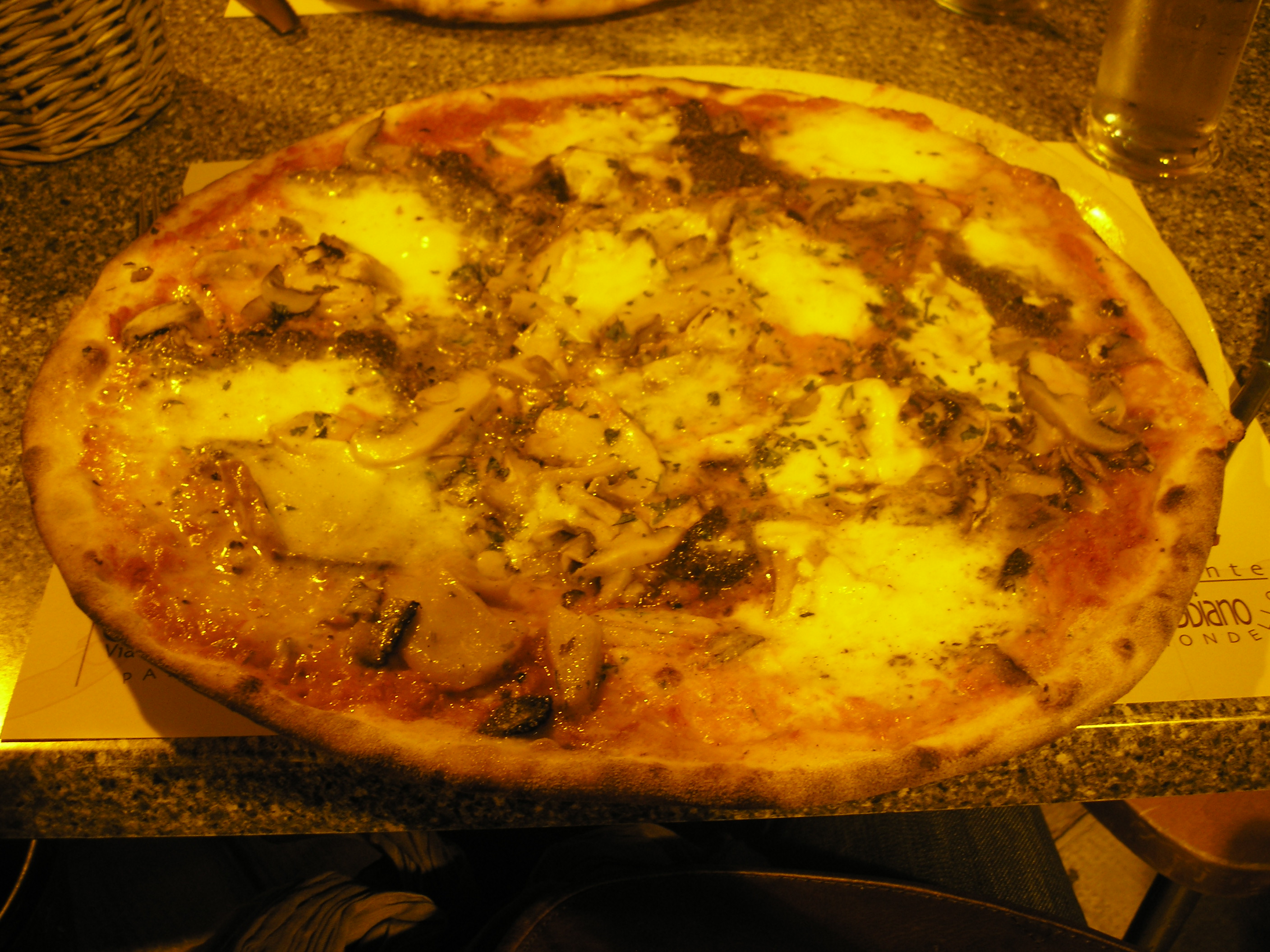
That’s right, people. Those dark-brown splotches are pure black truffle spread. I think Manic Mushroom Boy died and went to heaven that night. It was a nice way to end a strange part of our journey. I can’t exactly recommend you visit Palermo, but I’m glad that I did, if that makes any sense.
Next up: Beautiful Cefalù and its not-so-beautiful beachgoers. Stay tuned!
Clarence on Vacay: Cala di Luna, Sardinia
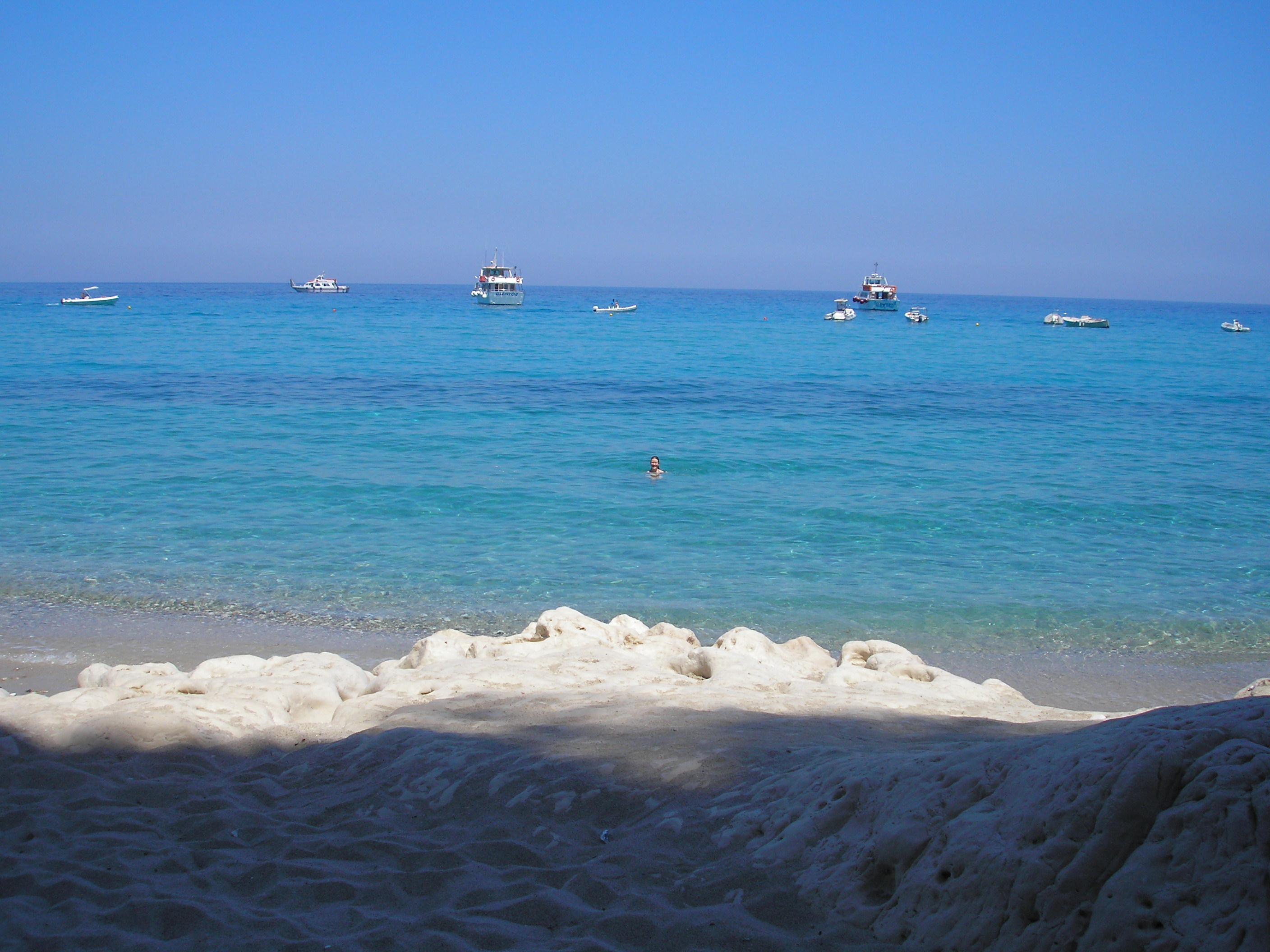
Despite having eaten perhaps the largest and best meal of our lives the night before, we awoke early to try our hand at the hike from the car-accessible Caletta Fuili to the beautiful Cala di Luna beach, accessible only by foot and boat. Our friends S and H had done a longer hike (called the Codua di Luna, which apparently takes you through a gorgeous river valley) during their winter visit to Sardinia, but with summer temperatures B and I decided to do an “easier,” shorter hike that would keep us along the coastline. Snort.
On the way, we stopped in the small town of Dorgali, which is very similar to Oliena in its lack of tourist infrastructure. We found an unremarkable supermarket, where we nevertheless spent a good half hour or so cooing at the various regional offerings. Is there anything better than exploring a supermarket in a foreign country? I can skip the most important national monuments entirely if it means that I can hang out in the canned fish, cheese, or deli sections of a European supermarket for an hour or so. After carefully considering our picnic options, we bought some sliced Sardinian mortadella, a wedge of Pecorino cheese, and some beautiful foccacia-like spongy flatbreads. Travel is an excellent way to get to know more about somebody, and one of the things I discovered about B is that this guy has an almost elemental love of mortadella – which, let’s be honest, is basically the boloney of the Italian deli counter. But even I had to admit that Sardinian mortadella looked like something special, with big peppercorns and pickles buried in the enormous round of pressed meat. The Pecorino recommended by the woman at the deli counter was pretty young, as it could be easily sliced with our amazing pocketknife, which had proved itself time and time again on the trip.

Nota bene: I suspect I’m making it sound as though we were having these profound, in-depth conversations with local Sardinians. We weren’t, or at least, I certainly wasn’t. B did an admirable job of transforming his dusty Spanish into something at least comprehensible to an Italian speaker. I suspect this mainly involved adding a lot arbitrary vowel sounds to the ends of words, though my language-fanatic boyfriend might want a bit more credit for his intuitive grasp of Latinate tongues. And me? Well, despite having traveled quite a bit in Italy, I’m stuck with little more than “Buon giorno / Buona sera / Buona notte / Ciao / Arrivederci / Per favore / Grazie mille / Scusi.” Which, accompanied by a smile, will do you just fine in most of Italy. Living in Paris has helped me perfect my “face of total listening comprehension,” so Sardinians would rattle on and on to me and I would smile and nod, smile and nod, thank, and then turn to B and say “What the hell just happened?” But we got around just fine with our limited grasp of the language, and so can you.
With our backpack full of treats, we headed to the trailhead. Driving from Dorgali to Cala Gonone takes you through a long tunnel that goes directly through the huge mountain range against which Oliena is nestled, spitting you out on the coast. I had no idea that we were staying so close to the beach, as there were craggy peaks blocking the view and providing the illusion that we were deep in inland Sardinia. Arriving at the trailhead, we were stopped by an “Australian” in suspiciously official looking garb.
“Hiking to Cala di Luna?” he asked us.
“Uh, yeah.”
“Well, let me give you a little information about the hike.”
Broseph proceeded to go on and on about the extreme difficulty level of the two-hour hike we were about to take, and how nobody, repeat nobody, ever does the return hike. We would definitely want to take a boat back from the beach, and the limited boat service would surely not take us anywhere near our car. He represented a local cooperative that would happily schedule us a return boat trip directly to our car that afternoon, but we had to pay up front. He would cut us a deal, only 20 euros for both of us.
I don’t know what it is about my superego composition, but I am such a sucker for official-looking scam artists. Put on a uniform, speak good English, pretend like you are acting in some kind of official capacity, and I’ll just open my wallet like the dumbest, greenest American tourist that was ever born. Thank god I was with B, who greeted the guy with immediate suspicion and politely turned down his offer. “We’ll see when we get to the beach how we feel,” B explained, “I suspect we will be doing the return hike.”
The “Australian” (B thinks he was an Italian who had learned English in Australia, which goes to show how little of an ear I have for accents) sighed skeptically and said “Well, let’s just say I told you so.”
Boom! If you ever want to really fuck with my head, simply say “Well, let’s just say I told you so.” I was wracked with anxiety that we had made the wrong decision and that we were going to be stranded and exhausted once we arrived in Cala di Luna. B, in his perpetually Zen manner that I was beginning to realize is a lovely counterpoint to my penchant for being high-strung, assured me that everything was going to be fine.
Well, the “Australian” was half right – the hike was killer. I mean, we’re talking scrambling over rocky precipices, uphill all the way, poorly marked, thrashing through the underbrush, just plain difficult. And I’m not a total wimp when it comes to hiking, either! But it was a lovely bonding moment for B and I, however, as we helped each other (okay, mainly it was him helping me) down difficult planes of rock and through tight passageways carved out of the cliffs. And, let me just say for the internets at large: two hours my ass. This is a solid three to three and a half hour hike. I say this because both Corsicans and Sardinians seem to lowball the tourists on this kind of estimate. I’d add an hour to whatever you are told if you are hiking on these islands. Moreover, we found the supposedly “popular” hikes are entirely deserted; so don’t expect to encounter anyone on your trip. We didn’t meet a single person on our hike to Cala di Luna. I entertained the worry at one point that we were just bushwhacking into the Sardinian wilderness to be eaten alive by wild boars.
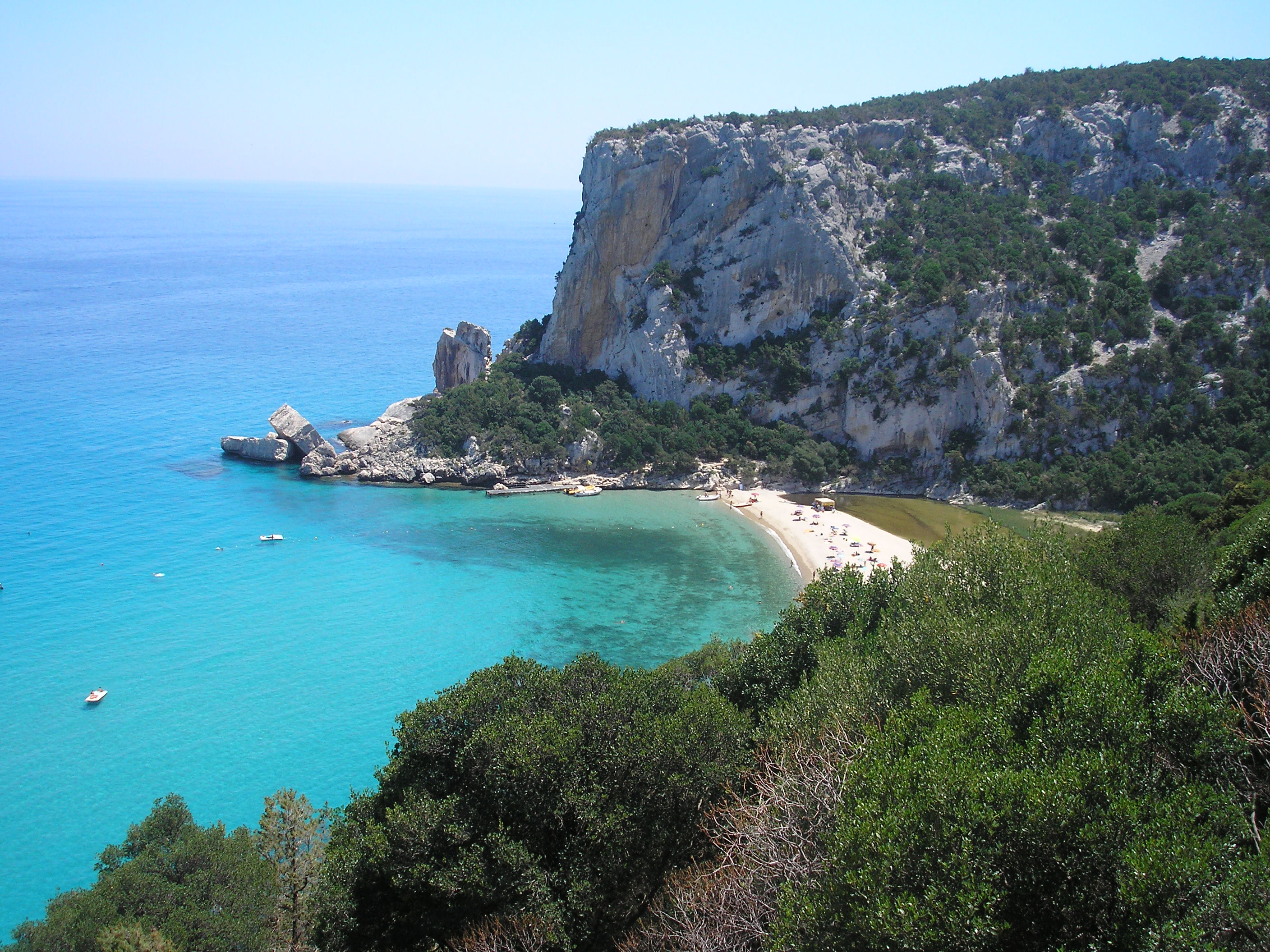
But after one of the sweatiest, most grueling hikes of my life, it was pretty sweet to come over the crest of a hill and see this:
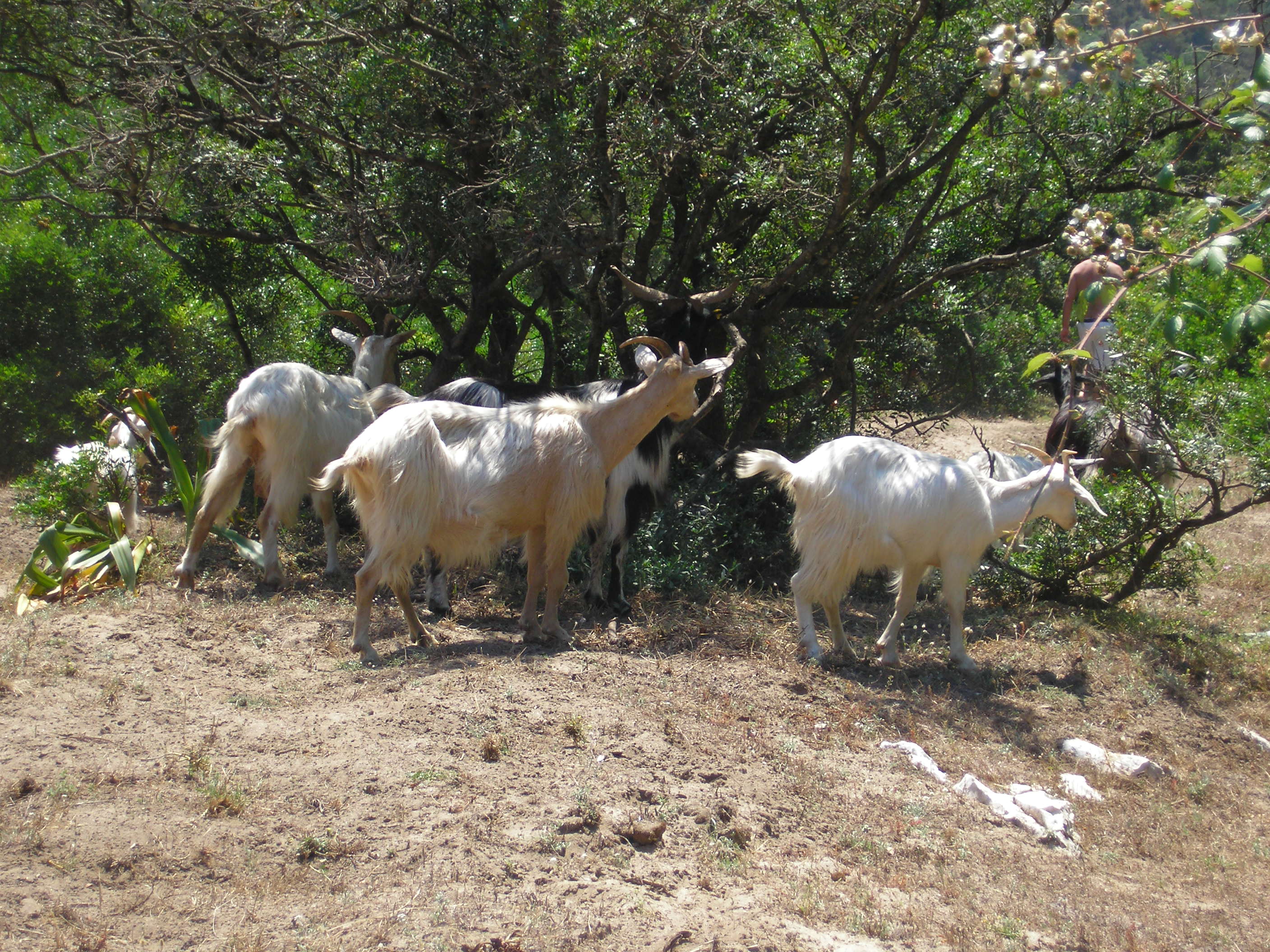
As we climbed down in the valley, we were greeted by bells. Who greeted us but these guys:
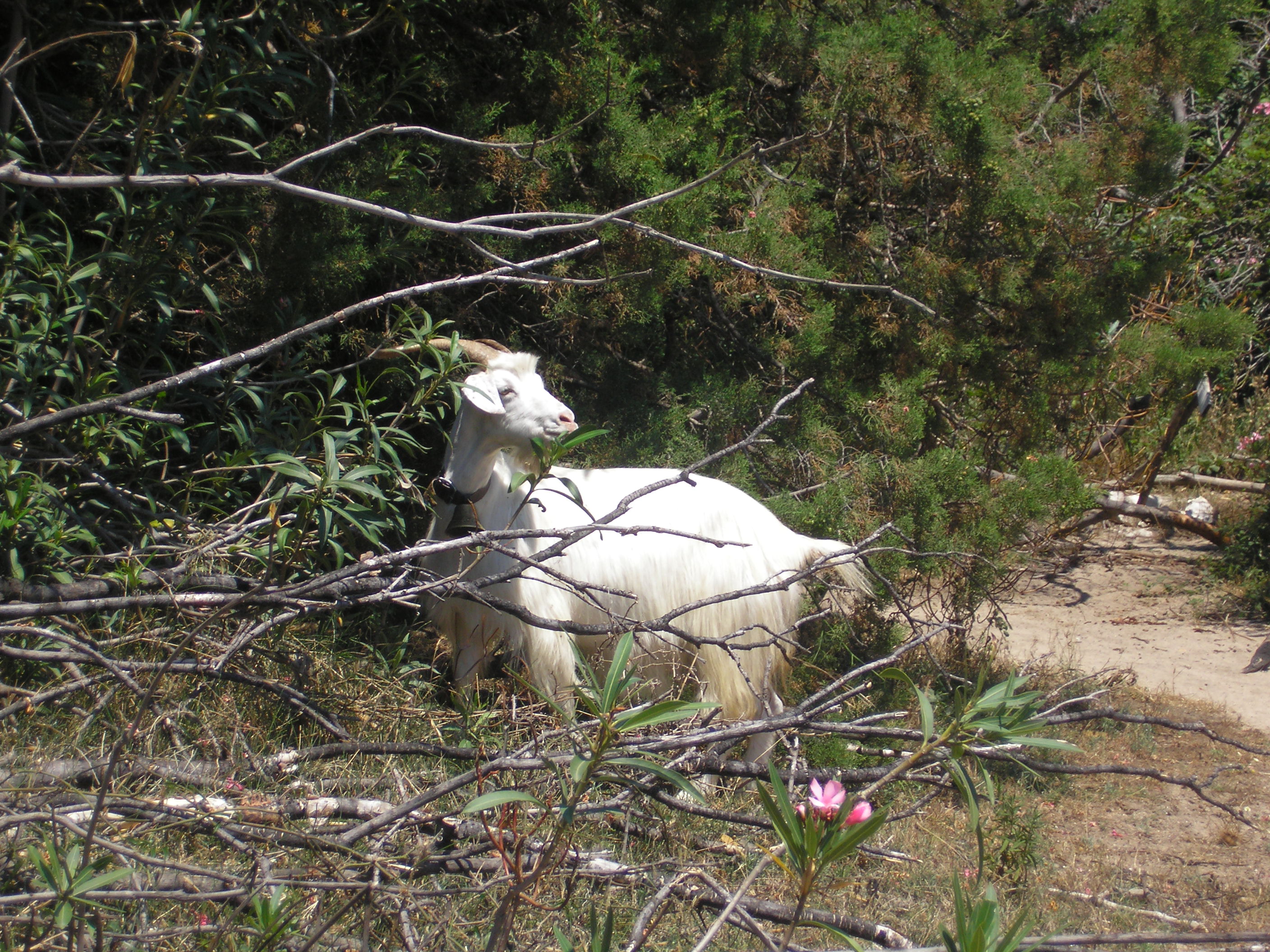
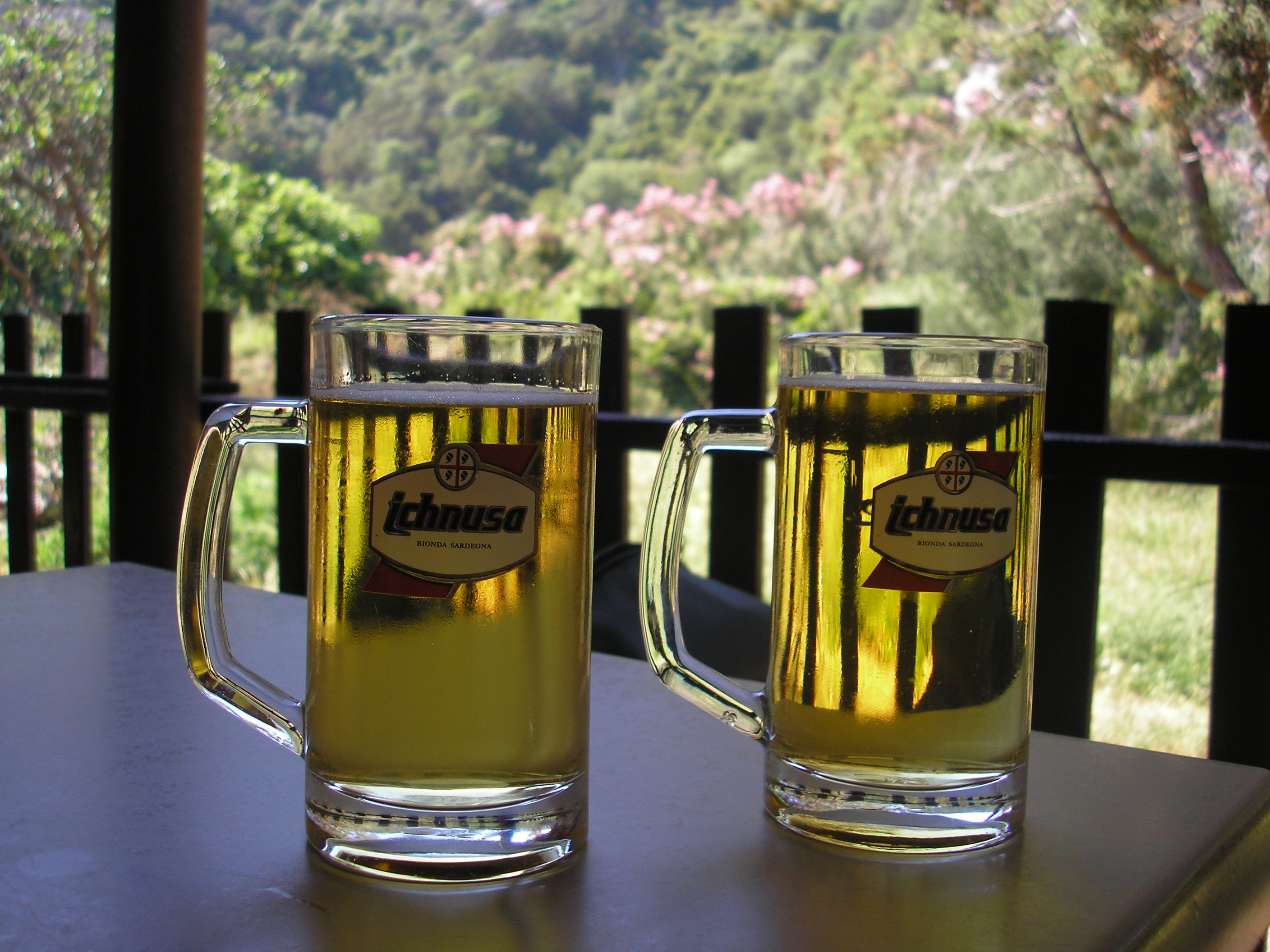
Cala di Luna was pretty busy, as large ferries dump hoards of tourists off from Cala Gonone, the nearest resort town. There is a bare-bones restaurant and a scuba and snorkel rental stand on the beach. But after our serious hike, we felt like we owned the place in a way that no portly boat-taking couch potato ever could. We immediately treated ourselves to a much-deserved first round of Ichnusa on the trip:
The beach at Cala di Luna is one of the most amazing things I’ve ever seen. On the south end, a white sand beach runs between a placid lake and the sparkling turquoise waters of the Mediterranean. As you move north, the beach is under these incredible cliffs that are carved out of the side of the coastline. This means that you can sit in the shade, a revelatory experience for Little Miss Sunburn over here. As you continue on, the coastline erupts in a series of amazing caves and grottos that go deep under the earth.
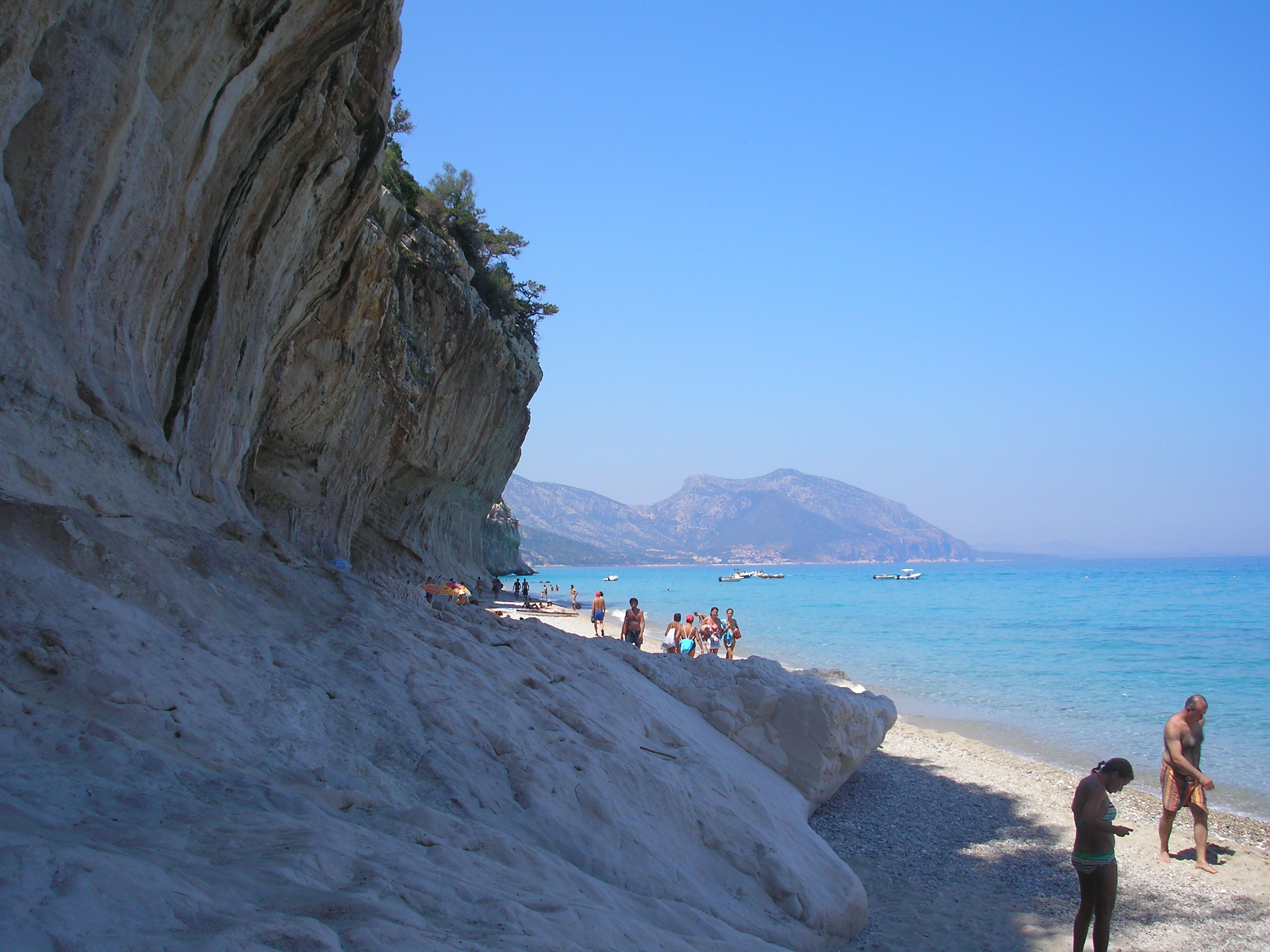
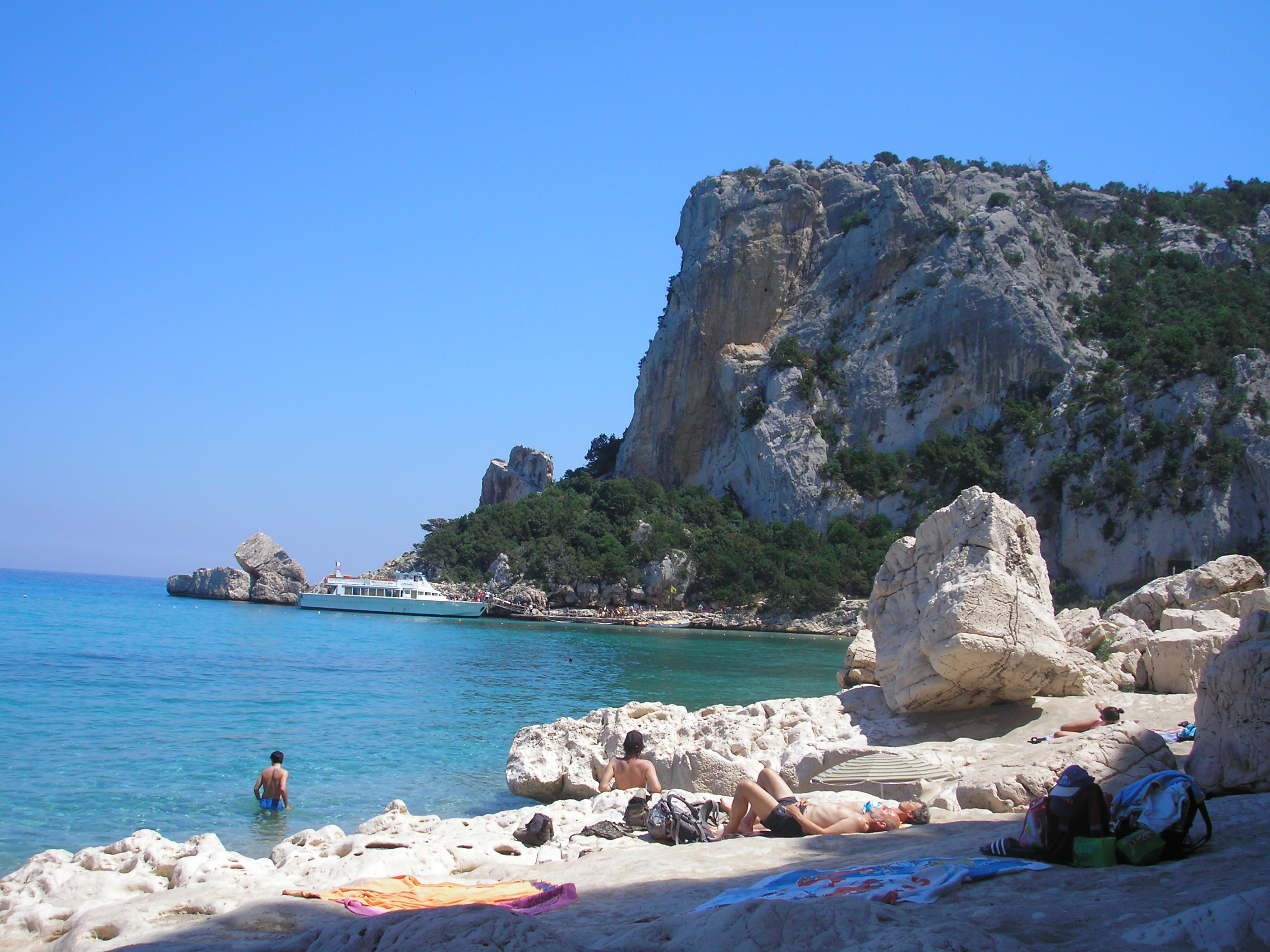


I gleefully swam until waterlogged and B explored the caves with great enthusiasm until he accidentally happened upon what must be the makeshift bathroom facility for the beach, barefoot. Oops. After a thorough wash-down, we then shared one of the best lunches of our trip from our supermarket cache:

Finally, we were happily vindicated to discover that taking a boat back to our car was an easy proposition and only cost 5 euro a person. B wanted to hike back, not because he wanted to endure the hike for a second time, but because he wanted to prove the “Australian” wrong. I reasoned with him that taking a 5 euro boat ride with one of his competitors was vindication enough, and that furthermore I would write about that scam artist on my blog, so all six of you that read this thing would be the wiser. More exhausted than vindictive at the end of the day, B settled for this compromise.
SO, should you ever find yourself visiting the Eastern coast of Sardinia and wanting to visit one of the best beaches in the world, may I recommend that you hike from Caletta Fuili to Cala di Luna? And when some guy assaults you at the trailhead with worrisome threats and demands your cash, you might want to spell it out for him:
lesbonsbonsdesraisons.wordpress.com.
That night we ate at the restaurant at Coop Enis (still funny!). It was decent, but after our meal at Guthiddai, it was a bit of a letdown. We did, however, get to sample pane frattau, which consists of moistened pane carasau topped with red sauce, grated Pecorino cheese, and a poached egg:

It’s kind of like the Sardinian version of huevos rancheros and it is equally earthy and satisfying. We also drank the bar none best bottle of wine of our trip, a Cannonau from Oliena (oh why oh why didn’t I save the label?!). I was entirely unaware of the drop-dead fantastic wines that are made in Sardinia, especially in the Oliena region. Sardinia is trying to up their export business, so you might be able to find some of their larger vineyards in your local serious wine shop in the US or France. I can’t recommend the Cannonau red wines from the Nuoro region of Eastern Sardinia enough, and I suspect you will get some serious bang for your buck as these vintners are trying to up their visibility on the international wine market. Enjoy!
Next stop: We cross the island and enter the serious seafood leg of our journey. Stay tuned for squid ink pasta, grilled cephalopods galore, and the most impressive lobster I’ve ever eaten!
An appeal to the hivemind and a parting nod
Tomorrow B and I leave for a few weeks to visit Corsica, Sardinia, and Sicily. As we lead an incredibly stressful life here in Paris, we are both looking foward to this much-needed vacation. Obviously I’m joking about our respective stress levels, but we are pretty excited for a change of scenery. I’m a bit of a beach junkie, so the idea of sunning on white sand beaches and hiking to swimming grottos has me pretty psyched. We both will also get to indulge our inner geeks — B will be able to survey some serious Etruscan, Greek, Roman, and Phonecian ruins and I’ll be able to see a lot of the towns that ole David Herbert spent time in during his travels. We’re also planning to eat ourselves stupid and have been spending most of our time reading aloud to one another about various regional organ meats that we can’t wait to try. I’ll promise to take tons of pictures and post the yummiest ones here when I return.
So here is my appeal to the hivemind: If you happen to have visited Ajaccio, Sartène, or Bonifaccio in Corsica; Oliena, Bosa, or Cagliari in Sardinia; or Palermo, Cefalù, Catania, or Taormina in Sicily and have any recommendations (especially food-related ones), would you mind posting them in the comments? Must-eats? Must-sees? We’re two adventurous eaters, eager museum-goers, and wouldn’t mind a serious hike if it yielded us a serious beach. Thanks in advance for any ideas!

I won’t have my computer with me and I suspect that Italian internet cafes are still as expensive as I remember, so it’s going to be lights out around here at Keeping the Bear Garden in the Background for the next few weeks. As a parting gift, let me leave you with David Herbert’s impressions of Mount Etna, which B and I intend to climb (!) on our final day. That is, if we haven’t eaten ourselves immobile.
Why can’t one sit still? Here in Sicily it is so pleasant: the sunny Ionian sea, the changing jewel of Calabria, like a fire-opal moved in the light; Italy and the panorama of Christmas clouds, night with the dog-star laying a long, luminous gleam across the sea, as if bayaing at us, Orion marching above; how the dog-star Sirius looks at one, looks at one! he is the hound of heaven, green, glamorous and fierce!–and then o regal evening-star, hung westward flaring over the jagged dark precipices of tall Sicily: then Etna, that wicked witch, resting he thick white snow under heaven, and slowly, slowing rolling her orange-colored smoke. They called her the Pillar of Heaven, the Greeks. It seems wrong at first, for she trails up in a long, magical, flexible line from the sea’s edge to her blunt cone, and does not seem tall. She seems rather low, under heaven. But as one knows her beter, oh awe and wizardry! Remote under heaven, aloof, so near, yet never with us. The painters try to paint her, and the photographers to photograph her, in vain. Because why? Because the near ridges, with their olives and white houses, these are with us. Because the river-bed, and Naxos under the lemon groves, Greek Naxos deep under dark-leaved, many-fruited lemon groves, Etna’s skirts and skirt-bottoms, these are still our world, our own world. Even the high villages among the oaks, on Etna. But Etna herself, Etna of the snow and secret changing winds, she is beyond a crystal wall. When I look at her, low, white, witch-like under heaven, slowly rolling her orange smoke and giving sometimes a breath of rose-red flame, then I must look away from earth, into the ether, into the low empyrean. And there, in that remote region, Etna is alone. If youwould see her, you must slowly take your eyes from the world and go a naked seer to the strange chamber of the empyrean. Pedestal of heaven! The Greeks had a sense of the magic truth of things. Thank goodness one still knows enough about them to find one’s kinship at last. There are so many photographs, there as so infinitely many water-colour drawings and oil-paintings which purport to render Etna. But pedestal of heaven! You must cross the invisible border. Between the foreground, which is our own, and Etna, pivot of winds in the lower heaven, there is a dividing line. You must change your state of mind. A metempsychosis. It is no use thinking you can see and behold Etna and the foreground both at once. Never. One or the other. Foreground and a transcribed Etna. Or Etna, pedestal of heaven.
Why then must go? Why not stay? Ah what a mistress, this Etna! with her strange winds prowling round her like Circe’s panthers, some black, some white. With her strange, remote communications, and her terrible dynamic exhalations. She makes men mad. Such terrible vibrations of wicked and beautiful electricity she throws about her, like a deadly net! Nay sometimes, verily, on can feel a new current of her demon magnetism seize one’s living tissue, and change the peaceful lie of one’s active cells. She makes a storm in the living plasm, and a new adjustment. And sometimes it is like madness.
– Sea and Sardinia, 1921
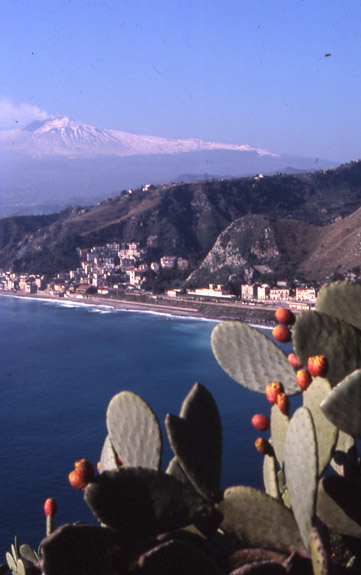
Sounds like quite the drug, and I can’t wait to experience it. I’ll catch you, dearest reader, on the flip side. In the meantime, I hope that wherever you are, you are enjoying these long summer nights.
 The Bear-Garden