Unclean Eating, Part Deux: Getting your Oyster Fix in Paris

So it will come as no surprise to regular readers of this blog that I was pretty psyched for oyster season to begin here in Paris.  I’ll ‘fess up that I didn’t really know there was such thing as an oyster season until last year.  Before moving to Paris, I was the dirtiest kind of unclean eater, one that fed largely on bargain beasts at (still great!) Jax Fish House in Denver and Boulder during highly inappropriate summer spawning months.  How clueless I was!  Now I know that you should only eat oysters in months with the letter “r” in them.  I’m too lazy to figure out if that applies to the French names for months as well, but you get the point. Unless you want a mouthful of bivalve spooge, you might want to wait until autumn to commence your own private oyster holocaust.

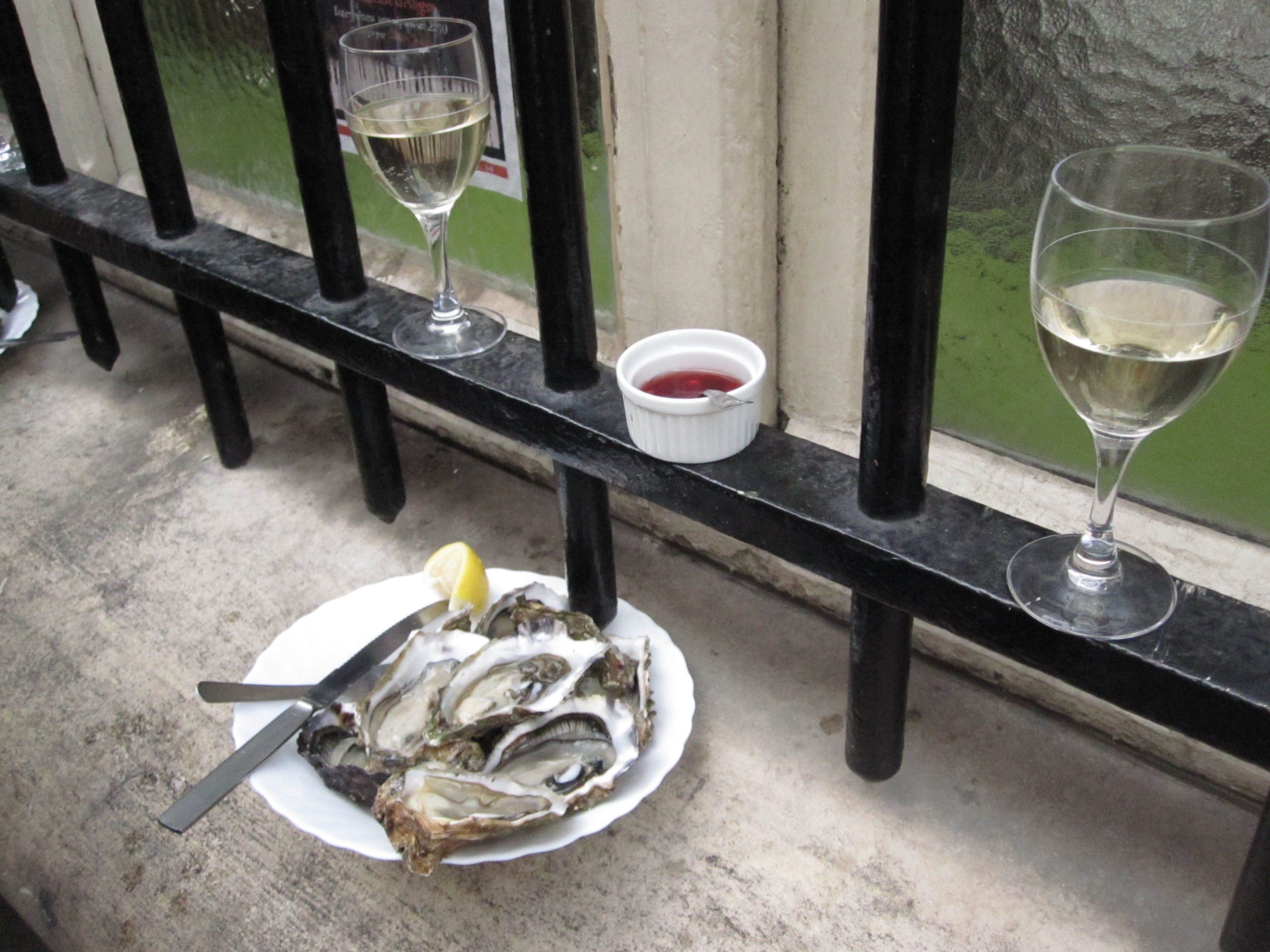
During our long summer of boozing at Le Baron Rouge (1 rue Theophile Roussel, 75011 Paris, Métro Ledru-Rollin), we often heard murmurs about a fabled oyster truck that the Baron hosts on weekend days during the winter. My best girl MT’s arrival in Paris for a short weekend jaunt (my, aren’t we fancy these days!) seemed like the perfect opportunity to give the much-hyped oyster truck a shot. We arrived to find a throng of eager unclean eaters gathered outside the restaurant, happily slurping down oysters off plates balanced on the hoods of cars and bicycle seats.  MT and I pushed our way through the heaving restaurant to order four glasses of Sancerre, while the boys waited in line for our delicious bivalves. I was relieved to see our regular bartender in all the madness, a graduate student in medieval literature who likely recognized me as “the girl whose boyfriend always talks to me about the book I’m trying to read” and plucked my order out of the boisterous crowd. The guys splurged and ordered the 13€ a dozen fine de claires, but the 9€ bargain ones looked also quite lovely. All the shucking is done on temporary tables on the sidewalk, and this truck moves through a serious amount of oysters in the course of a morning. After only a little wait, we had secured 4 dozen oysters served with lemon wedges and mignonette sauce and some baskets of brown bread. I had (quite cunningly, I think) saved a windowsill for our unclean eating, which we managed to balance our treats on quite nicely:
The best part was perhaps watching a five or six year old girl eagerly await the oysters her father carefully prepared for her. She slurped them down with delightful ease and clapped her hands in anticipation as her dad loosened yet another oyster from its shell for her to devour.  She ate a dozen by herself, and provided some consolation to the American stereotype of children that only eat grilled cheese sandwiches and buttered pasta. I know it’s easy enough to say “my future child will be an oyster-eater” when you don’t have a child, but I’ll go ahead and indulge this fantasy.  My future child will be a brilliant, witty, hyper-articulate, oyster-eating prodigy. Nobody better mess with her.

* * *

The other oyster revelation came in the form of La Cabane à Huîtres (4 rue Antoine-Bourdelle, 75015 Paris, Métro Montparnasse-Bienvenüe, tel. 01.45.49.47.27). We’d read glowing reviews of this Montparnasse oyster shack everywhere, and so a few weeks ago B, M, and I trekked southward in the rain.

We were silly enough to not make reservations and by the time we arrived the tiny, wood-panel lined restaurant was packed to the gills (it only seats 20). The woman working behind the counter, Ségolène, shook her head, but her father, proprietor Francis Dubourg, beckoned us in and asked for the entire restaurant to move around to accommodate a new table. Everyone cheerfully scooted around and made room for us, some even passing chairs over their heads mid-meal. This same thing happened again when we returned this week for another pair of stragglers, but I would recommend making a reservation for one of these coveted tables.

Francis Dubourg is one of the last old-school oyster farmers in the Arcachon basin, an area of coastline about an hour outside of Bordeaux that is my new obsessive point of travel research. He is a fifth-generation oyster farmer, and his son now runs the farming and harvesting end of this family business. Several times weekly, super-fresh crates of Dubourg’s unusually shaped, amazingly flavored oysters arrive in Paris, where they are greedily gobbled up by his many fans. Dubourg and his family are some of the only remaining farmers that actually raise the oysters in the mud (instead of in bags placed on metal harvesting beds), making their care and harvest a far more involved process. The result:  these labor-intensive beasts taste more pungently of the sea, and the earth, and of the unique ecosystem that produced them (the French call this environmentally-imbued taste profile terroir).
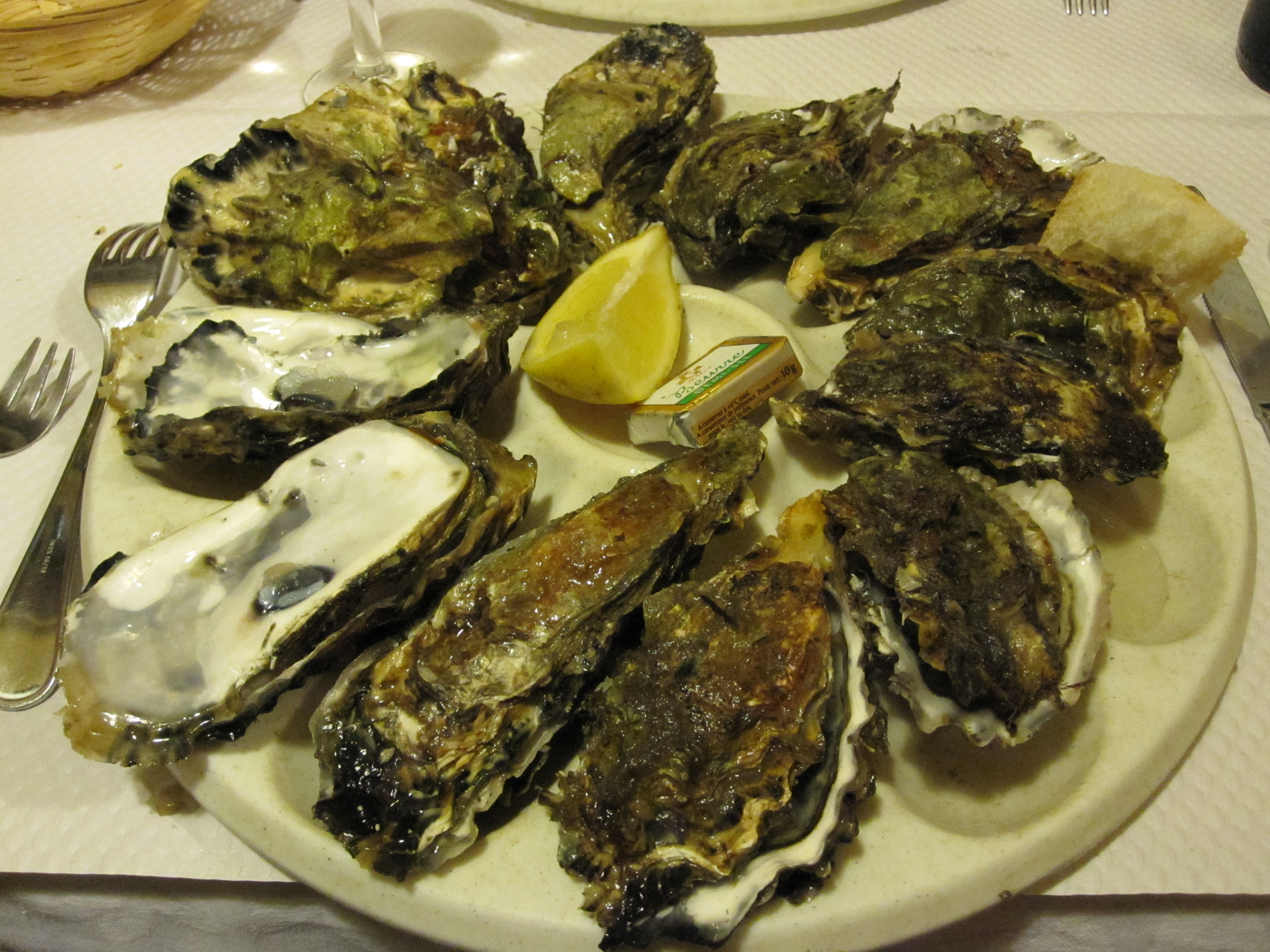
Whatever you want to call it, oh man, are they good. Compared with the commercially produced oysters we often see in the US, they look like a whole different animal. Irregularly shaped and covered in barnacles, these bivalves occasionally have a tiny red worm or two hanging out on the outside of their shells. Never fear – these little guys are only an indicator of the extreme freshness of these oysters (the oysters themselves, which are shucked fresh to order, are as healthy and delicious as can be). Part of the fun of the cramped space of La Cabane is that you often end up handing big plastic trays of oysters over to the other patrons.  This, along with perfectly-paired communal bottles of wine, makes the whole experience extremely convivial.

The other part of the fun?  Well, a dozen oysters is only one part of the meal. The menu also includes your choice of a sizeable slice of foie gras or a heap of magret de canard.
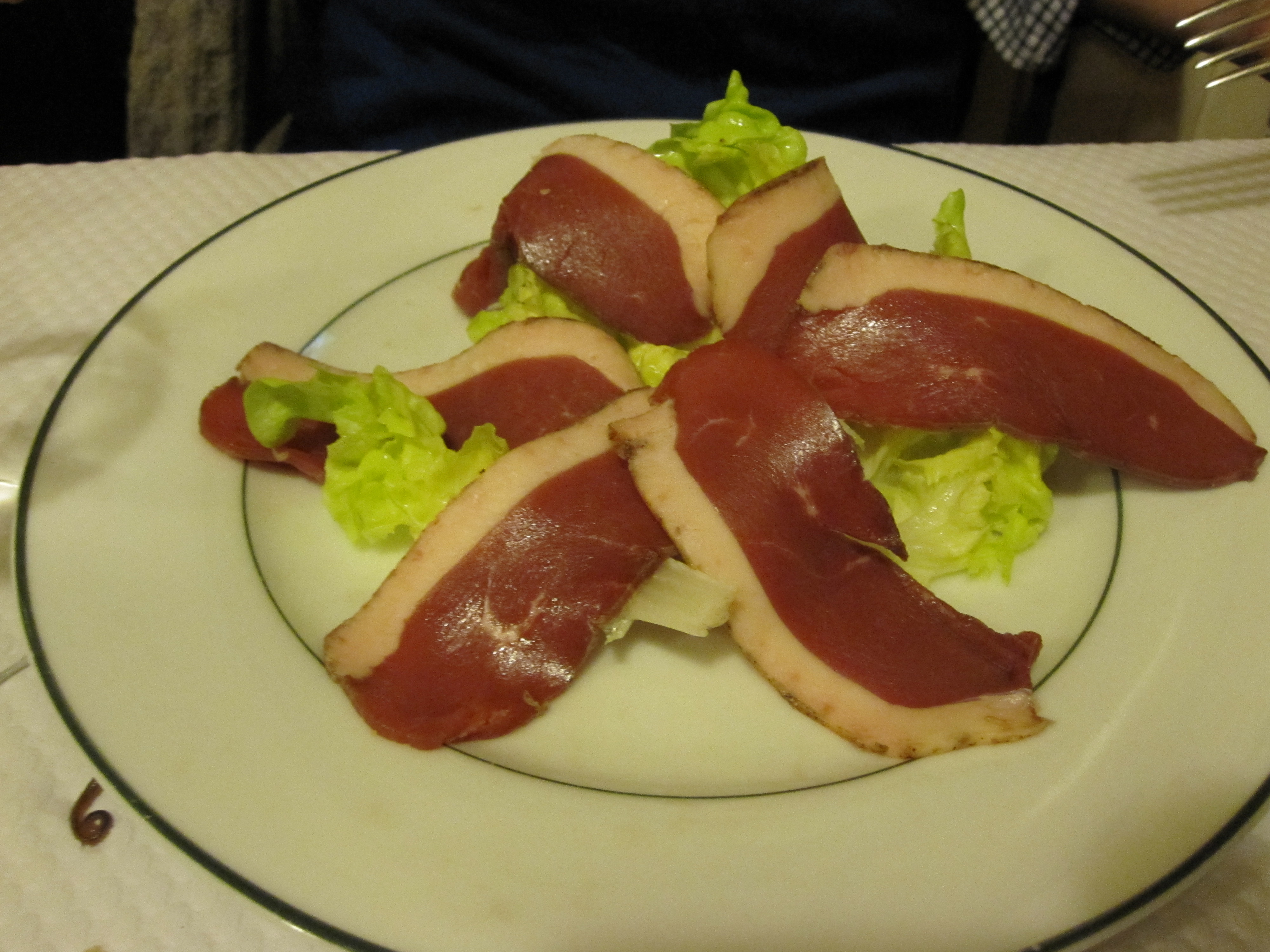
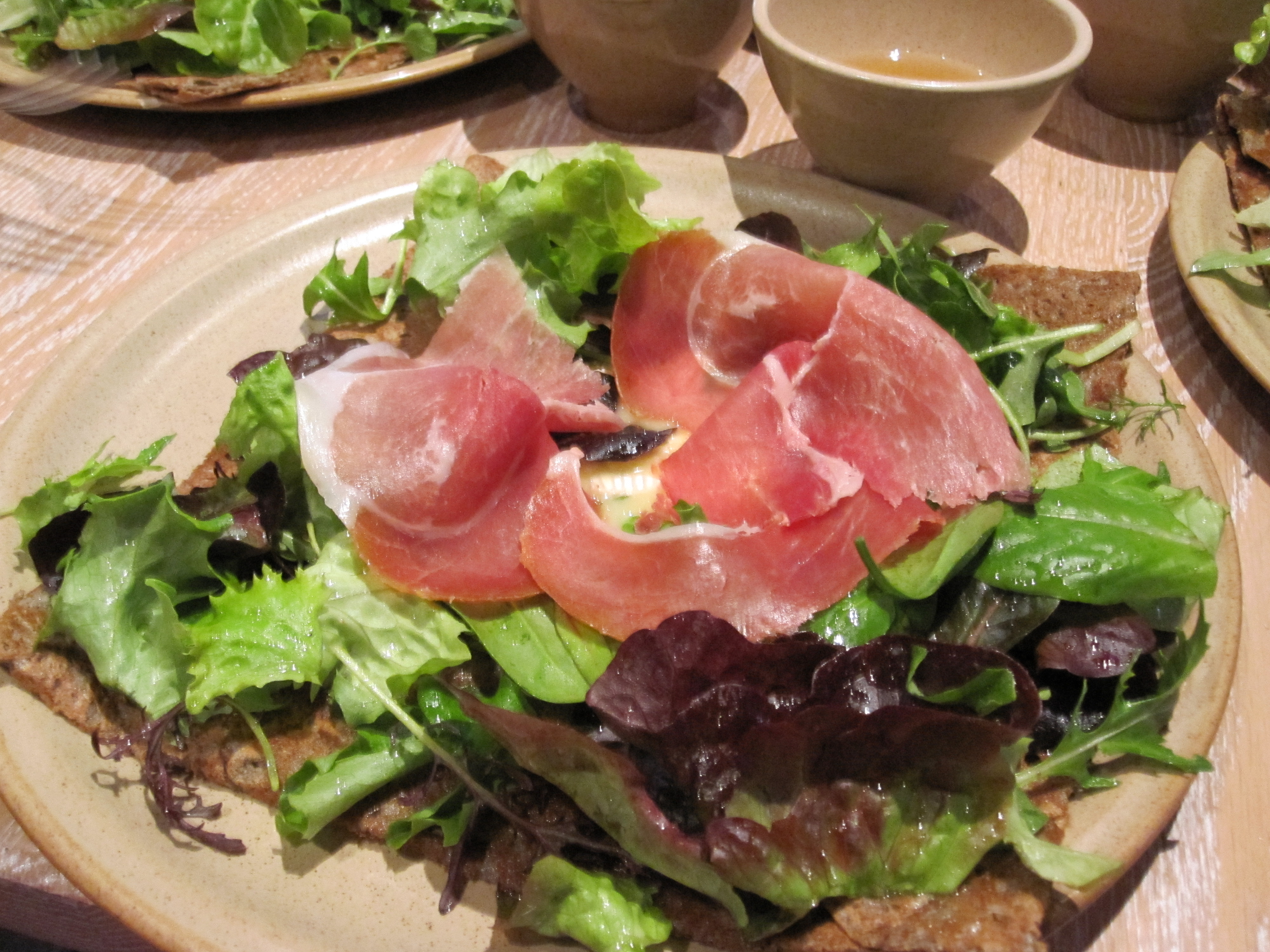
These are followed by a lovely cheese course of Tomme:

Finally your meal ends with a perfectly carmelized canelé, a special kind of custardy cake cooked to sepia perfection in molds made of leather. Paired with a stiff pour of Armagnac, it’s the perfect way to end an amazing meal.

And the bill?  Well, I can’t seem to get an exact beat on how these things are tabulated, but it seems that we usually spend about thirty dollars a person. Given that our most recent meal included four dozen oysters, two plates of foie gras, two plates of magret de canard, four cheese plates, four desserts, three bottles of wine, four Armagnacs, and four espressos, I’d say we did pretty well.

La Cabane is just about the loveliest place you can imagine, run by one of the friendliest and food-devoted families in France.  Please go there if you have a chance.
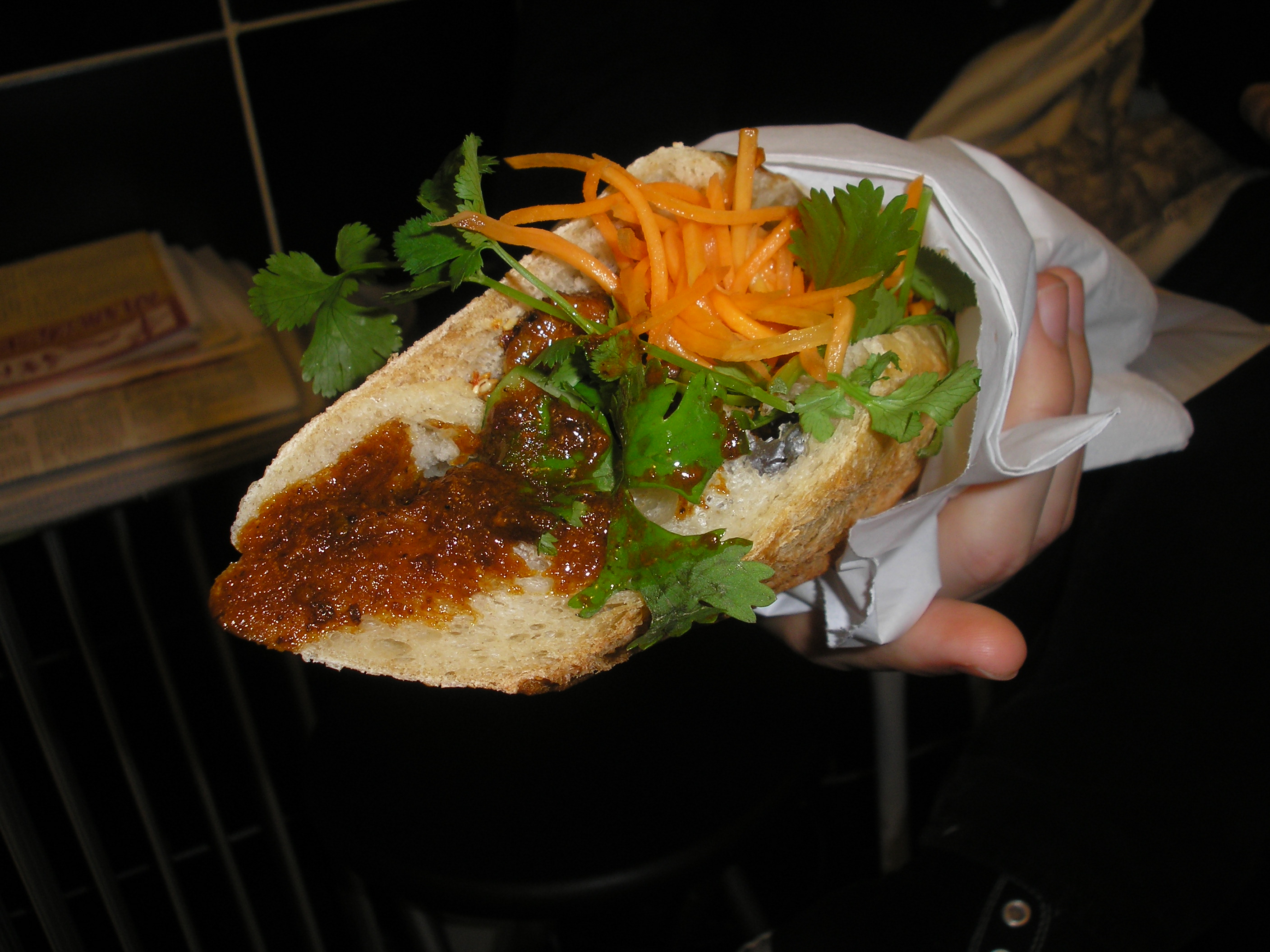
Clarence and the Perfect Sandwich: Banh Mi

Now that I’ve etched the list in stone, so to speak, I’m thinking of all sorts of things that should be on there but aren’t. One thing that perhaps should have been on the list was “find a great banh mi sandwich in Paris.” I’ve had banh mi on the brain ever since arriving on these fair shores, probably because all the important of the equation were here. Vietnamese people? Check! Amazing, fresh, crusty baguettes? Check! A cultural appreciation for spreadable meats? Check! It seemed that banh mi would be a no-brainer in Paris.

And there are, let’s say, many Vietnamese sandwiches in town. Following bread crumbs left by West Coast commentors on Mark Bittman’s New York Times blog entry that asked where a New Yorker might find a good banh mi, I headed to the 13th arrondissement and to Belleville (mumbling under my breath to no one in particular that Los Angelenos know a hell of a lot more about banh mi than New Yorkers ever will).  Some sandwiches were quite passable, like the ones that you can get outside of the Tang Frères Asian supermarket, if somewhat mild for my taste. But I hadn’t found anything to get religious about, nothing to change your day over. Moreover, if I’m going to schlep all the way down to the 13th on a cold winter day, I’m going to eat pho or something amazing at Rouammit.

And yet, like any diligent 21st century foodie, I kept googling. And what showed up more and more were reviews of a little place called, quite portentously, Banh Mi (7 rue Volta, Paris 75003, Métro Temple). Yesterday, which was rainy and filled with errands, seemed like the perfect day to drop in for lunch. The first piece of excellent news is that it is an easy walk from our apartment to 7 rue Volta, probably taking only about 10 minutes if you are really hungry and it’s raining really hard.

The shop itself is tiny, with nowhere but tiny folding stools to sit. The vast majority of the space given over to the proprietor’s (Angela’s) kitchen. This is a banh mi shop, and so you have only one easy choice to make when you walk through the door:  chicken, pork, or beef? There was a tempting pork pâté on the menu, but Angela informed us that she hadn’t made it today. And it quickly became clear that everything was made fresh and by hand daily, and that this was a woman who took the quality of her vegetables, bread, and meat very seriously. We ordered two pork sandwiches, which she disapproved of because she wanted us to try the different preparations of the meats. So I asked what she would recommend I order, and she said the chicken. One chicken and one pork, coming right up.

I could watch this lady make sandwiches all day. First she starts with beautiful baguettes, which she warms to crusty-perfection over a conventional toaster. Then she adds the meat, which has been slow-cooked in a special sauce.  The chicken is rotisserie tender and cooked with chilies and lemongrass, the pork is cooked in a caramelized tamarind sauce, and the beef is apparently sucré/salé, meaning sweet/salty (next time). Next she adds various chiles based on your desired level of heat. We requested très piquant, and we rewarded for that comparative adjective. Angela piled on perfectly crunchy slices of red bird tongue chiles, followed by crisp long spears of cucumber, piles of pickled carrots and daikon, and heaps of fresh cilantro. A few more special sauces followed (the only one I recognized was mayo on the chicken) and the hot sandwiches were handed over the counter. We noticed an intriguing Tsingtao stout (huh?) and decided to split one. We squatted on stools and got to work.

Oh my lord these sandwiches are good. I mean, really, really great. They are everything you want a banh mi to be – spicy, sweet, crunchy, fatty, and umami. We shared the two, and I couldn’t tell you which I liked better. Paired with the surprisingly dimensional dark beer, it was a perfect lunch. Throughout our meal, Angela provided pleasant company, explaining that her tiny shop was only a year or so old and that business was steadily growing by word of mouth, especially from American ex-pats. We asked what time she usually closed and she said that she would close when she ran out of food, which was usually around 6 or 7 p.m. But she takes phoned-in orders, so you can call ahead and she will have your sandwiches ready for take out when you arrive. I suspect we now have a go-to solution for harried weekday evenings after teaching.

There is some chatter from the Chowhound folks (corroborated by a few comments made by the proprietor herself) that at 5 euro this is an expensive Vietnamese sandwich. Huh? Given that three blocks away from this is the aristocratic wonderland of rue de Bretagne, where you can easily spend 10 euros on a small beer or 4 euros on a shot of espresso, Banh Mi’s fresh, handmade, 5 euro sandwich seems like a bargain. And, as Angela emphasized repeatedly, quality is very important to her. She is buying the freshest vegetables and the best quality meats, which is often not the case at the bigger banh mi stands in Paris. Anyway, we’ll be back as soon as we can, and I hope you go to if you are in the neighborhood. This American wants to make sure that Banh Mi stays in business for as long as possible.

Details:  Open Monday through Saturday from 11:30 until she runs out of food. No seating, but an excellent place for a takeaway lunch or dinner.

Not Frontin’

  • Buy an annual pass and tour the Louvre from top to bottom (this will take a while, so I’ll list the collections so I can cross them off periodically:  Egyptian antiquities; Near Eastern antiquities; Greek, Etruscan, and Roman collection; Islamic art; sculpture; decorative arts; painting; and prints and drawing).

  • Eat a Pierre Hermé white truffle macaron and a foie gras and chocolate macaron (if possible)

You totally thought I was kidding about this list thing, didn’t you?

Like I’m some kind of procrastinating slacker who talks a big game but doesn’t follow through, often neglecting her blog for weeks at a time!

But seriously, guys, I’m seriously serious about this thing. So serious, in fact, that after writing “The List,” I went out and bought a rotisserie chicken with fingerling potatoes roasted in the roasting grease (so. good.) and a new Bordeaux that I hadn’t tried (Eat as much charcuterie, foie gras, rillettes, truffles, rabbit, duck, rotisserie chickens, and oysters as possible and Try as many French wines as possible and keep a record of ones I love, respectively). Somewhere in between the wine shop and my apartment I began blubbering again about having to leave Paris, so the following morning B and I dutifully shuffled over to the Louvre. We recently discovered that despite not feeling especially jeune, we both still qualify for the 30 euro annual youth pass, which means unlimited admission to the permanent collection, all temporary exhibitions, and cultural events. Quite a deal, especially for people who definitely don’t get carded anymore. So sixty clams and two questionable ID photos later we were in the Egyptian antiquities, which we figured would be easy to bang out in a day. Wrong, wrong, wrong. You know the fantasy plan, that one where you spend a week going through the Louvre and see everything from top to bottom? Add another week or two to that itnerary. Three or four hours of devoted museuming and we had only managed to cover half of the Egyptian antiquities, buzzing through the sarcophagi and mummies far too quickly at the end.

Oh man, the Louvre is so great. I had sort of forgotten how amazing and astounding and totally humbling it is. It’s the kind of place that really reminds you what a speck you are in the great march of human history. Also, there’s nothing better than watching little kids go through and look at things from Ancient Egypt. Having been one of those six year olds who declared that I wanted to be “an Egyptologist” when I grew up, I particularly love the really serious ones. There was one boy, probably eight or so with bottle-thick glasses, who was carefully sketching various hieroglyphs that caught his interest. Both B and I melted in the face of his diligence and rigor. While I don’t really remember much from my Egyptology days (I get my sieve-brain from my dad), B is a perfectly preserved antiquities-nut. I would throughly recommend touring any kind of antique or medieval museum exhibition with B, and I don’t just say this because I’m dating him. He’s really the best guide ever in these places because remembers all of the gross and interesting stuff, like which organs went into which urns during the mummification process and how they extracted the brain via the nostrils and how cursive hieroglyphic script is formed and who the major and minor gods and goddesses were. He also doesn’t mind spending extra time in the jewelry displays and humors me when I spend twenty minutes or so deciding which ring I would want in the imaginary universe where the precious antiquities collection at the Louvre is actually a flea-market.

My camera died before we reached the mummy (!), but here are a few things I really liked:

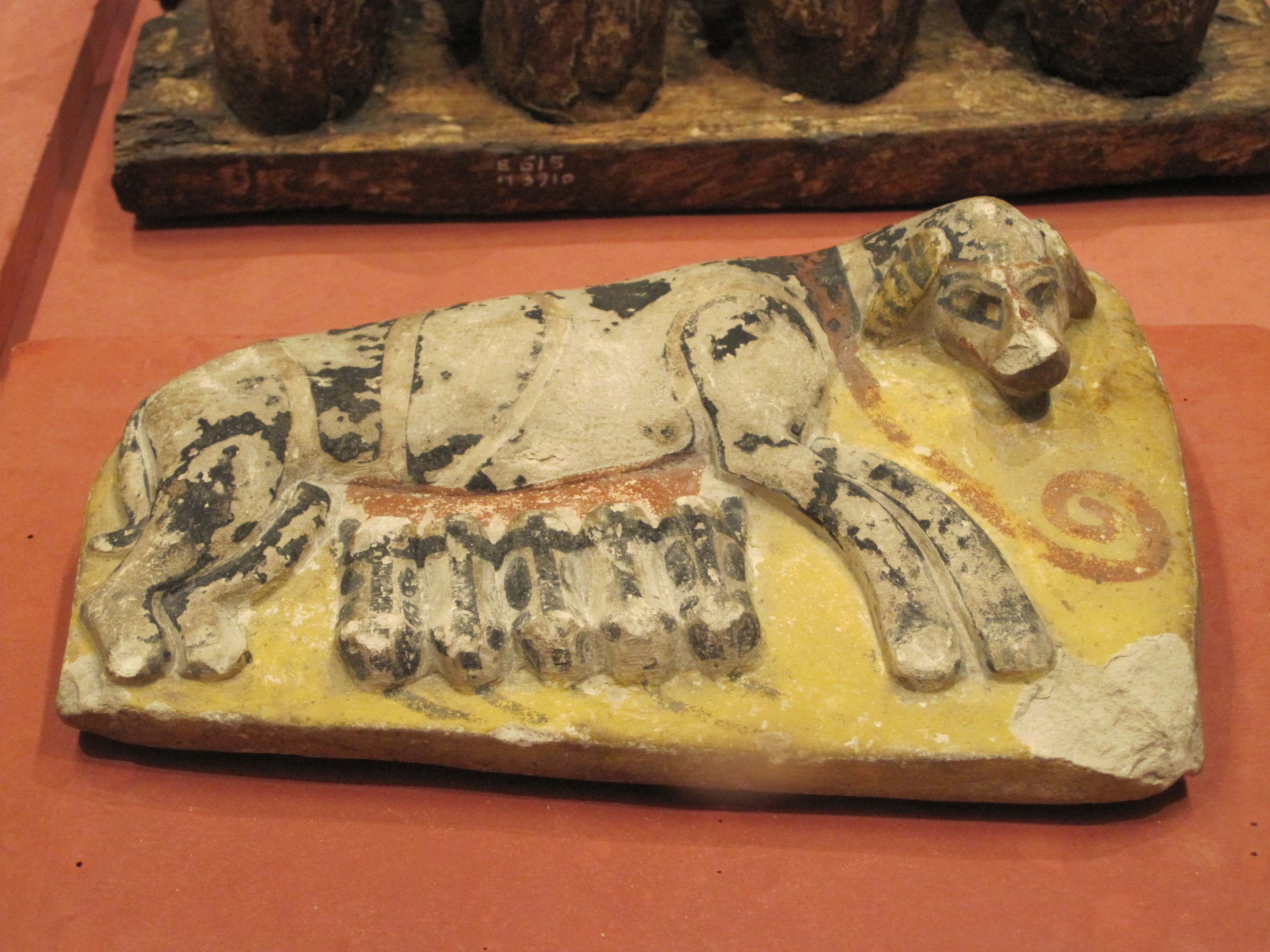
I’ve got puppies on the brain, obviously.

The eyes have it, every time:

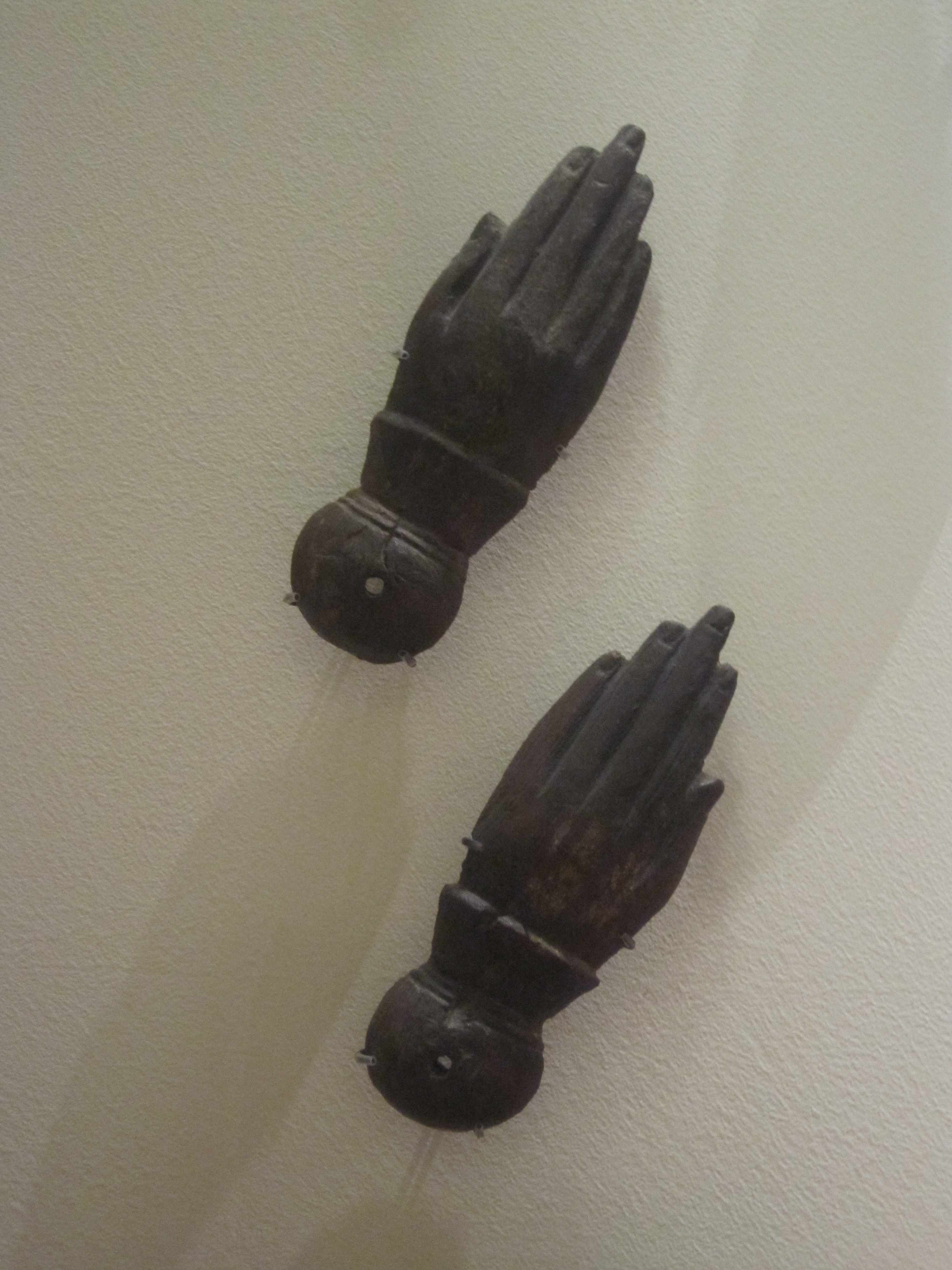
Ancient Egyptian castanets were shaped like hands!  Did you know this?  I didn’t:

* * *

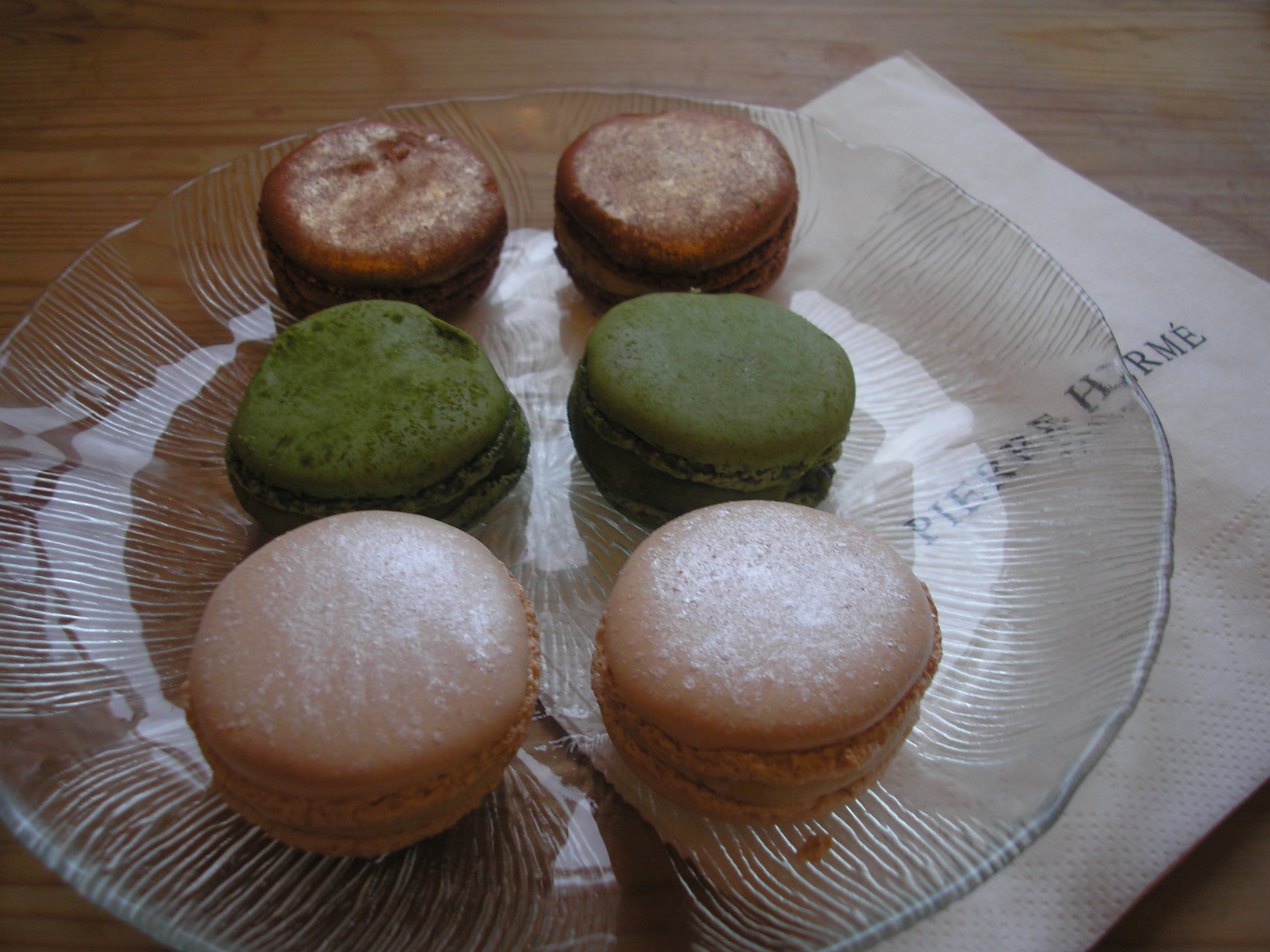
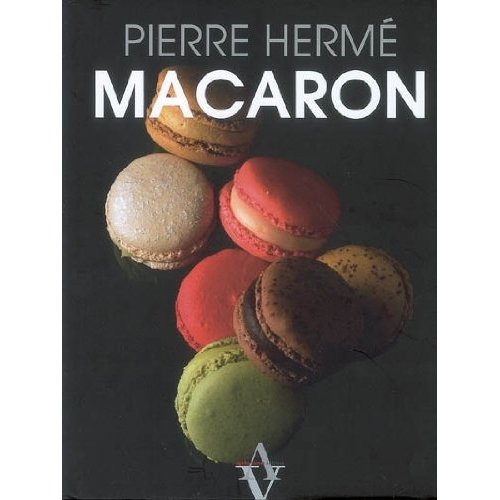
Finally, let’s not pretend that you come here to see my stupid museum photos. You come for the food! As you can see above, they finally released the white truffle Pierre Hermé macaron. B and I picked two up, along with some green tea/ginger/red bean and chestnut/green tea ones. A savory afternoon tasting, paired with a splendid smoky black tea that our friends from Hong Kong brought us as a gift and that B has finally learned to brew like a pro (it’s a tempermental beast, but well worth the effort). We saved the truffle macarons for last, as we had been told that they are palate-killers of the first order. They even bag them separately from the other macarons because their scent is so strong! I can’t even describe how fantastic these are. I wish that I was someone like Jeffrey Steingarten or Chandler Burr, someone who can vividly evoke tastes and scents in their prose. Alas, I can’t, so I’ll just say that they are slightly sweet, but mostly savory, with a delicate shell and buttery interior cut with macadamia nuts. The taste of white truffles is pronounced but not overpowering. They taste of autumn, and of the earth, and of luxury. When I asked B if it was among the top cookies he’s ever eaten, he corrected me and said that it was among the top things he’s ever eaten, and I’d tend to agree. They are perfect in every way. Even their white iridescent sheen is amazing. You should buy some immediately if you are in Paris and if you aren’t, I’ll concede that this is one thing you should be unabashedly jealous over. Pierre Hermé, I tip my hat. You are macaron Gods among men and I suspect that what you do qualifies in most cultures as alchemy.

I have a birthday coming up and I just saw this at the bookstore:

There are recipes, apparently! Perhaps a way to stave off the want when I return to the States next year?

The List

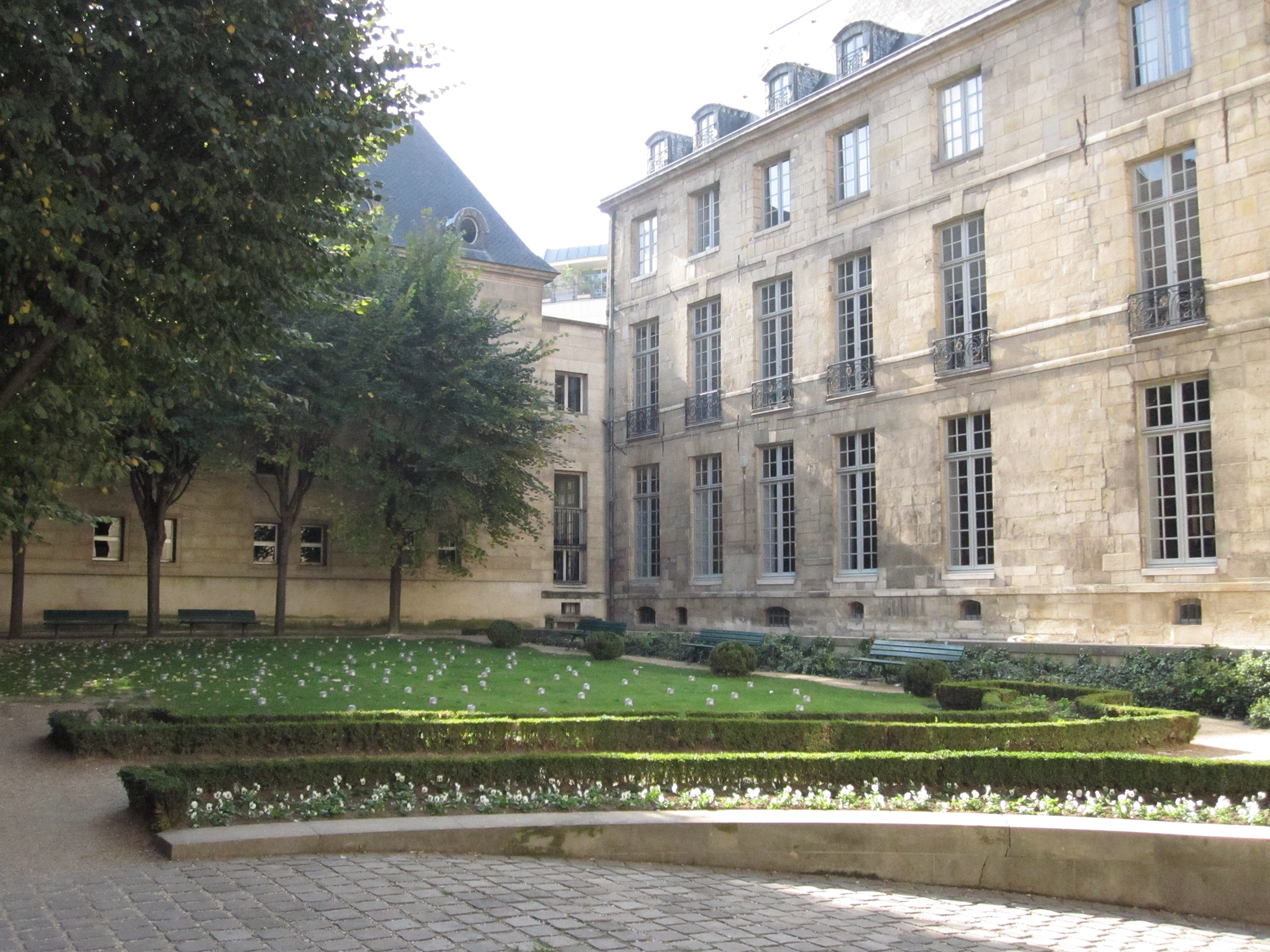
There seems to be a rash of “life lists” and “bucket lists” circulating on the ol’ blogosphere lately. And while I don’t have too many “life goals” at this point, I do have an ominous event looming at the end of next summer:  I’ll be leaving Paris. I don’t have a firm departure date just yet, but like all good things, this one will be coming to an end sometime in early August 2011. The mere thought of it makes me sad, and a few days ago I sat in the park in front of the Musée Picasso (closed interminably for restoration) and wept at the thought of having to leave this city. I’ve never been happier in my life than I have been living here. And while I’m excited for the next chapter, it’s still going to be a tough transition come next summer.

It’s easier than you think to become complacent when you live in a place like this for a long time. While I’ve certainly done plenty of amazing cultural activities since my arrival, I’ve also managed to avoid some really important one (like, uh, stepping foot in the Louvre). So I have compiled (along with B) a “to-do list” of sorts so I don’t forget all the things I want to do before I leave. I’ll share it with you, dear reader, and periodically update you on my progress. Some of these things are pretty cliché, so I’ll ask you to promise me that you won’t make fun. Telling you about things has been a great incentive to do things over the past ten months.  Better yet, if you are in Paris (or are planning on being in Paris) and want to join me in any of these activities, let me know!

The List

Muesums and other cultural attractions

  • Buy an annual pass and tour the Louvre from top to bottom (this will take a while, so I’ll list the collections so I can cross them off periodically:  Egyptian antiquities; Near Eastern antiquities; Greek, Etruscan, and Roman collection; Islamic art; sculpture; decorative arts; painting; and prints and drawing).
  • See the Jean-Michel Basquiat show at the Musée d’Art Moderne de la Ville de Paris before January 30th
  • See the Arman show at the Centre Pompidou before January 10th
  • Visit the Musée National Gustave Moreau museum
  • Visit the Musée de l’Orangerie
  • Visit the Musée Carnavalet
  • Tour the Catacombes
  • Take B and M to the Cimitière Montparnasse
  • Visit the Crypte Archéologique in front of Notre Dame
  • Visit the Muséum national d’Histoire naturelle
  • Visit Fondation Dubuffet
  • Visit Fondation Cartier pour l’art contemporain
  • Visit the Musée du Vin
  • Take B to the Musée du stylo et de l’écriture
  • Visit the Maison Rouge
  • Visit the Musée des arts forains
  • Visit the Musée de la vie romantique
  • Visit the Musée Jacquemart-André
  • Go to the top of the Tour Eiffel 
  • Go to the top of the Tour Montparnasse
  • Go to Versailles
  • Go to Chartres with B
  • Go to Giverny with my mom
  • Suck it up and go with B to Parc Astérix

Green Things

  • Ride bikes to the Bois de Boulogne and have a picnic
  • See the tulips in the Bagatelles in the spring
  • Take my mother to Parc Butte-Chaumont and buy her a drink at Rosa Bonheur
  • Take my dad for a bike ride along the Promenade Plantée to the Bois de Vincenne and rent a boat
  • Return to Fontainebleau with B in the spring and find some morels

Movies and Concerts

  • See Nouvelle Vague at the Casino de Paris on November 30th with M, AC, and B
  • See somebody at the l’Olympia, preferably somebody French and venerable
  • See The Gospel According to Matthew, Oedipus Rex, and Accattone! at Accattone, thus completing the project of seeing all of Pasolini’s films on the big screen
  • See 8 1/2 and La strada, thus completing the project of seeing all of Fellini’s films on the big screen
  • See Les Quatre Cents Coups, À bout de souffle, Pierrot le fou, Les Carabiniers, Masculin, féminin, Week End, Vivre sa vie, and Cléo de 5 à 7 on the big screen

Clarence, King of All Things Good and Plentiful

  • Eat as much charcuterie, foie gras, rillettes, truffles, rabbit, duck, rotisserie chickens, and oysters as possible
  • Try as many French cheeses as possible and keep a record of ones I love
  • Try as many French wines as possible and keep a record of ones I love
  • Learn to shuck oysters and do so for my friends on New Year’s Eve
  • Eat at Spring (B snagged reservations on January 6th , probably didn’t need that kidney anyway)
  • Eat at Yam’Tcha
  • Eat at Frenchie
  • Eat at La Gazetta
  • Eat at Rino
  • Have brunch at Rose Bakery with M
  • Go to Marché des Enfants Rouges as many weekends as possible and take my mom there when she visits
  • Eat a Pierre Hermé white truffle macaron and a foie gras and chocolate macaron (if possible)
  • Throw a proper ex-pat Thanksgiving feast
  • Throw a party for Fête de la Musique and make a thousand paper cranes to dump on the crowds for Raidd Bar’s annual block party

Save Me From What I Want

  • Buy an oyster-shucking knife and an oyster-shucking glove from E. Dehillerin
  • Convince B that the only thing we can afford from E. Dehillerin is an oyster-shucking knife and glove, or, price shipping costs for copper cookware and cast iron pots from E. Dehillerin
  • Buy the rest of Lacan’s seminars in French (four to go!), figure out how to ship books internationally on the cheap
  • Find an amazing set of vintage Laiguole cheese knives, preferably with wood or horn handles
  • Buy the perfect beret
  • Find vintage lithographs of our favorite landmarks in Paris (including the Hôtel de Ville, preferably on fire, Tour St. Jacques, Porte St. Denis, Notre Dame, Église de Saint-Germain-des-Prés, and Sacré-Coeur) at le Marché aux Puces de Saint-Ouen
  • Find a vintage map of the Marais (Saint-Ouen, you’re on notice!)
  • Visit Deyrolle, the famous taxidermy shop.  Resist buying a stuffed bunny.

Zee Vinter Soups

So at some point in the past two weeks winter decided to come to Paris. Man, oh man, do I hate winter now. Especially in a place like this, where it more often than not means gray, overcast day after gray, overcast day, with a fair amount of freezing rain and howling winds on the side.  I keep buying coats with the idea that I will eventually find one that keeps me warm but doesn’t render me a sweaty, overheated mess when I go from the cold street into the hot, crowded métro. I haven’t succeeded yet, though I did sink my clothing budget for the month into a pretty serious puffy down coat from Uniqlo. I could tell you about how it is Jil Sander’s line and looks nothing like the puffy coat my mother wore to shovel the driveway when I was a kid, but I’d be lying through my teeth.  Like most things in my life, it is symptomatic of the fact that my mom was usually right about things, and I had my head up my ass. The universal realization of growing up, I suppose.

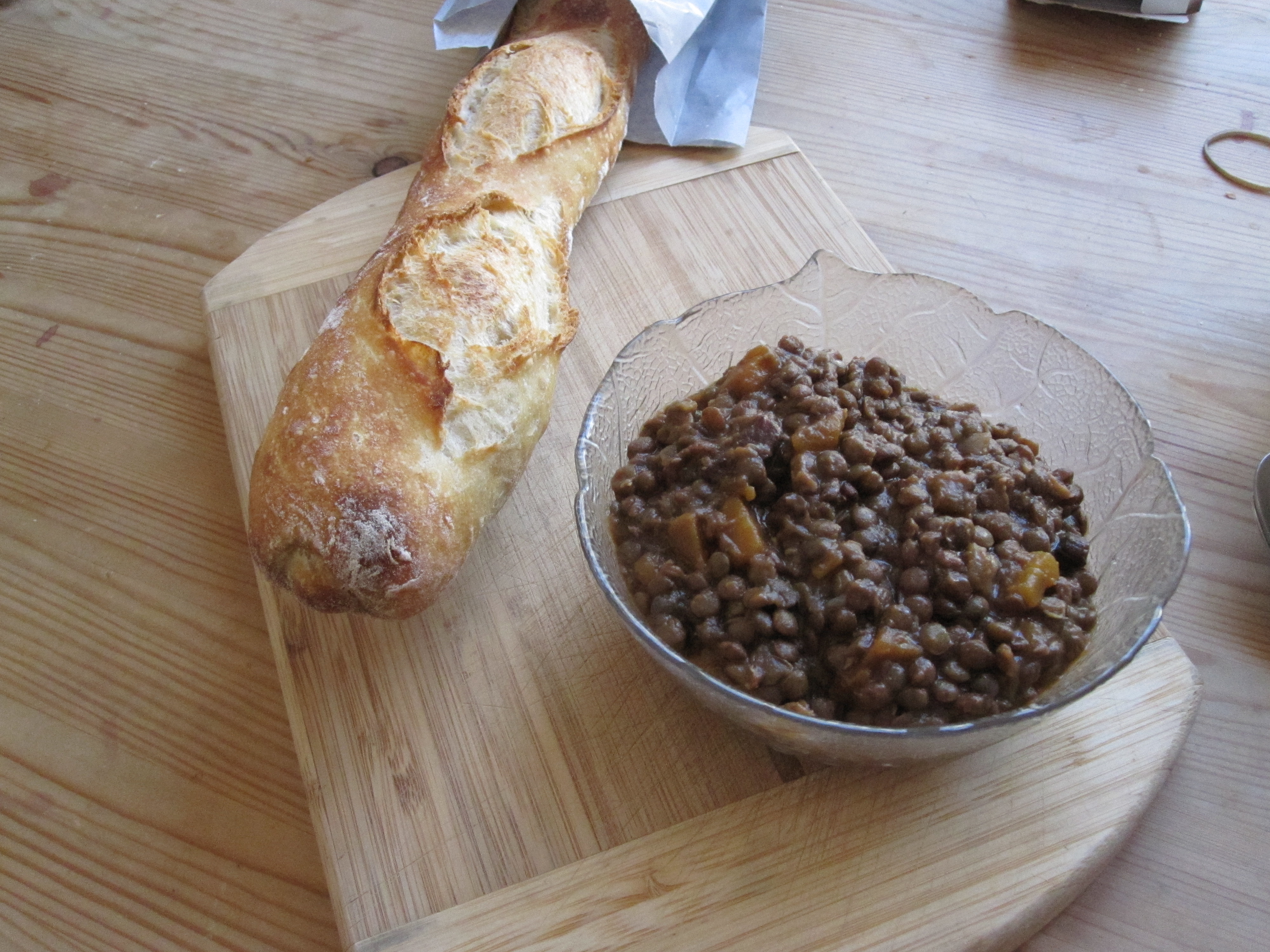
Anyway, all this WINTER has meant that we have been making a lot of SOUPS.  Some of them have been less stellar than others, but a few have been knockouts and I suspect that they will become a regular part of our schedule.  One that already has near-weekly place in the rotation is my lentil soup:

You see lentils and you think “healthy,” right?  Wrong!  I mean, I guess these are healthy in an abstract sense, but like most things in my life they actually contain a lot of pork fat and booze.  Surprise, surprise!  But they are seriously delicious, and get increasingly so if you make enough for leftovers.  They are easy and a hearty dinner in their own right, especially if you pair with some fresh bread (we buy our baguettes from the amazing Huré, 18 rue Rambuteau, Paris 75003, Métro Rambuteau, and will never pledge this kind of devotion to another bakery again) and a big green salad.

T’s Weekday Lentils

2 small, or 1 large, package of lardons (Lardons are matchstick or cube-cut pieces of bacon or larding fat cut from the belly of pork. In France, you can buy them in any supermarket in convenient packages. If you live in the States, you can ask your butcher if they sell pre-cut lardons, or you can buy pork belly and cut them yourself with a sharp knife.  Alternately, you substitute cubed bacon.  I’m a huge fan of Niman Ranch’s Applewood Smoked Bacon.  One package cut into strips would do quite nicely.)

3-4 large garlic cloves, chopped roughly

1 large (or two small) purple onions, diced

3-4 big carrots, diced

5 tablespoons of San Marzano tomato paste (or whatever you have, but seriously, spend the extra buck and get the San Marzano tomatoes from now on.  They will change your life.)

2 cups of chicken stock (We make our own, not because we are so sophisticated but because we eat a positively absurd amount of rotisserie chickens and my boyfriend is terrified of wasting anything.)

2 bottles of a burly red wine (One for the soup, one for you to drink with dinner.  By burly, I mean that this isn’t the time for a merlot or a pinot noir.  This is the time for a Bourgogne or a Côte du Rhône.  Maybe one of those punchy Australian syrahs would be nice! I’m not a wine snob, so just buy something cheap enough that you don’t mind cooking with it but decent enough that you enjoy drinking it.)

3-4 cups of French green lentils, rinsed and picked through for stones (I guess you could use a different kind of lentil, but it might change the amount of liquid you need.  All the more reason to buy and extra bottle of wine and eat another rotisserie chicken).

2 tablespoons of dried herbes de provence (I put this in everything, and it’s always good).

Salt, pepper, and crushed red pepper flakes (or Srichacha), to taste

Put a big pot on the stove over medium-high heat. When hot, throw in your lardons.  Cook, stirring occasionally, past the point where they release all their water, to the point where all the fat melts and they start to brown. Using a slotted spoon, remove the lardons from the pot, leaving the fat in the bottom. You should have enough to cook your veggies, but if it looks like they weren’t particularly fatty you can add a bit of olive oil.  Return the pot to the heat and add your onions. It should smell amazing. Once your onions have started to become translucent, add the garlic, carrots, herbes de provence, and browned lardons. Cook for a few minutes stirring regularly until everything has softened up.  Then add your lentils, stirring so that they become well-coated with fat. This is a trick B learned from a French lady, and it really does help your lentils cook. Then, when everything is nice and hot and starting to sizzle, add the tomato paste. Stir around, and then slowly begin adding wine. You want to keep the temperature up, so don’t add your liquid all at once. I usually put in about three-quarters of a bottle of wine.  You can do more or less, based on your own taste. I arrived at this magical amount because I usually drink a glass while I’m cooking, and give another to B when he gets home from work. Once I’ve added all the wine and the pot is simmering, I top it off with chicken stock until it reaches the top. I’ll be honest, the lentil to wine/stock ratios aren’t exact here, as different lentils need different amounts of cooking liquid.  Remember, you can always add more liquid if they start to burn, but you shouldn’t add wine too close to end of the cooking process because it won’t have time to mellow out. Turn down to low heat, partially cover, and walk away (stirring occasionally).  It usually takes about two hours for this to turn into something magnificent.  I add salt, pepper, and crushed red pepper flakes once the lentils have cooked, as I’ve found that I tend to over-salt if I do it beforehand.  You’ll know it’s done when everything is tender and thick.

* * *

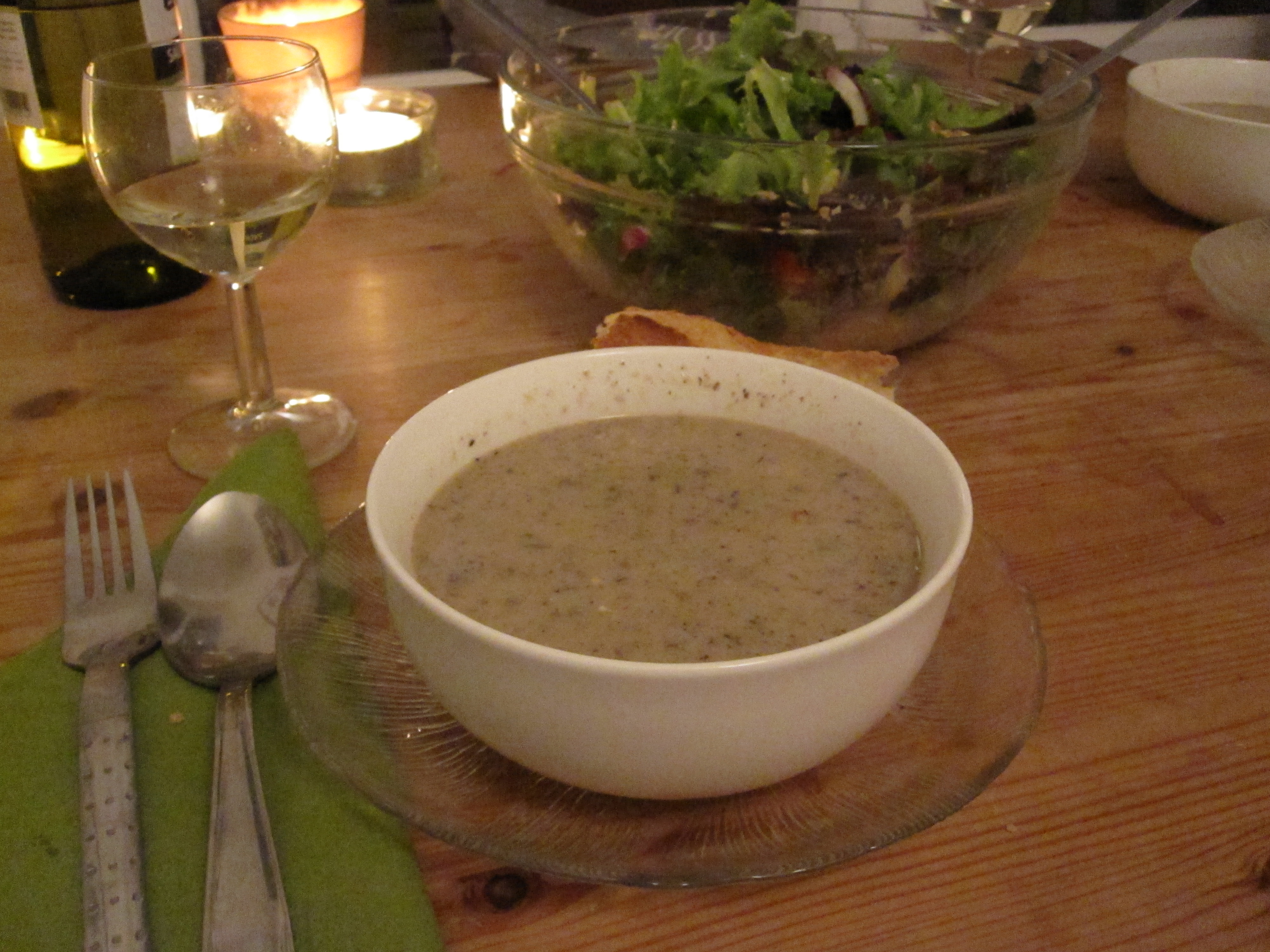
B is a well-documented mushroom maniac, so when the chanterelles, death trumpets, oyster mushrooms, and enormous cêpes began showing up at the vegetable market, he became a jittery mess. I suggested that he make an autumn mushroom soup, which was perhaps the best suggestion I’ve ever made. After tinkering around with some recipes he found online, he created the following masterpiece.

B’s Manic Cream of Wild Mushroom Soup

1 pound, or thereabouts, of assorted wild mushrooms (we bought giant cêpes, death trumpets, and golden chanterelles, though shitakes and oyster mushrooms would have been terrific as well), cleaned and roughly chopped

1 large leek, cut on the bias

White flour

White wine (I believe we used a Mâcon-Villages, though anything dry and not too sweet would work just fine)

Chicken stock

Container of crème fraîche (or heavy cream for those stateside)

Fresh thyme

Salted butter (please don’t insult mushrooms like these with margarine or oil)

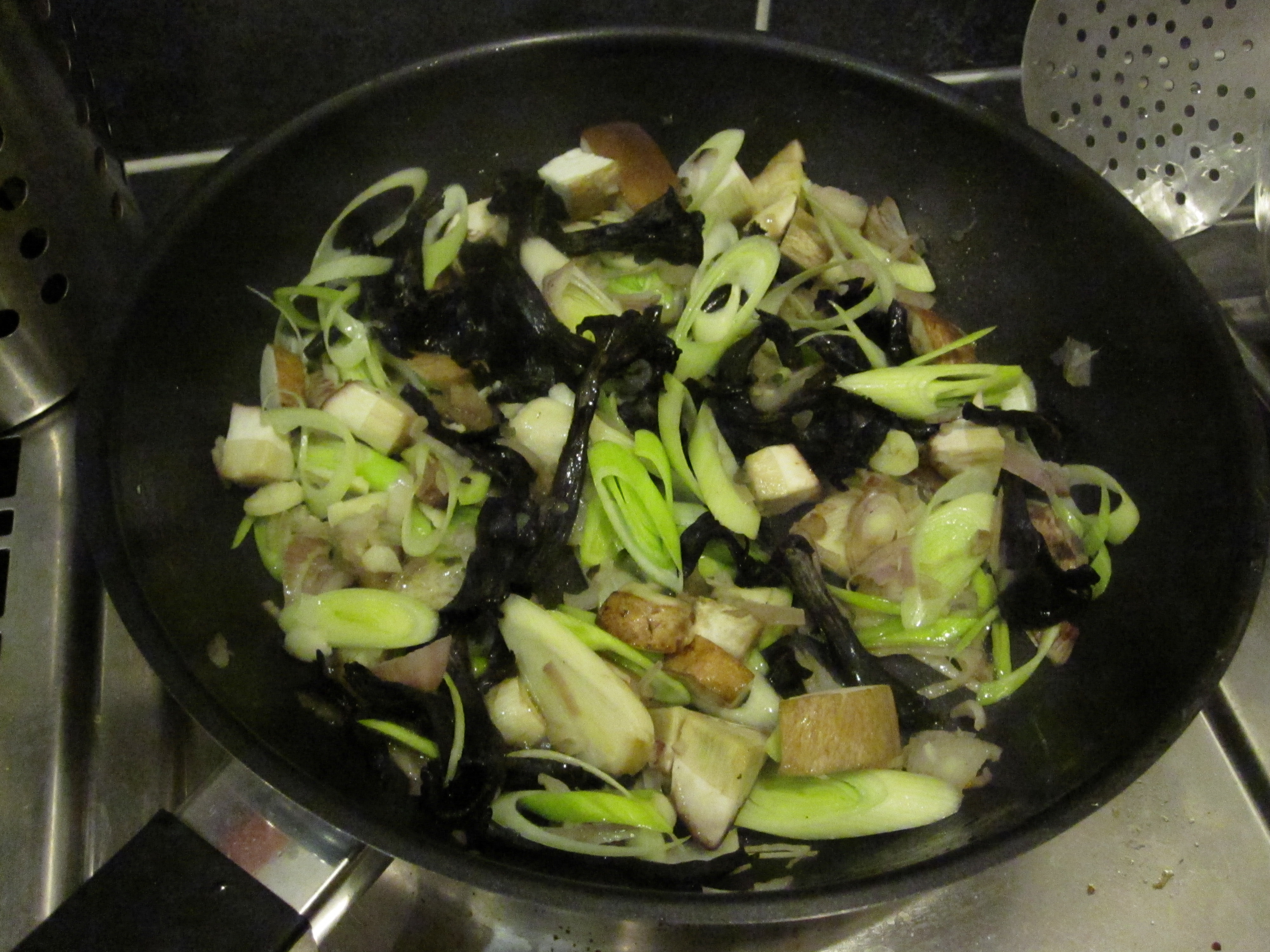
Set about one-third of your mushrooms aside (we set aside the otherworldly chanterelles).  Sauté the remaining two-thirds along with the leeks in butter until browned.  You will have to do this in batches, as it is important to not crowd your mushrooms as they cook (thanks Julia Child!).

When slightly browned, sprinkle with flour and brown a bit further until it looks and smells really yummy (highly scientific, I know).  Once you have browned all of the leeks and two-thirds of your mushrooms, gradually put the mixture in the food processor, using chicken stock as a liquid to get things moving. You should be left with an paste, which you should add to a pot with equal parts white wine and chicken stock. In another frying pan, brown up the mushrooms you reserved. These will not be pureed and will give your soup some texture.

Once browned, add to your burgeoning soup, along with the crème fraîche, thyme, and salt and pepper to taste.  Cook for about thirty minutes over low heat, be careful not to boil this delicate soup.  Serve with white wine, crusty bread, and a big salad (are you noticing a theme here?).

* * *

Finally, I’d like to share with you a soup that can be added to the annals of “growing up is good!” As my mom will certainly attest, I was kind of a weird kid when it came to food. I wasn’t a fan of many of the staples of American childhood, including peanut butter and jelly sandwiches, apple juice, or tomato soup. And while the idea of peanut butter and jelly still makes me nauseous, I’ve been coming around on tomato soup, especially when pair with a classic grilled cheese. Now everybody has their own version of the “perfect” grilled cheese (mine is with buttered wheat bread, Colby cheese, and should slightly burned on one side). Lately, in the absence of my beloved Colby (you can take the girl out of Colorado…), I’ve been making French grilled cheeses with a combination of Mimolette and Emmentaler. At the suggestion of the genius Aarti Sequeira, whose show and internet videos you should be watching if you aren’t already, I’ve begun adding carmelized onions to my grilled cheeses. Amazing and very grown-up.

I’ve struggled a bit more with the tomato soup part of the meal, as I find conventional canned tomato soups to be pretty gag-worthy. I started playing around with combinations I liked and last night I found the holy trinity: tomatoes, roasted red peppers, and basil. This ain’t your momma’s tomato soup, that is, if your momma was in the habit of opening a can of Campbell’s.  But it’s pretty stupidly easy and paired with a grilled cheese it makes for a yummy winter meal.

T’s Consummate Tomato, Roasted Red Pepper, and Basil Soup

Extra-virgin olive oil for sautéing

1 white onion, diced

2-3 large cloves of garlic, crushed

2 cans of San Marzano crushed tomatoes (seriously already!  Life changing!)

1 jar of roasted red peppers in water, chopped and keep the water (approximately five whole roasted peppers if you are fancy and burdened by so much free time that you want to roast your own)

1 teaspoon dried oregano

1 cup chicken stock (or ½ cup chicken stock and ½ cup of white wine)

2 tablespoons of good balsamic vinegar (when buying Aceto Balsamico Tradizionale di Modena, make sure you pick a brand with the seal and the cream-colored cap, which means that it was aged for at least 12 years. If you roll like Daddy Warbucks, splurge on the gold-capped variety, which has been aged for 25 years)

1 bunch of fresh basil (about 20-25 leaves)

Salt and pepper to taste

1 container of crème fraîche (or heavy cream, or half and half, as you like)

Saute the onion and garlic in olive oil until translucent. Add cans of tomatoes, red peppers, red pepper water, chicken stock, balsamic vinegar, and oregano. Simmer over low heat for about an hour and a half, or until the tomatoes sweeten up. Remove from heat and cool slightly, and then add roughly torn fresh basil leaves. Transfer and carefully process until smooth in food processor or blender (or use your immersion blender, you fancypants). Return to stove and add crème fraîche and salt and pepper to taste.  Cook on very low for about a half hour more.

Well that’s it people.  I hope you like these. As with everything I cook, I’m always tinkering with the recipe, so if you make any amazing adjustments, let me know. And I’m always looking for new soup ideas, so if you’ve got a real gem up your sleeve, please share!