Category: france
Save Me From What I Want: Shopping for Foodies in Paris
 To catch up those of you just tuning in, this is the second of a multi-part (how many parts? GOD ONLY KNOWS!) series on shopping in Paris. In our first installment, I told you all of the places that I like to spend money on books, information that I’m sure was terribly interesting and extremely useful to those of you reading this from Iowa. Now, I’m handing things over to Clarence so that he can tell you where to buy foodie things to stow away in your suitcase.
A question I’ve been often asked by visiting friends is “What would you stuff your suitcase with on a trip back to the US and where can I buy it?” Now, Clarence makes it virtually impossible for me to carry on my luggage, as it’s usually filled with jars of liquid carefully wrapped in socks. So buyer beware, my suggestions are not particularly TSA-friendly.
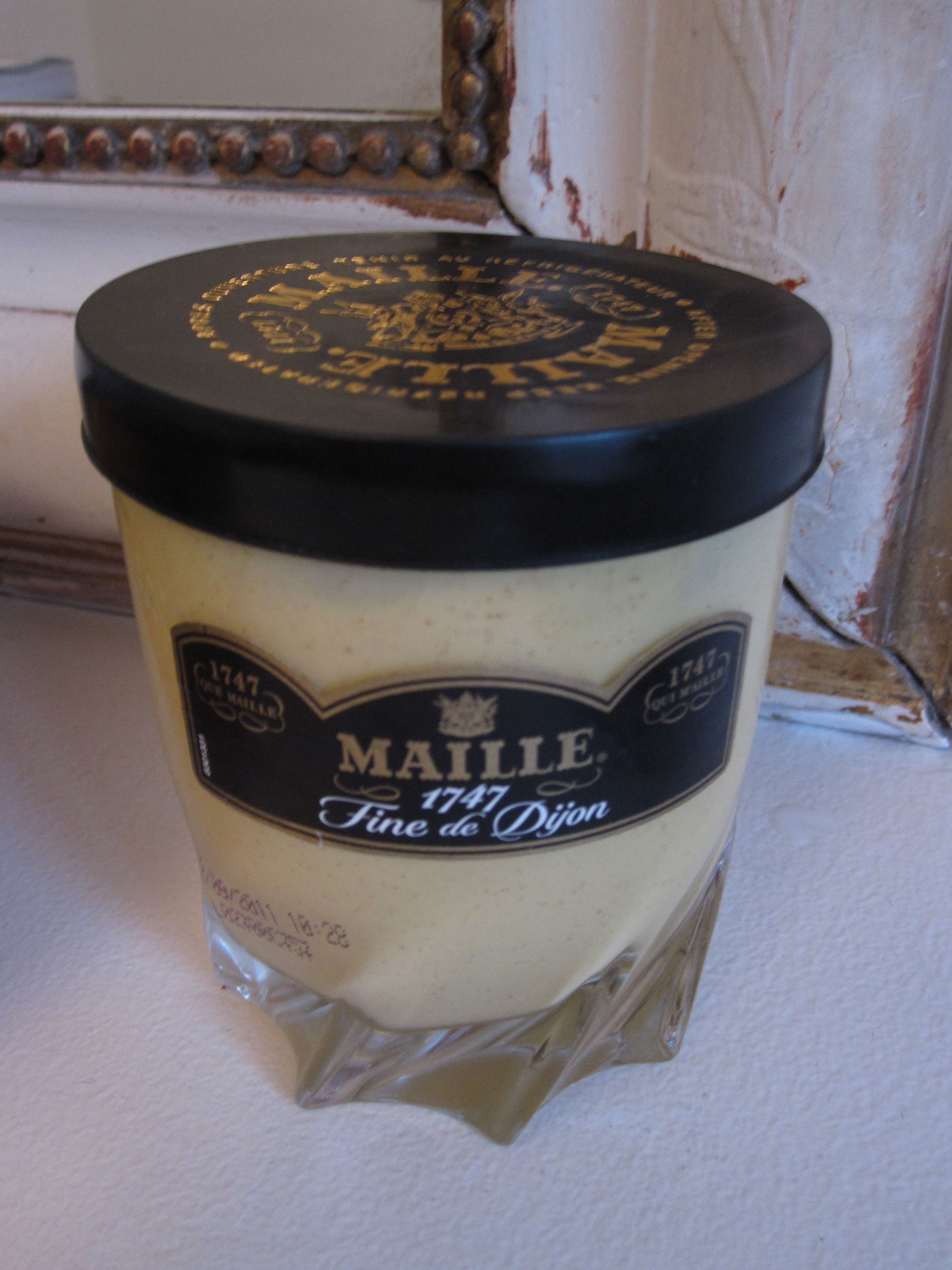 Maille (6 place de la Madeleine, 75008 Paris, Métro Madeline), which has been making mustard since before the Revolution, makes some of the yummiest mustards you can imagine. I wouldn’t have really thought of myself as a mustard-nut until Maille entered my life, but now I am a verifiable lunatic. The basic Maille mustards (both classic dijon as well as ‘à la ancienne’ with whole mustard seeds) are available on the cheap at any grocery store in Paris and make a handsome gift, especially if you snag one of the cut-glass jars that doubles as a whiskey glass when you finish the mustard.However, Maille mustard like this (in some form, I’m told) is available in the US at some specialty markets. If you want to get something singular, head over the Maille store and purchase one of their specialty flavored mustards. We love the chablis-morel and the hazelnut-death trumpet versions, but all the different varieties sound like they would take a sandwich (or a mustard cream sauce on pasta) to a whole new level. Maille also makes the best cornichons in the universe. I go through a big jar every week or so. I’m told these might be available in the US, but I would probably stash a few jars in my luggage just in case. I also have the mentality of a hoarder, so take all of this with a grain of salt.
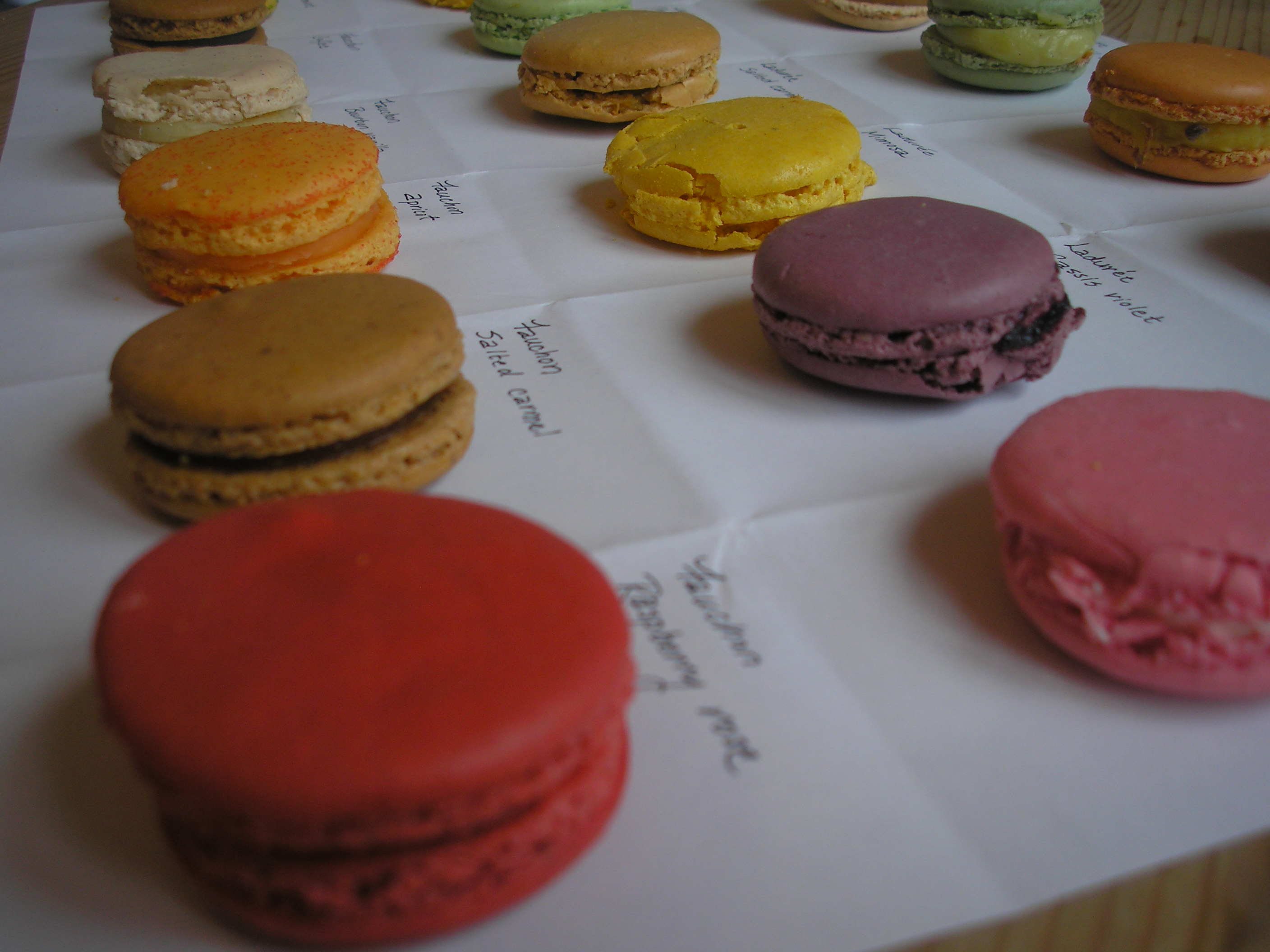 Regular readers know that Pierre Hermé (many locations around Paris) is the winner of the macaron Hungerdome, and therefore wins the dubious honor of being the first and only macaron shop that I take my visitors. But seriously, they do such a lovely job of packaging their singular creations that I can’t imagine why you’d buy a gift of macarons anywhere else. Just remember, they get stale in a heartbeat, so it’s best to buy any macarons for gifts the day you are leaving town. Moreover, no matter how cleverly they are packaged, they are fragile and bound to take some hits during travel. I’d probably instead select one of Pierre Hermé’s beautifully boxed collections of chocolates or tea, which I suspect would fare better than the macarons, which I regard as an “in Paris only” treat. But since some of my readers will likely quibble with me on this, I’ll hold my tongue. Caveat emptor. Stick them in a refrigerator if you can, that will extend their lifetime somewhat.
 Many of my guests can’t wait to visit the venerable teahouse of Mariage Frères (look it up yourself, I’m sure not going there with you), which is a regretable stone’s throw from our apartment. Look, go there if you have to, but it’s massively overpriced and will give even the least claustrophobic person a headache. The real tea fiends I know (and I am not counted in this observation, as I am a coffee drinker to the core) seem to prefer Le Palais des Thé (64 Rue Vieille du Temple, 74003 Paris, Métro Hôtel de Ville) which seems to have a similarly large and studied collection of classic black and green teas as Mariage Frères, minus the ludicrously expensive packaging and the hoards of tourists. I recently overheard a young woman blathering outside of Mariage Frères about how this is the “best tea made in France” and I refrained from explaining that no tea is “made in France,” rather all tea bought here is imported and packaged in Europe, holy god don’t they teach you anything about colonialism in school anymore, insert the sound of brain exploding. That aside, I’d also recommend Kusmi Tea (locations around Paris), which has brightly packaged boxes and tins of both bagged and loose tea. I particularly like their Jasmine Green and their Prince Vladimir varieties, and find that the small assortment boxes that are sold at Monoprix make a nice gift for someone who you have no idea what to buy for.
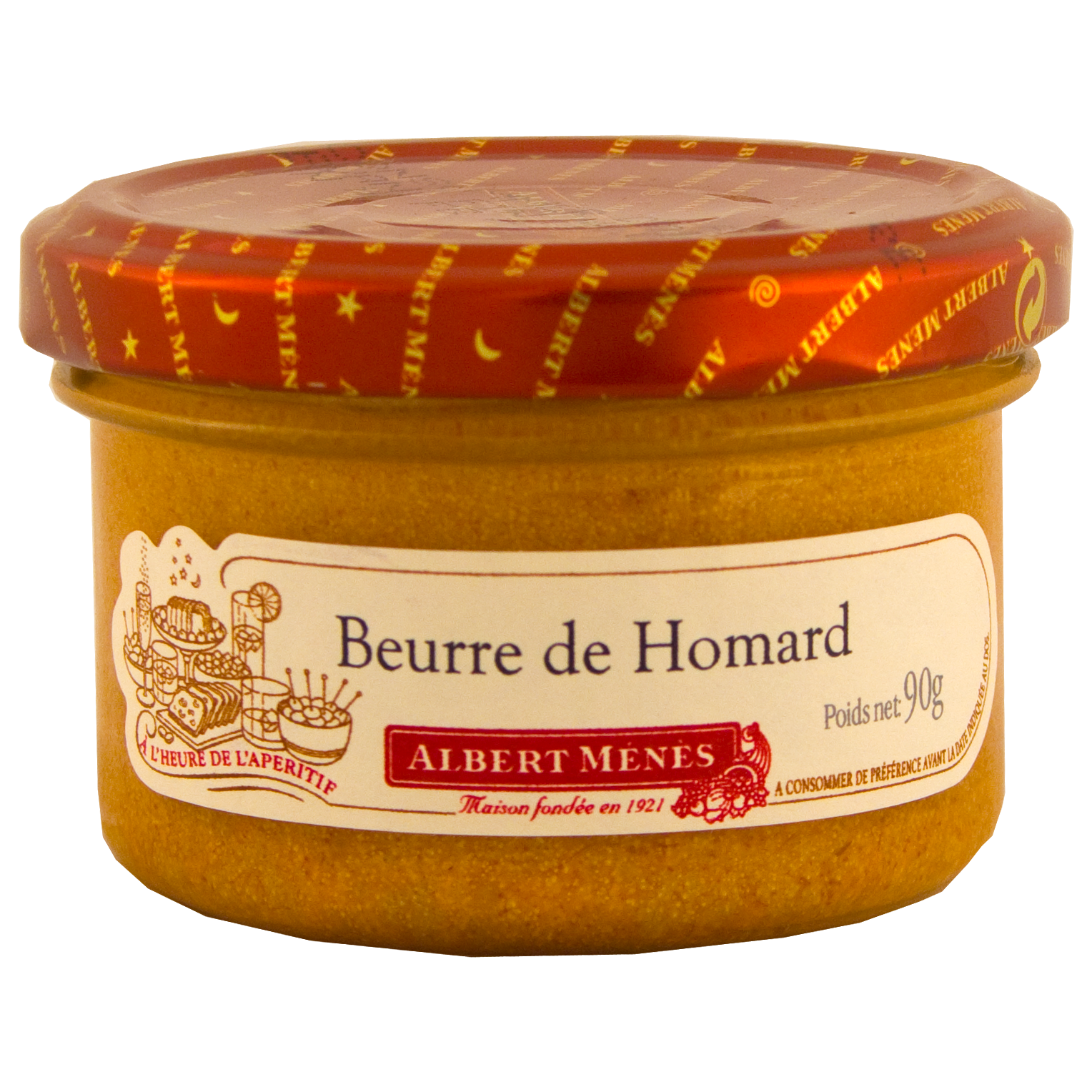
 I’ve already waxed poetic about La Grande Epicerie here plenty of times, so I won’t bore you with another sonnet to my favorite Parisian foodie institution. There’s no place better in town for picnic fixings. I’d also recommend you pick up your specialty Maille mustards there and check out their assortment of canned fishes, which includes the largest selection of La Belle-Iloise and Rodel sardines and anchovies I’ve found in Paris. (Yes, I carry cans of fish back to the States. What of it?) That said, many of the other shelf-stable products you will find at La Grande Epicerie you will also find much more cheaply at a larger Monoprix (locations around Paris), including Bonne Maman jams that are not available Stateside (Frenchies don’t know how lucky they are — the yummiest and best ones are sold in thinner, taller jars with purple checkerboard lids and labelled “Fruitée Intense”), various Bonne Maman cookies (we love the tartlettes and the financiers), and Albert Ménés rilettes and pâtes (or my favorite, their lobster butter). Other great (and cheap) gifts for foodies include Speculoos à tartiner (a gingery spread that is the consistency of peanut butter but tastes exactly like the Speculoos cookies that accompany many coffees in Paris) and crème des marrons (a chestnut spread that is often found at crêpe stands but hasn’t seen the global distribution of Nutella). You can also buy shelf-stable foie gras at both La Grande Epicerie and a larger Monoprix, something that your friends in California will be thanking your for effusively in the next few years.

Okay, so let’s pretend that you are a real stick-in-the-mud and refuse to check your luggage to accommodate all of these liquids. Where might one buy some non-perishable gifts for people who spend most of their time in the kitchen? Well, for the friend who can’t cook but likes to entertain in their impeccably curated home, I’d recommend a visit to the homewares section in the basement of the concept store Merci (111 Boulevard Beaumarchais, 75003 Paris, Métro Saint-Sébastien-Froissart), where you can buy all kinds of lovely (if somewhat frivolous) objects, including all the Pantone mugs in every shade your heart could ever conjure up.
Or, brave the jam-packed La Vaissellerie (92 Rue St Antoine, 75004 Paris, Métro Saint-Paul) for everything from clever dish towels to a rainbow of multicolored marmites. I especially like their crushed Solo-cup espresso cups, their wood-handled cheese knives, and their brass Champagne stoppers (a real bargain at 1 euro a piece). For real cooks, head to the cavernous E. Dehillerin (18 Rue Coquillière, 75001 Paris, Métro Châtelet). Once you’ve finished gawking at the copper pots, duck presses, and human-body sized cauldrons in the basement, head upstairs to the small goods area and pick up an oyster-shucking knife and glove or a non-stick rubber Madeline pan for your favorite chef.
 Do you really like them? I mean, really really? Then go to Laguiole (35 Rue Deux Ponts, 75004 Paris, Métro Pont Marie) and buy them a set of horn-handled steak knives, a wooden bottle opener, or the perfect set of cheese knives. You’ll see plenty of imitation Laguiole while in Paris (the distinctive honeybee on the handle), but the real deal is the real deal, and would make even the most difficult snob swoon.
Save Me From What I Want: My Favorite Bookshops in Paris

Bookstores, English-language
First off, I know you won’t listen to me on this, but will you please skip going to Shakespeare and Co.? Pretty please? Talk about a reputation having outlived a function. I’ve never found anything particularly interesting there besides some entitled American backpackers and a surly, unhelpful staff. Yes, they do occasionally have interesting authors speak, but interesting authors speak all over Paris, all the time.
Instead, if you are looking for pleasure reading in English, I would recommend you visit The Red Wheelbarrow Bookstore (22 Rue St Paul, 75004 Paris, Métro Saint Paul), a small but jam-packed space in the Marais with an extremely friendly staff and a well-curated selection of serious literature, books about Paris, cookbooks, and a rather extensive children’s section. If you are going to be in town for a while, they will happily order things for you that are not currently in stock. I’ll always have a soft spot for this bookstore, as it was one place that I could always count on having a pleasant chat with another human being after a series of long, lonely days.
For a more extensive selection, but perhaps less charm, I’d suggest you push past the tourist crowds waiting in line for hot chocolate at Angelina (why?!) and visit Librairie Galignani (224 rue de Rivoli, 75001 Paris, Métro Tuileries), ostensibly the “first English language bookshop established on the Continent.” Whether or not this is true, Galignani has perhaps the largest selection of fiction in Paris, often offering both the American and the British imprint of various books (this can mean a significant difference in price, though English-language books are always expensive here). In particular, Galignani has a peculiarly well-appointed selection of author autobiographies, biographies, and compilations of letters in a side room, so if that’s your jam, head on over.

For art books, slick stationary, cool kid’s books, and one of the most extensive postcard selections in Paris, visit the Librarie Flammarion inside the Centre Pompidou (Place Georges Pompidou 75004 Paris, Métro Rambuteau). We usually make a habit of meeting here before events at the Pompidou, and it is a rare occasion that all three of us can leave without somebody buying something. Many of the artist monographs on sale are in English, and it’s worth inquiring to the staff if something in particular you want is available in English. Most of the Centre Pompidou’s own gorgeous monographs (must. stop. buying. ten. pound. books.) are issued in English as well as French. Flammarion is especially notable for their year-round sales, making many of their expensive books up to fifty percent off. A must, especially if you are already visiting the Pompidou, which is in itself a must. I live only two blocks away, so give me a holler when you’re finished and I’ll meet you for a coffee upstairs and we can examine your booty together.
Bookstores, French-language
I could literally write about French bookstores all. day. long. As any nerd will tell you, Paris is a book-lovers dream. I daresay that nowhere else in the world can you find such beautiful, serious, and well-stocked bookstores on nearly every street as you can in Paris.
 If you are making like Sartre and de Beauvoir and taking an overpriced coffee at Les Deux Magots, may I suggest that you pop in to La Hune (170 Boulevard St. Germain, 75006 Paris, Métro Saint Germain des Près) and pick up some serious reading. Over sixty years old now, many important writers have browsed this shop and given readings there. And while I don’t think that André Breton is dropping by anytime soon, La Hune still has a pretty knockout list of authors that regularly stop by for book signings.
Another Left Bank favorite and the best recommendation I can make to other literary scholars is Librarie Compagnie (58 rue des Ecoles, 75005 Paris, Métro Cluny-Sorbonne). Oh man, can I do some damage here. Obviously, this is one of the main bookshops associated with the Sorbonne, so their selection of literary, theoretical, psychoanalytic, and political texts simply can’t be beat. They often stock both the mass market paperback editions of texts as well as the handsome Gallimard and Éditions de Minuit texts. We’re getting into book snob territory here, so forgive me if this is all Greek to you. Moreover, they host a regular series of lectures by important literary and theoretical authors, many of which transcend the traditional author meet and greet to discuss contemporary politics and culture at large. The staff is extremely sharp, and they often have a good beat on what is going on at the Sorbonne as well – make sure to check out the window displays and the front table, where you will find pamphlets and flyers for upcoming lectures, conferences, and film festivals. One of our favorite ways to spend a winter afternoon is to browse for a while at Compagnie, then head across the street to rue Champollion for a movie at Le Champo or La Filmothèque du Quartier Latin, and finally end up at Le Reflet (22 Rue Champollion, 75005 Paris, Métro Cluny-Sorbonne) for a glass of wine and a chat. Feel free to rip that itinerary off anytime you like. I guarantee you won’t be disappointed.

Should you find yourself in the opposite side of town in Montmartre, I can’t recommend enough a visit to Librairie des Abbesses (30 rue Yvonne Le Tac, 75018 Paris, Métro Abbesses), a smart and well-stocked store with a drool-worthy selection of novels and poetry from small presses, hip design magazines, and an interesting selection of specialized cookbooks. The proprietress is a particularly sassy Montmartre personality and one of M’s favorite eccentric characters in Paris.

Many of you may know that one of my academic interests is in psychoanalysis. Much to my continuous delight (and my pocketbook’s dismay), many bookshops in Paris are well-stocked with texts on this subject that would be either extremely expensive or virtually unavailable in the United States. I’ve been particularly lucky in my own Marais neighborhood in finding books that are of particular interest to me (and perhaps a handful of my readers). The lovely Les Cahiers de Colette (23/25 rue Rambuteau 75004 Paris, Métro Rambuteau) is well-stocked with both classic psychoanalytic texts as well as the newest releases in the field. They also carry all of the major French psychoanalytic journals and their back issues for at least a year or two.
Another local Marais favorite is Librairie Michèle Ignazi (17 Rue Jouy, 75004 Paris, France), The shop is run by an extremely helpful and knowledegable woman and they stock (among other things) an amazing collection of limited-edition poetry books. Ignazi and all of the other bookshops listed above are a great example of a particularly Parisian seriousness of bookstore employees. There are no blank-faced, doughnut-eyed Barnes and Noble employees at these stores. These are people who take their trade seriously and are eager to talk to you about your purchases and help you find things in their (often stuffed to the brim) stores.
There are two other places that I would be remiss if I didn’t mention, though they certainly veer more towards the American model of book megastore (with its attendant clueless and apathetic employees). The first is the sprawling Gilbert Jeune empire with its eight locations clustered around Saint Michel (just take the metro to Saint Michel and look for the yellow awnings). The go-to source for students in Paris, Gilbert Jeune is arranged according to academic topic, with heaving crowds during the beginning and end of the academic semesters. It’s chaotic, but it’s also one of the best sources of well-organized used books in Paris, and you can often find a bargain. Additionally, their top-floor selection of mass market (livres de poche) paperbacks can’t be beat, especially if you are looking to buy in bulk (guilty as charged). To the Paris newbie, I’ll pass on the following tip: when I first moved to France, I was perplexed by the pricing system of livres de poche. M patiently explained to me that each book is marked on the backside with a category code (usually a letter and a number, like F6) which corresponds to a pricing matrix that is posted on a wall somewhere in the store. I’m sure none of my readers are nearly as daft as I was last September, but just in case, I thought I’d pass that one on.
If all else fails and you can’t seem to find a particular book anywhere, I’d recommend that you steel yourself and visit FNAC (1 Rue Pierre Lescot 75001 Paris, Métro Les Halles). This multi-story French institution sells just about every gadget under the sun and has a stunningly large selection of books at the lowest prices in town. Not for the faint of heart or for anyone who can’t handle crowds, FNAC will certainly have what you are looking for, that is, if what you are looking for is available in France. Their staff is comedically unhelpful and I often find it is best to browse their website before entering the madness. Expect check out to take six lifetimes and to sever the final threads of patience you might still have remaining after battling the escalator crowds. Avoid at all costs in December and January, unless Black Friday-style stampedes are your thing.
Rare and Used Books

For rare and used books, I can’t recommend enough a visit to the Marché du livre ancien et d’occasion, held year-round every Saturday and Sunday from 9 a.m. to 6 p.m. (Parc Georges Brassens, 104 rue Brancion, 75015 Paris, Métro Porte de Vanves). A remarkably large selection of both valuable collectors books as well as bargain paperbacks, a book lover will be able to spend a whole day browsing here and thumbing through their treasures in the lovely Georges Brassens park that surrounds the market. I took B here for his birthday. Another one of our favorite things to do is to browse the bouquinistes that line both sides of the Seine around Notre-Dame. A Paris institution since the 1500s, the bouquinistes have little overhead and often offer books at lower prices than you will see anywhere else in Paris (especially if you are buying the coveted hardbound La Pléiade editions of classic French authors). Many bouquinistes also sell interesting vintage maps, print advertisements, and antique postcards, though at slightly higher prices. They are a great place to find gifts and a lovely place to browse as a tourist. I don’t make a habit of it, but you can bargain at both the Marché du livre ancien and with the bouquinistes.

So that’s my list, friends, but I know that this is the tip of the iceberg as far as this town is concerned. Please tell me about your favorite Parisian bookshops in the comments!
Jesus Saves, I Spend: Holiday Shopping in Paris
 Last week, in a particularly delightful class I teach to a group of bright law students, we somehow began discussing American shopping habits around the holidays. In particular, I described the regrettable phenomenon of Black Friday and its attendant cut-rate bargains, all-night campouts, and homicidal stampedes. In some regards, I felt kind of bad that I described it in such vivid terms – obviously, most Americans I know don’t shop on Black Friday. Moreover, I don’t like to be complicit in the ways that the French feel smug towards Americans (and vice-versa, I won’t pick a fight over much these days, but the Republicans in my family can consider themselves on notice if they want to argue that people die in the streets here as a result of socialized medicine). Anyway, while my little Frogs were indeed surprised to hear that people have actually died in the pursuit of a bargain DVD player in the United States, they corroborated my sentiment that the French are just as bad when it comes to holiday shopping madness as those of us from the other side of the pond. My own neighborhood here in Paris, the Marais, is testament to this very fact. We live just a stone’s throw from BHV, one of the largest department stores in Paris, and our street has become atherosclerosis personified with blank-eyed exhausted shoppers with lugging huge bags of god-knows-what.
My own family has seriously pared down our Christmas gift giving habits in recent years, much to my relief. If I’m being totally honest, I’ll admit that I’m not particularly into Christmas. I find the mandatory gift-giving holidays rather oppressive, and find meal-centric holidays far more to my liking (I’ll take a Thanksgiving dinner or an Easter brunch any day over a Christmas morning). I’ve also always been stuck with the rather lousy situation of having a mid-December birthday, resulting in many childhood years of Happy Birthday/Merry Christmas presents from my more distant relatives. And while my parents always went all out on Christmas when I was growing up (perhaps in compensation for all the double-dipping presents I received for my birthday), we’ve definitely scaled things back to a bare minimum in recent years. I suspect I’ve always been rather difficult to buy presents for. My only recollection of receiving a Christmas present that I genuinely wanted was the year that I asked for a coconut, which my parents obligingly stuffed into the top of my stocking. Enthralled by my good fortune, I ignored the hundreds of dollars spent on toys and spent Christmas morning fondling my coconut. My father is relatively easy to buy for and seems psyched about whatever he receives as a gift. My mother, on the other hand, is a nightmare. I can’t say whether it is because she genuinely doesn’t want anything (a late capitalist anomaly if there ever was one) or if everyone in the world is just consummately terrible at buying gifts for her. Either way, I can’t think of anything that I or anyone else has bought her that she’s ever really loved. Anyway, what I’m trying to say is that my immediate family has finally come to grips with the fact that we are relatively lousy at giving one another presents. My father comes over on Christmas Eve for a big dinner and we swap small gifts (in recent years, he purchased me a dearly beloved apparatus that holds books open and a travel mug for coffee). My mother has gone the practical route, carefully wrapping up socks, sweatpants, and printer cartridges that she has purchased at Costco for me and placing them under the tree, much to my pragmatic delight.
The stakes have changed, a bit, with the introduction of B into my life. B loves giving gifts and is quite good at it, much to my dismay. He began planning for Christmas in the beginning of October, prodding his family and friends for ideas and compulsively making lists of possible presents. While it’s nice to be the beneficiary of such carefully plotted giving, I do feel woefully inadequate. Gift giving is not my forte and the gifts I give are always leaden with expectation.
That bit of family and personal history aside, I’ve been toying with the idea of doing a shopping related post for a while. I’ve been reticent to do so, mainly because I am already a bit uncomfortable about the level of consumption already chronicled in this space. It seems that the most popular blogs, or at least those ones written by women my age, are little more than a compendium of spending. Artful spending, sure! Well-styled spending, of course! But it does seem that many popular blogs are entirely devoted to providing an account of the lovely things that the author buys and how she chooses to wear them or display them in her home. Don’t get me wrong – everyone is welcome to do whatever they please in their own corner of the internet, and I’ve spend more than a few hours thumbing through these types of spaces, green with envy that my own object world is not nearly so well-curated. But I didn’t want this to become that, perhaps because I already feel guilty about how much I like many of the things I buy and how much time and energy their acquisition occupies in my consciousness. I can feel smug about the fact that I don’t write about my quest for the perfect handbag, but that quest still exists. I already write far too much about the quest for the perfect slice of truffled foie gras, which I’m sure makes many people think of me as an unethical monster.

But it’s the holidays, and if the holidays do anything they make people act against their better judgment. So, over the next few days I’ll be posting a Paris shopping guide, a list of places I spend my money over the holidays and during the rest of the year. Feel free to skip it, if voluntary simplicity is more your bag. In any case, should you be jumping into the madness this season, may your holiday shopping be joyous and stress-free, dear reader.
Hungerdome: Will the Real Mexican Food in Paris Please Stand Up?! Parte Dos

First of all, I want to welcome any new readers that have arrived here thanks to my dear friend D’s (entirely undeserved) praise of my blog. D, whom my regular readers I’m sure remember as the gracious host who fed me oh-so-well in Berlin, is really one of the best people I’ve ever met and I’m lucky to call her a friend.
One feature that new readers might not be aware of here at Keeping the Bear Garden in the Background is the Hungerdome, where two culinary contestants enter and only one leaves the victor. The first Hungerdome was held in August and put three Parisian macaron bakeries head-to-head in what became a vaguely nauseating and startlingly mathematical battle. My regular readers will surely suspect that I have forgotten entirely about the second Hungerdome, where I meant to evaluate the meagre Mexican offerings available in the City of Lights.

Here’s the deal. Even though I did enjoy my evening at Hacienda del Sol, I’ll admit that the experience left kind of a bad taste in my mouth. How bad? Ninety euros bad, people. In absolutely no universe should that kind of food cost that much money, France or not. Many people had recommended that I visit Anahuacalli and evaluate it in comparison to Hacienda del Sol. A real live Californian even said that he had the best enchiladas verde of his life at Anahuacalli (an admission that makes me question his standards more than anything else). But the idea of spending another hundred bucks or so on a meal that I could probably make better myself left me cold, especially with a visit to the States on the horizon in which I plan to eat Mexican food until I burst at the seams.

Moreover, I don’t want to brag here, but I’ve started to really get cooking Mexican food here in my miniature Parisian kitchen down to a science. The discovery of a basement Portugese section in a Monoprix in the first arrondisement means that our pantry is well-stocked with black beans. B and M together are a ferocious tortilla-making machine. We even discovered an errant batch of fresh jalapeños a little while ago that had somehow mistakenly ended up in a French supermarket, which we purchased in bulk and froze. The result of all this legwork was that few weeks ago we hosted a carne asada taco night, one that was roundly received as one of the yummiest dinner parties on record. I can whip up some pretty killer Mexican food any night of the week here, so any restaurant claiming to do the same better bring their game face and not cost a week’s salary.
Two Parisian newcomers do just that. The first, El Nopal (3 rue Eugène Varlin, 75010 Paris, Métro Colonel Fabien), is as close to a Mexican taqueria as you are going to get in this town. Run by super-friendly Alejandro from Monterrey and some lovely Ecuadorians (whom B seems to think are Alejandro’s in-laws), El Nopal offers up a limited but tasty menu of tacos and burritos out of a shoebox-sized shop just off Canal St. Martin. Regrettably, there is practically no space whatsoever to eat inside, but I suspect that El Nopal will be the place to be come summer when eating by the Canal is de rigueur for all of the cool kids.
B, M, and I ventured there on a cold and rainy night, and squeezed in to the tiny space. We quickly made friends with Alejandro, who obviously realizes that it is the Americans who are the bread and butter of any Mexican joint in this town. We each ordered a basket of three tacos. Alejandro keeps the selection small, and the night we came in all he had available was an Ecuadorian spicy chicken and vegetable and beef and potato taco regional to Monterrey. Both were quite good, especially when served on the corn tortillas that Alejandro makes to order with an enviable little tortilla press and spread with refried beans. Best of all, he serves his tacos with a genuinely spicy and flavorful salsa, which we greedily doused ourselves in (and more of which was quickly provided). Washing down our tacos with bargain-priced (for this town) Bohemia beers, we were three happy campers. So happy, in fact, that we commandered the tiny space for another round of tacos and beer and a delightful Ecuadorian coffee-flavored dessert. While we ate, Alejandro shared with us secrets of where to buy spicy chiles in Paris (Asian markets) and how to keep our homemade tortillas from sticking to our remedial press (plastic shopping bags, not cling wrap). We left, aglow with booze and good cheer.
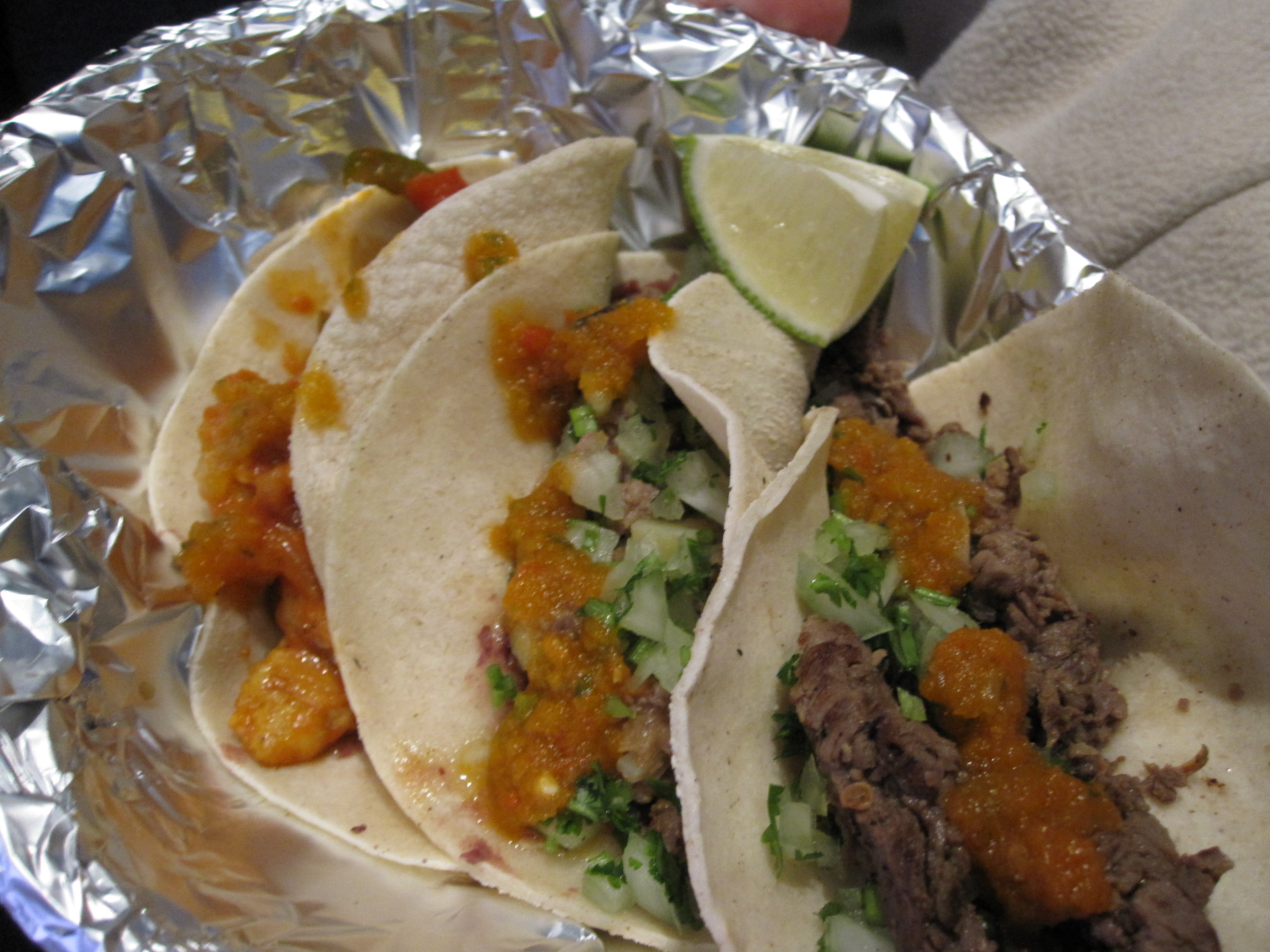
I quickly posted the image above of our tacos from El Nopal on Facebook, so that my Parisian friends of past and present would know that there was now a decent taqueria in town. The responses were mixed, including several from past inhabitants of this fair city that amounted to “That’s nice for you, and it would have been nice for me a year ago.” Another Paris resident and a loyal reader of this blog (hi L!) suggested that I should also try Rice and Beans (22 rue Greneta Paris, France 75002, Métro Etienne Marcel), a new burrito joint run by Americans that has just opened in the former space of much-lauded Rice and Fish, a sushi shop that has changed locations. Thus a new Hungerdome was born.

Rice and Beans, from which ate takeout last night, is a bit of a different animal from El Nopal. While both have a kitsch-filled aesthetic, Rice and Beans’ Luchador-centric decor feels a bit affected. The menu is quite extensive, offering a variety of tacos and burritos, as well as tamales and the restaurant’s namesake black beans and spanish rice. We arrived at the restaurant right when it was supposed to open and were told that the kitchen wasn’t running yet and that we should come back in a half hour. We acquiesced and browsed a lousy used bookstore nearby to kill some time. When we arrived back, we ordered a variety of things from the menu, including two chile colorado tamales, a carnitas burrito with all the fixings, and a selection of three tacos (chipotle chicken, fish, and chorizo). The (white) guy behind the counter was obviously an American, and the ever-affable B quickly struck up a conversation. He revealed that he was from Portland, which I regretted knowing, as I can officially say that the second worst Mexican food I’ve ever eaten was in the Pacific Northwest (the titleholder was in Berlin and wins due to the morale-annihilating case of food poisoning that accompanied it). Nevertheless, we tried to make conversation with this guy about the pitfalls of making Mexican food in Paris, having had a rousing conversation with Alejandro of El Nopal to the same effect. Rather bizzarely, he immediately became suspicious when we described the various places we had successfully located dried red chiles and corn masa for tortillas, and asked in a rather bullying tone if B intended to start his own Mexican restaurant in Paris. B laughed and explained that he was a scholar of medieval literature and would be returning to the states in less than a year, but you could tell that this guy’s guard was up. When B shared his (in my opinion, amazingly brilliant) idea of opening a taco truck on the gravel pit in front of the Louvre, the guy scoffed with the kind of disdain that one can only muster for a really good idea that one wishes he had thought of first.

Our rather chilly reception aside, I was still excited to get our Rice and Beans food home. I immediately dug into the burrito and was generally quite pleased with the results, as it tasted like a decent (if somewhat bland) burrito from anywhere on the West Coast. I’ll give extra points to anything that involves good guacamole, and this burrito certainly did. The tamales were moist and well-handled, despite the fact that nothing resembling red chile had ever touched their filling. The beans and rice were fine, in the way that unspectacular black beans and spanish rice are always fine. But the tacos quickly veered off course. It was entirely unclear what kind of substance was being billed as “chorizo,” but it certainly didn’t resemble any kind of chorizo I’ve eaten on this or any other side of the Atlantic. The deep-fried fish was good, if fishy (these guys did run a sushi shop, after all), but the “chipotle” chicken was as sad of a heap of limp, flavorless, dried-out chicken breast as I’ve ever seen. The worst offender was the homemade salsa, which was glorified marinara sauce in a tiny plastic cup. It was the culinary equivalent of squirting ketchup on your meal, and we quickly trashed it in favor of our own smuggled-in bottle of Tapatio for flavor and heat. They did have a variety of bottled hot sauces available at the restaurant, so perhaps that is more of the go-to condiment at Rice and Beans than the salsa, which seemed like a bit of an afterthought.

I guess I wouldn’t be so sour about the actual quality of the meal, which was totally decent by Paris standards for Mexican food, if we hadn’t been accused of being spies eager to check out the competition and steal their culinary secrets. To be honest, should B and I ever decide open up our taco truck, we’d give those guys a hell of a run for their money.
So, let’s Hungerdome this beast, shall we?
Round 1: Food
There’s really no contest. On one hand, you have a Mexican guy running a genuine taqueria with his family’s recipes. He understands what salsa is supposed to taste like and that Corona is not the only beer that one can import from Mexico. On the other hand, you’ve got some American guys running a burrito joint largely modeled on other European burrito joints that are modeled on Chipotle. While Rice and Beans does have a more extensive menu, El Nopal makes sure their small list of offerings are all perfect. As a fan of quality over quantity every time, this one goes to El Nopal. Lest I sound like the mean girl, however, I do want to say that Rice and Beans makes quite a good burrito, the likes of which you will be unable to find elsewhere in Paris.
Round 2: Booze
Mexican beers at both El Nopal and Rice and Beans are both a rather steep 4 euros a bottle, but that’s change compared to the cost of those beers anywhere else in Paris (B and I both had a seizure when we realized we were being charged 8 euros a pop for Negro Modelos at Hacienda del Sol). El Nopal serves Bohemia, however, which is my Mexican beer of choice. Thus this round goes to our friend Alejandro, who also knows a thing or two about beer. We’ll forgive him for regarding Tecate as “a fancy beer,” as apparently it was for him growing up in Monterrey.
Round Three: Price
A key factor, especially since I’ve already (rather dictatorially) decided that Hacienda del Sol and Anahuacalli are out of the running for the best Mexican food in Paris due to their high price tags. Tacos are a euro a pop cheaper at El Nopal than at Rice and Beans (two versus three euros), which can really mean something when you are eating in bulk. Thus, round three goes to again to Alejandro, who knows how much you can actually charge for a taco, in Paris or anywhere else for that matter.
Round Four: Restaurant Space and Ambiance
El Nopal is delightfully decorated and immaculately clean, but the size of the average American walk-in closet. Rice and Beans wins points for being an actual sit-down restaurant chock-a-block with kitsch, but their hygiene standards left both B and me a bit unsettled. It wasn’t dirty, per se, but it wasn’t exactly clean either. Moreover, El Nopal is a block from the Canal, whereas Rice and Beans calls the (cough) atmospheric area of Reamur-Sebastopol home. Come summertime, Alejandro will be able to call one of the coolest picnic areas in town his dining room. For this reason, and the general friendliness of the owners, El Nopal also takes this final round.
There you have it, people. Two Parisian Mexican places entered the Hungerdome, and El Nopal emerged victorious. Seriously, people, El Nopal is a brand-new, family-run business trying to make its way in a tough restaurant scene that doesn’t look kindly on anything spicy. If you find yourself on the Canal and hungry, please give it a shot. I want this yummy taqueria to make it through this long winter until next summer, when I anticipate having to fight my way in to get a plate of tacos for a picnic dinner.
Unclean Eating, Part Deux: Getting your Oyster Fix in Paris

So it will come as no surprise to regular readers of this blog that I was pretty psyched for oyster season to begin here in Paris. I’ll ‘fess up that I didn’t really know there was such thing as an oyster season until last year. Before moving to Paris, I was the dirtiest kind of unclean eater, one that fed largely on bargain beasts at (still great!) Jax Fish House in Denver and Boulder during highly inappropriate summer spawning months. How clueless I was! Now I know that you should only eat oysters in months with the letter “r” in them. I’m too lazy to figure out if that applies to the French names for months as well, but you get the point. Unless you want a mouthful of bivalve spooge, you might want to wait until autumn to commence your own private oyster holocaust.
During our long summer of boozing at Le Baron Rouge (1 rue Theophile Roussel, 75011 Paris, Métro Ledru-Rollin), we often heard murmurs about a fabled oyster truck that the Baron hosts on weekend days during the winter. My best girl MT’s arrival in Paris for a short weekend jaunt (my, aren’t we fancy these days!) seemed like the perfect opportunity to give the much-hyped oyster truck a shot. We arrived to find a throng of eager unclean eaters gathered outside the restaurant, happily slurping down oysters off plates balanced on the hoods of cars and bicycle seats. MT and I pushed our way through the heaving restaurant to order four glasses of Sancerre, while the boys waited in line for our delicious bivalves. I was relieved to see our regular bartender in all the madness, a graduate student in medieval literature who likely recognized me as “the girl whose boyfriend always talks to me about the book I’m trying to read” and plucked my order out of the boisterous crowd. The guys splurged and ordered the 13€ a dozen fine de claires, but the 9€ bargain ones looked also quite lovely. All the shucking is done on temporary tables on the sidewalk, and this truck moves through a serious amount of oysters in the course of a morning. After only a little wait, we had secured 4 dozen oysters served with lemon wedges and mignonette sauce and some baskets of brown bread. I had (quite cunningly, I think) saved a windowsill for our unclean eating, which we managed to balance our treats on quite nicely:
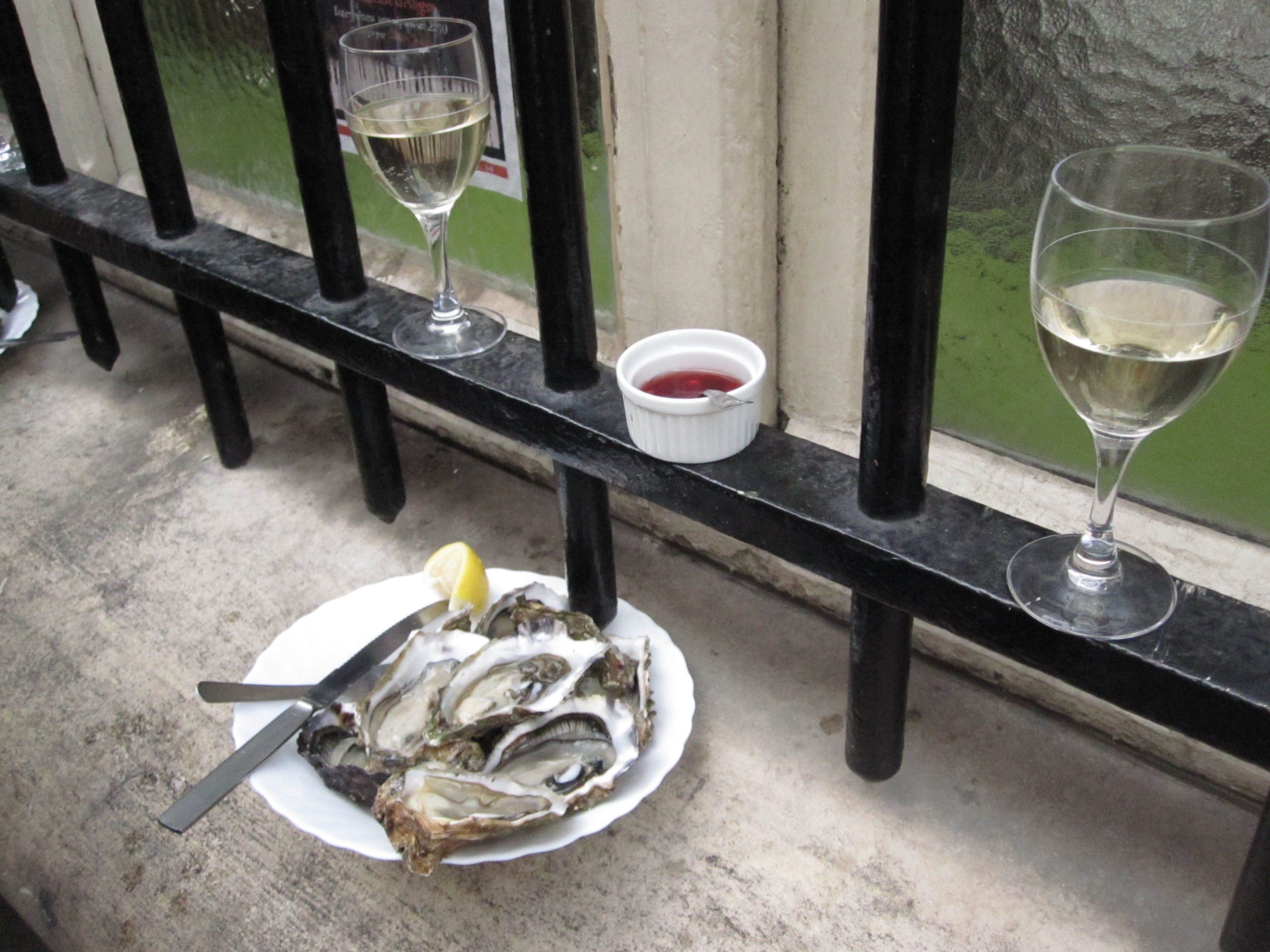
The best part was perhaps watching a five or six year old girl eagerly await the oysters her father carefully prepared for her. She slurped them down with delightful ease and clapped her hands in anticipation as her dad loosened yet another oyster from its shell for her to devour. She ate a dozen by herself, and provided some consolation to the American stereotype of children that only eat grilled cheese sandwiches and buttered pasta. I know it’s easy enough to say “my future child will be an oyster-eater” when you don’t have a child, but I’ll go ahead and indulge this fantasy. My future child will be a brilliant, witty, hyper-articulate, oyster-eating prodigy. Nobody better mess with her.
* * *
The other oyster revelation came in the form of La Cabane à Huîtres (4 rue Antoine-Bourdelle, 75015 Paris, Métro Montparnasse-Bienvenüe, tel. 01.45.49.47.27). We’d read glowing reviews of this Montparnasse oyster shack everywhere, and so a few weeks ago B, M, and I trekked southward in the rain.

We were silly enough to not make reservations and by the time we arrived the tiny, wood-panel lined restaurant was packed to the gills (it only seats 20). The woman working behind the counter, Ségolène, shook her head, but her father, proprietor Francis Dubourg, beckoned us in and asked for the entire restaurant to move around to accommodate a new table. Everyone cheerfully scooted around and made room for us, some even passing chairs over their heads mid-meal. This same thing happened again when we returned this week for another pair of stragglers, but I would recommend making a reservation for one of these coveted tables.
Francis Dubourg is one of the last old-school oyster farmers in the Arcachon basin, an area of coastline about an hour outside of Bordeaux that is my new obsessive point of travel research. He is a fifth-generation oyster farmer, and his son now runs the farming and harvesting end of this family business. Several times weekly, super-fresh crates of Dubourg’s unusually shaped, amazingly flavored oysters arrive in Paris, where they are greedily gobbled up by his many fans. Dubourg and his family are some of the only remaining farmers that actually raise the oysters in the mud (instead of in bags placed on metal harvesting beds), making their care and harvest a far more involved process. The result: these labor-intensive beasts taste more pungently of the sea, and the earth, and of the unique ecosystem that produced them (the French call this environmentally-imbued taste profile terroir).
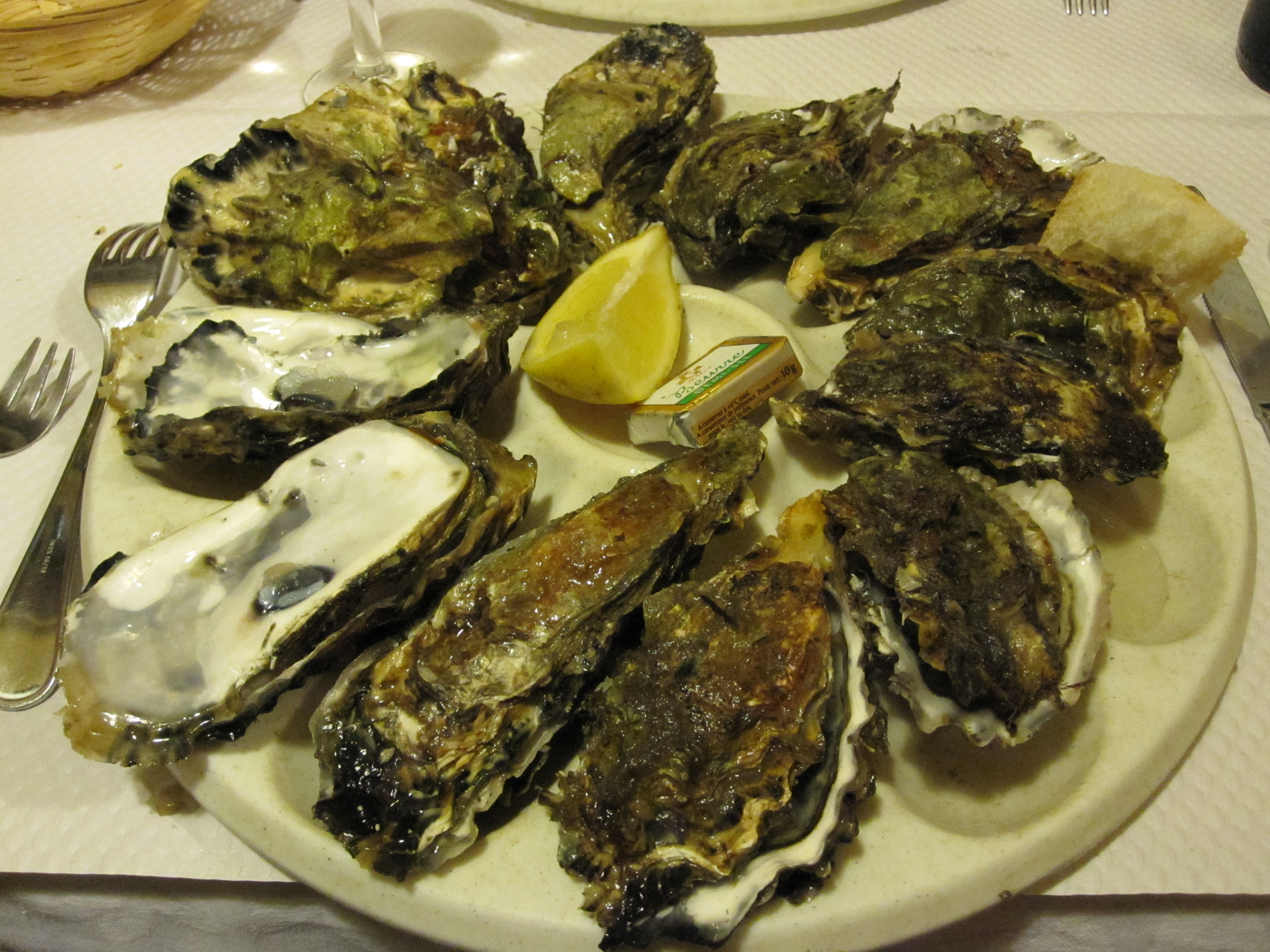
Whatever you want to call it, oh man, are they good. Compared with the commercially produced oysters we often see in the US, they look like a whole different animal. Irregularly shaped and covered in barnacles, these bivalves occasionally have a tiny red worm or two hanging out on the outside of their shells. Never fear – these little guys are only an indicator of the extreme freshness of these oysters (the oysters themselves, which are shucked fresh to order, are as healthy and delicious as can be). Part of the fun of the cramped space of La Cabane is that you often end up handing big plastic trays of oysters over to the other patrons. This, along with perfectly-paired communal bottles of wine, makes the whole experience extremely convivial.

The other part of the fun? Well, a dozen oysters is only one part of the meal. The menu also includes your choice of a sizeable slice of foie gras or a heap of magret de canard.
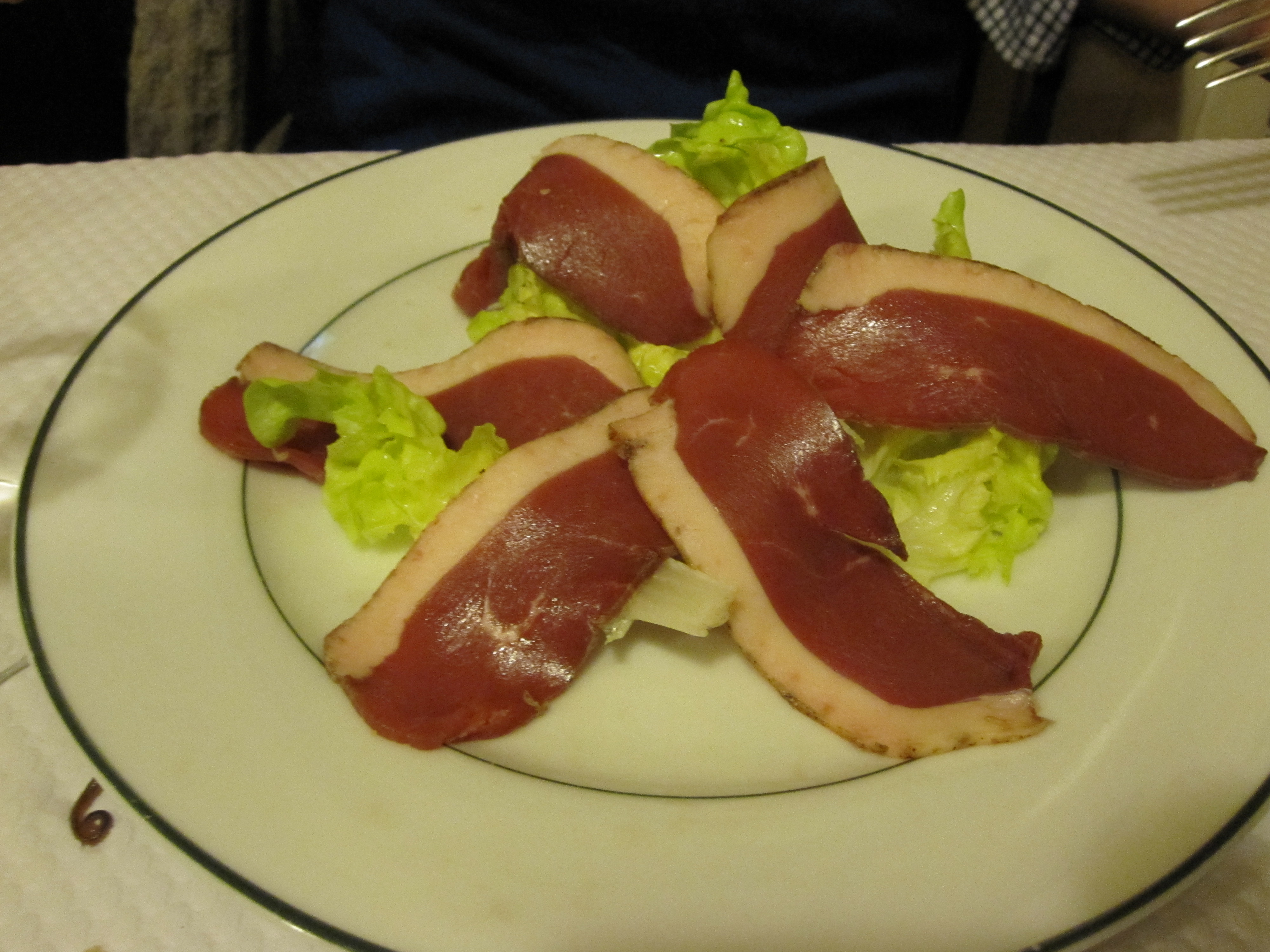
These are followed by a lovely cheese course of Tomme:

Finally your meal ends with a perfectly carmelized canelé, a special kind of custardy cake cooked to sepia perfection in molds made of leather. Paired with a stiff pour of Armagnac, it’s the perfect way to end an amazing meal.

And the bill? Well, I can’t seem to get an exact beat on how these things are tabulated, but it seems that we usually spend about thirty dollars a person. Given that our most recent meal included four dozen oysters, two plates of foie gras, two plates of magret de canard, four cheese plates, four desserts, three bottles of wine, four Armagnacs, and four espressos, I’d say we did pretty well.
La Cabane is just about the loveliest place you can imagine, run by one of the friendliest and food-devoted families in France. Please go there if you have a chance.
 The Bear-Garden