Category: lovely things
Clarence on Vacay: Bonifacio, Corsica
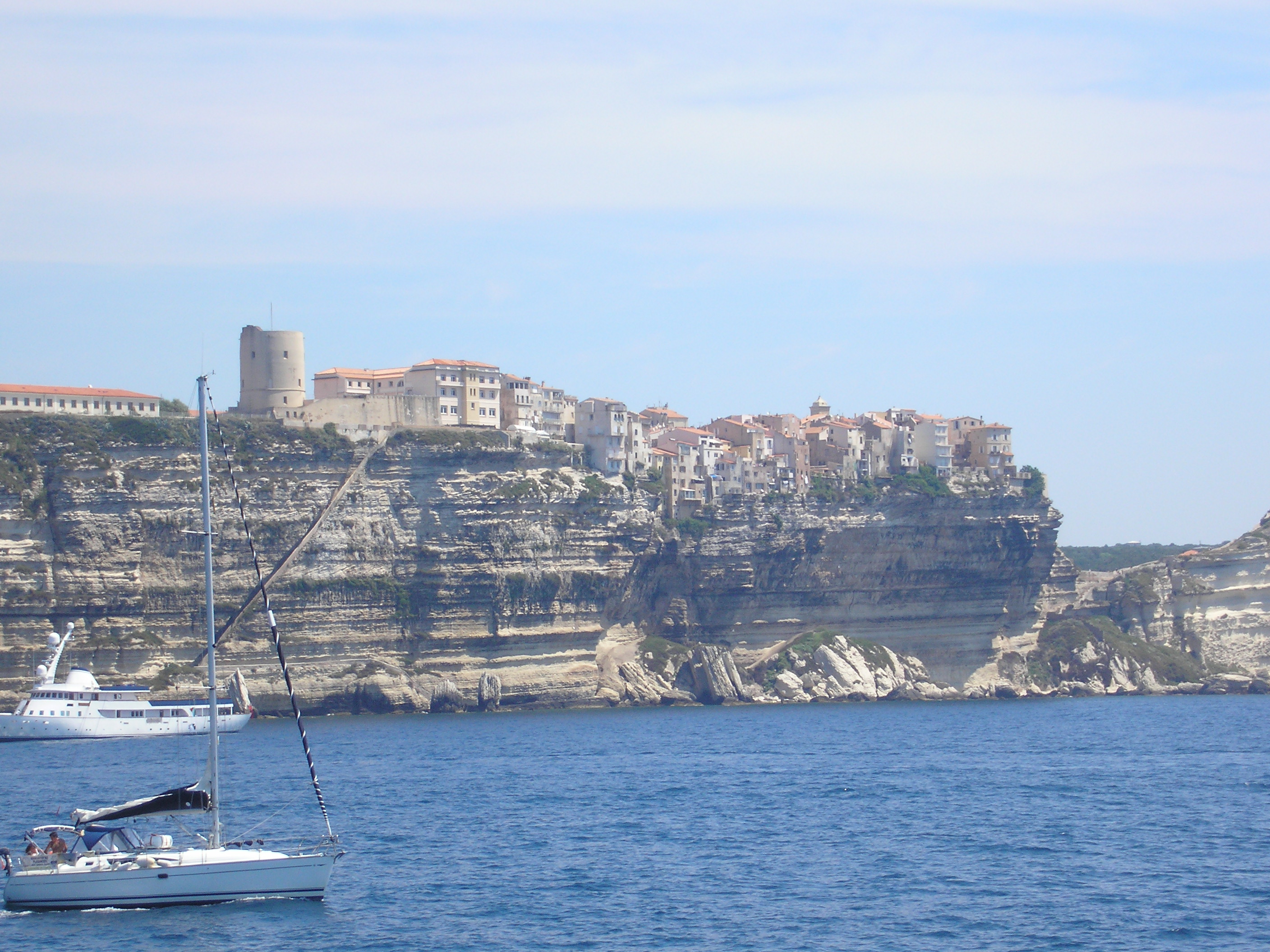
When we arrived in Bonifacio I was hot, tired, and totally carsick. I had also scratched myself until I bled on the bus ride. Corsican mosquitoes do not fuck around, people. I was also annoyed about the aesthetic trajectory of our trip, one in which I was looking increasingly bloated and blotchy while B was increasingly blond, tan, and dreamy. Between my sucrée blood and his enviable metabolism, I was starting to feel like I wasn’t quite punching my weight in our relationship looks-wise. I had also begun to realize that the vacation-binge, all-charcuterie-all-the-time, food philosophy I’d been indulging wasn’t doing me any favors in the stomach department. Bonifacio didn’t look like much more than a tourist trap from our hotel, which was conveniently located on the marina. Cross and sweaty, I decided to stop eating salami for a while and take a nap at our hotel while B went out to buy cigarettes and explore.
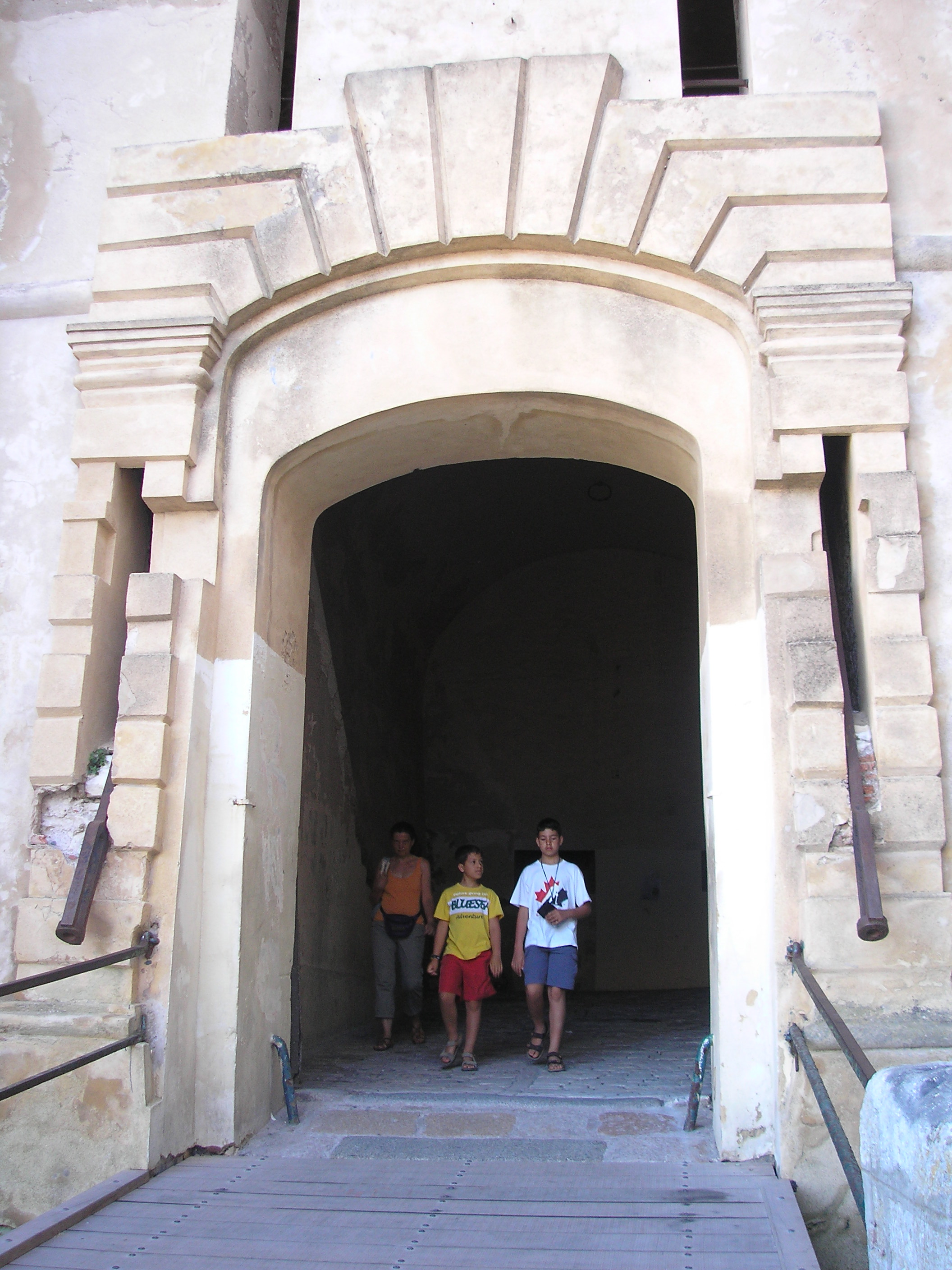
He came back giddy with medievalist glee. “You have to climb up a steep cobblestone street to get to the old town and cross a moat to enter through a fortified castle gate! There’s a DRAWBRIDGE!” While I sensed that I was witnessing my boyfriend regress to a decidedly less-dreamy phase of his development that involved more Dungeons & Dragons than romantic island vacations with girls, I was also intrigued. Drawbridges are sweet! So I puked and rallied (metaphorically), got dressed, and we headed into town. I was clutching, of course, a list of restaurants I wanted to try.

The original town of Bonifacio, which you reach by climbing either sets of stairs or a steep cobblestone path out of the marina strip that is lined with Eurotrash bars and wealthy yacht-owners, is a walled medieval town with narrow, cobblestone-lined streets and breathtaking views of the surrounding coastline. My mood immediately lifted with the views on the way up the hill. We explored the town for a while, which is chockablock with interesting little antique and souvenir shops, buttress-topped alleyways, and yummy smelling restaurants. I already had my eye on L’Archivolto (2 Rue Archivolto) from its glowing review in our Lonely Planet, but a walk-by this adorable antique shop and restaurant cinched the deal. B went in to see if we needed reservations and came out confused after having the restaurant’s Byzantine reservation policy inconclusively explained to him by the owners. “I think we are just supposed to come back around eight and hope for the best,” he said, puzzled.

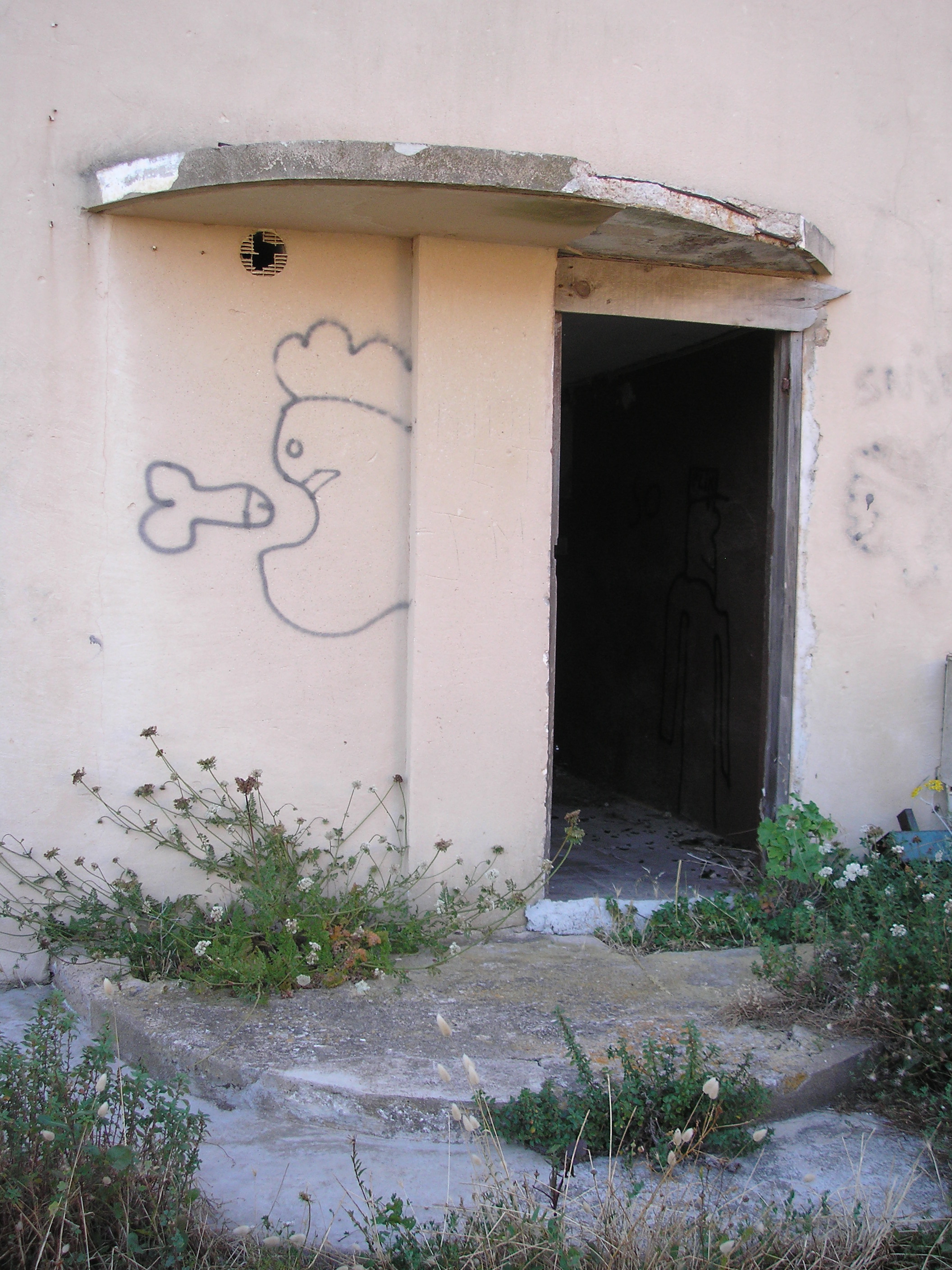
With time to kill, we wandered outside of the town center in search of a cluster of Genoese towers that we had seen on the bus ride from Sartène. Genoese towers make for lots of good phallus jokes, people. Instead, we ended up wandering into an abandoned military zone filled with revealing graffiti:
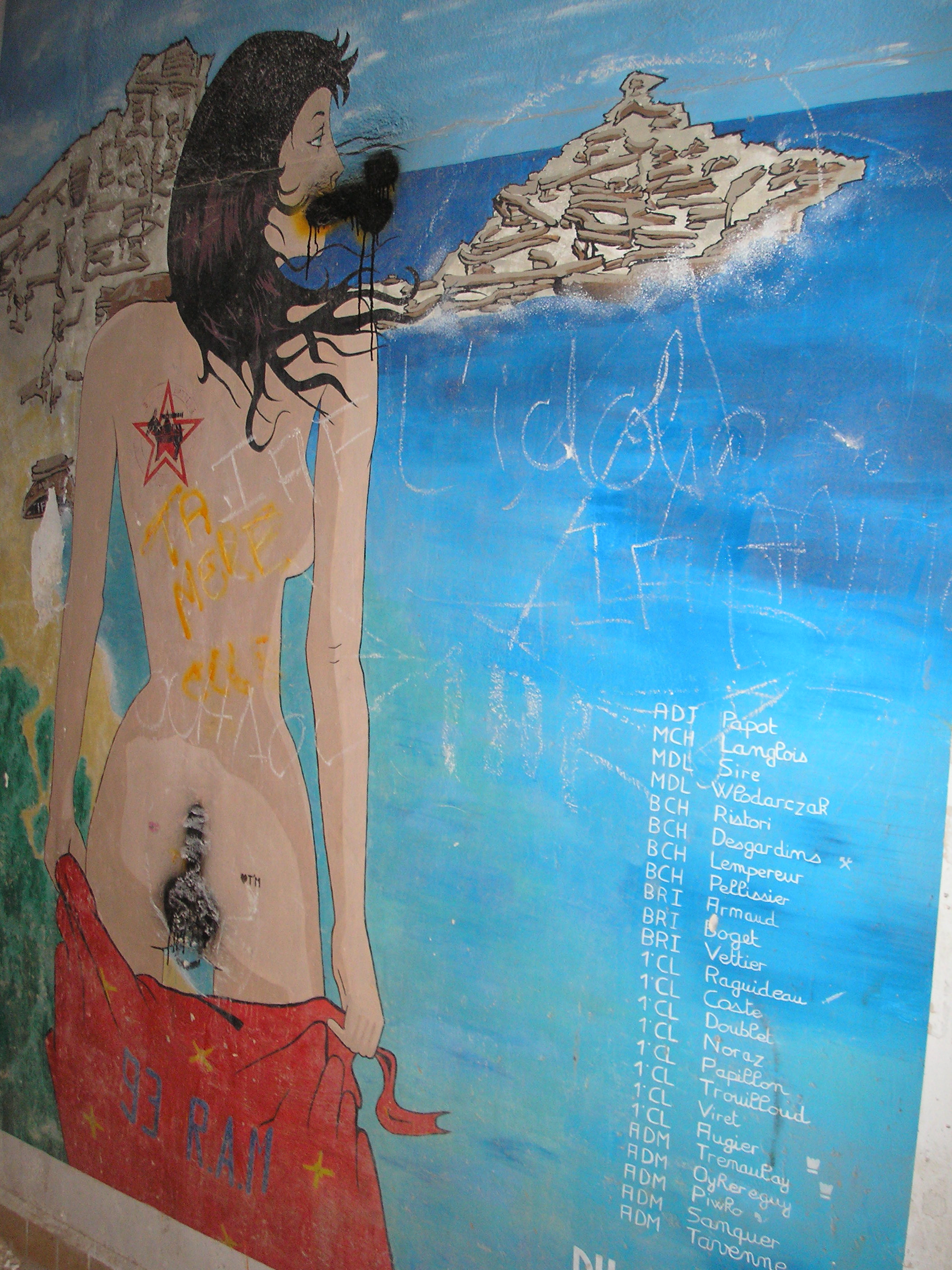
The mess hall was filled with murals for the various brigades that were stationed in Bonifacio:
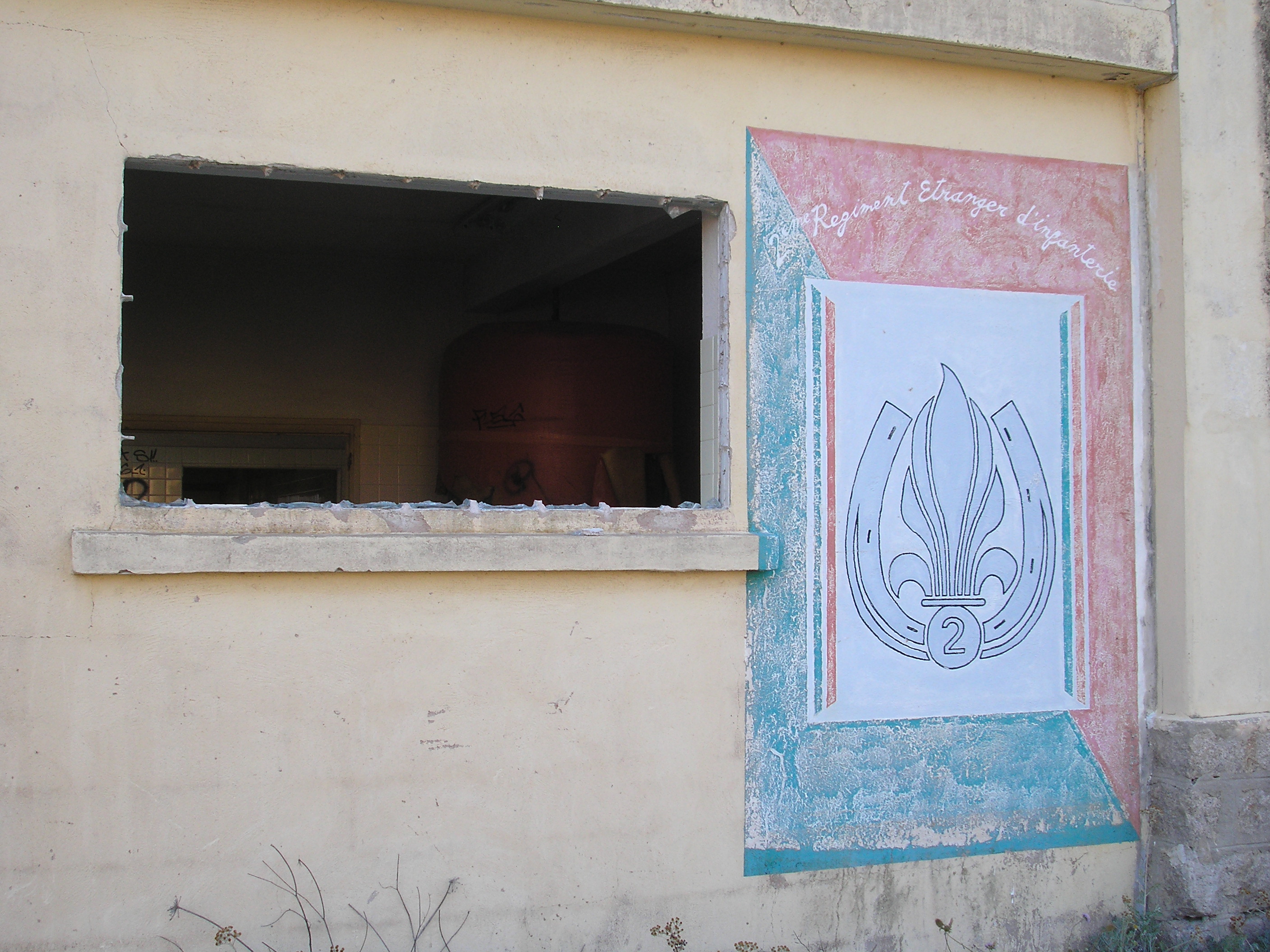


I, little Sally Rule Follower (“What if this is trespassing? What if there is aesbestos? What if my mom finds out?!”) was of course skittish about exploring, but even I have to admit that it was pretty awesome to stumble into this abandoned mill:


B could have explored all night, but it was getting close to the time of our non-reservation, so I insisted that we move on. We arrived at L’Archivolto and found it packed, a rope having been tied on the front entrance as if to say “Too late, you sorry stragglers.” After a bit of coaxing, we managed to get in for a place at the community table, which we shared with a lovely Parisian couple. Seeing us struggle with a couple of the different fish names on the menu, the woman we were sharing our table with provided some recommendations. Apparently, they had eaten at L’Archivolto three times that week, which I took as a very promising sign. And whoa, ho ho:
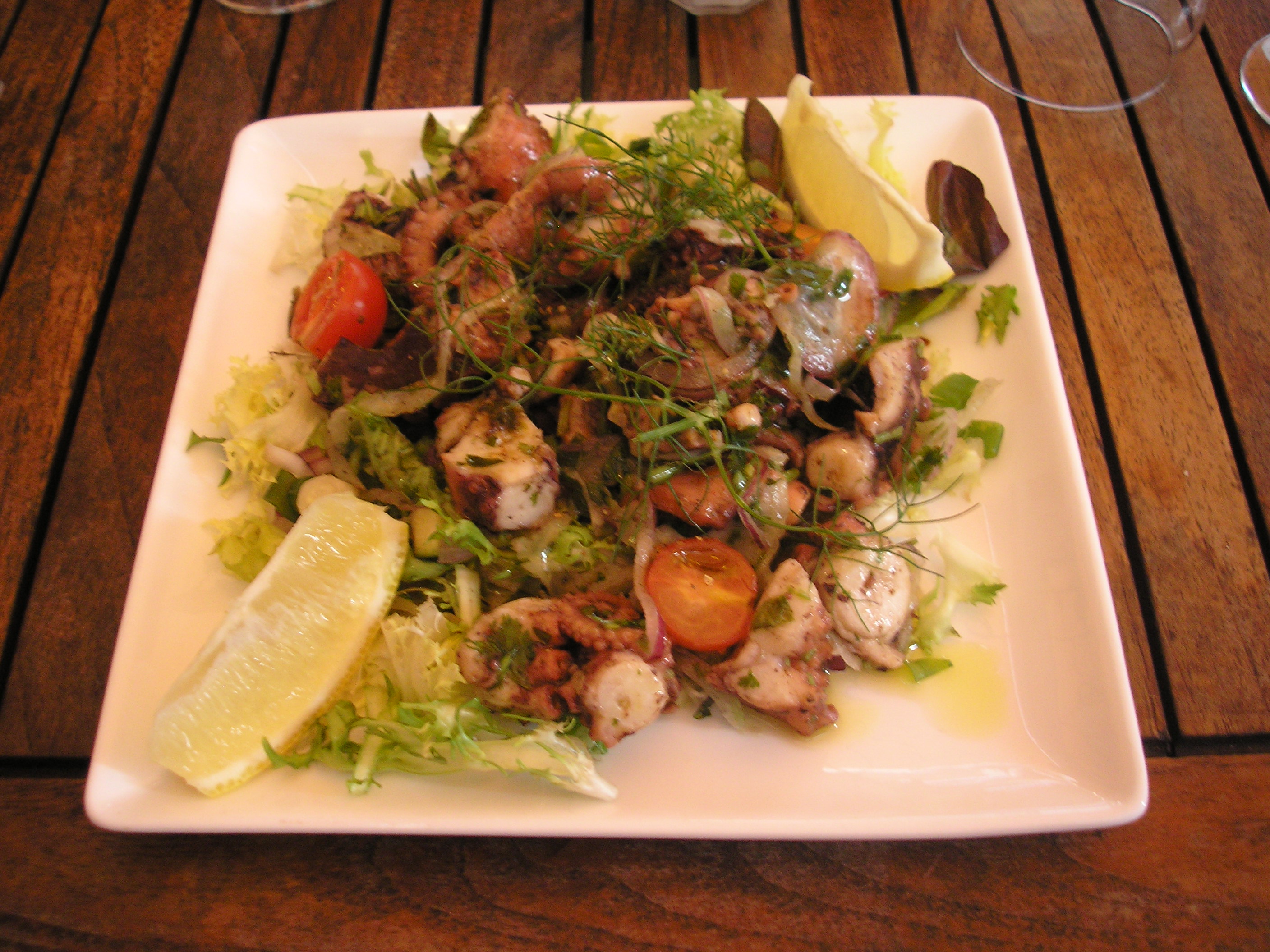
Our first plate was this cold octopus salad with cilantro. We were initially going to split one, but then our table companions received theirs and Clarence declared that he would cut anyone who asked him to share. This, people, was the most perfect salad I’ve ever eaten. Tender, sweet octopus, fresh cilantro, an assortment of wild greens, and super-sweet local cherry tomatoes, dressed with nothing more than some good olive oil and squeeze of lemon. What a revelation.

B’s second plate was a mysterious red mullet and fennel preparation that resembled a kind of warm tartare, or as B put it, “the insides of the very best crabcake I’ve ever eaten.” There was, certainly, a lot of crab in this rouget dish. It was served with a heavenly black olive tapenade that attracted a lot of attention from my roving fork (I may or may not have eventually gotten my hand slapped for excessive trespassing).

It was especially ridiculous that I couldn’t keep my hands to myself, especially since I was occupied with the best lasagna I’ve ever eaten or could possibly hope to eat. A bit of a riff on the local specialty of aubergines à la bonifacienne, L’Archivolto serves up a serious slab of their impossibly perfect eggplant and goat cheese lasagna. This picture sucks, but omg this was “call in the troops, I could be a vegetarian if I could eat this everyday” kind of food.

We wanted dessert, but were both uncomfortably full at that point. Instead we had a lovely conversation with our tablemates, who made sitting at the community table a delight. In this particular feature, L’Archivolto reminds me a great deal of my favorite restaurant in the world, Café Pasquals of Santa Fe, New Mexico. Both restaurants have an eclectic, homey design that reminds me of my Montessori teacher’s house when I was growing up. Both have a large community table that encourages visitors to mingle and chat with one another. And both use local products and elements of the regional cuisine while adding sophisticated techniques and flavors from around the world. They are both, in my humble opinion, exactly what a great restaurant is supposed to be, and while they are both pricey, I’d rather spend my money at a places like these than a fussy, white-tablecloth, honeydew-gelée and sunchoke-foam joint any day of the week.
Wandering down the hill to our hotel, we decided that full or not, we couldn’t neglect B’s Reign of Gelato (requiring that we eat gelato every single day of our trip). We stopped in at the marina Glaces et sorbets à Bonifacio (Rocca Serra) (17 quai Comparetti), a gelato shop with a staggeringly large counter, friendly staff, and a cool selection of local flavors. We shared a cup of sorbet made with locally-grown, organic clementine and lemons. The following day, B braved a scoop of myrtle (which he liked – I thought it tasted like cold medicine and mouthwash) and I got a final Brocciu fix. It’s definitely worth a stop.
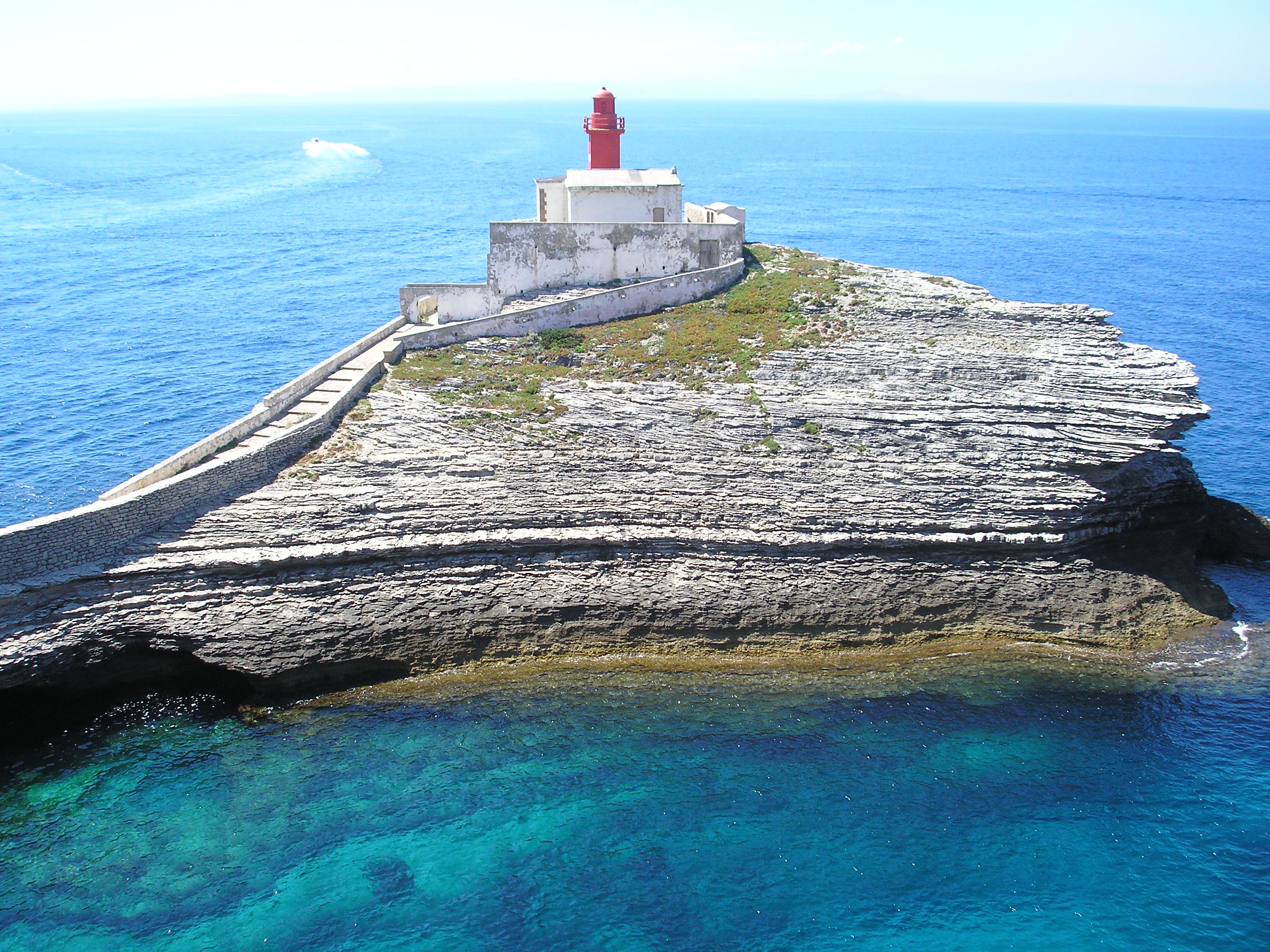
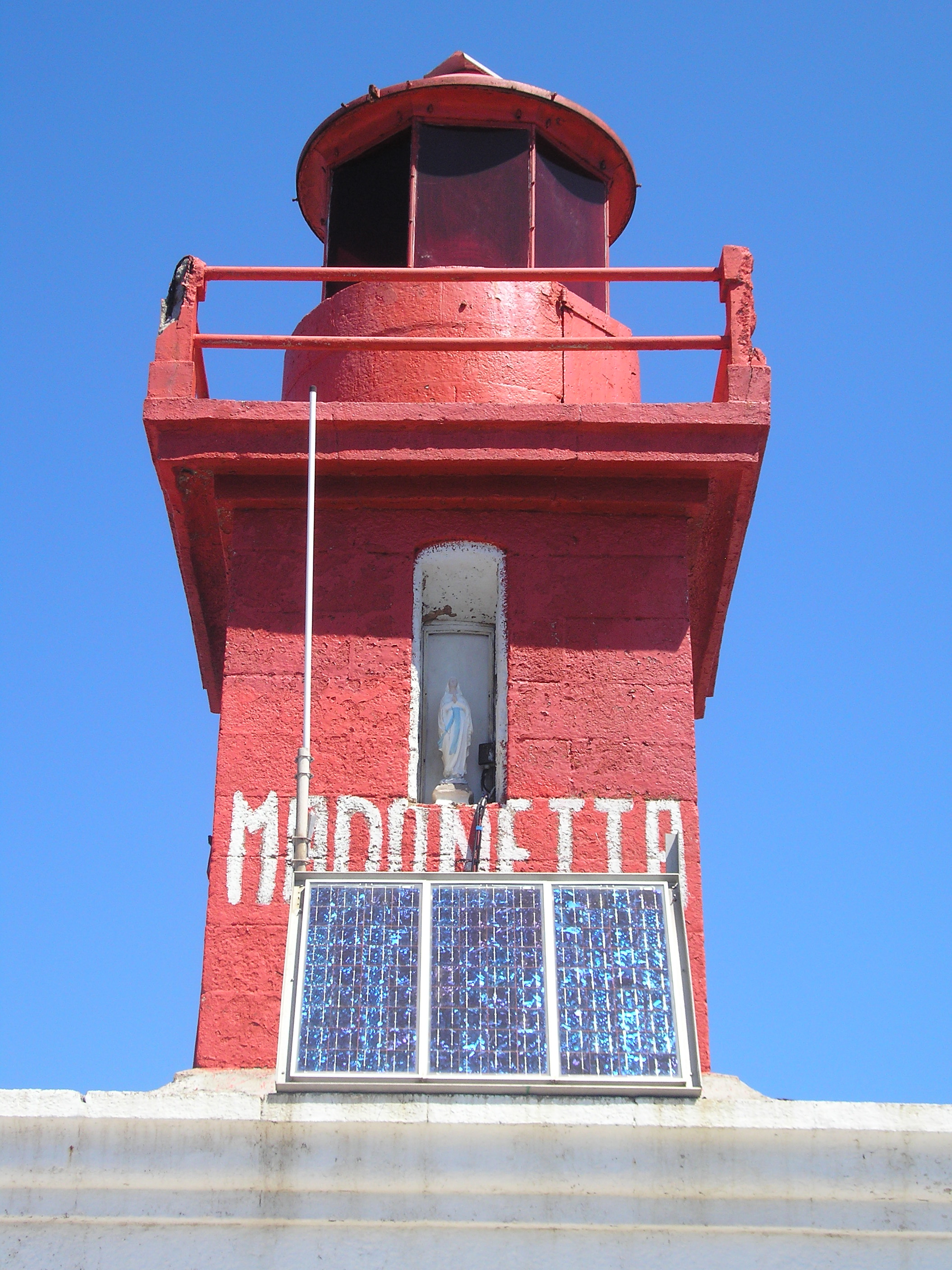
We spent most of our second day in Bonifacio hiking to Paraguan beach, which I’d also really recommend if you find yourself in Bonifacio. We weren’t in high tourism season yet, but town was definitely crowded, so we expected that our hiking trail would be full of other tourists. Instead, we were treated to three hours of exquisite coastline views, caves, calanques, and lighthouses without meeting a single other person. We ended sharing the white sand Paraguan beach with just a handful of other people. It was pretty heavenly to jump in the sparkling turquoise water after a long and sweaty hike. I don’t know if European tourists are particularly lazy, or what the deal is, but we continued to have hiking trails and limited-access beaches essentially to ourselves for the duration of the trip.

When dinnertime rolled around again, we pretended for a minute that we might want to go somewhere else besides L’Archivolto, but quickly laughed off such a folly and began fantasizing about what we were going to eat that evening. Our repeat visit landed us a coveted table on the terrace, and we got to work.
While I couldn’t bear to order a different entrée and indulged myself with yet another octopus salad, B ordered the house rabbit terrine for his first course, served with a chutney of apples and quince. It was exquisite:

My second course consisted of locally-caught and roasted supions (tiny calamari), potatoes, and tomatoes. Each squid was perfectly sweet, tender, and released a kind of aromatic seawater when I bit into them.

B’s second course was a special of the day: monkfish in a veal and wild mushroom sauce served with a sweet red cabbage sauerkraut and roasted tomatoes. B, owner of the patented Manic Mushroom Face, couldn’t resist ordering it when our server rattled off the list of “wild mushrooms” it entailed—morels, chanterelles, and black trumpets—despite his skepticism about a meat and fungi sauce on fish. Skepticism be damned, this was a nearly flawless dish and the fish couldn’t have been cooked more expertly. I’ll admit I was somewhat jealous, though he was generous in the bites he doled out (not without commensurate calamari from me, however!).

For dessert, we shared a bowl of fresh Corsican nectarines in myrtle wine, drizzled with local honey and topped with homemade peach gelato. No picture, as we were hammered. As we strolled out of Bonifacio, sad that we couldn’t stay any longer, we were greeted by a full moon over the sea. It was the perfect end to really amazing leg of our trip.
Next stop: We get lost, and then found (culinarily at least) in Eastern Sardinia!
Clarence on Vacay: Sartène, Corsica

After our hike to the Îles Sanguinaires, we boarded a bus headed inland to a town called Sartène. All of our copious research indicated that one really ought to have a car should one want to tour Corsica outside of the major tourist destinations. Pshaw, we said. We could really only afford a rental car on one island and Sardinia had won the coin toss. So we were stuck with public transportation, which at least from the outside seemed to be much more comprehensive in Corsica than Sardinia.
I suppose you know where this story ends up.

We arrived in the glorious hill town of Sartène after a beautiful, if nauseating, bus ride where we watched two too-cool-for-school Corsican teenagers flirt with one another the entire time. We practically heckled the guy to ask the girl for her number when he had reached his stop. He didn’t, of course. Teenagers. Our bus driver had been kind enough to ask us where we were staying, and seemed impressed by the location of our hotel (the only one I could find with any vacancies on the internet). He dropped us off at the bottom of a hill and told us it was only a short hike up a steep grade to get to our lodgings.
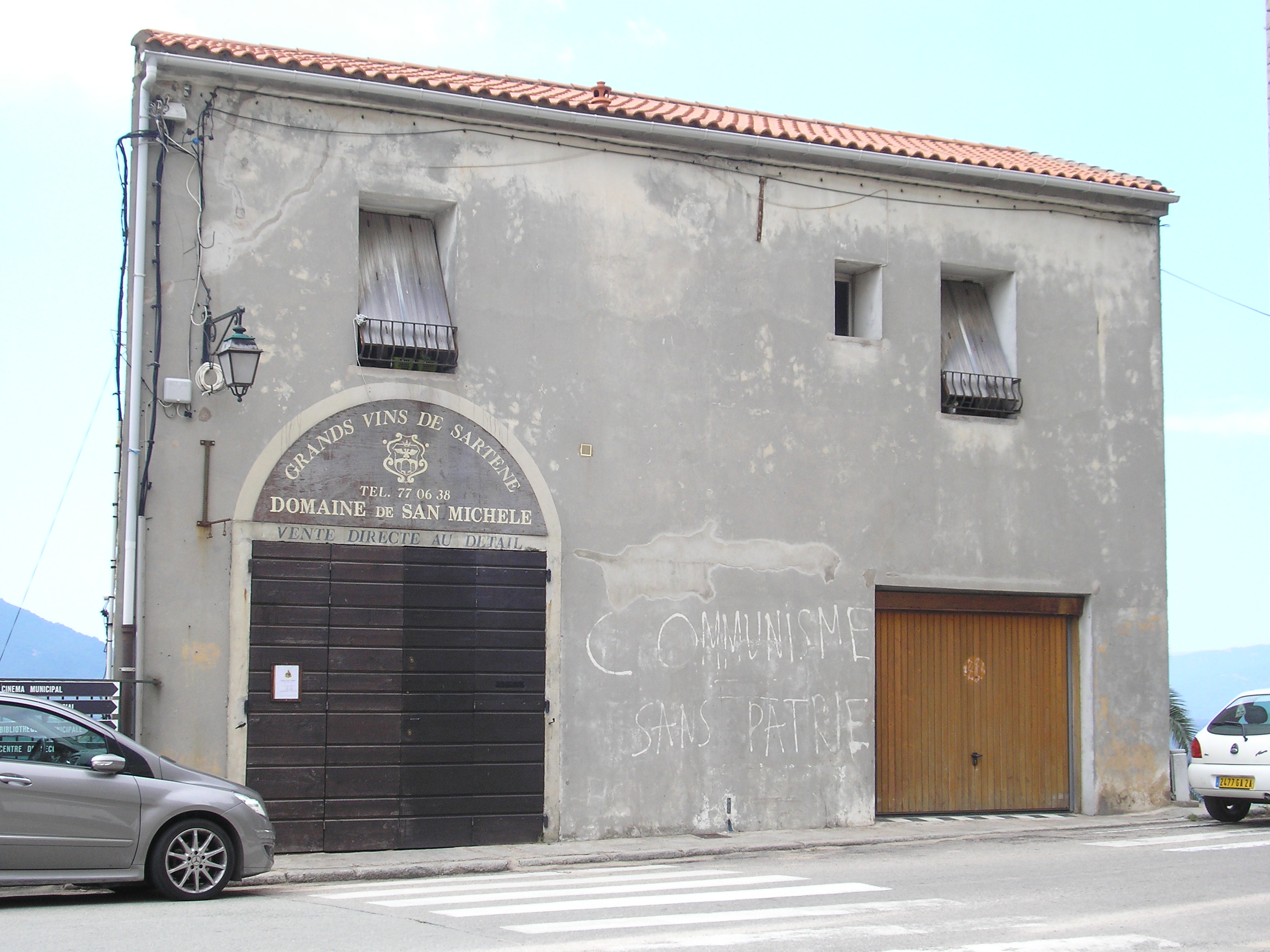
It was at this point that we realized that our grand scheme of renting bikes to tour the local archeological sites and beaches was probably not going to work out, as I could barely drag my suitcase (carry-on regulation size!) up that damn hill. And it appears that all the hills looked just like that one. We checked into the lovely Hotel San Damianu (Quartier St. Damien – BP3 – F – is it just me, or does that not really resemble an address?!), whose rooms all possess dreamy views of the valley and whose pool is a sparkling (if unheated) jewel in their beautiful garden. While the proprietress is lovely and vivacious, her husband is a crusty old crab who apparently hates Americans, even the polite ones who speak French and wax poetic about his beautiful hotel and town. I’m nit-picking here, as we had a really lovely stay there.
After a quick swim and a thorough inspection of my growing collection of mosquito bites (sexy!), we decided to explore the town of Sartène. Our Lonely Planet guidebook had called Sartène a “mysterious medieval village,” the “most Corsican of all Corsican towns,” situated in an area whose people are “more inward looking, more secretive, adamantly steeped in tradition.” I’ll decode this for you: people aren’t especially nice there. With some exceptions, of course. Sartène is in that unfortunate stage of development as a destination where the local economy is dependent upon tourism, but nobody is getting rich off of it. So everyone in town seems to resent the presence of outsiders, but they are also forced to cater to them. We were frustrated, I guess, because we probably imagine ourselves to be those most laughably unrealistic “unintrusive tourists,” you know, the ones who attempt to speak the language, steep themselves in local culture, eat the maggot cheese, etc.
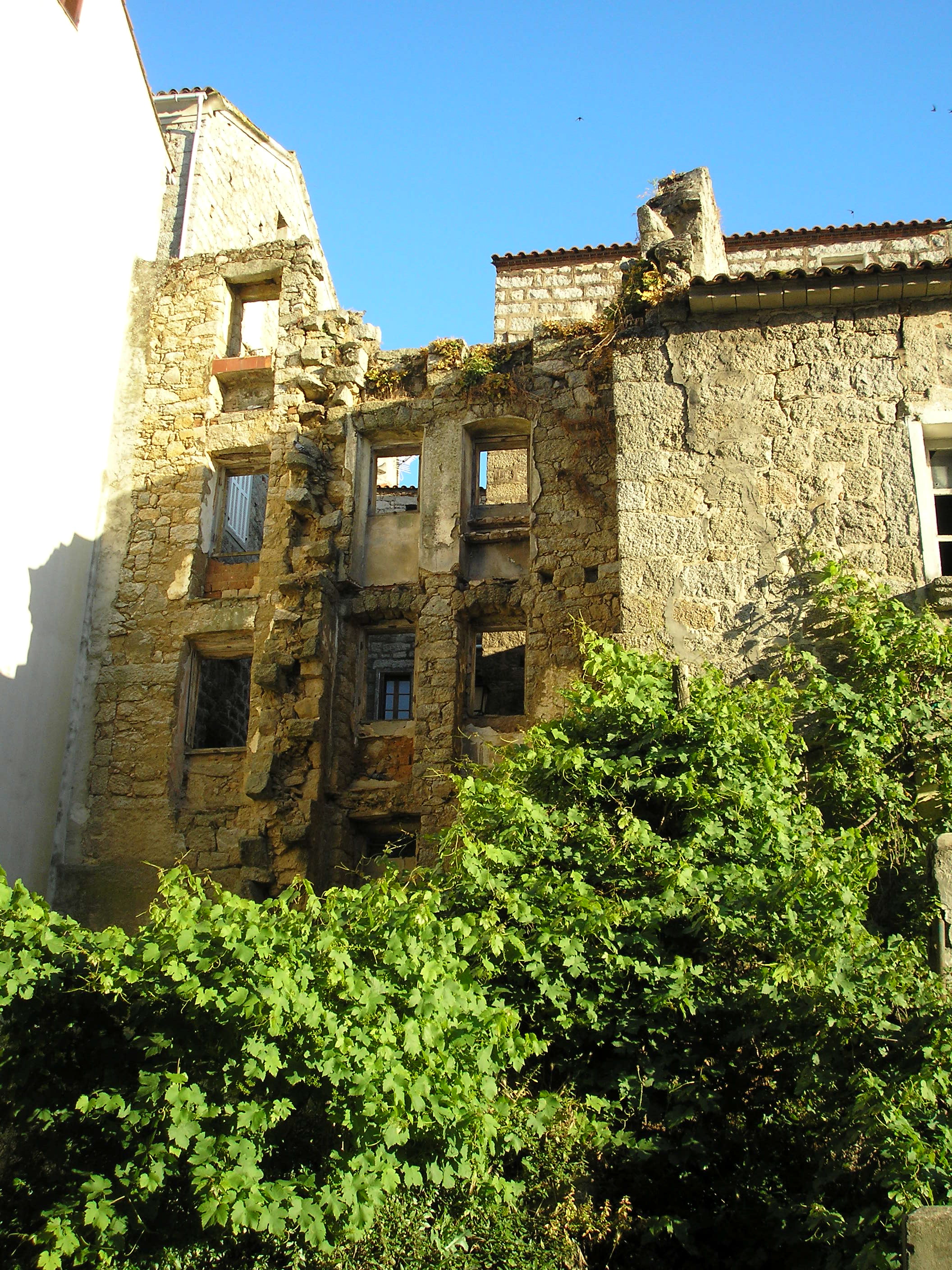
After wandering the admittedly beautiful narrow streets of Sartène for a few hours and procuring me some entirely worthless anti-itch cream, we stumbled on Le jardin de l’échauguette (Place de la Vardiola), a beautiful restaurant with a large outdoor patio with great views. We had a flat-out epic meal accompanied by a bottle of Sartènais red from the Domaine de San Michele (did I mention that we drank an Ajaccian rosé in Ajaccio? No? We did. Aren’t we just puke-worthy bougie?). For our first course, we split a bountiful assiette corse filled with local charcuterie, cheeses, olives, and a killer terrine flavored with myrtle, which grows in great abundance in Corsica and is a significant part of the flavor palate of the cuisine. B had a rack of lamb that he now describes as his Ur-Lamb. It was pretty amazing. I had another round of daube de veau (veal stew) served with yummy polenta. Best of all, we split another Corsican specialty for dessert, the Brocciu-based fiadone, a cheesecake-like dish made with the cheese, eggs, and a hint of lemon. The wine was perfect with our meal – we got our first real taste of the French notion of terroir, that is, the idea that the geography of a particular place infuses itself in the food that is produced there. Drinking a Sartènais wine while eating a Sartènais terrine brings out whole facets of the bouquet that you might not otherwise recognize, in this case, the strong flavor of myrtle. While I’m skeptical of upper-class “locavore” snobbery, I do think this kind of resonance is what Alice Waters has been ranting about for all these years.
There aren’t any pictures of that meal. Why? I have no idea. I suspect that the reason might be that we had quickly discovered that there was not much else to do in town besides get drunk, so we did, and had an amusing stagger back to our hilltop-perched dwellings. We awoke a bit hungover but psyched to see our amazing view. We went into town still clinging to the idea that we could rent bikes or figure out public transportation to the major archeological sites of Corsica. We were aggravated to discover that it is essentially impossible to visit Cauria, the home of three megalithic sites filled with menhirs and dolmens, without a private car. I don’t care very much about such things, but if there was one thing about B that I discovered on this trip is that there is nothing this boy likes more than piles of old rocks. Well, actually, these are the things he likes best:
1) Rocks, especially big ones, piled on top of one another by human hands, a long time ago.
2) Finding said piles of old rocks using unreliable highway maps designed for car trips, not archeological expeditions.
3) Coming up with vaguely crackpot theories about the function of said piles of old rocks in prehistoric times.
4) Climbing on said piles of old rocks like a feral child.
5) Jumping off said piles of old rocks, preferably into the sea.
For brevity in future entries about our trip, I will refer to our various “pile of old rocks” adventures using this handy numerical system. Sartène was a wicked disappointment for B because he didn’t get to experience any of the above listed primal joys. We asked the “tourist office” if there was a place we could rent bikes to visit Cauria and the supposedly dreamy Tizzano beach, but the woman laughed at the idea. I tried to soothe him with a visit to The Museum of the Prehistory (their English, not mine). It worked for me – the museum was airconditioned and I was cranky and itchy from the ever-increasing constellation of mosquito bites that now covered both of my legs. B got to exercise a bit of number 3 in the museum, arguing that the archeologists who had curated the exhibition had placed the beginning of the Bronze Age far too late in the chronology. I resisted the urge to make snoring noises. I figured that since he had listened to me kvetch about my itchy legs for 48 hours or so, it was the least I could do. Relationships are about give and take, people. We both got to experience the lovely view from the museum, which is by far the poshest place in town.

By midafternoon, we were totally out of attractions in Sartène and still had a few hours to kill before the bus to Bonifaccio arrived. We had a totally dissatisfying lunch cobbled together from a local deli consisting of a chestnut terrine (yucky and the consistency of catfood), a charcuterie plate, and cannelloni au Brocciu. At this point, we realized that cured meats were the likely culprits for our gastrointestinal distress and that we needed to lay off the lonzu for a little while. We also realized that there was little left to do in the heat besides get a cold beer, so we settled in at Idéal Bar (8 Place de la Liberation) on the main square in town. While it’s a pretty run-of-the-mill bar (with decidedly extraordinary spicy olives that they liberally distribute with drinks), it’s worth a shout-out for two reasons. Number one, the bartender/server was the first genuinely friendly person we met in Sartène. Number two, I was able to sample my second type Corsican beer:
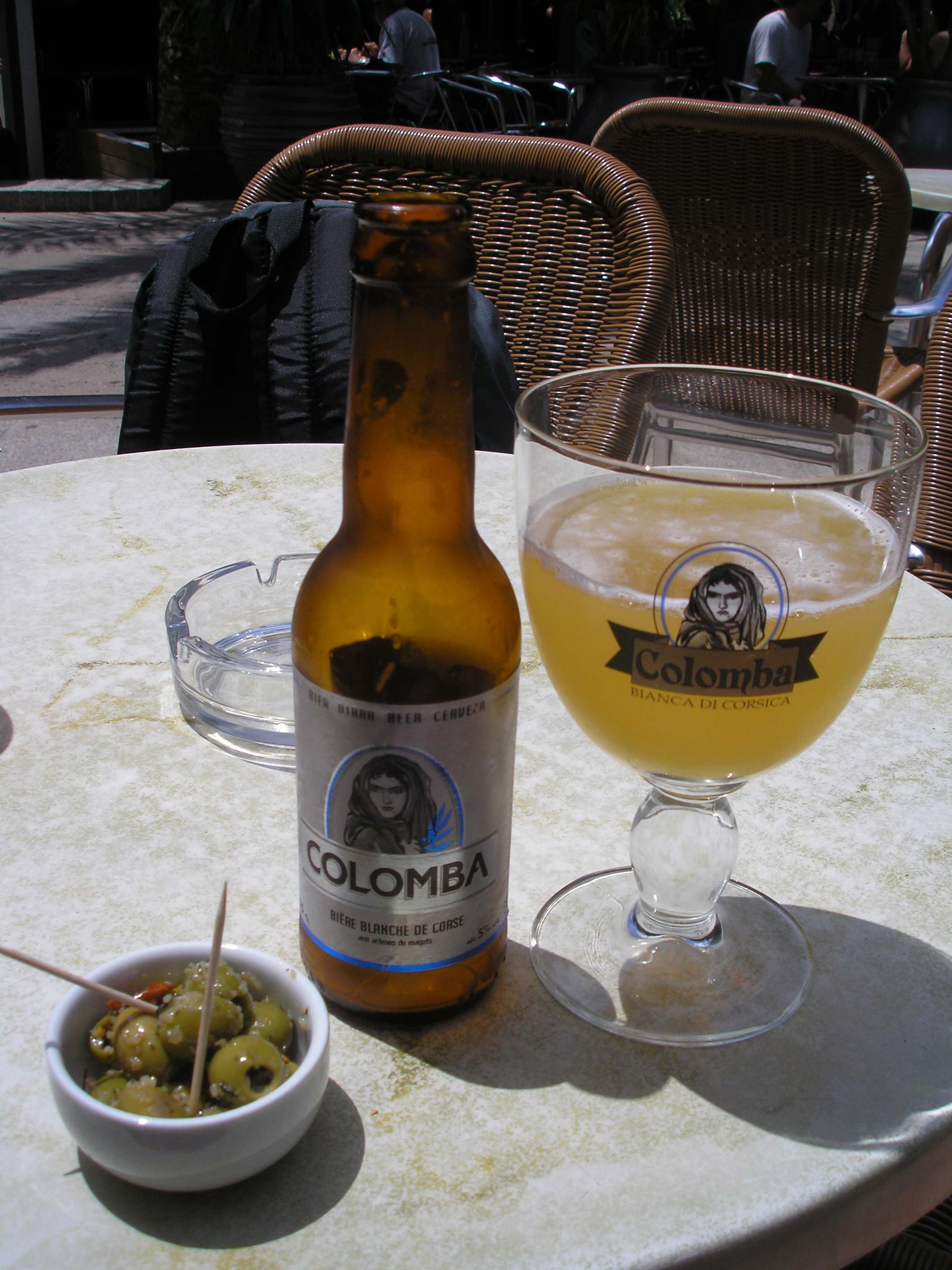
Colomba is an easy-to-drink blonde that is infused ever-so-subtlety with myrtle. It’s good, but not Pietra good. It’s worth a try, however, especially if you like a good blonde. That’s what she said, right?
Next stop: We get to work in Bonifacio eating cephalapods of all shapes and sizes!
Clarence on Vacay: Ajaccio, Corsica

We’re back! Our vacation was kind of beyond decadent and awesome. We ate ourselves stupid, saw lots of amazing stuff, and got along rather famously. Let’s be honest here: B and I are a new couple. I think both of us thoughts of this trip as a bit of a litmus test of our relationship. We totally passed with flying colors. By the end of the trip we had an arsenal of inside jokes that I suspect couples who have been together for years would envy. I can safely say I like him even better than when we left, which I didn’t even think was possible. For your benefit, he patiently photographed his food and spent hours carefully recapping our meals in his perfect script in my food log when I got too lazy and bloated to do so. I’ve been a bit lax about blogging about our trip because of this heat wave (which I’m sure all you Americans have been experiencing in much more stark terms than I have, so I’ll shut up about it pretty soon). B bought me a oscillating fan, filled a bucket of ice water for my feet, and told me to get my ass to work. So thanks, B! You’re the best, really.
Starting from the beginning, let’s just say that nothing gets me hotter than packing for a vacation. There’s something creating this perfect object-world in which all my clothes match and all of my cosmetics can be housed in identical, 100-milliliter Muji containers that makes me feel as though entropy can be staved off after all. I was especially obsessive about packing for this trip because I was bound and determined to conform to easyJet’s barbaric carry-on policy of one bag – not one suitcase and a “personal item” (a semantic evasion that I take considerable liberty with when flying) – just one bag. I “mock packed” several times in the week before we left, much to the bemusement of both B and our friend BC, who seemed especially horrified by this particular OCD flare-up. But B is a sucker for saving money, so he seemed pretty pleased when we waltzed through security without having to pay an extra fifty euro to check our bags. While I do think we packed really well, this does mean that we were both sporting some pretty smelly threads by the end of our two week trip.
I had grand plans that of getting a good night’s sleep before our flight, but that was thrown out the window when I noticed that Raidd Bar had erected a giant soundsystem and rack of spotlights, strobelights, and confetti-expelling machines on the street by mid-afternoon the day before we left. I gradually realized that it was Fête de la Musique, a day in Paris where music is played outside everywhere. While this originally meant that there would be various kinds of pleasant folk music played in the streets, Raidd Bar has apparently turned it into an annual, pre-Pride street block party extravaganza. By 8 p.m. or so the street beneath my apartment looked like this:
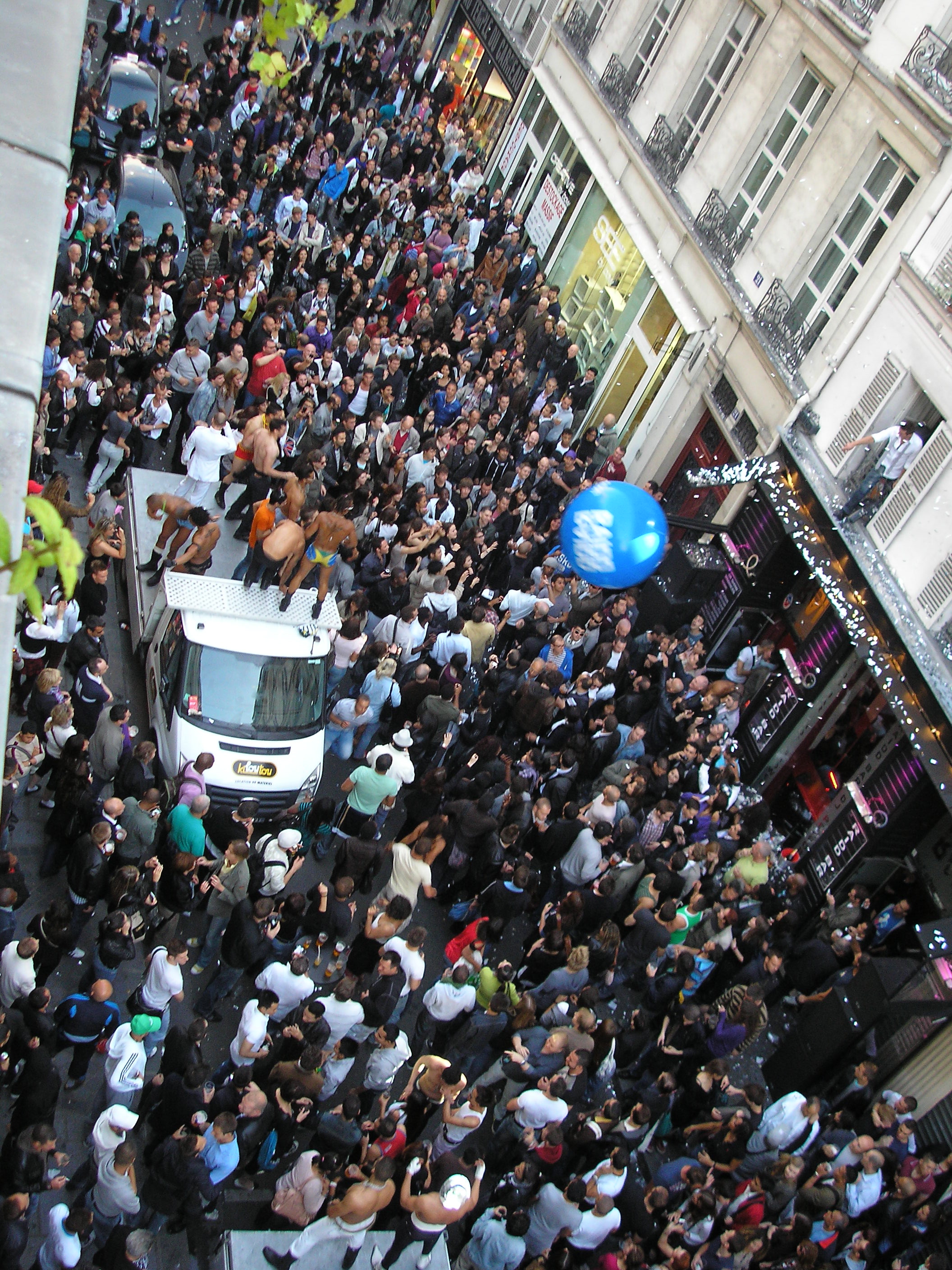
The Live Hot Shower Show dancers were given truckbeds to flaunt their exceptionally well-honed bodies and ass-jiggling skills. My favorite dancers were these guys, who rhythmically faux-fucked the windshield of the truck for the better part of the evening:

I witnessed this collective hedonistic outbreak with BC, with whom I had gone to dinner and retreated to my place when we realized that the best view would be from my living room windows. I realized that it was a pretty great party when the entire Marais began to sing along to Lady Gaga’s Bad Romance and I looked over and saw anti-establishment, South-Dakota raised, no-pop-culture-nonsense BC hitting the chorus at the top of his lungs. B arrived after fighting his way through the crowd for nearly an hour, and the three of us got drunk and threw several hundred paper cranes that I had compulsively made in the past six months into the crowd. It was a pretty amazing night, and I’m now convinced that for better or worse, I live across the street from the most happening bar in Paris. Or at least the one that can throw the best party.

Exhausted after only a few hours sleep (let’s just say that nobody wanted the party to end on my block that night), we arrived in Ajaccio after an exceptionally unstressful flight from Paris. We only spent 24 hours there, but we managed to cram in lots–a pretty comprehensive survey of Corsican cuisine. We passed the first travel-compatibility test admirably when we both took one look at the long line of hot and haggard tourists waiting outside of the Napoleon Bonaparte’s house of birth, shook our heads, and decided to get lunch instead. The destination: U Stazzu (1 rue Bonaparte), a shop that sells award-winning charcuterie, cheese, and other Corsican delights. Here is a furtively shot picture of their vaguely cavernous interior:
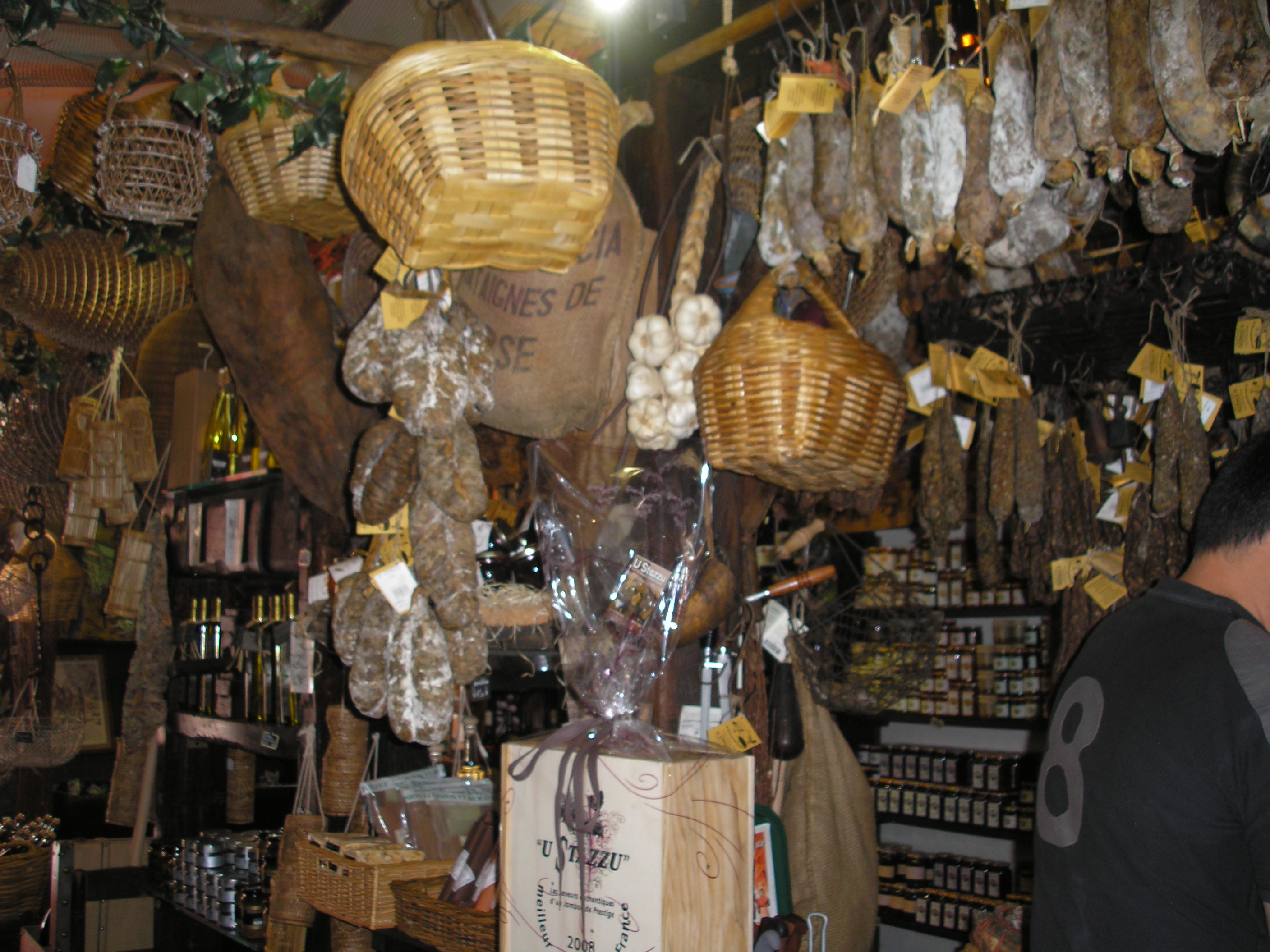
I was particularly excited about the Lalique Prize-winning sausages produced by A Bucugnanesa, a charcutier that distributes their products exclusively through U Stazzu. This is the real deal, people. A Bucugnanesa has been raising pigs locally for five generations. Their heirloom hogs (is there such a thing?) are born and romp through their short lives in the high mountain forests of Corsica, eating chestnuts and acorns. At the ripe young age of 25 months, they are dispatched and transformés into a variety of amazing dry sausages, all of which are aged in natural rock caves.
After sampling their glorious products, all of which were explained by a very helpful saleswoman, we purchased a smallish salamu (6€) and a round of Bastelicaccia cheese (12€), a slightly sharp, slightly crumbly, altogether perfect sheep’s milk cheese. Next stop was Boulangerie Galeani (3 rue du Cardinal Fesch), a four-generation old artisinal bread and pastry shop that specializes in Corsican baked goods (more to come on that subject). We picked up a baguette and made a mental note to return there for breakfast the next day. A quick dash into a souvenir shop for a pocket-knife adorned with the Moor’s head that is the symbol of Corsica and we were ready to sit on the sea wall and eat our feast. B proved himself to be an able knife-wielder:
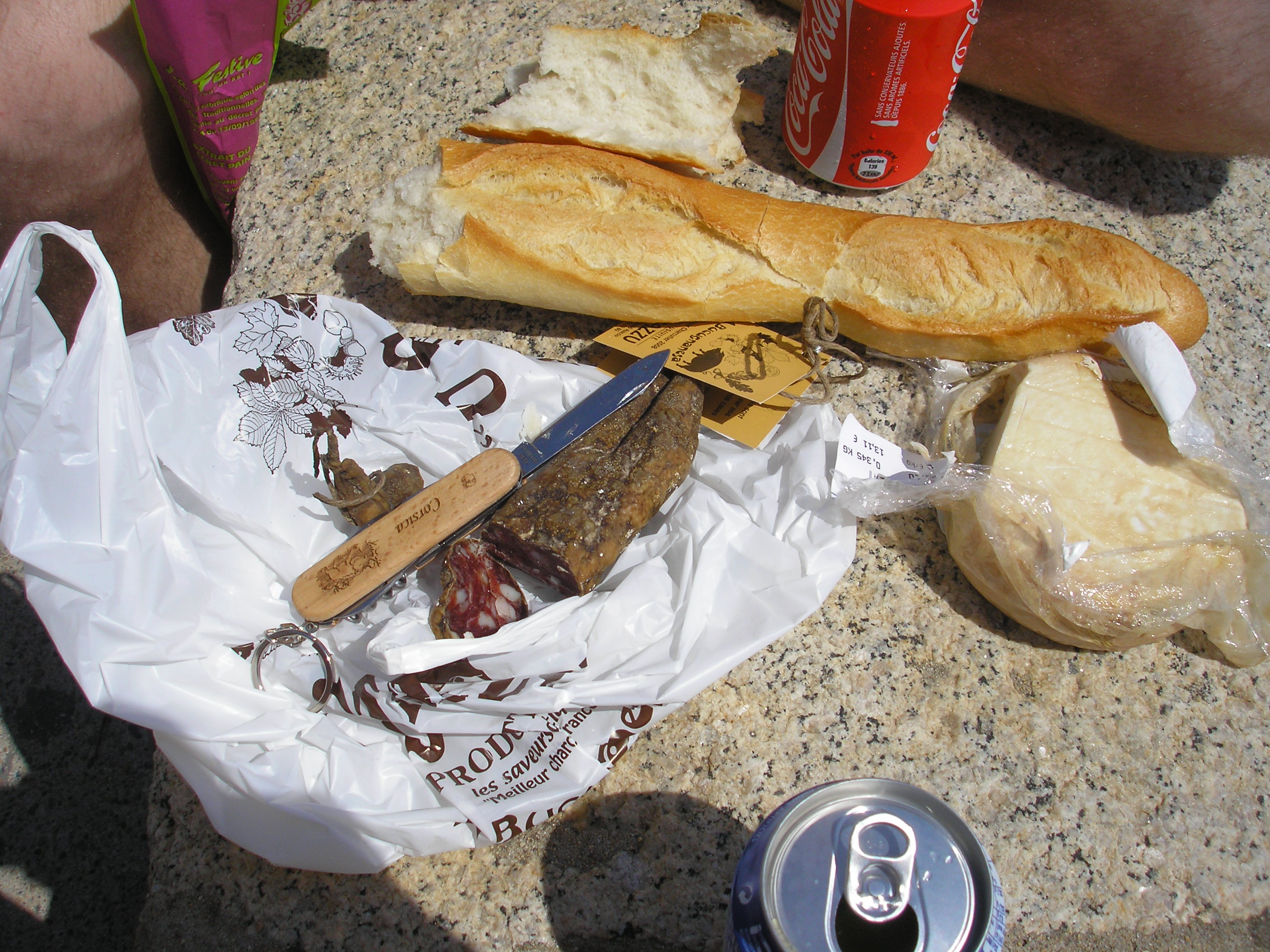
It doesn’t look like much in that shot, but oh man was it good. As a first meal went, it was a wonderful introduction to Corsican food, which as far as I can tell runs rather under the radar in the United States. Sated and tired from our trip, we hit the beach underneath the citadel. I got a taste of how delightfully New Wave and louche he looks while sunning himself in black Wayfarers, cigarette in hand.
After a lazy afternoon, we wandered over to the Le Grandval (2 cours Grandval), a great little bar mostly populated by locals. The owner appears to be a kind of unofficial historian of Ajaccio and his collection of vintage photographs of the town make for an interesting browse. Even better: our first taste of Corsican beer for our first aperitif on our trip:
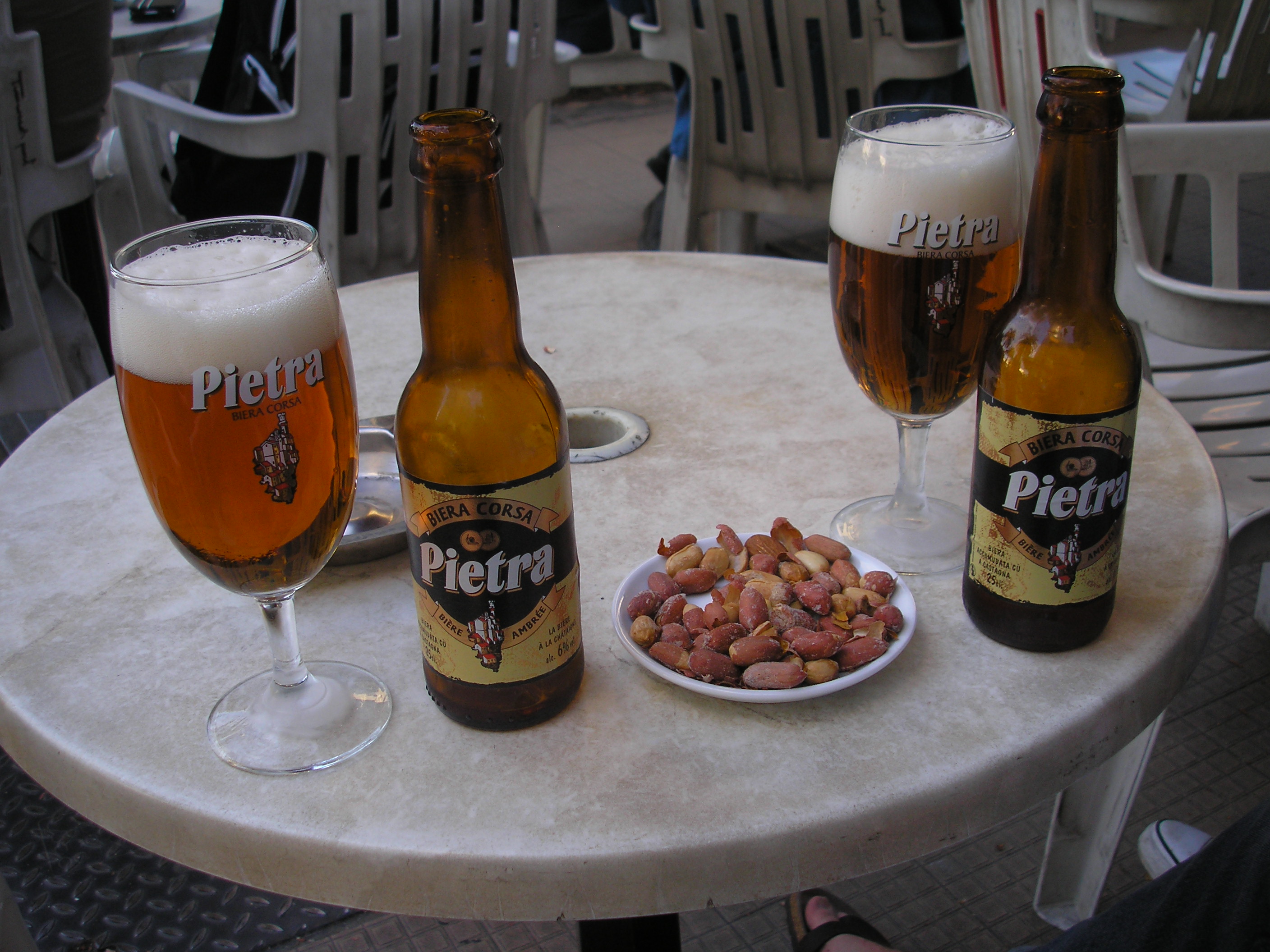
Pietra is a chestnut-tinged, medium brown ale. It’s not just drinkable in the “Oh, hey, we happen to be in this place and this is their local beer, isn’t that fun?!” kind of way. It’s drinkable in an “Oh man, this is really good! Do they import this outside of Corsica?” kind of way. I’ve since seen it in Paris, so you Frenchies can get your fix. I don’t know if they import it to the States, but you ‘mericans should really look for it with at your local booze megastore (god, I miss those places). Pair it with some dry salami and some olives and you’ve got yourself one hell of a way to while away the early evening.
We then headed to the much-lauded (and rightfully so) U Pampasgiolu (15 rue de la Porta). The name means “The Poppy” in Corsican, a language that made my Indo-European-languages-obsessed boyfriend scratch his head in etymological bewilderment with every sign. It’s a great stop if you are unfamiliar with Corsican cuisine, as the specialty of the house are these huge tasting platters that allow you to sample lots of different dishes in small portions.
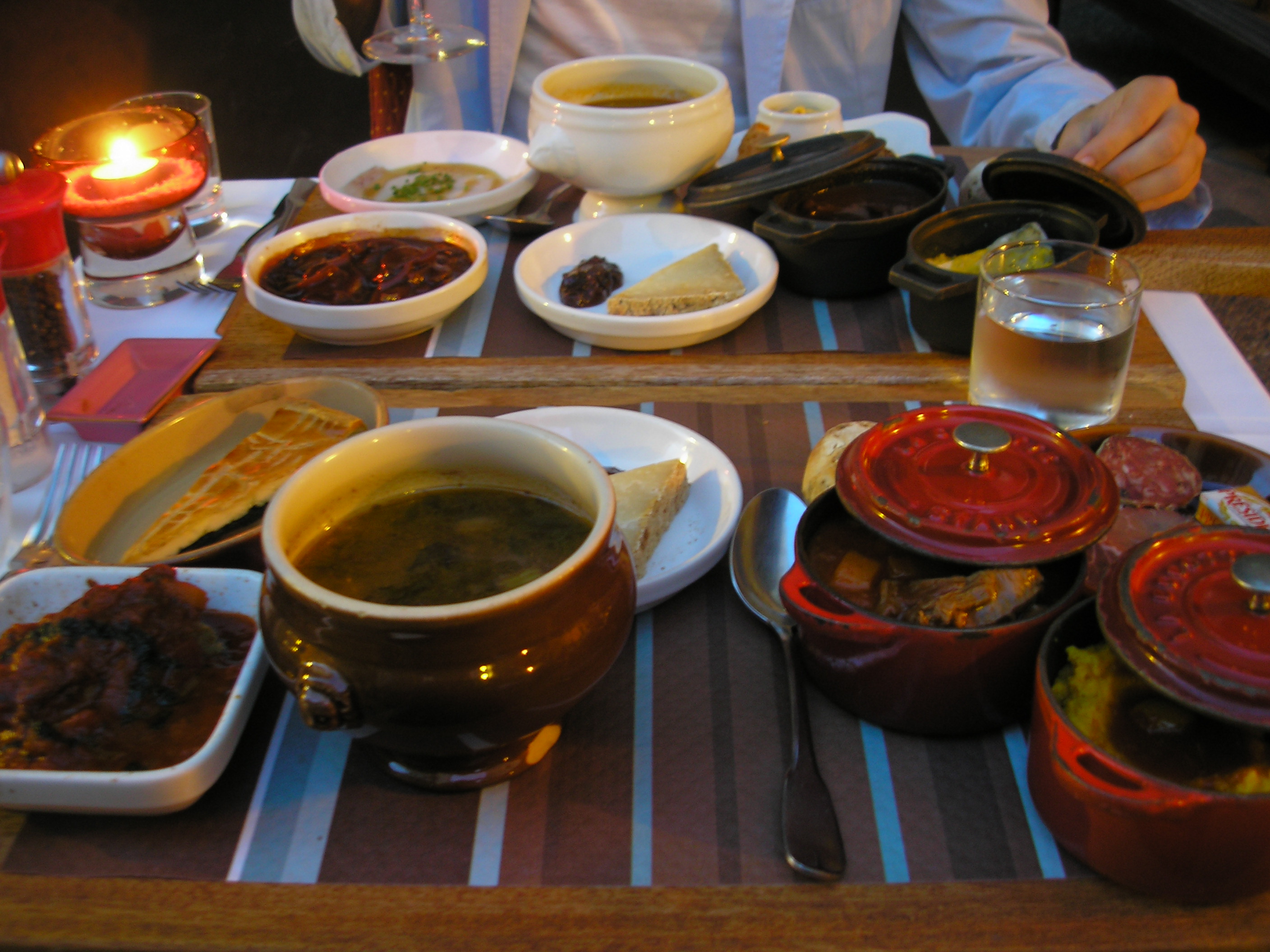
B took advantage of Corisca’s great reputation for seafood and ordered the planche de la mer in an effort to scratch a deep culinary itch he’d been having for a while. His meal contained–among other things–a rouget cooked in a creamy fennel sauce, stockfish cooked in a highly acidic balsamic-vinegar sauce, a swordfish carpaccio, and a seafood soup that made him make a series of rather inappropriate but rapturous noises. I had the planche spuntinu, which was comprised of old-school Corsican classic dishes. Despite the killer fishing off of Corsica’s coasts, just a few generations ago the perpetually-invaded and beleaguered Corsicans (like the Sardinians) were forced to live inland for safety. This means that classic Corsican cuisine is mostly pork, lamb, and sheep-based. The Planche spuntinu had a classic meat-stock soup, a veal daube served with creamy polenta, eggplant à la bonifacciène (basically a hybrid of ratatouille and eggplant parmesan, but better), a selection of charcuterie (including Corsican lonzu, a dreamy salted and cured filet of pork), a Tomme Corse with local fig jam, and a slice of savory tart with Brocciu and wild mint.
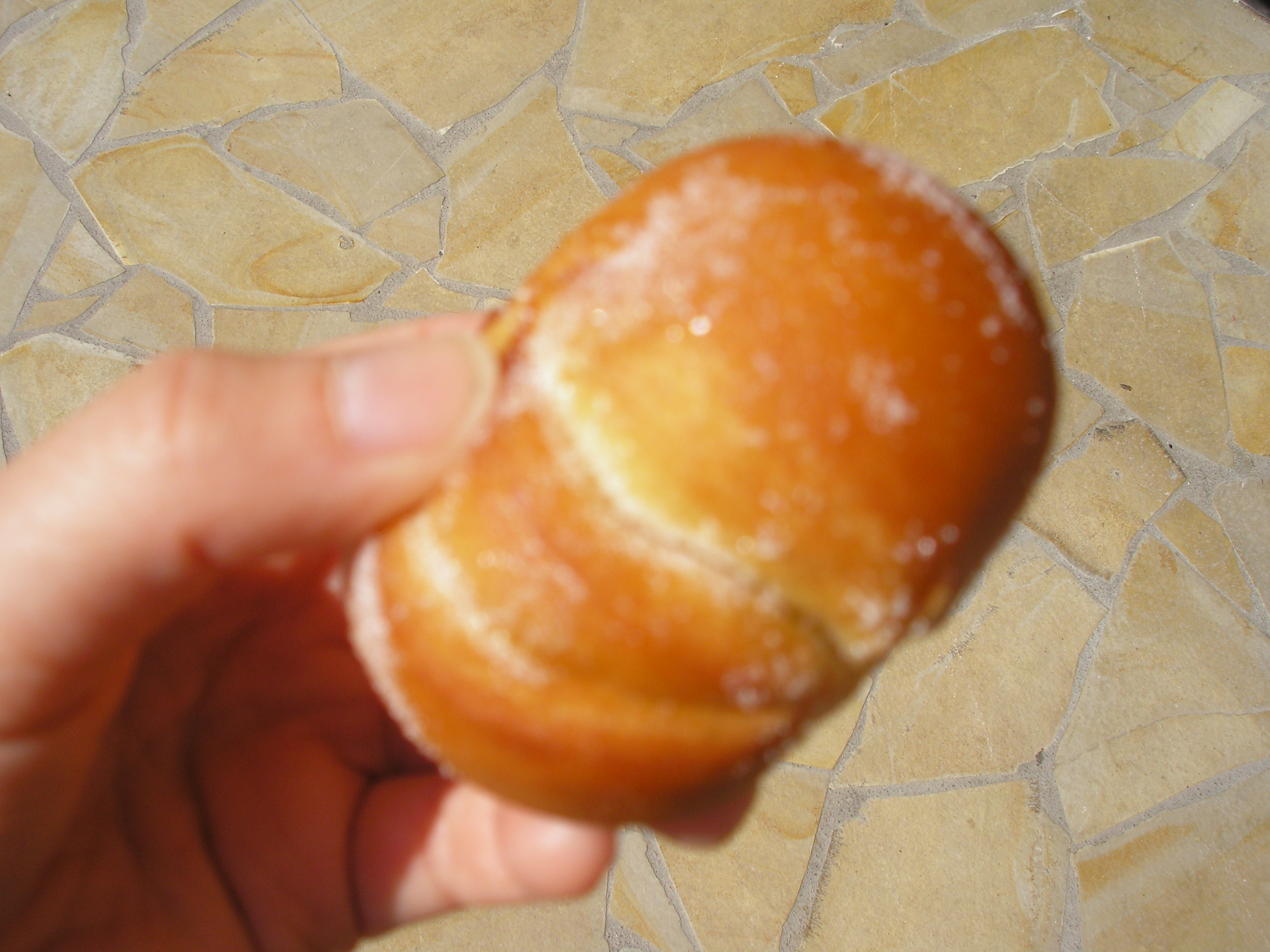
What, may you ask is Brocciu? Only the best thing ever. Brocciu is the national cheese of Corsica and was kind of a religious discovery for me. I guess you could liken it to ricotta, though it’s so much more delicious and versatile I’m rather loathe to make that comparison. It’s made from the whey of goat milk, and is available from December to June (the season in which goats are lactating). Serving or selling fake Brocciu is a serious offense in Corsica and can result in your restaurant or shop being shut down. I’d actually go so far as to say that you shouldn’t visit Corsica any other time of year than during Broucciu season. It’s that good and they put it in everything. After our huge meal at U Pampasgiolu, we wandered to a small gelato shop and ate Brocciu ice cream. The following morning, we went back to Boulangerie Galeani for the best breakfast ever: beignets de Brocciu (tender doughnut holes pumped full of melted creamy cheese and rolled in sugar).

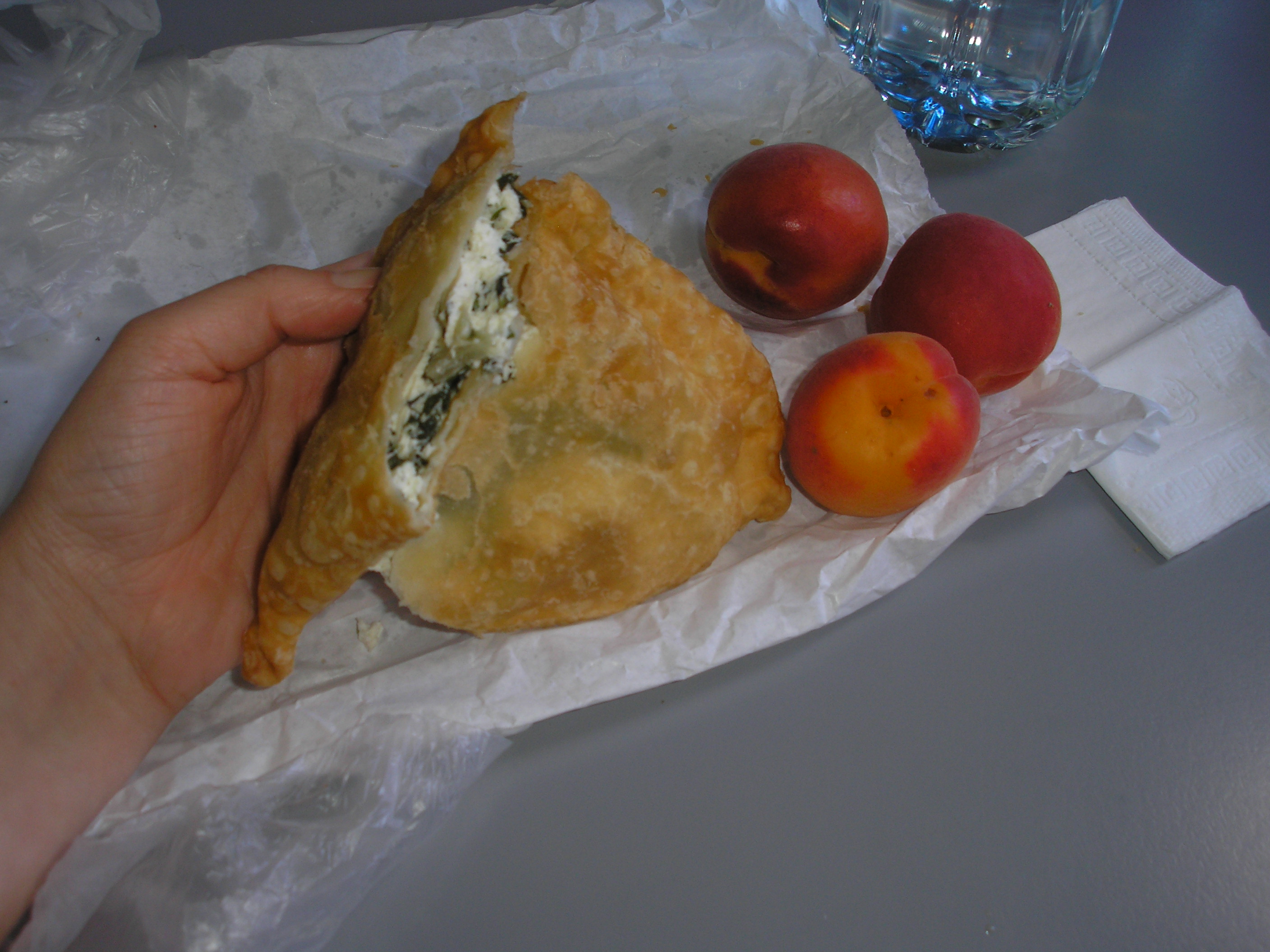
Some of our favorite lunches while we were hiking and traveling in Corsica consisted of bastelle filled with Brocciu, spinach, and wild mint. Think of this as my Ur-Hot Pocket:
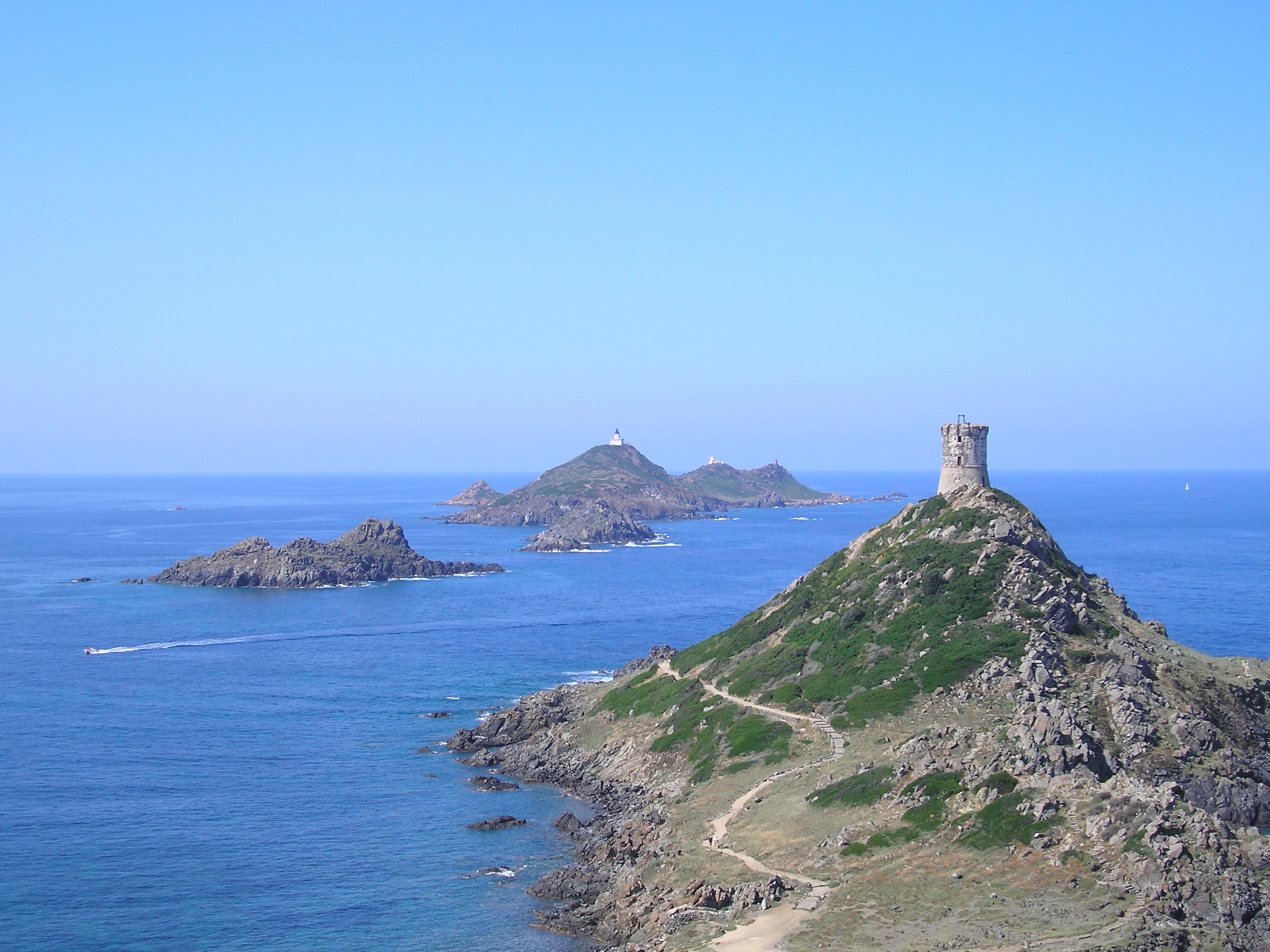
One such hike brought us to Pointe de la Parata and the Îles Sanguinaires. The view the islands from this Genoese tower was probably one of the most beautiful things I’ve ever seen:
Next stop: the doldrums of inland Corsica!
An appeal to the hivemind and a parting nod
Tomorrow B and I leave for a few weeks to visit Corsica, Sardinia, and Sicily. As we lead an incredibly stressful life here in Paris, we are both looking foward to this much-needed vacation. Obviously I’m joking about our respective stress levels, but we are pretty excited for a change of scenery. I’m a bit of a beach junkie, so the idea of sunning on white sand beaches and hiking to swimming grottos has me pretty psyched. We both will also get to indulge our inner geeks — B will be able to survey some serious Etruscan, Greek, Roman, and Phonecian ruins and I’ll be able to see a lot of the towns that ole David Herbert spent time in during his travels. We’re also planning to eat ourselves stupid and have been spending most of our time reading aloud to one another about various regional organ meats that we can’t wait to try. I’ll promise to take tons of pictures and post the yummiest ones here when I return.
So here is my appeal to the hivemind: If you happen to have visited Ajaccio, Sartène, or Bonifaccio in Corsica; Oliena, Bosa, or Cagliari in Sardinia; or Palermo, Cefalù, Catania, or Taormina in Sicily and have any recommendations (especially food-related ones), would you mind posting them in the comments? Must-eats? Must-sees? We’re two adventurous eaters, eager museum-goers, and wouldn’t mind a serious hike if it yielded us a serious beach. Thanks in advance for any ideas!

I won’t have my computer with me and I suspect that Italian internet cafes are still as expensive as I remember, so it’s going to be lights out around here at Keeping the Bear Garden in the Background for the next few weeks. As a parting gift, let me leave you with David Herbert’s impressions of Mount Etna, which B and I intend to climb (!) on our final day. That is, if we haven’t eaten ourselves immobile.
Why can’t one sit still? Here in Sicily it is so pleasant: the sunny Ionian sea, the changing jewel of Calabria, like a fire-opal moved in the light; Italy and the panorama of Christmas clouds, night with the dog-star laying a long, luminous gleam across the sea, as if bayaing at us, Orion marching above; how the dog-star Sirius looks at one, looks at one! he is the hound of heaven, green, glamorous and fierce!–and then o regal evening-star, hung westward flaring over the jagged dark precipices of tall Sicily: then Etna, that wicked witch, resting he thick white snow under heaven, and slowly, slowing rolling her orange-colored smoke. They called her the Pillar of Heaven, the Greeks. It seems wrong at first, for she trails up in a long, magical, flexible line from the sea’s edge to her blunt cone, and does not seem tall. She seems rather low, under heaven. But as one knows her beter, oh awe and wizardry! Remote under heaven, aloof, so near, yet never with us. The painters try to paint her, and the photographers to photograph her, in vain. Because why? Because the near ridges, with their olives and white houses, these are with us. Because the river-bed, and Naxos under the lemon groves, Greek Naxos deep under dark-leaved, many-fruited lemon groves, Etna’s skirts and skirt-bottoms, these are still our world, our own world. Even the high villages among the oaks, on Etna. But Etna herself, Etna of the snow and secret changing winds, she is beyond a crystal wall. When I look at her, low, white, witch-like under heaven, slowly rolling her orange smoke and giving sometimes a breath of rose-red flame, then I must look away from earth, into the ether, into the low empyrean. And there, in that remote region, Etna is alone. If youwould see her, you must slowly take your eyes from the world and go a naked seer to the strange chamber of the empyrean. Pedestal of heaven! The Greeks had a sense of the magic truth of things. Thank goodness one still knows enough about them to find one’s kinship at last. There are so many photographs, there as so infinitely many water-colour drawings and oil-paintings which purport to render Etna. But pedestal of heaven! You must cross the invisible border. Between the foreground, which is our own, and Etna, pivot of winds in the lower heaven, there is a dividing line. You must change your state of mind. A metempsychosis. It is no use thinking you can see and behold Etna and the foreground both at once. Never. One or the other. Foreground and a transcribed Etna. Or Etna, pedestal of heaven.
Why then must go? Why not stay? Ah what a mistress, this Etna! with her strange winds prowling round her like Circe’s panthers, some black, some white. With her strange, remote communications, and her terrible dynamic exhalations. She makes men mad. Such terrible vibrations of wicked and beautiful electricity she throws about her, like a deadly net! Nay sometimes, verily, on can feel a new current of her demon magnetism seize one’s living tissue, and change the peaceful lie of one’s active cells. She makes a storm in the living plasm, and a new adjustment. And sometimes it is like madness.
– Sea and Sardinia, 1921
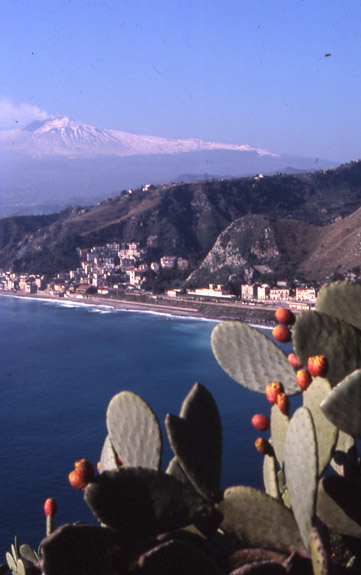
Sounds like quite the drug, and I can’t wait to experience it. I’ll catch you, dearest reader, on the flip side. In the meantime, I hope that wherever you are, you are enjoying these long summer nights.
To one swell guy
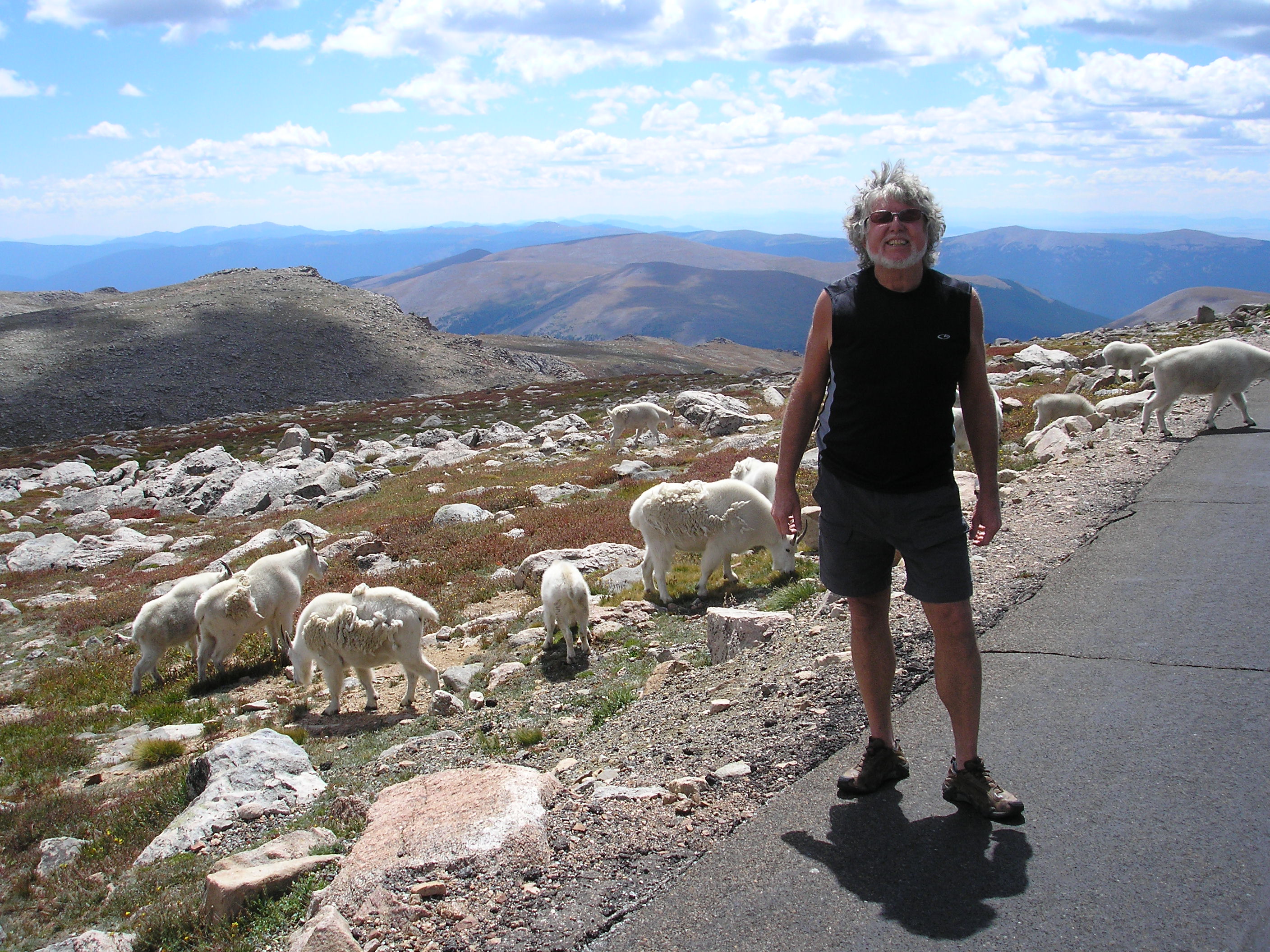
I don’t know if you’ve met my dad, but if you haven’t you really ought to. He’s one fantastic dude. I’m actually one of those kids who suffered because her parents were a little bit too cool, rendering me a stick-up-the-ass teetotaler in my teens and early twenties. After all, I figured that the only way to rebel when faced with too cool parents is to be a square. Fortunately I got over that phase and realized that my dad isn’t just somebody who is all the things a great father ought to be, he’s also all the things that a great friend ought to be. And that’s a trickier balance than you might expect.
I was a lucky kid in that I got to spend a lot of time with my dad growing up. While I occasionally referred to him as a “fun fascist” because of all of the activities—skiing, snowboarding, camping, mountain biking, hiking, windsurfing—that filled our family weekends and vacations, I’m now grateful that he instilled in me that being active and spending time outside will do wonders for one’s outlook on life. My dad was also pretty devoted to reading to me when I was a kid and he spent many long hours every night reading aloud stacks and stacks of books to me. I know that not everybody is fortunate enough to have a lot of quality time with both their parents—especially when both of them work—and I feel really blessed to have had the kind of childhood that I did.
As an adult, I’ve come to discover that my father is a really tender, non-judgmental listener and dispenser of good advice. I’ve come to rely more and more on his wisdom in recent years. My father hasn’t led a very traditional life – his decisions have more often prioritized living to the fullest in the present moment. Perhaps on account of this he doesn’t always resemble other men of his age or generation. He also often seems to be one of the happiest and sanest people I know, so maybe we should all take a lesson from him. I deeply admire his enthusiasm for even the smallest things in life, his voracious appetite for all things fascinating and new, and his tremendous capacity for generosity, both with the people he loves and complete strangers. He’s also hands-down the most fun guy you’ll ever meet and I doubt anybody that knows him would argue otherwise. His vigor and kindness are contagious and I know that the corners of the world that he inhabits are much the better for his presence.
So here’s a rather sappy shout-out to my dad – I miss you today and sure wish we could be spending it together. Happy Father’s Day!
 The Bear-Garden