Kvetch break!

My hot water heater isn’t working. Again.

If you know me well (and who am I kidding, all five of you do), you likely have heard me complain about the hot water in my apartment. You haven’t? Seriously?! Lucky you! I won’t go into detail about what has transpired in the past four months on this subject. Suffice it to say, I moved into a newly renovated (read: expensive) apartment where everything was supposed to be spick-and-span upon my arrival, and instead I ended up with two months of cold showers despite the fact that half of the wrench-toting Serbian immigrant population in Paris was coming in and out of my home daily. Between that, a nightmarish level of complication in getting internet set up, and a decidedly ghetto teaching gig, my first two months in Paris were not particularly glamorous. I wore myself and everyone I love thin with my complaints.

I know, I know. I’m living in Paris. Not Haiti. I need to shut up. Moreover, people are only interested in listening to your problems if a) you are paying them to listen or b) they have some of the same problems. The latter is why support groups or group therapy are effective. Take this theory with a grain of salt – I have no idea what happens in an AA meeting short of what I’ve seen on television. Nevertheless, there is a threshold for sympathy in ordinary relationships and I have stampeded past it too much recently.

This whole situation has made me bummed about living alone, not because I am so retro as to think that if I had a man around the house these things would get fixed more quickly.  (Though if the universe wanted to send me a guy capable of doing anything other than telling me how capable he is, I wouldn’t exactly spit in its face. Did you hear that Universe? I’d literally trade all the hyper-verbose, hyper-articulate guys I’ve dated in the past five years for one soft-spoken handyman. There seems to be a direct correlation between one’s level of gratuitous higher education and one’s general worthlessness when it comes to taking care of practical shit. And yes, I include myself in this observation. And yes, Angry Reader, I know that this is 2010 and not 1955 and I could easily learn about home improvement and car engines myself and avoid this situation all together. Or perhaps you are going to tell me about how despite your combo Ph.D./M.D. you have managed to single-handedly restore a Alfa Romeo 1750 and renovate a perfect little Craftsman bungalow by the sea, all while keeping a steady balance of great conversation and terrific sex in your feminist relationship with your girlfriend. Congratulations! Get your own blog.) I guess the situation bums me out because it seems like it might be acceptable to voice the white-hot rage I felt while taking a ice-cold shower this morning to someone if he was in the same position as I was. Maybe he would have just taken his own ice-cold shower and we could be angry and goosebump-covered together! Then we could leave angry messages in tandem on the voicemail of my Serbian contractor! Doesn’t that sound romantic?

Cinéclub: La Filmothèque du Quartier Latin

La Filmothèque du Quartier Latin

9 rue Champollion, 75005 Paris

Métro:  Cluny – La Sorbonne

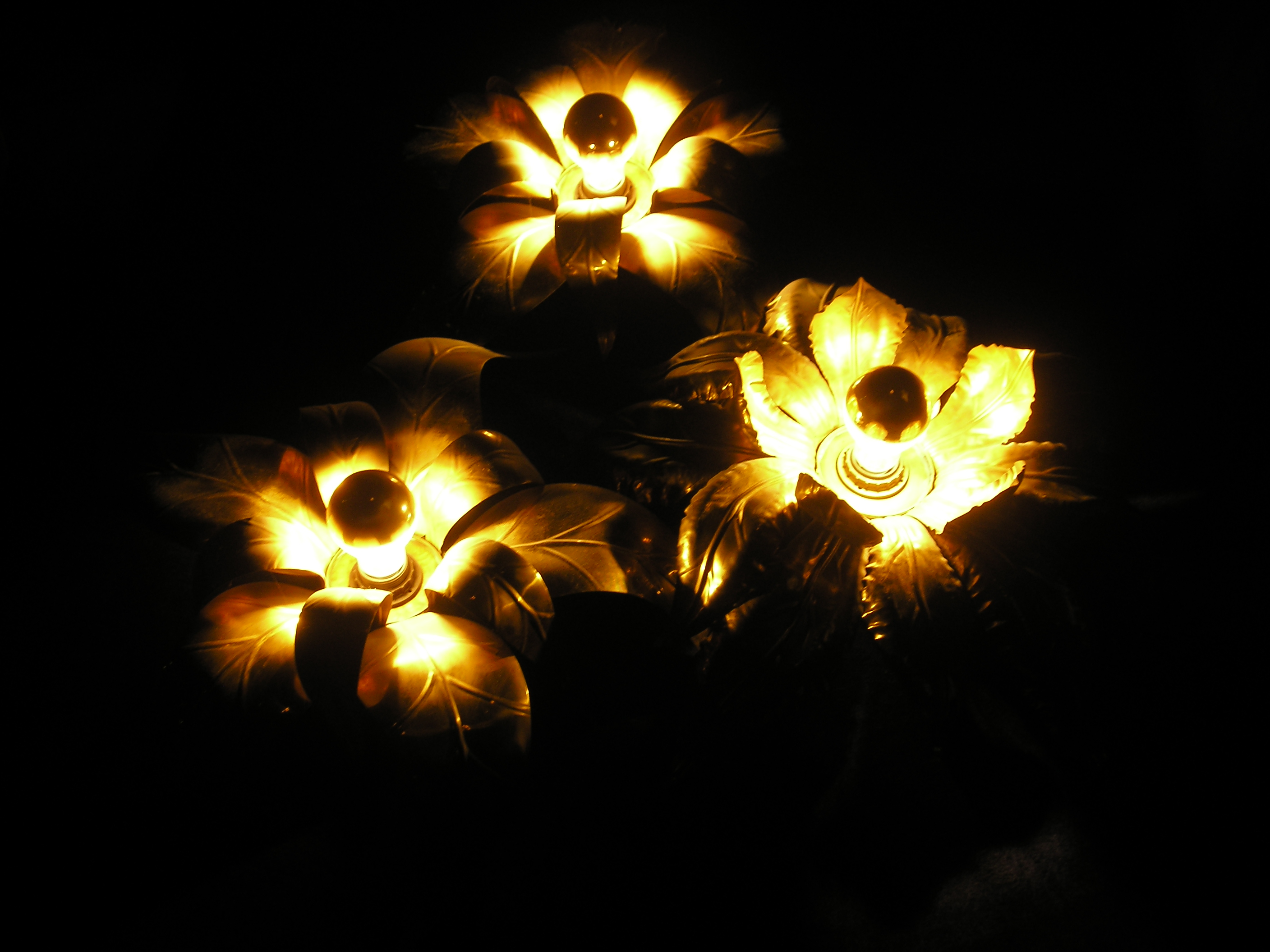
Last night some of my people and I saw a delicious new print of Pasolini’s 1968 Teorema at La Filmothèque du Quartier Latin. I’ve mentioned this cinématheque here before, but it really deserves its own entry. God, I love this place. From what I gather on the internets, La Filmothèque was founded in the late 1960s as part of the Cinémas Action, an excellent group of small theatres on the Left Bank that is now made up of Action Écoles and Action Christine. Following a management dispute in 2005, La Filmothèque splintered off and was renovated in 2006 with quite excellent results. It houses two screens, the 100-ish seat Salle Marilyn and the smaller Salle Audrey. The OCD preschooler in me loves that the two screening rooms at La Filmothèque are color-coded. Everything in Salle Marilyn is red, and everything in Salle Audrey is blue, extending to the Filmothèque’s excellently maintained website. I’m mildly obsessed with the light fixtures in the theatres and fantasize about the day when I can outfit my own home with such baroque loveliness. I have lots of really bourgeois dreams.

The programming at La Filmothèque is consistently sharp and timely. Like some of the other slick theatres in the area (including Le Champo), La Filmothèque synchs some of their programming with other cultural events in Paris. So to correspond with the excellent Fellini retrospective at Jeu de Pomme, La Filmothèque screened La Dolce Vita every night for a two months (I only went twice, I promise). Something about being in Europe makes me obsessed with Southern California, meaning that I’m compelled to devour Thomas Pynchon novels when living in Paris (weird, I know). In the same vein, I went through a intense revival in interest in David Lynch in the past month. Ever-canny to my longings, La Filmothèque served up an amazing three-week Lynch binge. Likewise, I suspect that La Filmothèque heard that I have a cinéclub and that we are really into Pasolini right now, hence their current screening of Teorema. We had a ball last night, though I suspect we might have been the obnoxious Americans that were whispering too much and laughing too hard. As a sidenote, my angry reader never responded to me, so I’m going to keep writing about Pasolini.  It could have been a great love affair, Angry Reader! Where have you gone?! Are you at Accattone right now? We’re going to see Il Racconti di Canterbury tonight, join us!

Teorema chronicles a domestic scene turned inside out by the introduction of the seriously sexy Rimbaud-reading Terence Stamp, who enters a wealthy Milanese family and quickly seduces mommy, daddy, brother, sister, and the maid. Stamp’s character leaves as abruptly as he came (ha!), leaving the family to disintigrate in his wake. Mommy starts trolling the streets for young men to screw in ditches, sister goes into a fist-clenching catatonic state and is institutionalized, brother discovers art and becomes a handful of clichés about sublimation, and daddy becomes a train-station stripper who ends up screaming in a desert of volcanic ash. The maid returns to her rural village and goes into a religious withdrawal: eating only nettles, curing children afflicted with measles, levitating above the building for the entire town to witness, and eventually burying herself to weep in a construction site for new apartment buildings. I’m sure that the initial reception of this rabidly anti-Church and anti-bourgeois film was a tad different in 1968, but we thought it was hysterical.

My last entry was titled “Remnants” and I realized that I titled it that because of a passage I especially like from Pasolini’s A Film-Maker’s Life, which I’ve been reading in lieu of doing work. I was thinking about this passage last night when I was trying to explain my deep and abiding love of men with chest hair and I found myself saying, “Well, of course this is deeply Oedipal, but…” I find myself increasingly annoyed by my circumscription of my own autobiography by a certain clinical and critical language. Pasolini obviously felt the same way:

I’ve never talked about the importance of the family, I’m against the family, the family is an archaic remnant. During my childhood I had certain conflicts with my family whose background was definitely middle-class. My father represented the worst element I could imagine. It’s rather difficult to talk about my relationship with my father and mother because I know something about psychoanalysis. What I can say is that I have great love for my mother. My origins are fairly typical of petty bourgeois, Italian society, I’m a product of unity of Italy as a Republic.

He also obviously had a soft spot for a man with some serious body hair.

Remnants

A inspected the blog line graph yesterday and noted that as soon as I started writing about him, my readership plummeted. I suggested that this is because nobody wants to read about a do-gooder humanitarian. We agreed that it would probably be best for the blog if I invented a rockstar named Z with whom I can conduct a steamy affair. I worried for a moment that focusing my energy on recounting the various occasions in which Z has done blow off of my naked body before ravaging me in a public restroom might detract from the main purpose of this blog, namely writing about brunch. But A assures me that rockstars are very good at going to brunch. In fact, A insists that rockstars survive entirely on brunch and appetizers. I didn’t realize how well acclimated I was to the rockstar lifestyle!  Yesterday I ate a lovely brunch, a plate of charcuterie for dinner, and a bag of hot wings at 3 a.m. Bring me some leather pants. I’m ready.

* * *

Two nights ago I went to a screening at the Centre Pompidou of Chantal Akerman’s documentary about the German choreographer Pina Bausch, Un jour Pina a demandé, followed by a production Bausch’s 1984 Barbe-Bleue. I’d like to write something semi-articulate about it because it moved me very deeply, but I am coming up against the sense that I lack an adequate vocabulary to speak about dance, or at least this particular type of work. This frustrates me immensely because I feel like I’m dissolving into someone who is moved by everything and has nothing to say about anything. Bausch’s couples in particular dismantled me. This will surely make me sound like a philistine, but I had no idea that such a nuanced version of intersubjectivity could be evoked by dance. Bausch’s work makes shared affect viscerally physical. I kept thinking about this passage in Judith Butler’s Undoing Gender that always makes me weep:

Let’s face it. We’re undone by each other. And if we’re not, we’re missing something. If this seems so clearly the case with grief, it is only because it was already the case with desire. One does not always stay intact. It may be that one wants to, or does, but it may also be that despite one’s best efforts, one is undone, in the face of the other, by the touch, by the scent, by the feel, by the prospect of the touch, by the memory of the feel. And so when we speak about my sexuality or my gender, as we do (and as we must), we mean something complicated by it. Neither of these is precisely a possession, but both are to be understood as modes of being dispossessed, ways of being for another, or, indeed, by virtue of another.

There is a lousy video on youtube of the production of Barbe-Bleue:

Clarence in Paris: Le 20 de Bellechasse

Le 20 de Bellechasse

20 rue de Bellechasse, 75007 Paris

Métro:  Solferino

Back when I was young, young, young, I lived in Paris for a semester of study abroad. Oh yes, a semester of study abroad from my expensive East coast private university! You know, just like the kids I ruthlessly mock when I am out and about! I am a total hypocrite!  In my defense, I don’t think I was the worst of the worst when it came to being a study abroad stereotype. I was the one who wandered around alone a lot, occasionally breaking up the wandering with reading in cafes and quietly weeping in parks. Which is certainly a study abroad stereotype, but a less offensive one than the kid who spends every weekend in a different European city getting wasted on his parents’s dime.

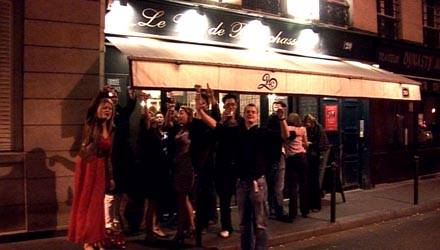
One of my friends during college happened to live on the rue de Bellechasse during this period of time over a just-opened restaurant, the rather uncreatively named Le 20 de Bellechasse. Her apartment was improbably nice for a Parisian apartment, perhaps more so than I even remember (I was still too young, young, young to know that having a washing machine is pretty luxurious in this town). Come to think of it, the area around the restaurant is actually a strange area for a young person to live. It’s a bit of a walk from the hopping area of St. Germain des Près. It’s only a few blocks from the Musée d’Orsay, but at night it is pretty deserted with the exception of Le 20. But Le 20 is a tiny, bustling haven if you find yourself on that side of town. It might even be worth a detour.

A and I happened to find ourselves wandering aimlessly around the Left Bank last night after watching Antonioni’s 1957 Il grido. We had debated between that and a documentary about a bloody Malaysian military coup but decided that the Antonioni might be less of a bummer. Wrong answer! Unmoored by all the existentialism, and the bleakness, and the suicide (ugh), neither of us had much of a sense of what we wanted to eat. We got to the point where we were going into restaurants, sitting down, looking around uncomfortably, and then leaving, only for A to moan something like “I mean, they were going to burn the fields to put in an AIRSTRIP! In that shitty town?  Really!?” Apparently despite his adeptness in dealing with warlords, I have a softie on my hands. At any rate, after traversing St. Germain and contemplating everything from seafood to Tex-Mex, I finally suggested that we head east to Le 20.

Le 20 is one of my go-to places for visitors. I brought some dear family friends there on their first night in Paris.  I brought my mother and B there on her last night in Paris. It’s always heaving with a splendid-looking young professional crowd and run by a group boisterous young guys who seem to know everybody. Sébastien Tellier is on heavy rotation on the stereo. The menu is unfussy, often seasonal, and written on chalkboards posted around the dining room. They have your basic French bistro fare, from an excellent steak tartare with enormous capers to a dreamy noix de saint Jacques au beurre noisette (scallops in a brown butter sauce). They handle meat especially well at this joint;  I’ve enjoyed their entrecôte, their lamb chops, and their bacon cheeseburger – all served decidedly saignant should you desire. Here is the vocabulary lesson I wish I would have had in Madame Snow’s high school French class (if had gone more often):

bleu: rare (bloody)

saignant: medium-rare

à point: medium

bien cuit: well-done

In France, when they say “saignant,” they mean medium-rare. Nothing peeves me more than what has happened in the United States with the Chilis-ification of hamburger cooking. If your beef is too frightening to be served anything less than well-done, then you shouldn’t be serving it in the first place. It’s bad enough that the vast majority of beef sold for hamburgers in the U.S. is already fatless, dense, and bland, but to serve it grilled to grayish-brown is like getting hit in the face. American food-poisioning paranoia is indicative of a lot of different collective anxieties and that rant is better saved for another day. Suffice it to say that nicer restaurants ought to grind their own beef in house so that the constant low-level fear of poisoning their lawsuit-happy customers doesn’t prevent them from cooking everyone’s meal to the temperature they desire.

All this is to say that they cook a really good burger at Le 20. Two of them and a couple of pints quickly pulled A and I out of our Antonioni-induced funk. Oh, and did I mention the fries, which come out on huge plates for everyone to share? Perfect. We didn’t stay for one of the best moelleux au chocolat (molten chocolate cakes) in Paris for my money, but if you find yourself at Le 20, you certainly should.

Details:  Open everyday for lunch and dinner except Sunday. A great place to grab a bite after visiting the Musée d’Orsay. The moelleux au chocolat takes twenty to forty minutes to prepare, so think about ordering it with your meal.

On truth and lies

“All I can do is tell the truth.  No, that isn’t so–I have missed it.  There is no truth that, in passing through awareness, does not lie.  But one runs after it all the same. […] A certificate tells me I was born.  I repudiate this certificate:  I am not a poet, but a poem.  A poem that is being written, even if it looks like a subject.”

– Jacques Lacan in his preface to the English-language edition of Seminar XI