Hayseed Enough for Small Town Living: Clarence Loves Michiana

Confronted with the possibility of another sweltering week without air conditioning in Bloomington, we gleefully packed up and headed north for a week to that hazy zone on the Indiana/Michigan border where B’s parents’ live. Ostensibly we were cat-sitting while they were out of town, but mainly we were taking advantage of their lovely lakeshore digs. There’s something about being alone in your parents’ house (or in this case, my boyfriend’s parents’ house) that always feels like playing grown-up. This was an especially pronounced feeling last week, as we channeled middle-aged retirees, cruising around the lake on the family pontoon boat with beer cozies in hand. We wore shorts and tucked our shirts in. We waved at the neighbors and gossiped under our breath. We crashed local potlucks bearing makeshift fruit salads. We yelled at tourists that rode their jetskis too close to shore, and muttered obscenities if other boats broke the ‘no-wake’ rules after dark. In short, we gave one possible version of our future selves a serious test drive, and I’ll admit it was pretty awesome.

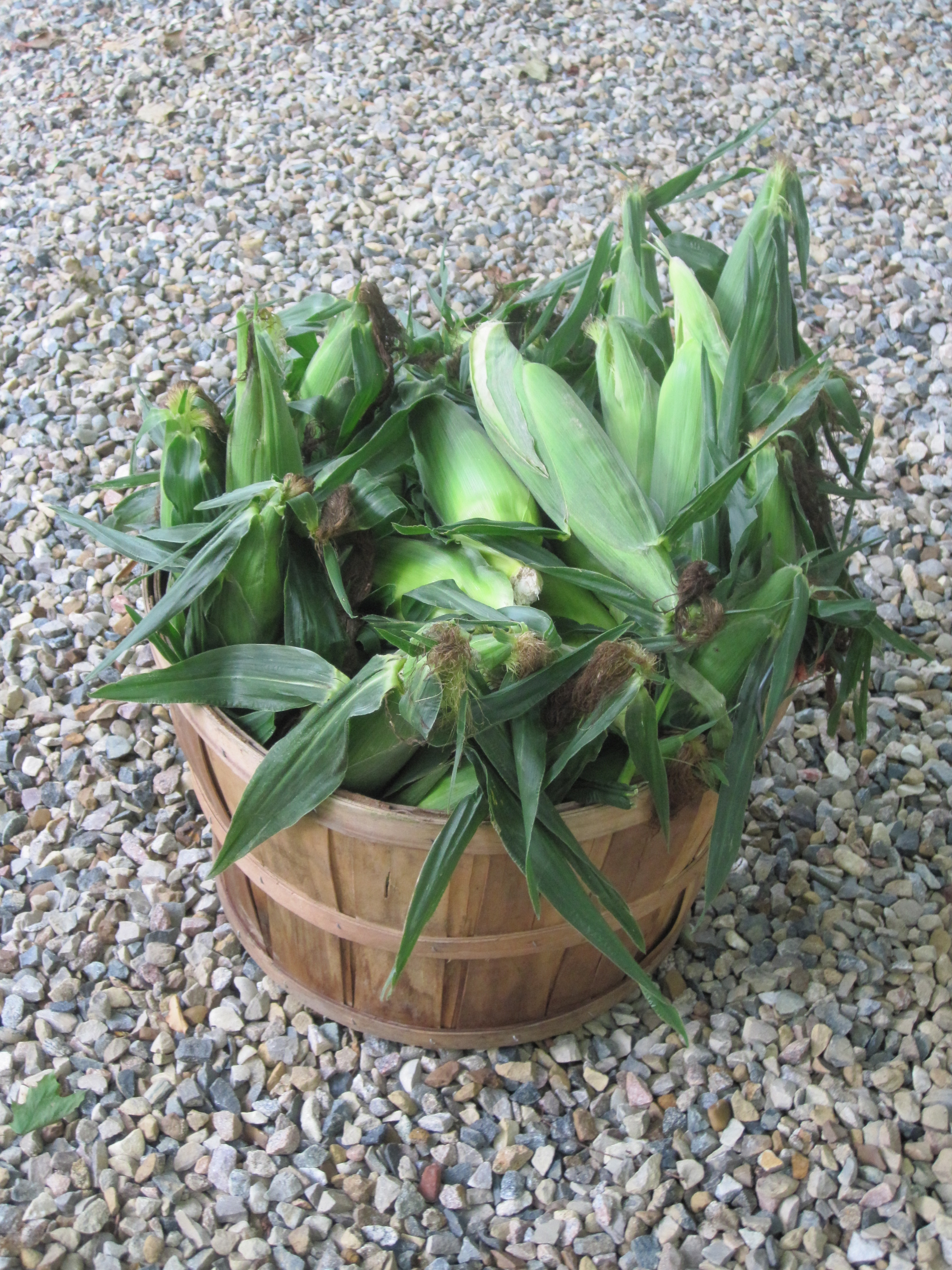
The Michiana area is made up mostly of farms, so we took advantage of the bounty of local produce and stuffed ourselves stupid with sweet corn, Michigan blueberries, and some of the sweetest heirloom tomatoes I’ve eaten in years. The best local farm stand is Diamond Acres Farm (located on Kamp Kosy, south of Cassopolis, Michigan off the M-62 just past the high school, open 10-6 everyday) and we found ourselves there almost every day. The sweet corn is in full force already, and we happily grilled a few ears every night alongside venison steaks we lifted from B’s dad’s personal hunting cache. The peaches from Diamond Acres weren’t ready just yet, but I brought them home with me, hoping that they will soften up in a paper bag so that I can satisfy my seasonal jones for peach-cobbler.
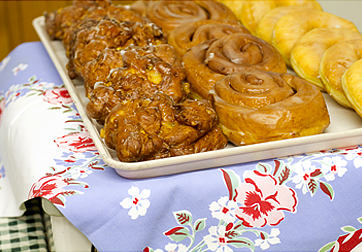
On days when we didn’t want to fire up the grill, we ate enormous, delicious breakfasts at the local Amish-run bakery, Farm House Bakery and Restaurant (59573 White Temple Road, Vandalia, Michigan, 49095, 269.476.9668).  Farm House Bakery makes of one of the fluffiest, yummiest cinnamon rolls I’ve had in a long time, and you can opt for one instead of toast with most of their breakfasts at no extra charge, making a believer out of even the most skeptical patron of this religiously-inflected restaurant.

We also frequented our beloved Vlasicak’s Meat Market & Smokehouse (63490 M 62 South,
Cassopolis, Michigan 49031,
269.445.8763), home of the world’s best beef jerky.  Seriously, dear reader, this is literally the most amazing beef jerky I’ve ever eaten, and this is coming from someone who probably knew the word pemmican before I knew the words Mama or Dada.  We smuggled Vlasicak’s jerky to France, give it without a trace of irony as gifts, and keep an inordinately large hoard in our refrigerator at all times. Needless to say, jerky and Michigan IPA’s make for an excellent pontoon-boat cruising combination.

On our final day at the lake, a neighbor came over to deliver a bowl of chicken salad, “Just in case you kids were getting hungry.” Later that day as we drove by some family friends, they invited us to a hog roast at the local camp. Our friend M was visiting from Chicago, and he was incredibly charmed by all the rural hospitality. The three of us went to the roast, ate our fill and then some, and listened to oldies covers played by a local band, the adorable Misspent Youth of South Bend, Indiana.  While I had hoped for a spit-shot, by the time we arrived everything had already been expertly butchered. You’ll just have to trust me that it was a pretty swell way to spend an evening.
 

Object Relations No. 3 & 4: The Ryder and Indiana University Cinema

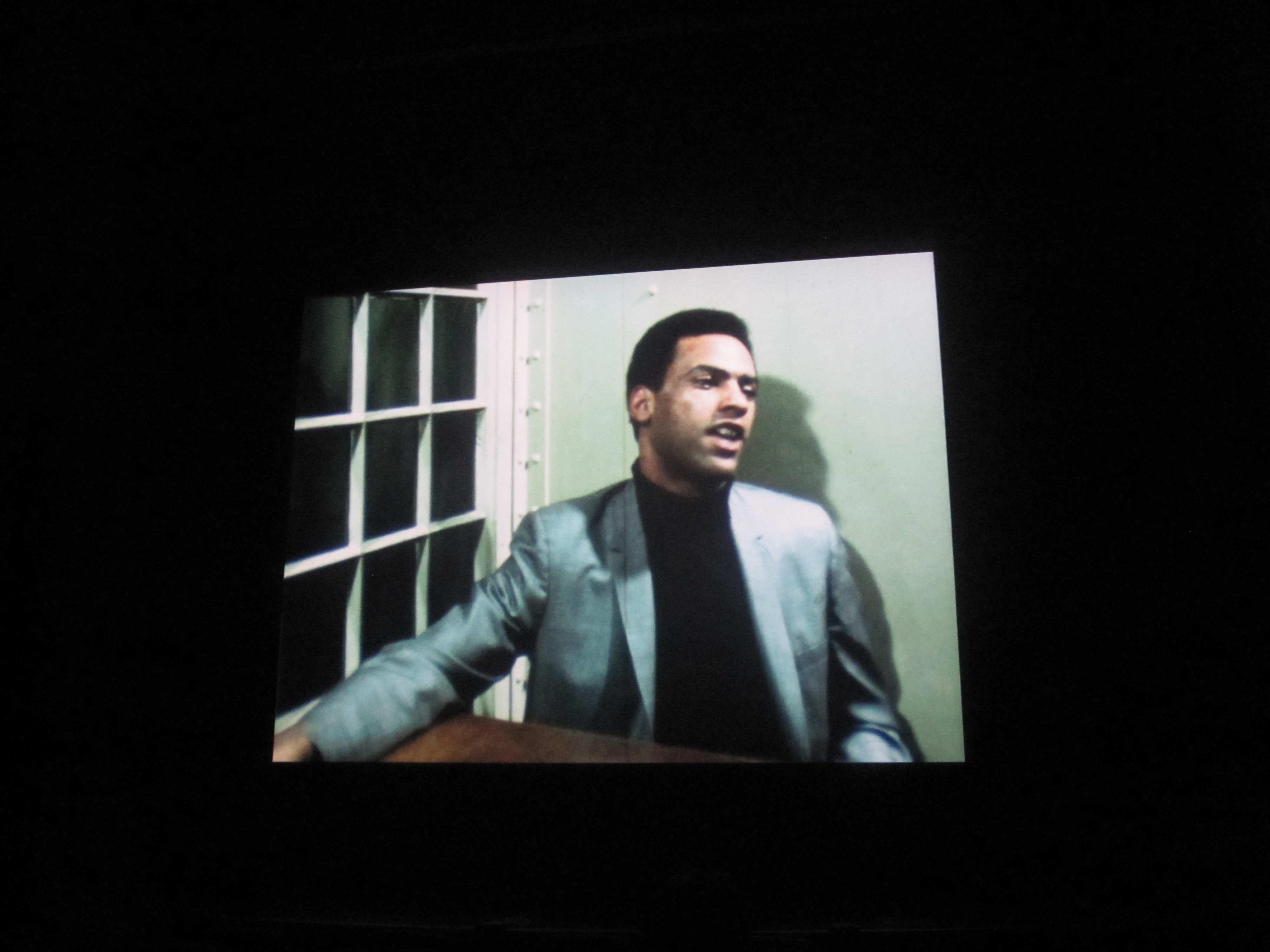
Moving from Paris to Indiana the past fall (see also: the things we do for love), one of the things I expected to mourn the most was my film-going. You see, I spent rather a lot of time at the movies in the past two years, watching the sort of thing that one rarely sees on the big screen in America outside of New York or Los Angeles. I started reading Cahiers du Cinèma. Wednesdays were my favorite day of the week, because it meant a new Pariscope to obsessively scour with a highlighter.  Basically I became a low-down, dirty little cinéphile, and I had friends and a city to support my habit. There may or may not have been weeping during my final viewing of Quartier Lacan at Accattone. Okay, there was definitely weeping, but that wasn’t really all that strange for that place.

So you can imagine my surprise upon arriving in Bloomington at the discovery that this is a town of serious film-going folks, small though their numbers may be. So serious, in fact, that about twenty-five years ago a group of them founded The Ryder film series and magazine. The Ryder screens independent, foreign-language, and revival films at a variety of venues around town. Many of these locations serve booze, making them aces in my book. The Ryder also publishes a free magazine available on nearly every corner around campus, which also covers about local theatre, opera, concerts, and lectures in addition to film. For those of you that wince whenever the cashier at the megaplex asks you to fork over eleven bucks for a movie, the price is oh-so-right at The Ryder.  And they conduct free-ticket lotteries at the beginning of every feature, so sometimes your next movie is on the house! Because of the relatively transient nature of the operation, everything is screened digitally, which has its drawbacks, and sometimes the projection quality isn’t great. But for many newish independent films they are the only game in town, and you’ve got to respect that the operation is likely a labor of love for a few individuals who saw an absence in their community and devoted themselves to filling it.  It’s a pretty fantastic thing, and it doesn’t happen very much anymore, especially in the arts. The Ryder is proof positive that you don’t need an enormous budget to dramatically increase the number of independent and foreign films available to a community, just the long-term commitment of people who care enough about such things to make it happen.

Speaking of commitment to film, following his 2009 appointment as Indiana University President, Michael McRobbie (a hard-core cinéphile if I’ve ever seen one) promised to fund the construction and maintenance of a world-class cinema facility on the university campus. He called it a much-deserved “place for film” for a university and town that had long shown an interest in the medium. And while presidents of all stripes often make big promises when they are taking office that end up moldering on the shelf, this particular president actually put his money where his mouth was. Appointing Jon Vickers as full-time director in 2010, the IU Cinema facility opened in the former space the university theatre in January of 2011. Most universities can’t even replace a broken photocopier that quickly. The space is exquisite, incorporating several 1933 Thomas Hart Benton murals from the original space with one of only 10 THX-certified university cinemas in the country. Thanks to unique collaboration with Sony, the IU Cinema boasts 16mm and 35mm film and Barco 2K and 4K digital projection equipment, and a Dolby sound system that makes you gasp.

It’s a magnificent facility, but it is really Vicker’s continuous programming that makes it sing. As their website can rightfully boast, IU Cinema hosts “film premieres and rare archival screenings, film festivals, conferences, filmmaker retrospectives and silent films accompanied by live music.” This year alone I was able to see everything from Los Olvidados to The Kid, Juliet of the Spirits to Ran, Agnès Varda shorts to Psycho. I watched films from the Australia in the 1970s series, the East Asian Film series, and New Trends in Contemporary Italian Cinema. Thanks to the Jorgensen Guest Filmmaker series, I was able to attend lectures and film series by Chuck Workman, John Sayles, Monica Treut, and Whit Stillman this year. IU also periodically screens recent independent and foreign releases, so we were able to see movies like A Separation and Melancholia within a month or two of their release; no small thing once you get into the bowels of Southern Indiana. Next fall, they are (wait for it) hosting Werner Herzog. This news has resulted in our new favorite game: speculating on where we would take Herzog when he comes to visit Bloomington in the fall, if we were going to be in Indiana in the fall (we aren’t), and if somebody trusted us to be his chaperones (they wouldn’t). In my fantasy, the one other person in town who voted for Cobra Verde at the IU cinema can join me and Wern when we go to the quarries. In the meantime, doing Herzog impressions around town will have to suffice.

Perhaps my favorite moment of the year came when Michael McRobbie was introducing Solaris, one of the films he had specifically selected for his “President’s Choice” series. I know, I know, a university president who loves Tarkofsky! Crazy! He spoke about how establishing a serious venue for cinema on campus was not only an institutional improvement for the university’s reputation, but also an important gift to the community that this university inhabits. In an age of economic downturn and the rape and pillage nationally of public universities, it’s a rare thing for a university adminstrator to acknowledge the imbrication between the university space and the community, and the responsibility that both have to each another for cultural enrichment.

The Ryder’s showtime schedule can be found at theryder.org. Their films are screened at Bear’s Place, the IU Fine Arts Theatres, FARM Restaurant, or the Buskirk Chumley, with outdoor screenings in the summer at Bryan Park. Tickets are $5 for everybody. Food and drinks are available for purchase at the Bear’s Place and FARM screenings. Students beware, you must be 21 to enter screenings at Bear’s Place.

The IU Cinema’s schedule can be found at www.cinema.indiana.edu, along with excellent podcasts.  Ticket prices vary, but many events are free to the public. However, the Cinema requires that you pick up tickets for all screenings, even the free ones. Tickets for first-run and popular films often run out weeks in advance. You can pick up tickets at the IU Auditorium Box Office, which is open from 10 a.m. to 5 p.m., Monday through Friday or online at the cinema website. Tickets are available on the first day of the month of the screening, so we made a habit of planning our film-going in advance and getting our tickets all at once. A box office in the cinema lobby is also open 30 minutes prior to any screening and a standby line forms there, but again, the early bird gets the worm.

Symptoms that a Soviet Loves You

You arrive at her house for a visit, and a “casual lunch on the patio” consists of red caviar and blinchiki (Russian crêpes), festooned with sour cream and fresh dill. Oh, and a perfect salad of fresh radishes, green onions, and cucumbers. Side effects of caviar-on-landing may include weakness in the knees, but Japanese beer is a good remedy for that.

What’s for dinner when a Soviet loves you? Homemade golubtsy (stuffed cabbage rolls) topped with more sour cream, of course. Sour cream is an important component of Soviet love. Side effects of golubtsy-love may include bloating and boasting.

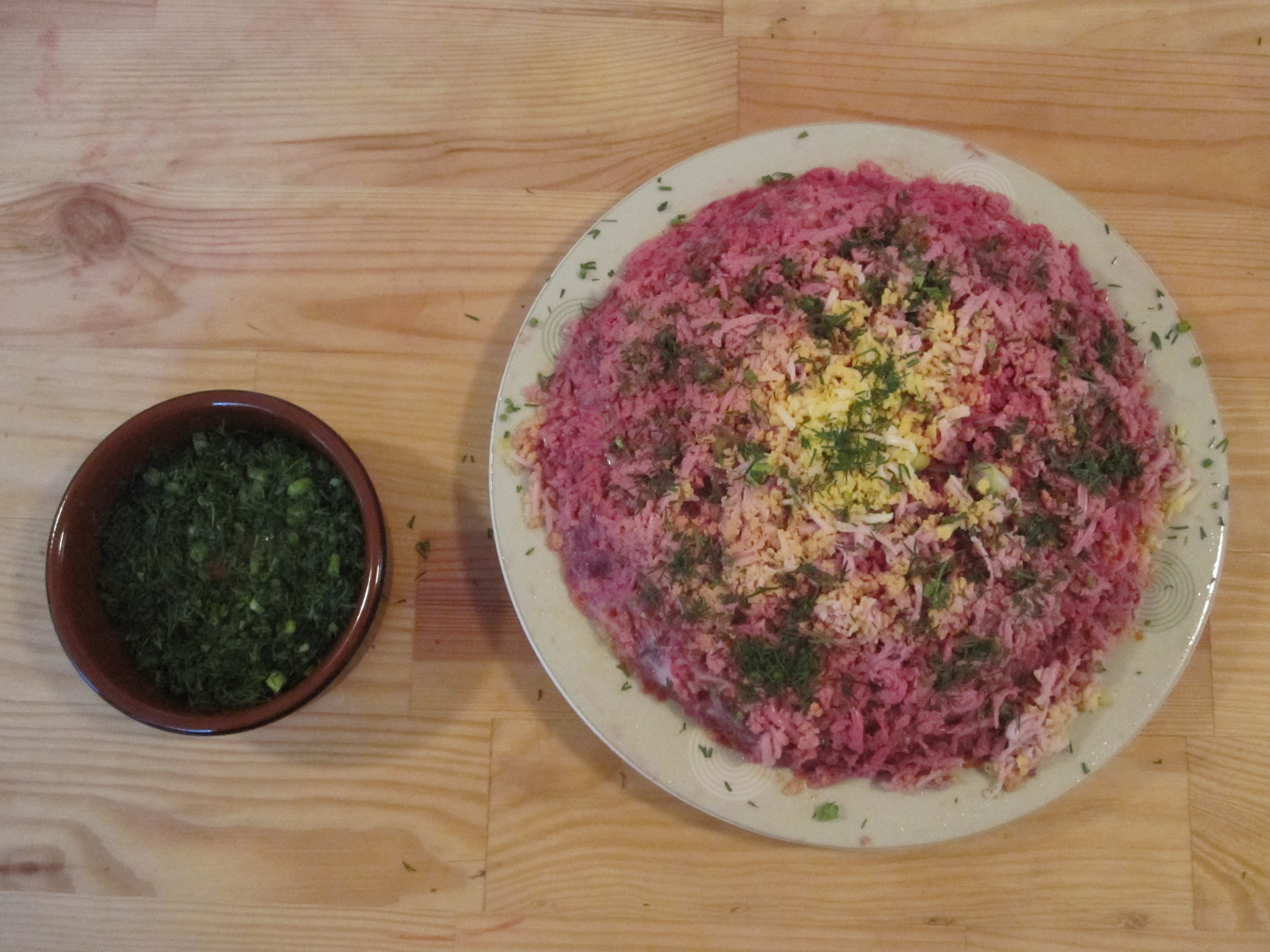
Have you found the love of a Soviet Jew? Then lunch the following day will probably be shuba, that fuchsia salad of Eastern-European Jewish diaspora, made of salted herring, potatoes, carrots, beets, onion, hard-boiled eggs, mayonnaise, and dill. My Soviet is an expert at using the smallest amount of mayonnaise humanly possible, so her shuba never gloppy. Side effects of shuba-love may include eating beets for breakfast and excessive bragging on your blog.

Merci beaucoup, M!

Object Relations No. 2: Midwestern IPAs

I always tell people that Paris is a city that has everything you could ever want to eat or drink, except for the things it doesn’t. One significant shortcoming of the French capital is beer. While they make lots of things better than anybody else, the French are lousy at making beer. Don’t let them try and tell you any different. They’ll try and claim Belgian beers as part of French culinary culture when pressed, which is pretty hilarious given how they speak about Belgium the rest of the time. But the majority of beer-drinking folks in Paris are currently slurping down a Kronenbourg 1664 (call it a “seize,” should you ever find yourself at a Paris dive bar). 1664 is draught that most American expats quickly realize is somewhere between an MGD and a Tecate in terms of general depressingness. I know, I know, 1664 seemed kind of cool the first time you saw it on a bar menu in Brooklyn (it’s French, after all), but trust me, it’s a lousy beer from a nation of lousy beers.

All this is to say that I spent a lot of time missing the amazing diversity of microbrewed beers we take for granted here in the US. I was especially homesick for India Pale Ales, those glorious hop-heavy beers that really hit the all the right spots on a hot summer day. I know that hop-forward brews aren’t everybody’s bag, but this girl just can’t get enough.  You say Double or Imperial IPA, I say, sign me up.

B, a native Hoosier and self-appointed ambassador (read: unpaid) for the Midwest, had spoken longingly about his favorite breweries in Michigan, Wisconsin, Illinois and his homestate of Indiana. Being a Colorado native and longtime denizen of California, I was a bit skeptical that anywhere could have the kind of diversity of breweries that those two states can offer. But I’ll say I’ve been thoroughly schooled in the very best way in the past year. The Midwest makes some of the best beers I’ve ever encountered, especially as a devoted IPA drinker.

My favorite IPA comes from Bell’s Brewery of Kalamazoo, Michigan, close to where B’s parents live.  It’s called Two Hearted Ale, and should you find yourself in Bell’s somewhat limited range of distribution, please go buy yourself a six-pack immediately.  It’s one of the best things that ever happened to me. Bell’s also makes a seasonal double IPA called Hopslam.  It’s pricey, 8.98% alcohol, and will cure any hop-related deficiencies you might be suffering from.  Beer Advocate gives it a 94.  Stout drinkers should also try Bell’s licorice-heavy Kalamazoo Stout.

There must be something in the water in Michigan.  That great twofer of a state also houses Short’s Brewing Company of Bellaire, who makes the delightfully named Huma Lupa Licious IPA. Named for the hop plant Humulus lupulus, this malt lives up to it’s moniker. Another otherworldly fountain of beer goodness is Founder’s Brewery of Grand Rapids. Their Centennial IPA finds a regular slot in our refrigerator, and when somebody has been especially well-behaved they just might get rewarded with a four-pack of the seasonal Double-Trouble. Bitter never tasted so good. Should rye strike your fancy, you’ll never be happier than with a Founder’s Red Rye Pale Ale in your hand.

Cheese-heads can certainly boast about Tyranena Brewery of Lake Mills, Wisconsin. In particular, their “Brewers Gone Wild” series is a seasonal delight.  My particular favorite from this cycle is Hop Whore, which is basically just as down and dirty and delicious as the name would suggest. In their regular roster, I love their Scurvy, an IPA brewed with orange peel for a slightly citrusey, slightly peppery punch. It’s excellent with grilled fish and sweaty afternoons.

B’s dad was born and raised in Warrenville, Illinois, as was Two Brother’s Brewing Company. They make both the eminently drinkable Resistance IPA as well as the double Heavy Handed IPA, which I regrettably missed during it’s appearance from September to December. It’s good to have goals for the future.

Finally, I would be remiss if I didn’t give a shout-out to our local brewery, the great Upland Brewery of Bloomington, Indiana. I’ll tell you more about their amazing food another day, but for now I’ll just say that their Dragonfly IPA has accompanied many great nights for me in this town and will be sorely missed come this fall.

Bell’s, Short’s, Founder’s, Two Brother’s, and Tyranena are distributed all over the Midwest, so treat yourself if you happen to find yourself in fly-over country. Upland is available all over Indiana, but many of their specialty brews are for B-Town consumption only.

Clarence Jumps for Joy: More Boston Feasts

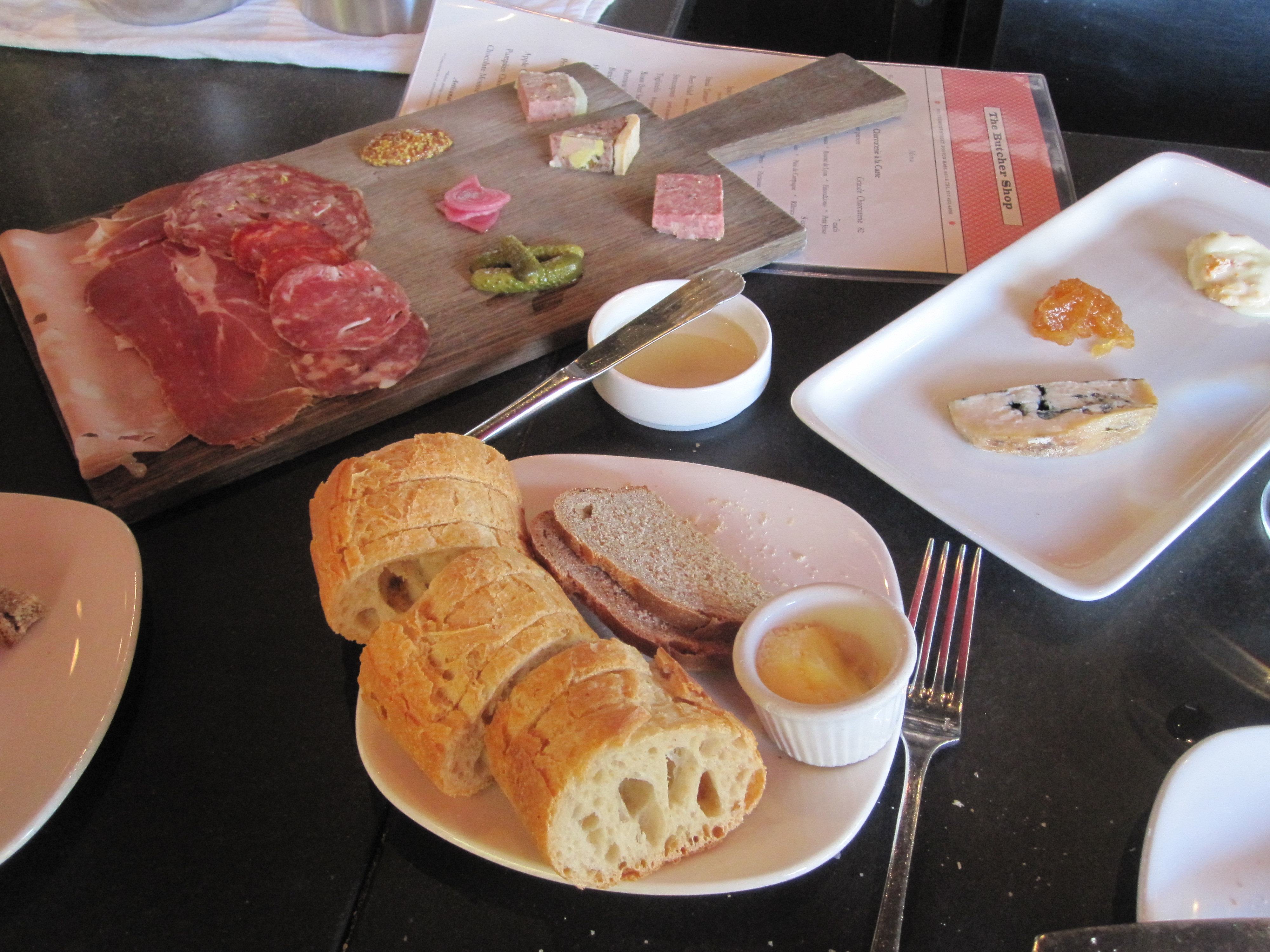
When we weren’t eating the insects of the sea, we ate some other pretty terrific stuff during my brief sojourn in Boston. After a day of sightseeing and shopping on Newbury Street, M and I headed to Barbara Lynch’s The Butcher Shop (52 Tremont Street, Boston, MA 02118, 617.423.4800, www.thebutchershopboston.com). I’d been excited to try The Butcher Shop ever since my friend J purchased her Thanksgiving turkey there last year to rave reviews. It’s a real carnivore pleasure hanging out there, as they do much of the butchery right in the center of the dining area (vegetarians and the squeamish should probably eat somewhere else, if the name of the restaurant wasn’t clue enough). The refrigerated case would be the first thing I would rob given the opportunity and disposition for theft.

We ate lunch at the bar, drinking rosé and sharing a charcuterie plate of mortadella, prosciutto di Parma, salami Biellese, spicy sopressata, game bird en croûte, pâte de campagne, and a foie gras terrine, as well as a few cheeses from their excellent selection.  Everything was lovely, though the portions are pretty miniscule. I did secretly long for the heavy, unfussy charcuterie plates at Le Baron Rouge, but as far as US charcuterie goes, The Butcher Shop is pretty great. For the Boston folks, it would also be an excellent resource if you were looking for an unusual cut of meat.

For my final evening in Cambridge, M had made reservations at the cozy local restaurant Bondir (279A Broadway, Cambridge, MA 02139, 617.661.0009, www.bondircambridge.com). Named for chef Jason Bond and presumably meant to evoke something like “to leap for joy” in French, it has a bit of a different connotation for French speakers (especially the filthy-minded ones like us). Let George Brassens explain:

Egregious sexual innuendos aside (and there were certainly a lot of them), Bondir is a truly gorgeous restaurant. It’s tiny — only 28 seats — meaning that reservations are a must, though I did see a few people loitering by the handsome fireplace hoping that a table would open up as the evening progressed. Bondir’s menu changes daily and focuses on sustainable New England produce and seafood. All the plates come in two sizes and sharing is encouraged – great news if your crew is like my crew and everything gets passed around anyway. On our night in April, we drank a ‘09 Francois Raquillet, ‘Les Naugues’ Mercury première Cru, and the three of us shared the following:

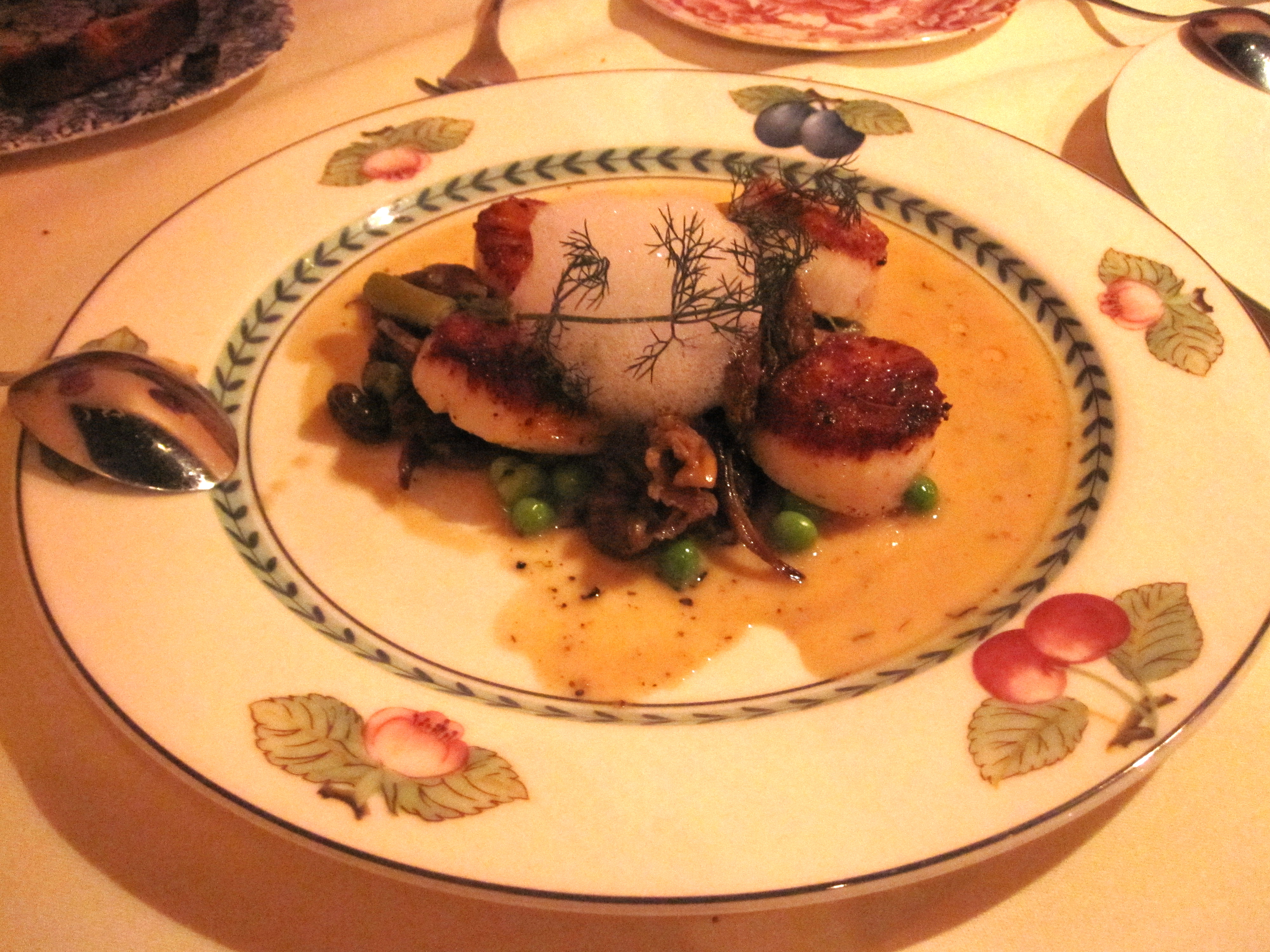
Scituate scallops
 with sorrel, yellowfoot mushrooms, Georgia sweet peas,
 pickled radish pod, and sage froth

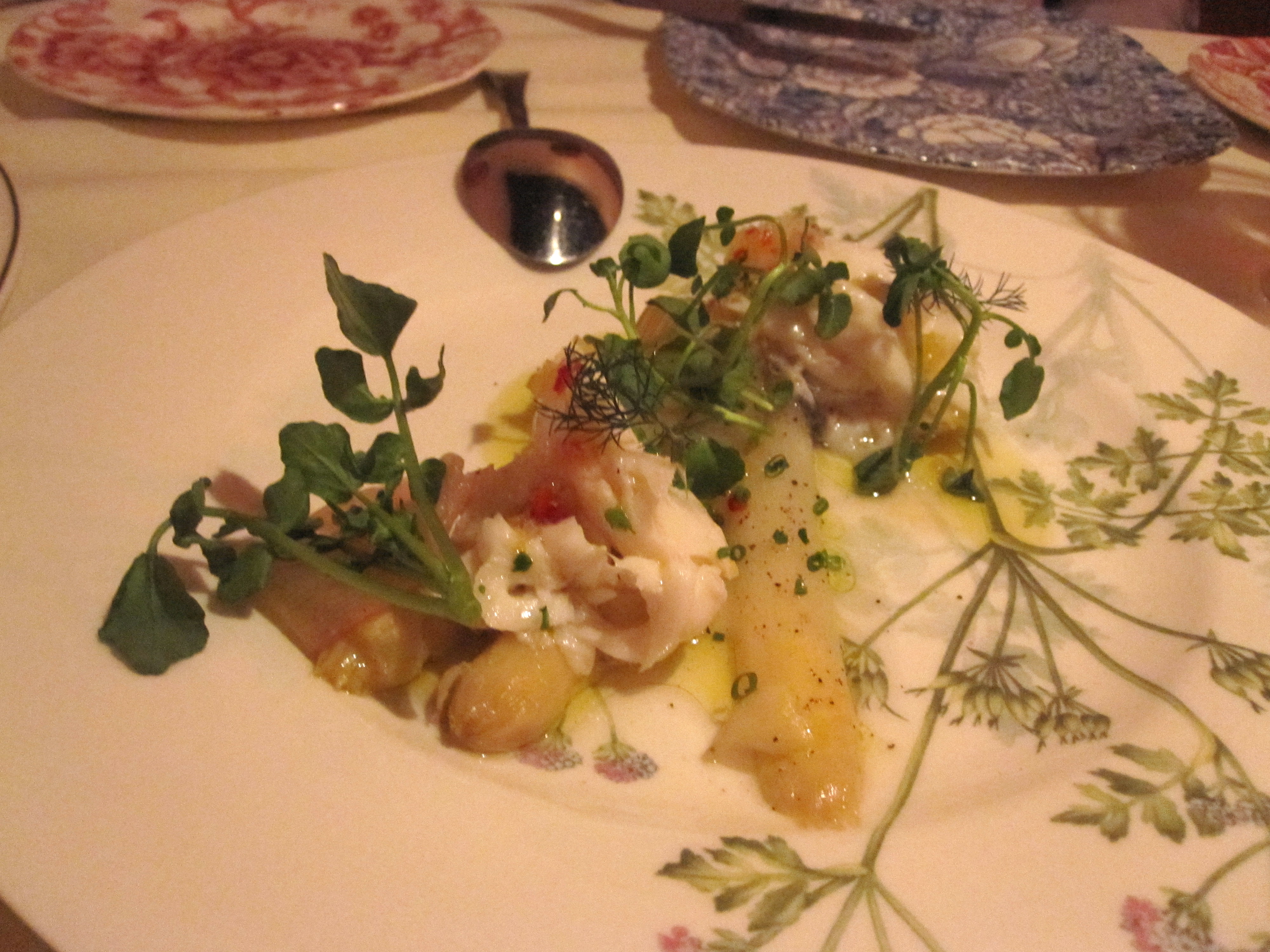
French white asparagus salad with 
wild Westport watercress, lemon-chili vinaigrette, pickled rhubarb, 
lemon verbena, and olive oil-poached Day Boat halibut

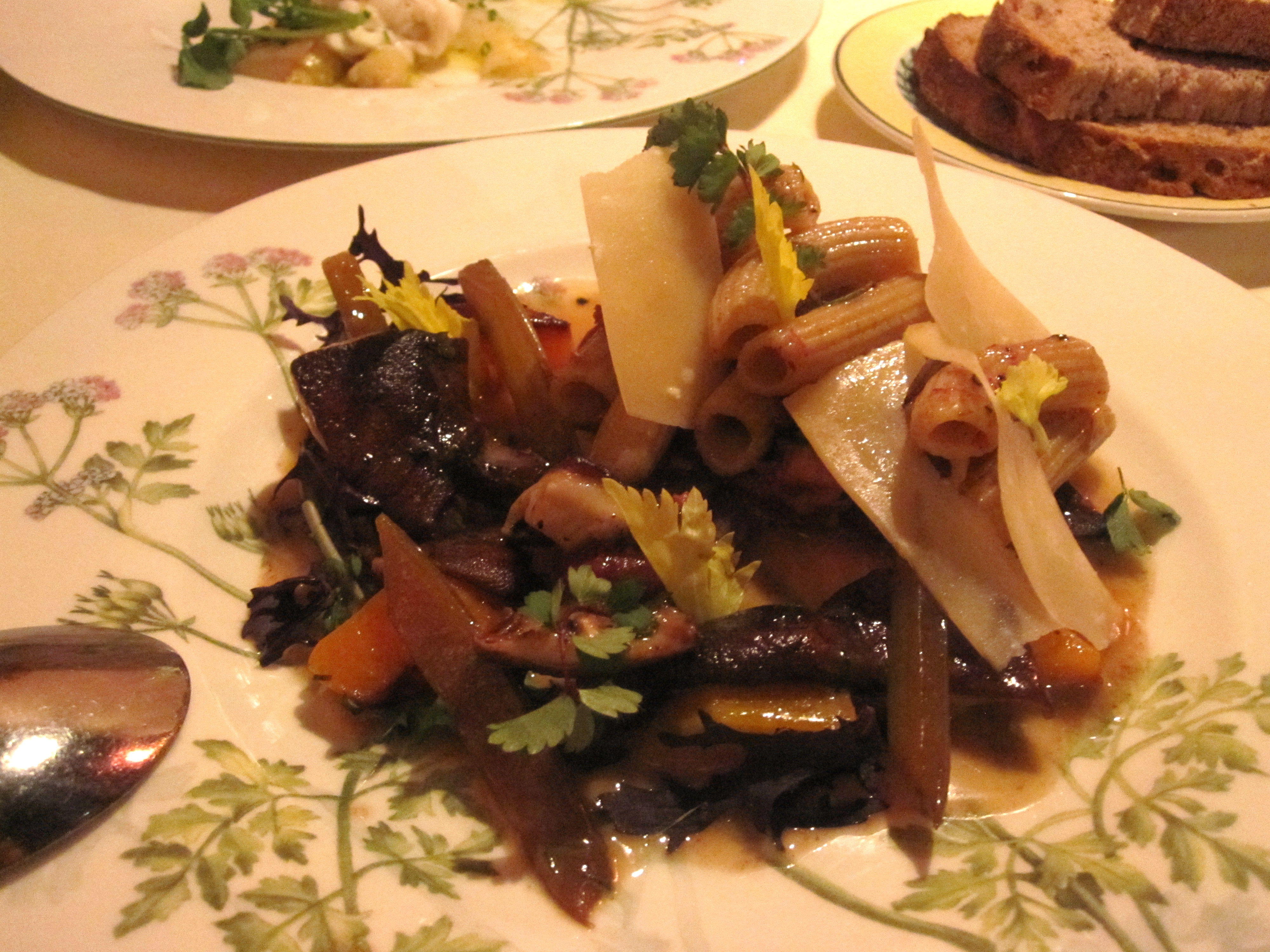
Red wheat rigatoni with 
braised beef shank, shiitake mushroom, butternut squash, 
Pu-Erh celery baton, and Parmigiano Reggiano

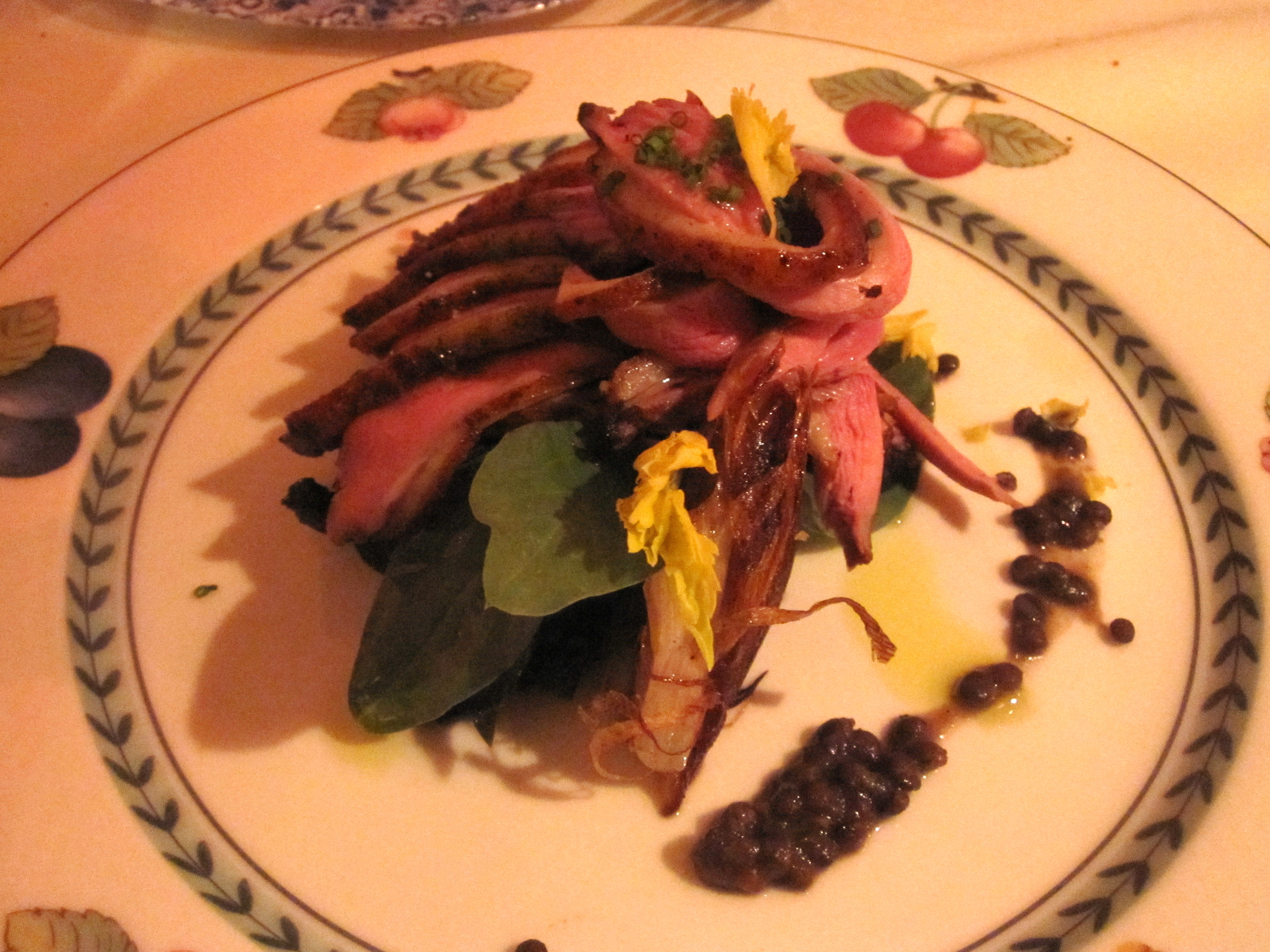
Rouen duck breast with 
Rhode Island white flint cornmeal cake, young onion greens, 
collard greens, and red wine black lentils

Angus beef bavette with 
red wine braised root vegetables, 
rye berries with crème fraîche, and roasting jus

Westport spring-dug sunchokes with 
olive oil-caramel, gingerbread cake, lemon mousseline,
 and fruit leather

Sour cherry trifle with 
mocha chocolate financier, almond milk gelato, and 
meringue brulée

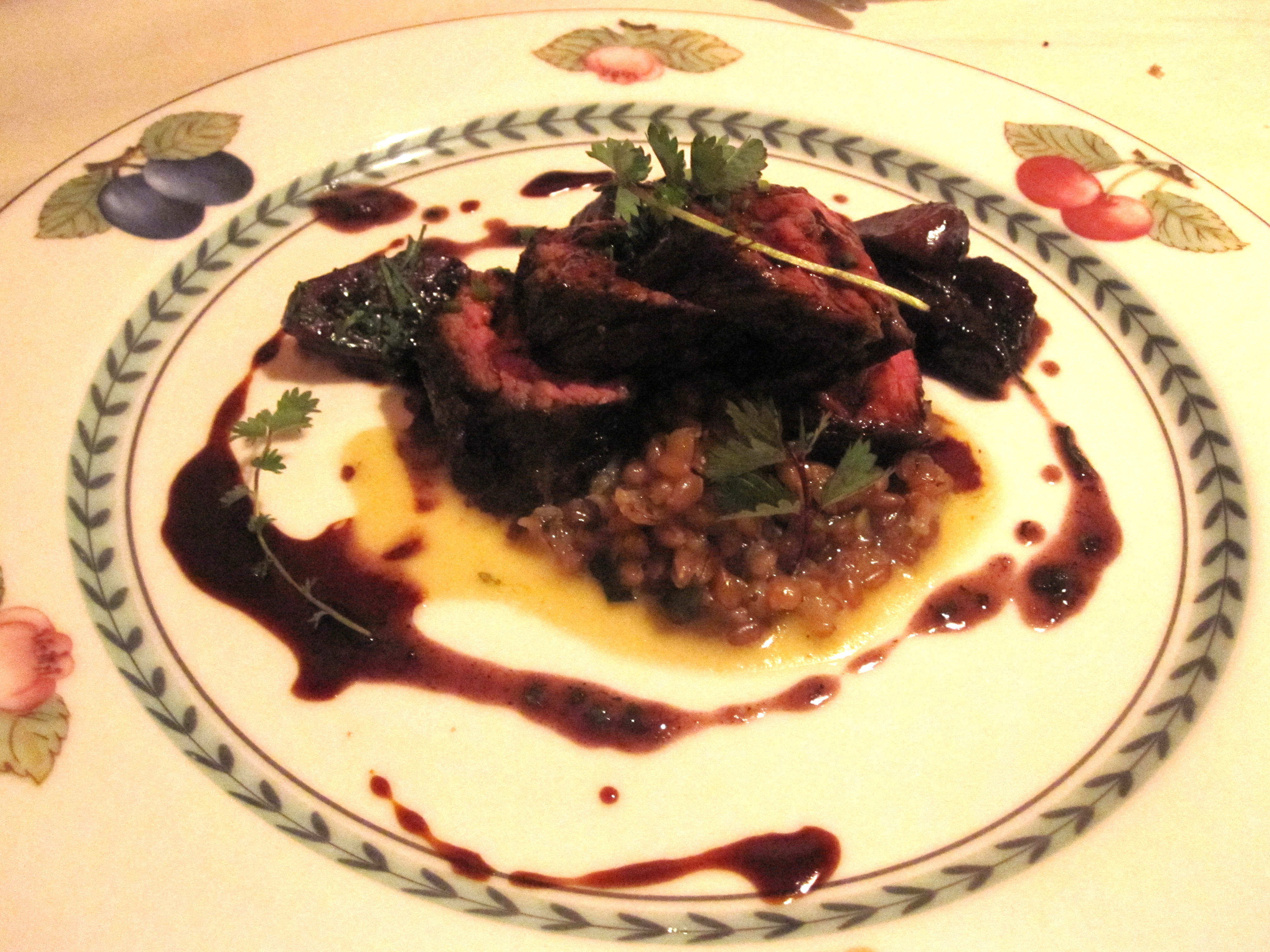
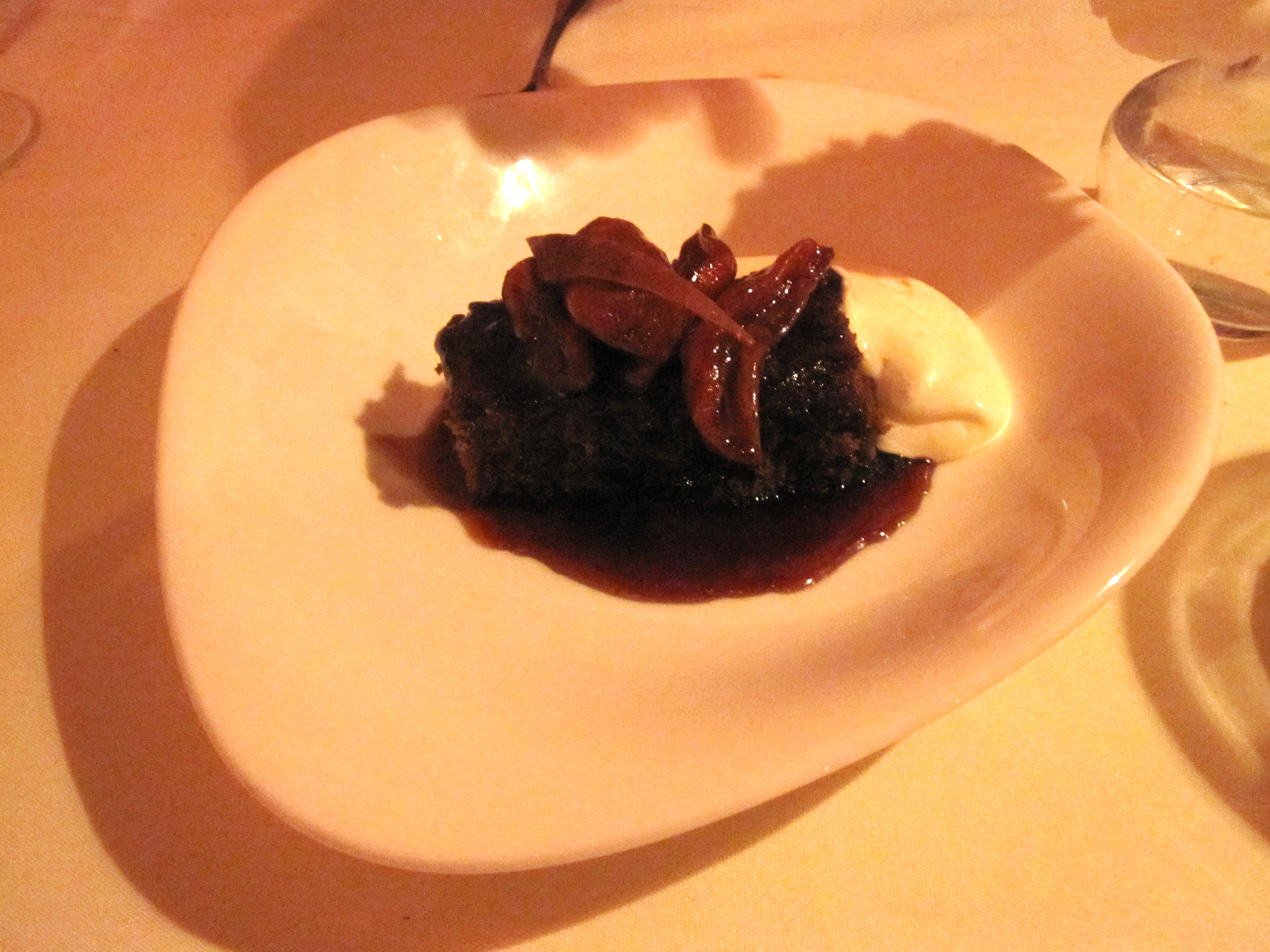
Those final two desserts were really something special – I had never imagined that a roasted sunchoke would make for such an utterly decadent dessert.  I’ll ‘fess up now, I didn’t record the details of each dish with nearly the precision listed above (my real list was more like Scallops! White asparagus! Pasta thing! Duck! Beef! SUNCHOKE DESSERT! Sour cherry sundae!). I fleshed out the details two months later with the happy assistance of the Bondir website. If, like Clarence, your version of porn is restaurant menus, I’d highly encourage a visit, as an archive of past menus is available for your perusal. I’ve gotten some lovely ideas for my own cooking from the site since my visit. A pithy substitute for a lovely evening, but it will have to suffice until I find myself again in Cambridge.

Finally, I’d be totally remiss if I didn’t mention A&J King Artisan Bakers in Salem (48 Central Street, Salem, MA 01970, 978.744.4881, www.ajkingbakery.com), both for their g-g-g-gorgeous bread and free WiFi, which allowed A to study for his exams while M and I browsed the nearby Peabody Essex Museum. We devoured one of their boules and a rhubarb tart at the beach in Rockport, yelling at the seagulls to bake their own damn bread. I brought a bag of A&J’s coconut macaroons back home to Indiana for B, thereby extending my the yumminess of my trip into the following week at home.